This EdTech challenge is part of our ongoing effort to crowdsource and showcase stories from the EdTech East Africa community. If you’d like your work to be featured, please email the editor at juliet@edtech-eastafrica.com
Since opening its first school in Mukuru Kwa Njenga in 2009, Bridge International Academies has made incredible strides in addressing one of the world’s most pressing challenges—education for all. With a mission to tackle the fact that one in two children worldwide is not learning, Bridge has worked tirelessly to ensure that every child, regardless of background, has access to quality education. This vision has come to life in urban informal settlements and rural areas, where children face significant educational barriers.
From the beginning, Bridge International Academies set out to provide an affordable, high-quality alternative to traditional public education. Today, the organization operates community schools across 30 out of 47 counties in Kenya, offering life-changing educational opportunities to children who would otherwise struggle to access learning. These schools are designed to provide education that equips learners with practical skills and real-world knowledge, empowering them for future success.
Bridge’s approach to education is rooted in a powerful mission: to provide every child with a strong foundation that opens doors to a better future. To deliver high-quality education that is data-driven and evidence-based, the organization works closely with teachers, parents, and local communities.
In pursuit of this mission, Bridge has re-engineered every aspect of the education system—from teacher training and lesson delivery to school construction, financial administration, and beyond. This commitment ensures that Bridge’s community schools are as effective, transparent, and accountable as possible. The results speak for themselves: independent exam results consistently demonstrate that Bridge schools provide a proven pathway to success.
A key element of Bridge’s solution to the global education crisis is its data-driven, technology-enabled approach. Bridge has transformed lesson delivery and student progress tracking through digital learning systems. Teachers use tablets loaded with standardized, scripted lessons that guide each step of the learning process, ensuring that every student receives consistent, high-quality education, no matter which school they attend.
Real-time data and analytics are integral to Bridge’s operations. By inputting student assessment results into the system, teachers and administrators can track student performance, identify learning gaps, and make informed decisions to improve outcomes. The technology also allows for content to be updated and tailored to meet the specific needs of each student, ensuring lessons remain relevant and effective.
Teacher empowerment is at the heart of Bridge’s model. The organization invests heavily in continuous professional development, providing teachers with daily, expertly designed lesson plans and regular instructional coaching. This support ensures that teachers are equipped with the pedagogical skills and classroom management techniques they need to succeed, allowing them to focus on what they do best—teaching and inspiring their students.
Bridge’s data-driven decision-making further ensures that the organization is always improving. Daily data collection on student attendance, assessment results, and teacher performance helps to track progress, identify challenges, and implement targeted interventions where needed. Whether addressing underperforming students or schools, this data allows Bridge to make real-time adjustments to enhance learning outcomes.
The scalability of Bridge’s model is another key achievement. Designed to work in diverse settings—from densely populated urban centers to remote rural areas—Bridge’s approach ensures that quality education is accessible in both high- and low-density environments. The use of technology enables Bridge to expand its reach without compromising on the quality of education provided.
Looking ahead, Bridge remains committed to being a global leader in education research and innovation. The organization aims to contribute to the global knowledge of what works in low-resource education settings and continues to improve educational outcomes for children in the world’s most underserved communities. Bridge is focused on ensuring that even more children from underserved areas gain access to the same high-quality education offered in its schools—education that prepares them for success in a rapidly changing world.
Bridge’s journey is far from complete, but every step forward brings the organization closer to realizing its vision of education for all. As it continues to innovate and grow, Bridge is more committed than ever to its mission of transforming education and empowering the next generation.
Grace Mbugua, the Director of Communications for Bridge Kenya & Uganda, submitted this story.
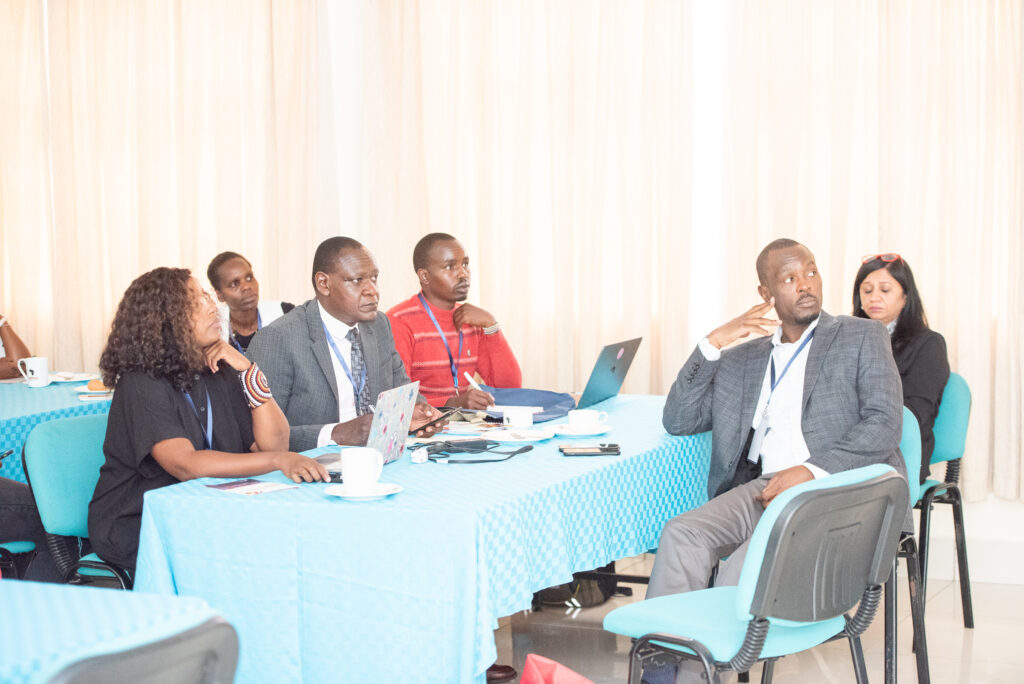
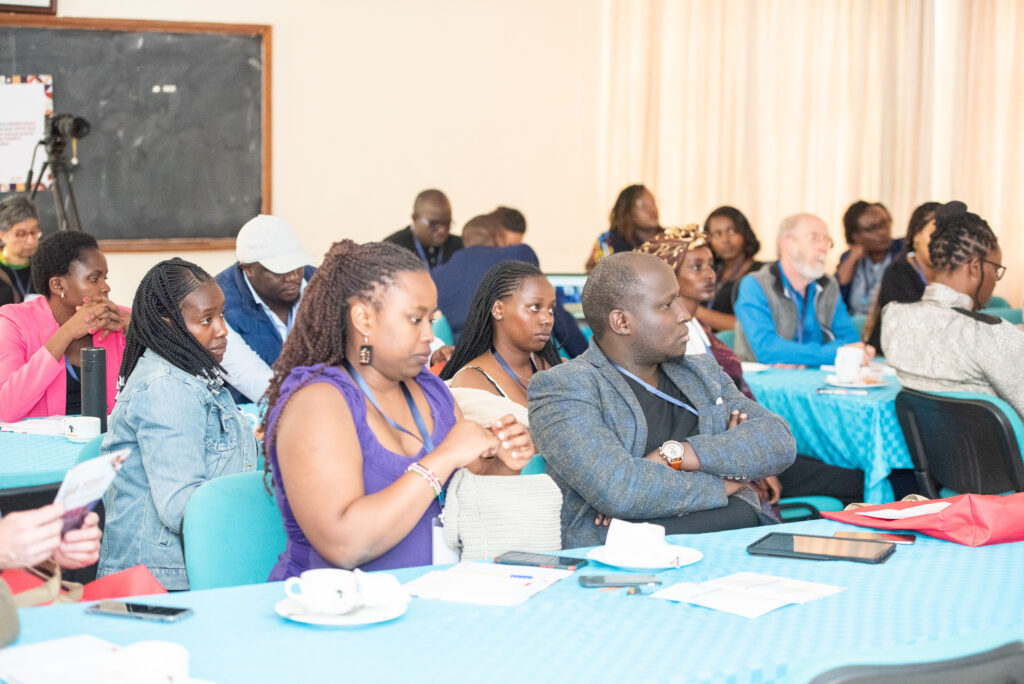
The annual EdTech Summit agenda includes breakout sessions curated with different learnings and case studies.
This year, two organizations in the EdTech ecosystem ran the demo sessions. iHub, which has an EdTech fellowship in partnership with the Mastercard Foundation, conducted the demo sessions for EdTech entrepreneurs.
These sessions provide a platform for innovators to showcase their educational technology solutions, allowing educators, administrators, parents, and tech enthusiasts to experience these tools firsthand and determine which ones best meet their needs.
As noted by Measured, live demos are among the most effective methods for demonstrating progress and gathering feedback. They enable participants to quickly grasp the functionalities and benefits of different products and services through direct interaction.
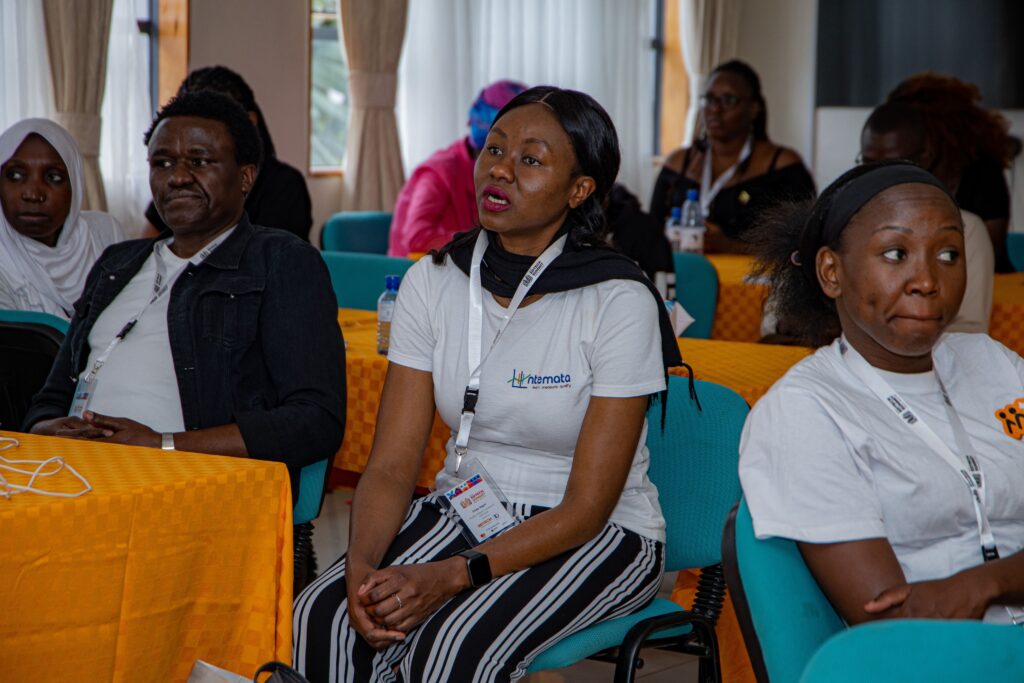
The EdTech entrepreneurs demoing their products were Somachat, Recess, Mzizi, Ntemata, Esoma Kids, and Kuze AI. These sessions highlighted several key benefits crucial to the growth and success of the EdTech ecosystem.
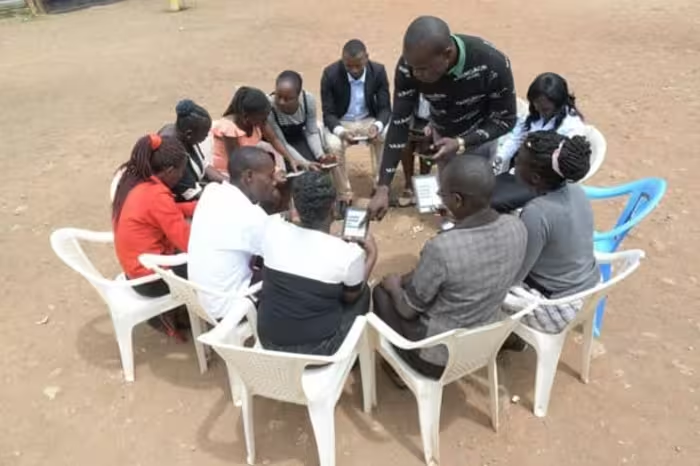
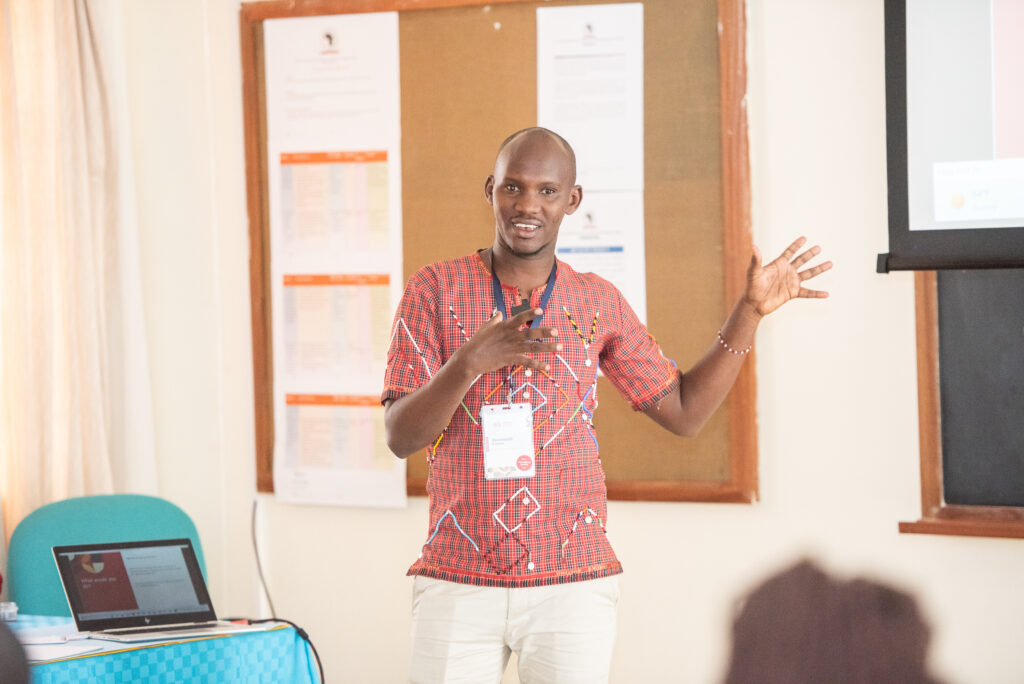
Throughout their presentations, each speaker paused to guide the delegates through the process of navigating the application, urging them to take out their phones and explore a specific feature. This hands-on approach not only made it easier for potential users to understand the technology but also fostered a deeper connection with the products.
Live demos present opportunities for immediate feedback. Participants have the opportunity to immediately ask questions, voice concerns, and offer suggestions. Lewis Njoroge from Mzizi, an online platform for school process automation, emphasized that these sessions offer invaluable real-time feedback from existing clients while also attracting new potential customers.
This interactive environment is critical for EdTech companies, as it allows them to address uncertainties and refine their solutions to better meet the needs of educators and students.
This was evident at this year’s EdTech Summit, where delegates raised pertinent questions, such as whether platforms were free or fee-based, the applicability of EdTech solutions across different education levels, and the capabilities of the technology in grading and standardization.
The phrase “seeing is believing” works well during these demo sessions. The tech companies gain the audience’s trust during these practical sessions. This transparency is essential in an industry where educators are often cautious about adopting new technologies without clear evidence of their efficiency.
Moreover, live demos are more engaging than passive presentations. They capture the audience’s attention by demonstrating real-time problem-solving, which keeps attendees actively involved. This higher level of engagement leads to better retention of information, making it more likely that participants will consider adopting the demonstrated technology.
Benta Otsyeno, a training coordinator with Nawiri, noted that the practical displays allowed her to see how different EdTech solutions work and helped her identify Somachat as a user-friendly option accessible to parents with smartphones despite their literacy level.
Decision-makers typically attend summits like this one in search of practical, implementable solutions. Therefore, these demos enable EdTech entrepreneurs to demonstrate the application of their technology in real-world educational settings, highlighting its relevance and effectiveness. This practical approach can significantly influence purchasing decisions.
Benta, for instance, pointed out that Mzizi distinguished itself with its Parent Engagement Platform, a feature that parents who frequently travel for work or have children in boarding school appreciate.
Lastly, live demos present opportunities for partnerships with other organizations. Many EdTech companies rely on collaborations to enhance their service offerings. For instance, Somachat collaborates with organizations such as Longhorn to supply standardized question papers, which it then uploads onto its exam and question banks for client use.
EdTech Summits offer a unique and valuable platform for EdTech entrepreneurs to network with other players in the EdTech ecosystem, either formally or informally. This year’s curation involved demo sessions to create a mutually beneficial environment for EdTech entrepreneurs and attendees.
These sessions go beyond merely showcasing products; they foster engagement, build trust, and create lasting relationships with potential clients, ultimately driving the growth and success of the EdTech ecosystem.
IREX is a development and education organization committed to cultivating leaders, empowering youth, strengthening institutions, and increasing access to quality education and information because it is the best hope for a brighter today and tomorrow. In Kenya, KPLAY implements a holistic, gender-responsive, play and technology project in 309 schools in Kwale and Kilifi.
A second research-based project seeks to evaluate the effectiveness of technology in improving learning outcomes and girls’ digital literacy in primary schools in Kilifi. School leaders’ understanding of the benefits of LTPT (Learning Through Play and Technology) has increased, enabling them to effectively support teachers in incorporating LTPT into the classroom. In addition, parents, community leaders, and trusted community-based organizations support LTPT in their schools and advocate for its inclusion. Government champions are now advocating for LTPT scaling across Kwale and Kilifi and its inclusion in professional development modules.
EdTech East Africa is collaborating with IREX, leveraging the WhatsApp platform, which has features to enhance parental empowerment and engagement activities. Some engagement tips are creating parent groups for communication and resources, updates and tips; capacity building on how to use the resources effectively; and more. Parents receive regular, short messages that are easy to digest. Videos and voice notes enhance instructions, and parents/teachers can consult privately regarding the learner’s progress.
Learn more about the Parental Empowerment and Engagement Activities that complement Kplay at home in the document below:
Let’s take a trip to Sobral. You don’t know where Sobral is? No problem. Google Maps’ got you. From the map, Sobral looks like a tiny dot with nothing to write home about. But don’t let that tiny dot deceive you. Because? Sobral has got a world of a story to tell.
Sobral, a municipality in Ceará in Brazil, has a population of 200,000 inhabitants. Among Brazil’s 26 states, Ceará has the fifth lowest GDP per capita. Ceará and Sobral had low levels of literacy 20 years ago. Then an education revolution of sorts happened.
According to The World Bank, “in just over a decade, Ceará improved the quality of education so much faster than the rest of Brazil. Among them, Sobral went from a bottom-ranked municipality to become first for both primary and lower secondary education and to reach levels of education quality comparable with those of world-class education systems as measured by PISA.”
Ceará has the lowest rates of learning poverty in Brazil and features 10 of the 20 top-ranked municipalities. Sobral has some of the best primary schools in Brazil. The outstanding educational results of Ceará and Sobral students are well above what would be expected given the socioeconomic context in which they live and learn.
What happened? What changed? How did Sobral do it? That’s what Dr. Samuel Marigat and other educationists went to find out in 2022. The trip, which was under the South-South (Kenyan Chapter) Programme, was to understand why a rural village has such high literacy levels and for educationists to learn the importance of foundational literacy. It’s this knowledge that Dr. Marigat and other players came to share at the 2023 Kenya EdTech Summit. The two-day summit, which was co-created by different players in the EdTech space, led by EdTech East Africa and sponsored by Mastercard Foundation, the EdTech Hub, Oracle Academy, and Amazon Web Services.
“At the end of the programme, we asked ourselves, ‘What do we go and implement?’” said Dr. Marigat, who’s a Curriculum Support Officer (CSO) at the Teachers Service Commission. “I said we will go to Kirinyaga. The South-South agreed to support us on this initiative in Kirinyaga.”
Kirinyaga rising
In 2020, in terms of education, the most dropped county in Kenya was Kirinyaga. There are 200 public schools and 200 private schools in this county that are located in Central Kenya.
Most foundational literacy programmes are led and funded by development partners. Unfortunately, when the partner leaves, the programme dies. Dr. Marigat was adamant that Kirinyaga’s turnaround would be government-led; from gun to tape.
“The teachers belong to the GoK and are paid by the GoK,” Dr. Marigat explained. “Ditto the heads of departments and CSOs and others. Because it’s government-led, we ensure there’s sustainability. Personalities go, but offices do not. The systems will remain.”
“Because it’s a government-led initiative, we move at the pace of the government. Two, we don’t allow partners to cut and paste their programmes. In Kirinyaga, we say we cook our mukimo – a local delicacy in Central– our way.”
The more, the merrier
Though Kirinyaga’s foundational literacy turnaround is Caesar-led, it is also multisectoral. It is community-centric. As the Swahili proverb warns: “You can’t kill a louse with one finger.” The team to kill illiteracy consists of Dr. Marigat, the country director of education, an official representing the Minister of Education, a steering team representing all the sectors, and a technical team that’s currently working on a manual. Other players who have seats in this roundtable are teachers, heads of institutions, County Directors, parents, CECs, the business community, and elected leaders.
Their approach is four-pronged. One; NGOs and other development partners remain in a position of support. Two; everyone moves at the government’s pace and is allowed to be the pace-setters. Three; they are collecting and learning from shared local data. And four; they have crafted roles and working teams that allow the government to take the lead.
A project on early childhood literacy and numeracy which was carried out in 400 randomly-selected villages in a rural district of Uttar Pradesh, India concluded that: “In order to fully optimise the potential of the community, there is a particular need to strengthen mechanisms for school-community engagement, recognising that home, school and the broader community are all important sites for children’s learning. This could involve implementing mechanisms for regular communication, coordination, and collaboration between teachers, parents, and communities around how best to support children’s learning.”
Fixing the foundation
A building can only go as high and be as solid as its foundation. The foundation’s depth must be commensurate to the weight it will carry and the type of soil the edifice will stand on. Every construction material used must be A1. From planning to execution, there are no cutting corners.
Education is a building that houses a nation’s hopes and aspirations. This means that learning outcomes cannot be wished away until foundational literacy is fixed. The mission of education stakeholders in Kirinyaga is to ensure every learner can read by Grade 3. They are aware that Grades 1 to 3 are the foundation. If this isn’t done right, a catastrophic collapse awaits the county and country.
“When we say most learners can read, if there’s one learner who can’t read, is that okay?” Dr. Marigat posed. “When we say 99% can read; what if that 1% is your child, how would you feel? It’s never okay when there’s one child who can’t read.”
In their initiative, no child will be left behind. To achieve this, the team’s work focuses on material development, pedagogy for early grades, and formative assessment. Besides, they have got a much-needed shot in the arm; by putting all ECD teachers on permanent and pension, the county government isn’t just walking the talk but also making the foundation firmer.
Evidence-based learning
John Adams said, “Facts are stubborn things; and whatever may be our wishes, our inclinations, or the dictates of our passions, they cannot alter the state of facts and evidence.”
Facts. Evidence. Two legs that make educational initiatives run, without which such initiatives cannot go anywhere. And Dr. Marigat knows this too well: “We prided ourselves that we were doing well, but evidence showed otherwise.”
Having learnt their lesson, Kirinyagans are doing things differently. The teachers have developed learning materials, which cover four weeks. Every Thursday, without fail, they assess every learner to check their competence level. Thereafter, they start remedial work for learners who have not met the standard. They want to know – and not guestimate – if their learners are meeting the standard.
After the assessment, they have a rubric that has been developed in partnership with the Kenya National Examinations Council (KNEC) and the Kenya Institute of Curriculum Development (KICD). That’s where technology comes in. They get real-time data because their attention is on formative evaluation. They use the evidence brought by the data to inform learning and what interventions are needed for each learner.
Tech and teachers
In Kirinyaga County, every school has a minimum of 40 gadgets. Many of these gadgets are still brand new. Part of the reason why the laptops are still new is because teachers are struggling.
The gadgets are also safe. It’s very tempting to think of the learner when talking about the use of tech in education.
“Let’s put the learners on the back burner. They’re not missing anything,” Ciku Mbugua said. “Let’s not focus on the teachers just to say we’re building technology skills.”
“Let’s equip them to use technology in their day-to-day work. Once the teachers start to perceive technology as an assistant, a tool that makes their tasks easier, then we’re going somewhere. If we want to build the capacity of teachers, we need to figure out how to leverage data; and how they can collect, understand, and use data to make decisions in the classroom. How do we begin a culture of data?”
In Kirinyaga, teachers are “tech-ing” their homework game. They write links to videos the learners need to take to their parents to watch. This has made the parents more involved. It has made parents realise they have a central role to play. It has made them realise that, like the traditional African fireplace, it takes three stones to cook.
This supports the hypothesis that: If pedagogical leaders, teachers, and parents are equipped with the mindset and competency to support the appropriate use of data, teachers and learners will receive targeted impactful support that will ensure every child can read with fluency and comprehension.
Policy
The role of policy in any foundational literacy effort cannot be overemphasised. Before you do anything, ask yourself: “Am I introducing something that’s contrary to policy?” Check the policy.
Even the team in Kirinyaga is toeing the policy line. They are implementing what’s within government policy. They are using digital learning devices from the government. They are not introducing anything new. They brought an official from KNEC when they were introducing their assessment tools.
“Government is about structures,” Dr. Marigat advised. “If you want to discuss the curriculum, go to KICD. If it’s about assessment, talk to KNEC. If it’s teacher management, go to TSC. We cannot talk about publishing books if it’s not approved by the right government agency.”
Here’s the thing. Situations may seem to be alike. But that’s not always the case. There’s a place for learning from others. There’s a place for visiting success stories like Sobral and, like a sponge, soaking in all the lessons. But there’s grave danger in blindly bringing an intervention that worked in other countries and thinking it will work locally. For instance, in nomadic communities, the schools follow the children.
When you go to the village, first find out what works in the village. Then, as they say, work it.
10 down, 90 to go
Dr. Marigat’s team has currently done 10% of all the schools in Kirinyaga County. Next January, they want to roll out the initiative in all the schools in Kirinyaga. That’s 20 of the total 200 public schools, which are scattered in the 81 sub-locations.
There’s an African proverb that says it takes a village to educate a child. A village is made up of people, policies, and potentials. These are what these intrepid educationists will have to tap into to realise their dream of making Kirinyaga the Sobral of Africa.
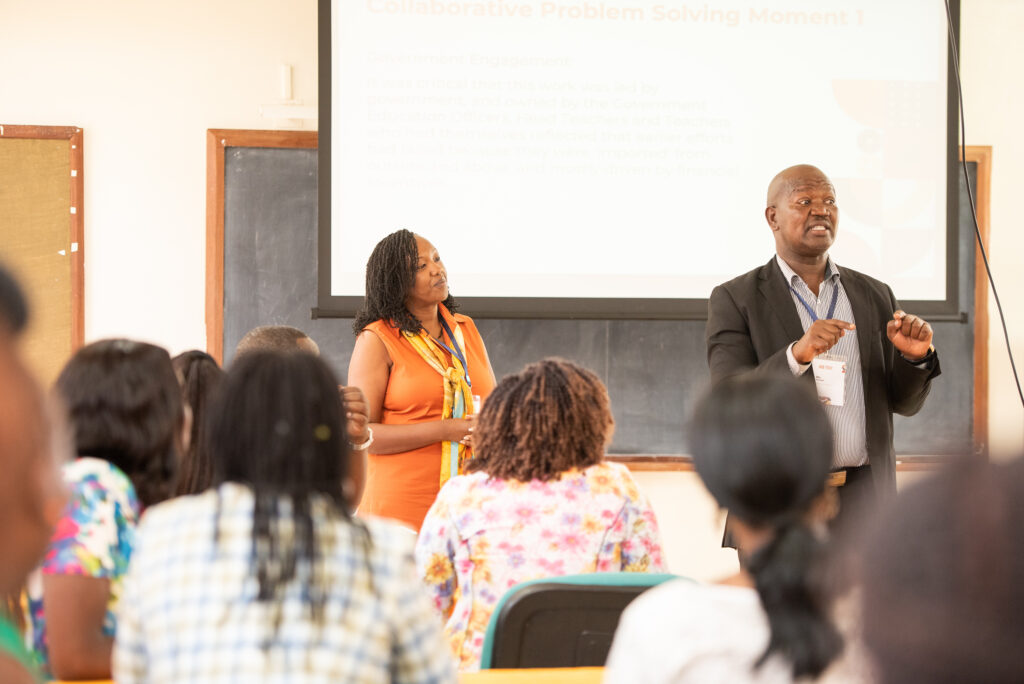
The Learning Out Loud sessions were a favorite among participants of the EdTech Summit 2023, organized by EdTech East Africa and sponsored by Mastercard Foundation, EdTech Hub, Oracle Academy, and Amazon Web Services. It was an opportunity to dive into real-world situations and exercise creativity in solving challenges. In this case, they were grouped into teams and told to picture themselves in charge of an organization that offered education to children in marginalized communities.
They were to come up with ways to increase enrolment and attendance among school children. It was an immersive experience. The excitement was in working against the clock to come up with the best viable ideas. Great suggestions were presented, ranging from developing cheaper, entry-level learning devices to rewarding the most engaged parents. It was a fun way to learn and be involved.
After every team had presented, participants were eager to listen to the main presentation. Partly to find out whether their ideas would work in real life and out of new-found appreciation for the environment PICO was operating.
Pastoralists Integrated Concerns Organization (PICO) is an indigenous community-based organization that seeks to address issues affecting the pastoralist communities within Kajiado County, such as climate change, education, and social empowerment.
Jeremiah Kutanya co–founded the organization in 2018 as a response to the challenges he had faced during his younger years while taking care of his parents’ livestock. He often had to skip school whenever it fell on him to take them out for grazing and watering. As if this was not enough, his journey to school involved a 20km round-trip, leaving him too exhausted to concentrate on his learning. He would wake up as early as 3 a.m. to just make it to class on time. Not to mention the risk of meeting wild animals that roamed freely in those parts. He vowed to help children facing the same situation if he ever got the chance. PICO uses best practices and accessible technology in its activities.
PICO employs the TaRL learning method to improve literacy and numerical skills. This is carried out in a fun way using locally available materials. Organizations such as Naconect, Grica Kenya and Keep Kenya Learning (KKL) help provide tech-enabled educational resources.
Community Learning Centers and Child Safety
Before kicking off, PICO had conducted a survey to understand the issues that impeded the learning of school-age children. The survey revealed that the children traveled an average of 10 kilometers to school, leading to lateness and poor concentration from fatigue.
In some cases, parents opted to keep the children at home and tasked them with herding cattle until they were old enough to undertake the journey to school. Explaining the effect of late enrolment, Jeremiah said, “Being in class with younger pupils affected the children’s learning attitude and subsequent performance.”
PICO has established Community Learning Centers close to where the children live. The education programs cater to learners from grade 1 to grade 5. This is because foundational education is critical for the overall academic success of the child. PICO works with five primary schools and one secondary school, which then enroll these learners and transition them into the formal learning system. The schools also register them into the National Education Management Information System (NEMIS).
The Community Learning Centers help retain the children within the education system. Whenever a child missed classes for two consecutive days, the team visited the child’s home to understand the reasons behind his/her absence. They would then provide the necessary support to ensure learning resumed. In cases of teenage motherhood, PICO ensures the learner can continue with her studies after giving birth. To equip untrained teachers with pedagogical training and learning strategies, the organization runs radio programs under the Pastoral School concept.
PICO maintains a community library equipped with laptops, tablets, and books donated by the locals. Sitting areas are furnished with cowhide, which is used by learners during study sessions. Volunteers are on hand to assist in training.
Keeping Parents Engaged
Parental involvement boosts the child’s well-being and confidence, which are essential for success. As KICD states, the engagement of parents creates an enabling environment for the school to build on. Working in conjunction with Naconnect, PICO created a handbook for parental engagement programs that provide skills for learning at home.
Parents are empowered through providing basic training that allows them to access educational content using feature phones. Content is sent to them based on the learner’s level. This training equips parents to differentiate various types of messages they receive on their phones, enabling them to support their children’s learning. Learners earn performance points redeemable through cash.
Engaging parents was not without hitches. Occasionally, a parent would be reluctant to let his child attend classes when he could be at home helping out with the chores. Negotiation would then be required, with an agreement reached on the number of hours that would be set aside for learning.
Use of Volunteer Teachers
The Community Learning Centers are manned by volunteers with a minimum of high school education. They are then trained in the TArL methodology. Criteria for selection are a demonstrable passion for service and a commitment to work for a specific period. The latter is to prevent disruption of learning should the young volunteer leave unexpectedly.
Lessons into The Future
The learning-out-loud session proved to be an eye-opener on the challenges faced by pastoralist communities in accessing education. By empowering parents, better learning outcomes are achieved. Parental engagement is an essential component in sustainable learning among pastoral communities.