Blog

  • Building Collaboration Infrastructure: Lessons from EdTech East Africa

    By Jennifer Otieno

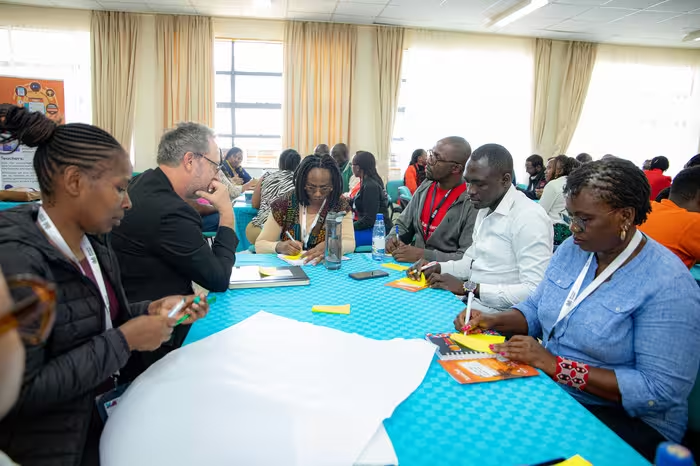
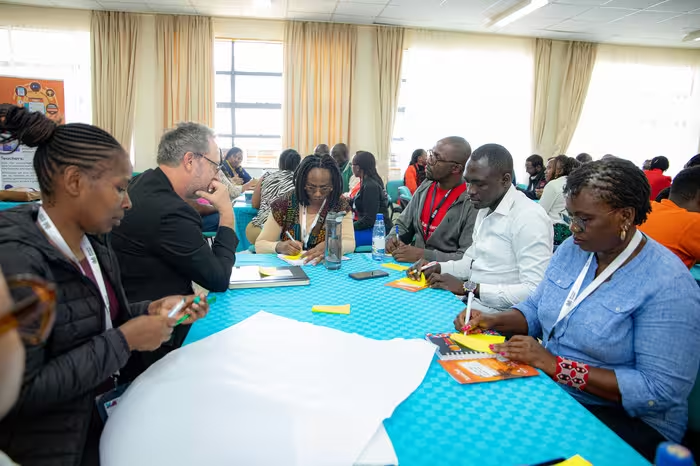
    In the fast-evolving world of education technology, innovation is often seen as the spark that drives change. But at EdTech East Africa, we’ve learned that lasting impact doesn’t come from innovation alone—it comes from the infrastructure of collaboration that supports it. Over the past decade, our small but determined nonprofit has focused on building the connective tissue that brings people, ideas, and institutions together. We’ve learned that when you invest in the right relationships, rhythms, and resources, collaboration becomes more than an intention—it becomes an engine.

    This post shares what we mean by “collaboration infrastructure” and how we’ve built it, layer by layer, to strengthen the EdTech ecosystem in Kenya and the wider region.

    At its core, collaboration infrastructure refers to the structures, systems, and social norms that make it easier for people and organizations to work together effectively. In our experience, this includes:

    • Shared spaces (both physical and virtual) where people can connect informally and formally
    • Regular convenings that create rhythm and momentum
    • Accessible information that allows stakeholders to stay informed and aligned
    • Common frameworks and language that reduce friction and misunderstandings
    • Trust-building mechanisms, including transparent communication and inclusive processes
    • Tools and processes that streamline joint action

    This infrastructure doesn’t appear on its own. It must be intentionally designed, maintained, and adapted over time. And while it often lives behind the scenes, it’s what makes deep, sustained collaboration possible.

    Why It Matters: The Collaboration Gap in EdTech

    In Kenya, as in many parts of the world, the EdTech sector has grown rapidly—but often in silos. Innovators, funders, policymakers, educators, and researchers frequently operate on parallel tracks, with limited visibility into each other’s work. This fragmentation leads to duplicated efforts, missed learning opportunities, and a slower pace of collective progress.When we launched EdTech East Africa – first as EdTech Nairobi – we saw this clearly. There were passionate individuals and promising solutions across the ecosystem, but no reliable way for them to find each other, align efforts, or share insights. We knew that if we wanted to strengthen the impact of EdTech in Kenya and the region, we had to start by building the infrastructure that would allow people to work together.

    How We’ve Built Collaboration Infrastructure

    Here’s how we’ve approached this challenge through our work over the past 10 years.

    1. Creating Consistent, Inclusive Convenings

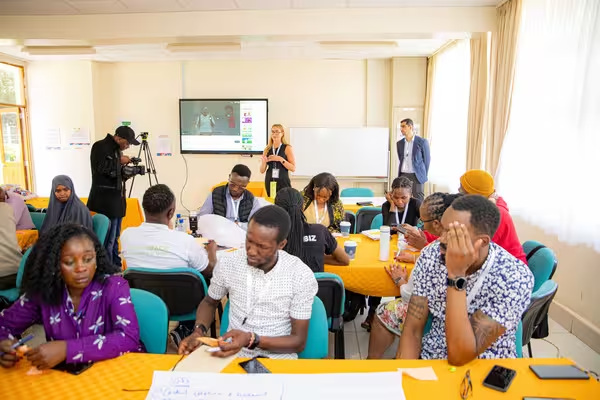
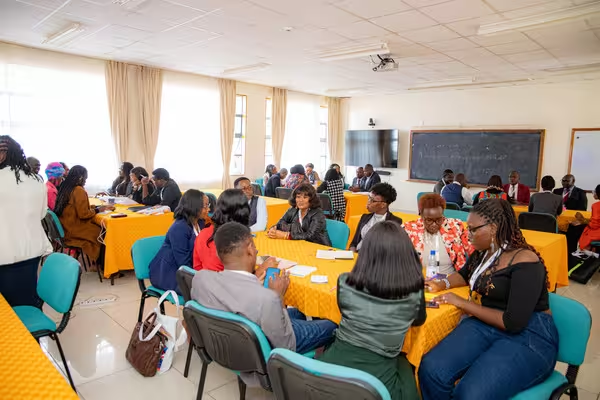
    One of our first steps was to launch a monthly community meetup—an open, informal space where anyone working in or curious about EdTech could come together. What started as a gathering of a few people in an office grew into a well-attended monthly event that was hosted 10 times a year, and rotated between different themes, formats, and hosts.

    These convenings have become a pillar of our collaboration infrastructure—a place where people meet potential partners, share lessons learned, and surface collective challenges. These monthly gatherings morphed during Covid-19 when we could no longer gather in-person – to online discussions, the EdTech Mondays Kenya television show (in partnership with Mastercard Foundation) and into national and regional EdTech summits that bring diverse stakeholders together. We’ve deliberately created multiple ways to engage and low-barriers to entry, allowing for a diverse mix of voices, from startup founders to teachers to ministry officials.

    2. Making Knowledge Accessible

    We realized early on that information asymmetry was holding the ecosystem back. Many local innovators didn’t know what donors were funding. Policymakers didn’t have access to timely data on what was working in classrooms. Startups couldn’t find research that could guide their design.

    To address this, we started curating and sharing ecosystem intelligence on our community platform, EdTech Baraza: reports, funding opportunities, events, and key policy updates. We also created a monthly newsletter, EdTech Jalada, that helps people stay informed. While not flashy, these efforts have created a shared knowledge base that others can build upon.

    3. Fostering Cross-Sector Dialogue

    EdTech doesn’t live in a vacuum. Real change requires coordination between government, civil society, the private sector, and educators. But these groups often operate with different incentives and languages.

    We’ve made it a priority to bridge these divides—organizing policy dialogues, roundtables, and collaborative workshops where stakeholders can come together on neutral ground. Sometimes that means translating between “tech-speak” and “education-speak.” Other times it means simply creating a safe space to surface tensions and find common ground.

    Through this work, we’ve helped foster shared language and frameworks that make cross-sector collaboration smoother and more productive.

    4. Modeling Collaborative Leadership

    Perhaps most importantly, we try to model the collaborative values we promote. This means being transparent about our process, actively crediting the contributions of others, and inviting shared ownership of our platforms. 

    When we organize events, we invite others to co-design and co-host with us. Importantly, we do not try to “own” any convening. We believe this right belongs to the full community, and it is something that we encourage others across the ecosystem to do, even using our brand and tools. 

    When we create tools and frameworks, we invite our partners to co-create, use and adapt how they wish. When we receive a request outside our scope, we refer it to someone in the community who’s better suited to respond. This has helped build trust and reciprocity, which are the glue of any collaboration infrastructure.

    5. Co-Creating with the Community

    We don’t assume we know what the ecosystem needs—we ask. Many of our initiatives have emerged directly from community input. Our partnerships with government and donors are rooted in years of relationship-building and listening.

    For example, we are working with EdTech ecosystem builders in Rwanda, Ethiopia, Tanzania and Uganda through our Regional Community of Practice to create shared EdTech impact and measurement frameworks that create shared language and understanding, facilitating interoperability across the region. This co-creation mindset ensures that our infrastructure serves real needs, not just organizational goals.

    Lessons Learned

    Building collaboration infrastructure is slow, relational work. It doesn’t always come with flashy metrics or instant results. But over time, we’ve seen its power. Some of the most promising EdTech partnerships and initiatives in Kenya today trace their origins to an EdTech East Africa event, WhatsApp thread, or introduction.

    Here are a few lessons we’ve learned:

    • Consistency beats intensity. A steady rhythm of engagement builds more trust than occasional big events.
    • Neutrality is powerful. Acting as a convener without an agenda allows people to lower their guard.
    • Small tools can make a big difference. A shared platform or group chat can be the backbone of coordination.

    Collaboration is a competency. People need support in learning how to work well across boundaries—we can’t assume it comes naturally.

    Looking Ahead

    As EdTech becomes more globalized and data-driven, the need for strong local collaboration infrastructure is only growing. We see our work as part of a broader movement to reimagine what ecosystem leadership looks like—less about control and more about connection.

    In the years ahead, we plan to deepen our role as a backbone organization for the EdTech ecosystem in East Africa. That means continuing to convene, connect, and co-create—but also investing in the next generation of ecosystem builders who can carry this work forward.

    If you’re building something similar in your own context, we’d love to learn with you. Because while infrastructure may be invisible, its impact is not. Collaboration is how we move from isolated efforts to shared progress.

    Let’s build together.

    Interested in partnering, learning more, or replicating some of our models? Reach out to us at info@edtech-eastafrica.com, join EdTech Baraza, or follow our work on LinkedIn, X, Instagram and Facebook.
  • The State of Competency-Based Education in Kenya

    By Mo Nyarinda

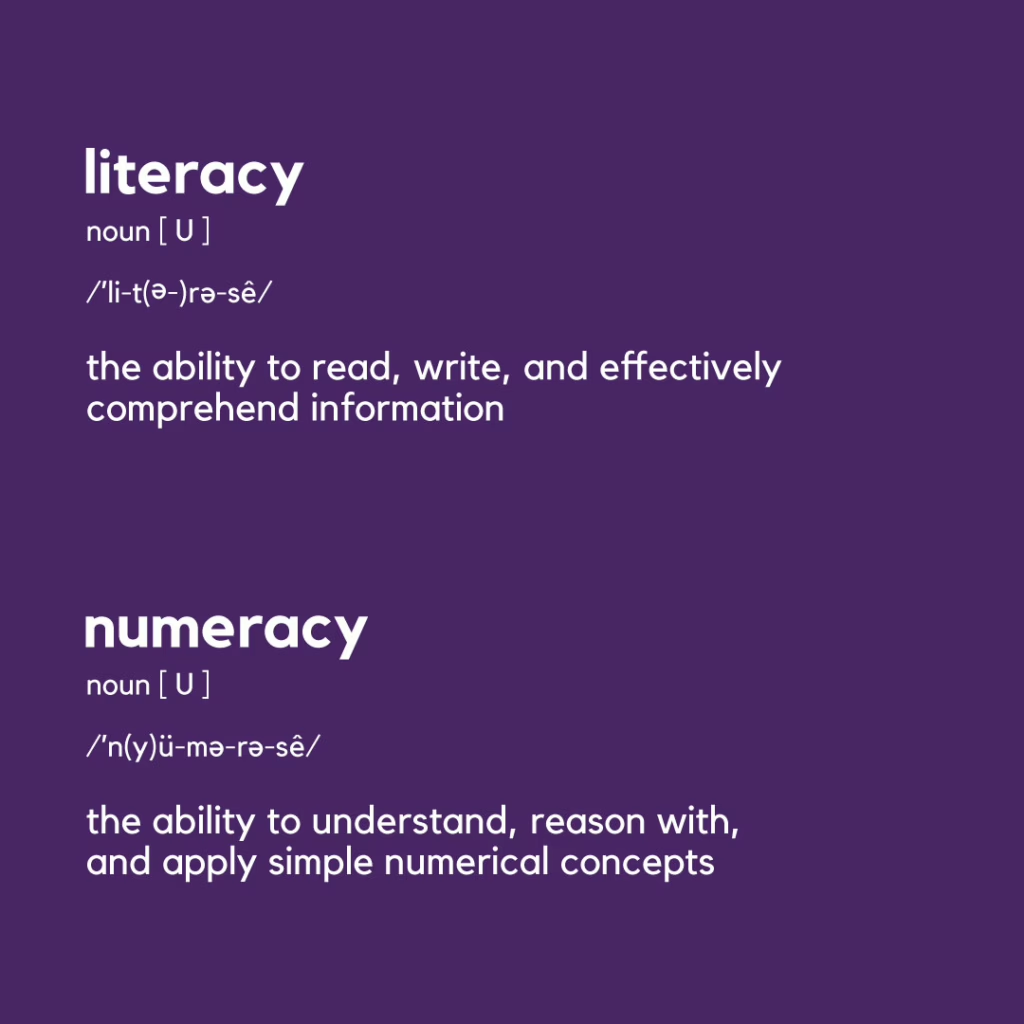
    On the 29th of April 2026, the Daily Nation ran a front page story “State’s shocking admission on CBE“ sharing some statistics from the Grade 3 National Assessment System for Monitoring Learner Achievement (NAMSLA) report. The NASMLA study released by the Kenya National Examinations Council reveals that nationally, only 41.4 percent of Grade 3 learners met the English Literacy benchmark while 26.8 percent met the numeracy skills benchmark of 50 percent.

    The data further shows the stark disparities by region, with West Pokot, Isiolo, and Turkana County counties having the lowest percentage of learners attaining the English literacy benchmark, and Marsabit, Busia, and Vihiga Counties recording low performance in Mathematics activities. According to the study, schools in informal settlements, refugee host counties and those that focus on age-based special needs education also had the lowest number of learners meeting foundational learning requirements. 

    These findings match the Usawa Agenda’s 2nd Foundational Literacy and Numeracy Assessment (FLANA) Report titled Are All Our Children Learning? which documents that learners in refugee community schools have significantly lower learning outcomes compared to those in public and private schools. The survey conducted across the 47 counties in Kenya found that “35 in 100 Grade 6 learners cannot read and comprehend a Grade 3 appropriate English story” and that “foundational numeracy learning outcomes have stagnated” between 2023 and 2025.   

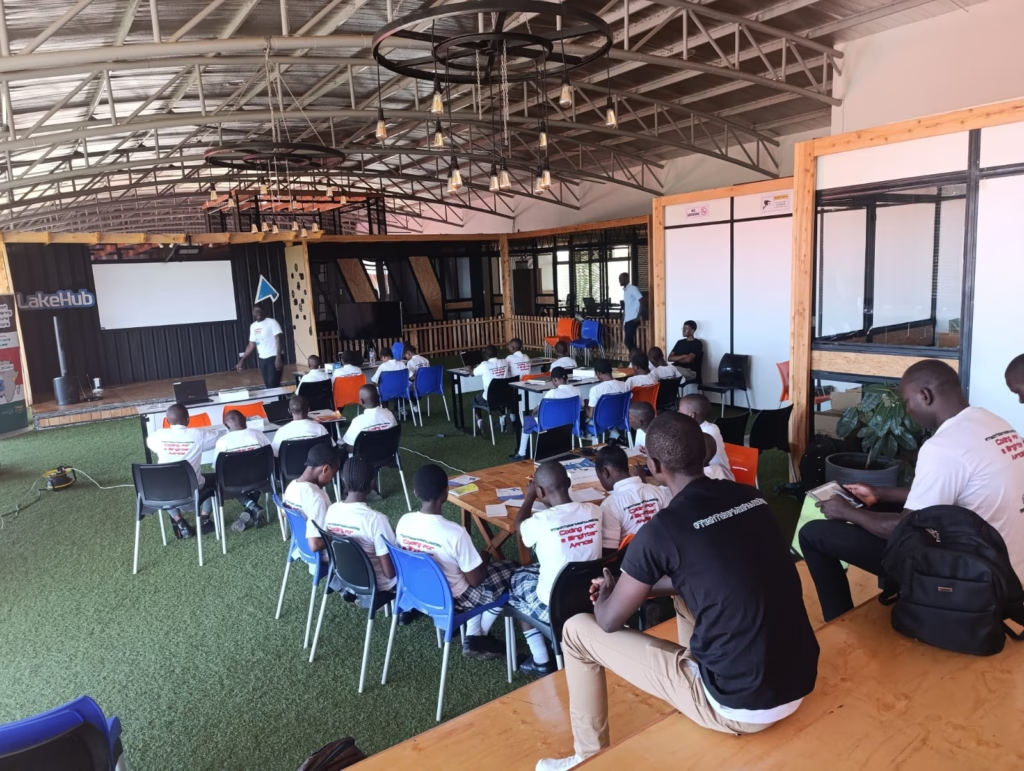
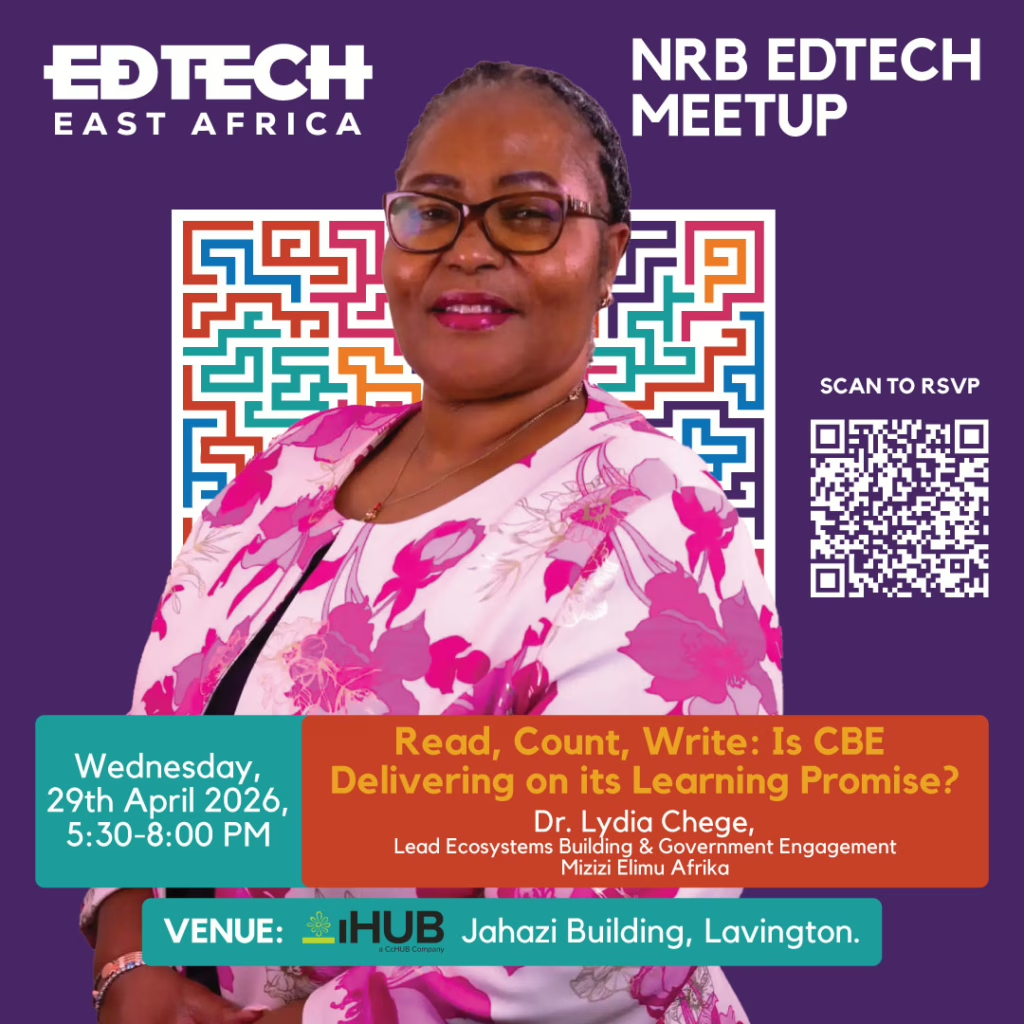
    EdTech East Africa hosted the NRB EdTech Meetup on Wednesday, 29th April 2025 under the theme ‘Is CBE Delivering on its Learning Promise?’ Well, in terms of access to education, the FLANA report indicates that 95 out of 100 children are in school. The facilitator of the meetup, Dr. Lydia Chege, who’s the lead ecosystem building and government engagement at Mizizi Elimu Afrika started by asking participants a very simple question: How many numbers can you count on your fingers? I said ten, another person said so many! I am still figuring out how many we can as part of the task she gave us. 

    This quick exercise set the tone for the session which involved panelists from different organisations sharing their perspective on learning in the digital age and how EdTech can effectively support all learners to read, count and write. The panelists were Winnie Ongiri, the head of operations at Signvrse who shared the importance of inclusivity in education through the use of sign language for deaf learners; Emily Kathini, a teacher that shared on the need for personalised assessments for teachers to understand their learners’ needs better; and Christopher Maingi, a Mathematician and parent of a neurodivergent learner who called for EdTech developers to create early intervention plans that can enable parents to prepare learners with different abilities for school.

    The Next Steps for Stakeholders in Education

    There was consensus that indeed competency-based education (CBE) is facing several implementation challenges. At the NRB EdTech Meetup, a space for education innovators and stakeholders to meet for peer learning and exchange of ideas, the attendees shared some of the solutions that need to be replicated widely, or introduced in education for learners to improve their foundational literacy and numeracy outcomes. These include:

    • Teachers integrating technology in classrooms –  according to the FLANA report, the current national average on the uptake of ICT use in education is 47.4 percent. Teachers can continue to use EdTech in the classroom by using visual aids to improve retention, audio stories for better listening and comprehension, and the use of multi-sensory approaches to engage learners with different learning abilities
    • Capacity building – there needs to be continuous training of teachers to use EdTech tools in classrooms, and as tools that can reduce the time spent in administrative tasks so they can focus more on learners needs 
    • Increased parental engagement – parents need to be more proactive about their children; supporting them at home for effective learning and managing screentime especially for fun 
    • Introduction of adaptive assessment methods for different learners – there needs to be an early identification system which can detect learning challenges and propose assessment methods that accommodate every learner e.g. learners who struggle with written exams but are very good at oral exams or use of devices 
    What EdTech Developers and Educators Can Do 

    Education technology if deployed in school and used correctly can unlock better learning outcomes for learners. In order for this to be successful, EdTech developers should involve end users, mainly learners, teachers and parents at every stage of their design process, and test the tools with them so that they build user friendly tools. They should also apply universal design principles and accessibility considerations for all learners to benefit from, especially those with special education needs. See this practical Equity and Inclusion Toolkit developed by iHUB for educators, technologists and designers.

    Educators on the other hand should stay open to EdTech integration in schools, acknowledging that tools are not replacements for the human-teaching expertise. Both educators and EdTech innovators can also take advantage of EdTech summits, EdTech meetups and education conferences to showcase their products and be exposed to current working technologies in education. The 3rd Annual Educational Assessment Symposium by KNEC is one such event happening in Nairobi this 4th-8th May 2026 where both government and other education stakeholders are convening. Ultimately, if there are enough teachers per student in each grade, and if teachers tracked learner’s performance continuously, interventions can be introduced to ensure that foundational learning proficiency is attained by each learner by the time they complete primary education in Kenya.

    Join the next NRB EdTech Meetup on Wednesday, 27th May 2026. More details can be found on EdTech East Africa’s social media pages.

  • EdTech Summits: Where “Event” Ends and Systems Change Begins

    By Jennifer Otieno

    Let’s be honest. The mere mention of a “professional event” often conjures images of fluorescent lights, lukewarm coffee, and an endless parade of PowerPoint slides that could lull a rock to sleep. We’ve all been there – dutifully exchanging business cards while secretly dreaming of our comfy couch and a good Netflix binge. But what if I told you there’s a different kind of gathering, one where the energy is palpable, the ideas flow freely, and you actually leave feeling energized, not drained?

    Welcome to the world of EdTech East Africa’s summits.

    At EdTech East Africa, we’re not just organizing “events.” We’re cultivating communities, sparking connections, and driving tangible change. And while some might casually lump us in with the usual conference crowd, our sentiment analysis data from past summits tells a very different story. So, let’s dive into why our summits are anything but typical.

    Beyond the Buzzwords: Crafting a Co-Created Vision

    Typical conferences often feature a lineup of “thought leaders” dispensing wisdom from on high, leaving attendees to passively absorb information. While there’s value in expert insights, we believe that true innovation stems from collective intelligence. Our summits are designed as dynamic spaces for co-creation, where every voice is heard and valued.

    Our sentiment analysis consistently highlights participants’ appreciation for the “inclusive” and “participatory” nature of our summits. Phrases like “I felt my ideas mattered” and “it was inspiring to build something together” pepper the feedback. This isn’t just fluffy feel-good rhetoric; it translates into concrete outcomes. For instance, our recent Kenyan summits have been instrumental in co-creating a shared vision for EdTech in Kenya. Imagine a diverse group of educators, innovators, policymakers, and learners, not just discussing challenges, but actively designing solutions and pathways forward. This collaborative spirit ensures that the vision is not just aspirational, but deeply rooted in the realities and aspirations of those it serves.

    From Anecdotes to Evidence: Influencing Policy with Real Impact

    One of the biggest frustrations with traditional events is the often-nebulous return on investment. You network, you learn a few things, but does it actually move the needle? For us, the answer is a resounding yes, especially when it comes to influencing policy.

    Kenya’s ICT in Education and Training Policy 2021 is a critical framework for the future of learning in the country. Our summits have become a vital feedback loop for this policy. Through structured discussions, breakout sessions, and direct engagement with Ministry of Education officials who are active participants (not just passive observers!), we gather rich, qualitative and quantitative data. This isn’t just a handful of opinions; it’s a collective voice, rigorously analyzed through sentiment tracking and thematic analysis.

    Our data provides irrefutable evidence for the Ministry of Education, showcasing not just what’s working, but also identifying critical gaps and areas for improvement in the policy’s implementation. Participants consistently express how “empowering” it is to contribute to national policy, with many noting that their feedback was “taken seriously.” This direct line of communication and evidence-based input is a stark contrast to the often-indirect and anecdotal feedback mechanisms available through typical channels. We don’t just talk about policy; we actively shape it.

    The Secret Sauce: Deepening Relationships and Addressing Power Dynamics

    Perhaps the most significant differentiator of our summits lies in our intentional focus on deepening relationships and addressing inherent power dynamics within the EdTech ecosystem. Typical events often reinforce existing hierarchies, with prominent speakers holding court and attendees vying for fleeting moments of their attention.

    Our sentiment analysis reveals a strong appreciation for the “level playing field” and “genuine connections” fostered at our summits. We proactively design activities and structures that encourage peer-to-peer learning and mentorship, breaking down barriers between established players and emerging innovators. Feedback often highlights the “unexpected collaborations” and “supportive environment” that leads to more meaningful and sustainable partnerships.

    We believe that true systems change isn’t just about sharing information; it’s about building trust and fostering a sense of shared purpose. By creating spaces where power dynamics are acknowledged and actively mitigated, we empower a broader range of actors to contribute, leading to a more robust and equitable EdTech ecosystem. It’s not about who has the biggest platform, but about who is willing to build together.

    More Than Just a “Talk Shop”: Real Action, Real Community

    Ultimately, what truly sets EdTech East Africa’s summits apart is that they are not mere “talk shops.” They are catalysts for action. The energy, the connections, the co-created vision, and the evidence-based insights all converge to mobilize our community to take collective action.

    Our summits are designed to be dynamic and engaging, fostering a sense of belonging and shared purpose. We’ve replaced the stiff formalities with interactive workshops, vibrant discussions, and opportunities for authentic networking. The goal isn’t just to disseminate information, but to ignite passion, inspire collaboration, and empower individuals and organizations to drive positive change in the East African EdTech landscape.

    So, the next time you hear about an EdTech East Africa summit, don’t picture another boring conference. Imagine a vibrant gathering where ideas collide, relationships flourish, and the future of education in East Africa is actively being shaped, one energized conversation at a time. It’s an experience that’s anything but typical, and frankly, a whole lot more fun.

    Join us for the 2026 Regional and National EdTech Summits! Please direct partnership inquiries to sally@edtech-eastafrica.com.

    Jennifer Otieno is the Co-founder and Executive Advisor of EdTech East Africa.

  • A New Chapter for EdTech East Africa

    Ciku Mbugua Appointed as the Chief Executive Officer

    Today is a momentous day for EdTech East Africa–one filled with gratitude, excitement, and a profound sense of optimism for the future.

    After 11 years of visionary leadership, our CEO and Co-founder, Jennifer Otieno, has passed the baton to the incredible Ciku Mbugua. Ciku is a purpose-driven leader with over a decade of experience advancing social innovation and education transformation across East Africa. She brings a deep commitment to building equitable, technology-enabled learning ecosystems that empower communities and unlock opportunity. Ciku holds an MSc in Public and Urban Policy from the University of Glasgow and is an Acumen East Africa Fellow. To support this transition, Jenn is stepping into the Executive Advisor role where she will continue to share her invaluable experience, institutional knowledge and strategic guidance.

    “I am deeply honored to take on this role and lead the incredible EdTech EastAfrica team into this next chapter. I believe that this moment, more than ever, calls for more local ownership, knowledge sharing and collaboration if we are to reap the gains of integrating technology in our education systems. I am privileged to lead an organization that is at the forefront, building the ecosystem infrastructure required to capitalize on all the expertise education stakeholders bring to the table. Jenn and Missy have laid a great foundation that we are very excited to build upon.” Ciku said.

    In 2014, Jennifer Otieno and Missy Mwendwa embarked on a journey driven by a shared passion: to harness the power of technology to transform education across East Africa. Over the past eleven years, EdTech East Africa has blossomed under Jenn’s stewardship. We have witnessed monumental growth in Kenya, and expanded our reach in Uganda, Tanzania, Rwanda, and beyond. What started as a small gathering of passionate educators and technologists has evolved into a thriving ecosystem of innovators, policymakers, investors, and educators, all united by a common goal to transform education. We have seen groundbreaking EdTech solutions emerge, impactful policy dialogues, and an undeniable shift in the educational landscape, powered by the collective efforts of our members.

    “While stepping down from the CEO role is bittersweet, I am incredibly excited for this next chapter, both for myself as Executive Advisor and for EdTech East Africa under Ciku’s leadership,” Jennifer said. “I’ve had the privilege of working closely with Ciku for years, and I have absolute faith in her vision, her strategic acumen, and her profound understanding of our community’s needs.”

    Ciku Mbugua has been an integral part of the EdTech East Africa journey for many years, most recently as a Board Member and a Partner through EdTech Hub, where she has consistently demonstrated exceptional leadership, a deep understanding of the EdTech landscape, and an unwavering commitment to our mission. She brings a wealth of experience, a fresh perspective, and an infectious energy that perfectly positions her to lead EdTech East Africa into its next phase of growth. Her strategic insights, strong community ties, and proven ability to execute will be instrumental as we continue to expand our impact across Africa.

    In her capacity as CEO, Ciku’s focus will be exploring new avenues for impact, deepening our community engagement and ensuring that EdTech East Africa remains at the forefront of educational transformation. Ciku is passionate about further democratizing access to quality education through technology, empowering teachers to be digital champions, fostering regional collaboration, and amplifying the voice of African EdTech innovators on the global stage.

    Join us in welcoming Ciku Mbugua to EdTech East Africa and celebrating Jenn’s remarkable legacy. Our future as an organization is bright, and we are thrilled to embark on this next chapter with all of you. Here’s to a future of continued collaboration, innovation, and educational transformation!

    Congratulations Ciku Mbugua!

  • Reimagining Classrooms in Kenya’s Frontier Counties

    By Hillary Atindah

    A Facilitator’s Reflection on the Teachers’ Town Hall

    Hillary Atindah at the Town Hall session

    My work as a teacher trainee in Kenya’s frontier counties like Marsabit, Turkana, Samburu, Wajir, Isiolo and Garissa, has taught me to appreciate the deep resilience and innovation that pulses through classrooms.

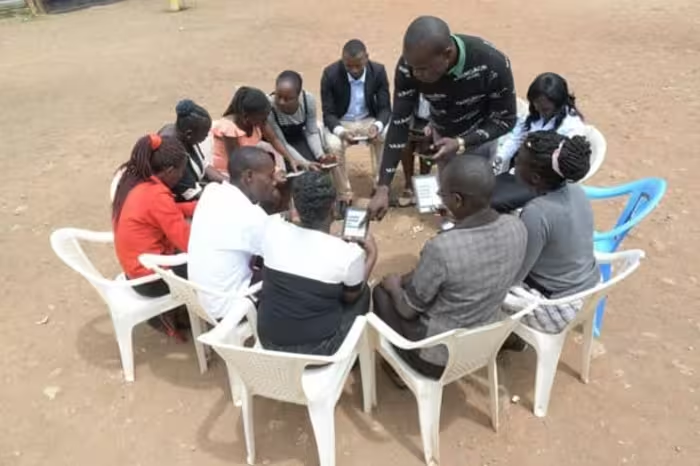
    Frontier counties, for context, are geographically remote, economically marginalized regions bordering neighbouring countries in the Eastern and Northern parts of Kenya. These areas often face insecurity, harsh terrain, poor infrastructure, and historical underinvestment in education. Many schools lack basic facilities, reliable internet, and trained teachers. Yet amid these challenges, teachers are creating extraordinary impact, building learning environments with grit, love, and resourcefulness. I facilitated the Teachers’ Town Hall at the Frontier Counties EdTech Summit and witnessed these stories firsthand. The dialogue was deeply grounded in lived realities. Teachers from the North Eastern region took centre stage, and their voices echoed a truth we must all reckon with: change is already happening; we just need to pay attention. The discussion areas prompted teachers to share their challenges and thoughtful integration of technology in the classrooms. The discussion areas were:

    • Teachers as designers “Tech it your way”
    • Teachers as Researchers “Evidence Speaks”
    • Teachers as Policy Shapers
    • The Missing Piece: Parents
    • The Urgency and need of Social Emotional Learning: Aligning Mind, Heart, and Action

    Teachers as Designers

    Mr. Jamal Aden (Boystown primary and Junior school) shared how he restructured his lessons around limited electricity hours and learner availability. He runs outdoor literacy sessions in the early morning and uses storytelling circles to teach comprehension and critical thinking. His digital lessons are supplemented with printed materials produced using a community printer borrowed from a local youth group. 

    Lokho Daki (Garissa primary and Junior School) described repurposing old mobile phones into basic learning tools; pre-loading them with Kiswahili songs and digital readers for learners with no access to textbooks. It was a reminder that design in frontier regions means working with what you have, not what you wish you had.

    Teachers as Researchers

    Asha Yussuf (Iftin primary and Junior school) shared how she began tracking the performance of her lower primary students after introducing hands-on learning using bottle tops and stones to teach counting and addition. Within three weeks, she recorded a 30% improvement in comprehension and retention among struggling learners or time takers.

    She didn’t have a research grant or formal training in data analysis. What she had was curiosity, intentional tracking, and a desire to improve outcomes. In regions where academic research rarely reaches, teachers like her are leading bottom-up learning innovation-gathering, interpreting, and acting on evidence every day.

    Round table discussions during the Town Hall in Garissa

    Teachers as Policy Shapers

    Several educators from the frontier region questioned why they’re often excluded from policy development, especially regarding Competency-Based Education (CBE) reforms and digital learning strategies. One teacher asked,

    “Why are tech tools and CBE materials designed in Nairobi without input from those of us in the field?”

    Their call was clear: policies should be co-created with the people implementing them. Frontier teachers are not just implementers—they are frontline strategists, with critical insights on what works in low-resource, culturally complex settings.

    Parental Involvement

    Family engagement emerged as a critical, often overlooked factor. In the frontier region, low parental literacy and cultural barriers can distance families from school life. Garissa Primary and Junior School  is innovating by engaging parents during market days through community leaders and local radio. Another is using translated visual guides to explain CBE concepts to parents and caregivers. Teachers are stepping into new roles not only as educators but as mediators between home and school. Their message was powerful: if we want better learner outcomes, we must bring parents into the learning journey.

    The Urgency and Need for Social-Emotional Learning

    One of the most urgent and moving conversations happened when I asked, “How do we expect learners to perform when they come to school carrying emotional pain we never ask about?”

    For many educators in the frontier region, Social-Emotional Learning (SEL) is still an unfamiliar term but a deeply familiar need. Learners in frontier areas face trauma from drought, conflict, displacement, and early marriage. Teachers themselves navigate burnout, isolation, and systemic neglect. We must prioritise more structured SEL sessions  for both learners and teachers because true education goes beyond academics. It nurtures the mind (cognitive development), the heart (emotional well-being), and action (behaviour, empathy, and resilience). Embedding SEL into daily practice through check-ins, reflective storytelling, and peer support could transform classrooms into spaces of healing, not just instruction.

    My Take Away

    This Townhall made one thing clear: the classroom is not broken, it’s evolving in ways we can all learn from. Technology is only part of the equation. The real innovation lies in teacher agency, community connection, and context-specific design. The sooner we recognize frontier teachers as designers, researchers, and policy actors, the faster we move toward equitable, transformative education.

    Let’s stop prescribing solutions and start building trust with those already solving problems.

    Hillary Atindah is a Digital Literacy and Education Equity Advocate who believes that every child deserves an opportunity to thrive in an increasingly digital world. Connect with Hillary on LinkedIn.

  • Is EdTech in Kenya a Necessity or Privilege?

    Kenya has ‘forgotten’ education challenges which are often exposed when disaster strikes, take for instance the floods of April – May 2024. The news was awash with stories of destroyed classrooms, flooded classrooms and learning crises caused by the rain. According to The Impact of 2024 Deadly Floods on Schools research report, 1,967 schools were damaged, and 62 primary schools submerged by water as of May 2024. Resulting consequences of this was closure of schools, a directive by the government,  to protect learners from the floods, and risk of waterborne diseases. Apart from the state of the classrooms, there is the problem of teacher shortages, underfunding in education, curriculum changes and the very high cost of living to mention but a few. With such limited resources, recurring problems and competing priorities, why do we need education technology (EdTech)? Shouldn’t we solve the infrastructural and capacity issues we face before jumping to EdTech?

    I have travelled to the Coast, Central and North Eastern regions of Kenya attending the Pwani Regional EdTech Summit, Central EdTech Summit and the Frontier Counties EdTech Summit respectively, to find some answers to a few  conflicting questions: do we need EdTech in Kenya?  Is EdTech for the privileged? How do we bridge the gaps in education in Kenya?

    Contextualised Problems and Solutions

    In the first half of the year that I have spent engaging with key stakeholders in education in Kenya—teachers, learners, EdTech innovators, Ministry of Education representatives, development partners, local and international non governmental organisations—I have learnt that all education problems cannot fit in one basket. While some policy and infrastructural issues such as inadequate funding, lack of inclusivity, inadequate teacher professional development, policy issues plague all the Coastal, Central and North Eastern regions I have been to, some problems are specific to certain areas thus it is critical to address them at the local level and find sustainable solutions that work. 

    At the Pwani Regional EdTech Summit, the priority issues raised include but are not limited to increased school drop out tendencies for both boys and girls, low literacy levels, and child sextortion while in the Frontiers Region, systemic exclusion by the government, and cultural norms and stereotypes are the barriers to education. In the Central region, tech  integration in education systems was discussed more keenly with reference to the National ICT Survey statistics placing household laptop ownership at 9.3 %, and internet registration at 7.1 % as contributors to the digital divide in Central Kenya. So how can the Ministry of Education (MoE) tackle these education challenges and provide long term sustainable solutions for all learners in Kenya?

    First, I acknowledge that the government is not and cannot be an independent actor when it comes to education sector challenges. Different organisations and actors are developing sustainable solutions and creating impact in public schools in underserved communities in Kenya which I’ll dive into in a bit. This is achieved by ecosystem building organisations like EdTech East Africa, who gather education stakeholders in the same room through the regional and national EdTech Summits to discuss EdTech in Kenya, strengthen regional EdTech collaborations and form communities of practice for people to go about their work with shared knowledge and best practices. The summits are curated to give voice to teachers during the Teachers’ Townhall, to generate evidence and data that can influence policy in the ICT in Education and Training Policy (2021) public participation sessions and to showcase innovative, locally-driven solutions for inclusive digital learning via the Demos and Workshop sessions.

    My favourite session to attend in all the three summits has been the policy dialogues where participants are separated in groups to discuss and present their findings on a) equity and access, b) ICT for educators c) research and innovation, and d) digital safety and well being. The key take away in this session led by the Directorate of ICT in the Ministry of Education for me is always the varied responses on the implementation of the ICT in Education and Training Policy (2021). The session is designed to get responses on what’s working, what’s not working, what can be improved to leverage technology usage in Kenyan classrooms, and proposed solutions to transform education. I am often awed by how the government providing laptops and tablets to schools is both the thing that works and the thing that does not work in the three regions I have gone to. On the surface, providing these digital devices for learning is the first step in making EdTech in Kenya accessible. However, lack of internet bundles or even the entire internet infrastructure in rural areas, lack of electricity, resistance to EdTech adoption, maintenance costs of devices, ratio of ICT trained teachers to school population and competing home priorities are a major hindrance to adoption of EdTech in learning.

    I also enjoy the Themed Teachers’ Town Hall  which is an open conversation facilitated by a teacher on “Empowering Educators as Innovators in EdTech.” It is a dedicated space for teachers to locate and centre themselves in the EdTech conversation. The facilitator starts by asking open ended questions and passing the microphone to teachers. Usually, teachers highlight how they solve problems with local EdTech solutions, how they integrate technology in classrooms both as innovators and users, and how they monitor and evaluate the impact of EdTech solutions in classrooms. In a room full of EdTech entrepreneurs, the Ministry of Education, learners and development partners, teacher voices are critical as they are on the ground with learners, choosing what works best for their classrooms and driving EdTech usage or not. The importance of teachers in the EdTech ecosystem cannot be understated; they provide insightful feedback in real time to EdTech Practitioners attending the summit on their willingness to integrate new innovations in the classroom, their challenges with EdTech courseware and suggest any improvements that can be incorporated to make the EdTech solutions better for maximum impact.

    Is EdTech Necessary?

    On our drive to Garissa for the Frontier Counties EdTech Summit, I counted about four schools and saw many girls of school-going age walking around. They were either escorting donkeys to waterpoints or taking care of other younger children and I suppose helping their families with other chores. At a police checkpoint in Tana, more than seven girls approached our bus to ask for water bottles for storing milk. I thought and voiced this to one of the summit attendees I was travelling with, “This is so unheard of in my village in Kakamega. Every child of school-going age is in school and if they aren’t any neighbour will ask and report to the area chief for them to handle the matter.” At the same time, I also recognised that in my home area, there is some form of stability and our way of life is agriculture. Compared to the nomadic lifestyle, it is definitely a huge ask to expect learners in school when their families are moving in search of pasture, food and water. I think the realisation that EdTech is indeed a necessity happened for me at that time. 

    I had been privy to Learning Out Loud Workshop sessions hosted by several organisations during the EdTech summits such as LEWA Conservancy and their offline learning solutions in areas prone to human-wildlife interaction. The LEWA Education Programme uses Physics Education Technology (PHET Labs) to offer interactive science and math simulations that mimic real-world lab experiments. By using this technology, teachers in rural schools (where involved) have overcome lab equipment shortages and achieved practical learning outcomes for learners improving engagement and performance in science exams. I had seen NABU showcase how they create culturally relevant books and distribute them on a free mobile app with the goal of improving foundational learning. I had seen robotics and AI presentations in a modern world and I had seen the work of Pwani TeknowGalz in empowering girls to stay in school. But, I had not seen EdTech’s relevance yet in low-resource areas, until I saw the three girls from Mbaikini Girls Secondary who won the World Robotics Olympiad and until I saw a number of out of school girls on a weekday and thought of EdTech as an intervention.

    Transforming education in Kenya is possible and in alignment with Sustainable Development Goal 4; ensure inclusive and equitable quality education and promote lifelong learning opportunities for all. EdTech in Kenya should not be exclusive to a select few who can afford it, nor should it replace traditional learning systems but complement it as a holistic approach to education. There is a growing need for digital learning to be adapted, especially post COVID-19 pandemic, which can be done through co-creating solutions with local communities based on evidence and data, encouraging ownership of EdTech innovations and implementing policies that work and fit in the digital era. As these shifts happen, we need proper classrooms, well stocked libraries and posting of teachers in schools all over Kenya to improve learning outcomes. And if ballot boxes can reach all public schools that serve as polling stations during general elections, surely education infrastructure can be improved in all schools.

  • Enhancing Online Safety for Children: Lessons from Jesse Soleil’s Experience

    Enhancing Online Safety for Children: Lessons from Jesse Soleil’s Experience

    By Mariana Kemei

    “My wife and I were sitting on the couch when our daughter burst into tears. Our immediate question was, ‘What’s wrong?’ After some probing, we discovered that some of her classmates, who were supposed to be her friends, were making inappropriate advances toward her on social media. When I asked to see what they had written, I was shocked by the profane language aimed at my 13-year-old daughter,” said Jesse Soleil.

    This heart-wrenching moment was a turning point for Jesse, sparking his mission to protect children online. According to UNICEF, while the Internet offers opportunities for children to stay connected with friends and explore their interests, it is not always a safe space. As children grow up as digital natives, it becomes essential for parents, educators, and society to assess how prepared they are to navigate the dangers that come with this connectivity.

    The web offers vast educational resources, entertainment, and social interaction, but with it also come significant risks—cyberbullying, exposure to inappropriate content, and potential encounters with predators who disguise themselves as peers.

    Jesse’s experience inspired him to create Akili TV, a platform that combines entertainment with valuable lessons on online safety. He recognized the need to communicate with young people in a language they would understand and embrace, using engaging content to teach them how to protect themselves in the digital world.

    Open Communication: The Key to Online Safety

    One of the most effective ways to safeguard children online is by fostering open communication. Parents should cultivate an environment where children feel safe discussing their online experiences without fear of judgment or punishment. When children encounter something inappropriate or troubling, they should feel comfortable sharing it with a trusted adult.

    This open dialogue also allows parents to better understand who their children are interacting with online. Rather than imposing harsh judgments, parents should focus on listening and guiding, ensuring their children feel supported.

    Setting Boundaries and Guidelines

    In addition to communication, setting clear boundaries regarding technology use is essential. Parents should establish rules around screen time, supervise their children’s browsing, and select apps or websites that are appropriate for their children. By guiding children toward verified, child-friendly platforms, parents can reduce the likelihood of exposure to harmful content.

    Educating children about the importance of privacy is equally crucial. They need to understand why they shouldn’t share personal information—such as their full name, address, or school—with strangers online. Social media accounts should be set to private, and children should only accept friend requests from people they know in real life.

    Speaking to delegates during this year’s EdTech Summit, Jesse shared a clip from Flash Squad, a teen series that explores the challenges young people face online. In one episode, a high school student clicks on a suspicious link, leading to his accounts being hacked and harmful messages sent to his contacts. Through relatable stories like these, Jesse conveys the importance of online safety in a way that resonates with young viewers.

    Modeling Responsible Behavior

    Children learn more from what they see than what they are told. While parents often instruct their children on responsible online behavior, they must also lead by example. If parents post inappropriate content or disregard privacy, their children are likely to follow suit. By modeling responsible behavior, parents set the standard for their children’s digital conduct.

    Using Technology to Monitor and Guide

    Parents should also stay actively involved in their children’s online activities by using apps that allow them to monitor browsing history and social media interactions. However, it’s important to strike a balance between monitoring and allowing children to develop independence. As children mature, parents should gradually shift the responsibility of safe internet use onto their shoulders, teaching them how to manage their online presence responsibly.

    Collaborative Efforts for a Safer Internet

    While parents play a crucial role, they cannot tackle online safety alone. Technology companies must prioritize child-friendly platforms, like YouTube Kids, and implement more robust parental controls. If more platforms followed this model, it would offer parents greater control over the content their children are exposed to.

    Schools also play an important role in educating children about online safety. By incorporating lessons on digital literacy and responsible online behavior, schools can equip children with the tools they need to navigate the internet safely.

    Governments, too, have a part to play by enacting policies that protect children’s privacy and regulate age-appropriate content. Effective legislation can ensure that technology companies adhere to strict standards regarding data protection and online content for minors.

    Jesse’s unfortunate experience with his daughter’s online bullying ultimately became a catalyst for change. Through Akili TV and programs like Flash Squad, he has helped countless children learn how to stay safe online. His story reminds us that while the internet offers incredible benefits, it also requires vigilance, communication, and collaboration to protect our children.

    Online safety is a shared responsibility. By working together—parents, educators, technology companies, and policymakers—we can create a safer digital world for the next generation.

  • Community stories: Bridge Academies Foundation’s Journey to Achieving Education for All

    Community stories: Bridge Academies Foundation’s Journey to Achieving Education for All

    This EdTech challenge is part of our ongoing effort to crowdsource and showcase stories from the EdTech East Africa community. If you’d like your work to be featured, please email the editor at juliet@edtech-eastafrica.com

    Since opening its first school in Mukuru Kwa Njenga in 2009, Bridge International Academies has made incredible strides in addressing one of the world’s most pressing challenges—education for all. With a mission to tackle the fact that one in two children worldwide is not learning, Bridge has worked tirelessly to ensure that every child, regardless of background, has access to quality education. This vision has come to life in urban informal settlements and rural areas, where children face significant educational barriers.

    From the beginning, Bridge International Academies set out to provide an affordable, high-quality alternative to traditional public education. Today, the organization operates community schools across 30 out of 47 counties in Kenya, offering life-changing educational opportunities to children who would otherwise struggle to access learning. These schools are designed to provide education that equips learners with practical skills and real-world knowledge, empowering them for future success.

    Bridge’s approach to education is rooted in a powerful mission: to provide every child with a strong foundation that opens doors to a better future. To deliver high-quality education that is data-driven and evidence-based, the organization works closely with teachers, parents, and local communities.

    In pursuit of this mission, Bridge has re-engineered every aspect of the education system—from teacher training and lesson delivery to school construction, financial administration, and beyond. This commitment ensures that Bridge’s community schools are as effective, transparent, and accountable as possible. The results speak for themselves: independent exam results consistently demonstrate that Bridge schools provide a proven pathway to success.

    A key element of Bridge’s solution to the global education crisis is its data-driven, technology-enabled approach. Bridge has transformed lesson delivery and student progress tracking through digital learning systems. Teachers use tablets loaded with standardized, scripted lessons that guide each step of the learning process, ensuring that every student receives consistent, high-quality education, no matter which school they attend.

    Real-time data and analytics are integral to Bridge’s operations. By inputting student assessment results into the system, teachers and administrators can track student performance, identify learning gaps, and make informed decisions to improve outcomes. The technology also allows for content to be updated and tailored to meet the specific needs of each student, ensuring lessons remain relevant and effective.

    Teacher empowerment is at the heart of Bridge’s model. The organization invests heavily in continuous professional development, providing teachers with daily, expertly designed lesson plans and regular instructional coaching. This support ensures that teachers are equipped with the pedagogical skills and classroom management techniques they need to succeed, allowing them to focus on what they do best—teaching and inspiring their students.


    Bridge’s data-driven decision-making further ensures that the organization is always improving. Daily data collection on student attendance, assessment results, and teacher performance helps to track progress, identify challenges, and implement targeted interventions where needed. Whether addressing underperforming students or schools, this data allows Bridge to make real-time adjustments to enhance learning outcomes.

    The scalability of Bridge’s model is another key achievement. Designed to work in diverse settings—from densely populated urban centers to remote rural areas—Bridge’s approach ensures that quality education is accessible in both high- and low-density environments. The use of technology enables Bridge to expand its reach without compromising on the quality of education provided.

    Looking ahead, Bridge remains committed to being a global leader in education research and innovation. The organization aims to contribute to the global knowledge of what works in low-resource education settings and continues to improve educational outcomes for children in the world’s most underserved communities. Bridge is focused on ensuring that even more children from underserved areas gain access to the same high-quality education offered in its schools—education that prepares them for success in a rapidly changing world.

    Bridge’s journey is far from complete, but every step forward brings the organization closer to realizing its vision of education for all. As it continues to innovate and grow, Bridge is more committed than ever to its mission of transforming education and empowering the next generation.

    Grace Mbugua, the Director of Communications for Bridge Kenya & Uganda, submitted this story.

  • Strong Collaborations to Build Robots and Rural Futures at the TechTober Mashujaa Day

    Strong Collaborations to Build Robots and Rural Futures at the TechTober Mashujaa Day

    By Juliet Awuor

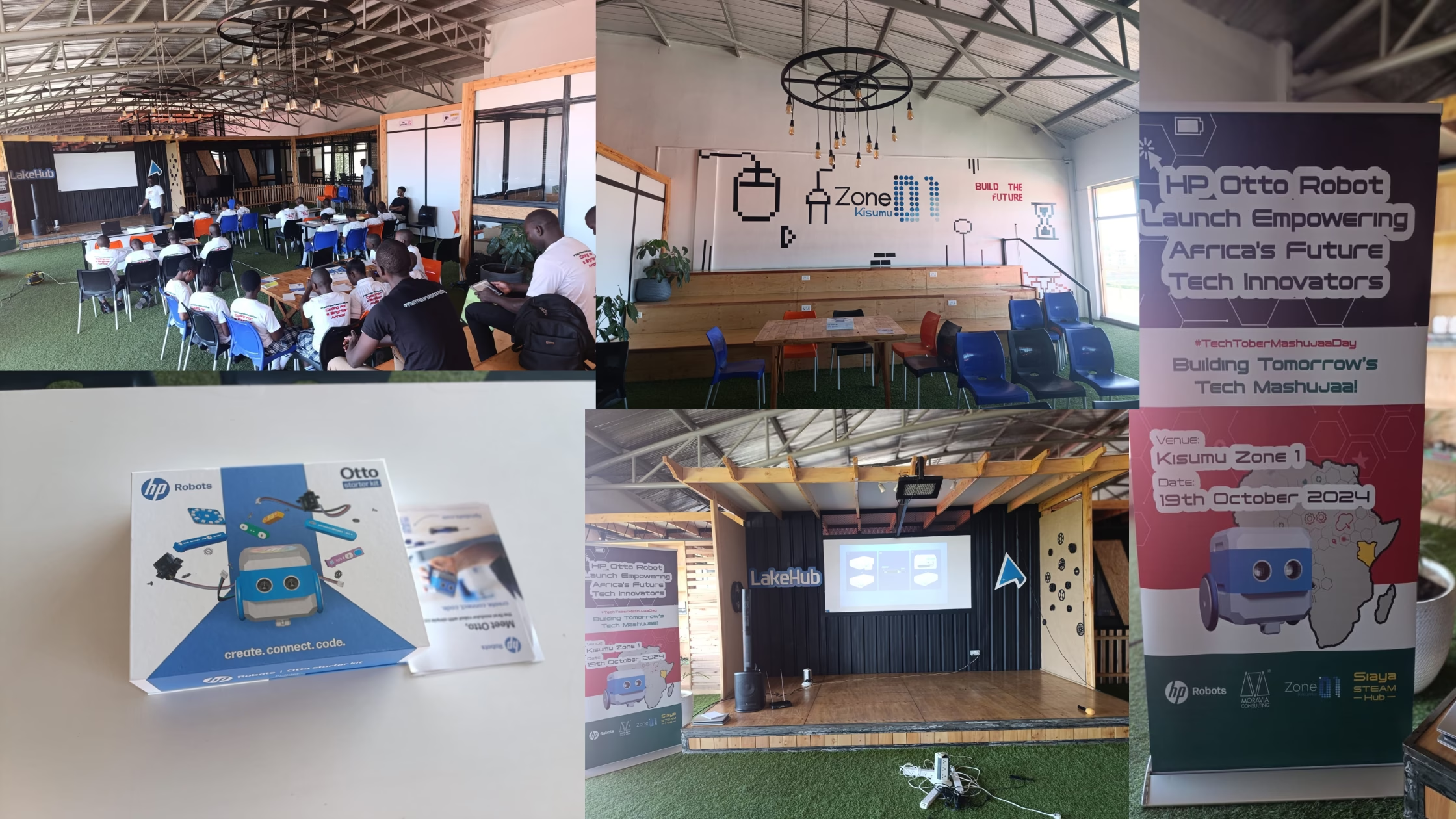
    “You want to go fast; go alone; but if you want to go further, go with others.” This powerful philosophy came to life during the #TechToberMashujaaDay event held on Saturday, October 19, at Zone 01 in Kisumu. Organized by Siaya STEAM Hub, led by Moses Okoth, and supported by HP Robots, this exciting event brought together primary and junior high school learners to explore the world of robotics.

    Each group of 6–8 students received a box of unassembled parts and was tasked with assembling an Otto Robot. Using computational thinking, design thinking, and critical thinking, the students worked collaboratively, learning to follow provided instructions, solve problems, and build confidence in STEM-related skills.

    “Technology is advancing at a supersonic speed internationally,” said Moses Okoth. “In agriculture, for example, people are using drones and apps to improve yields. Yet here in Kenya, many students are still learning traditional farming methods through the same old agricultural clubs.”

    Agricultural clubs have long played a crucial role in Kenyan schools, teaching students the fundamentals of farming, sustainability, and food security. These clubs instil valuable skills such as patience, responsibility, and an understanding of natural cycles—knowledge that remains essential in an agricultural economy like Kenya’s. However, as global agriculture evolves with technology, there is a need to modernize these clubs to better prepare students for the future.

    Integrating emerging agricultural technologies into school programs helps students gain hands-on experience with modern farming tools. For instance, agricultural clubs could introduce drone-based crop monitoring, precision irrigation systems, smart greenhouses, and mobile apps that analyze soil health. These innovations would make learning more engaging and equip students with the knowledge needed to bridge the gap between traditional and modern farming practices.

    By blending tradition with technology, agricultural clubs can continue to nurture young agripreneurs while embracing innovations that enhance efficiency and productivity. Instead of replacing traditional farming lessons, technology can complement them—equipping students with the skills needed to become future-ready agricultural leaders in Kenya and beyond. And where better to introduce technology-driven learning than in rural areas, where agriculture remains the primary source of livelihood?

    Through hands-on activities like assembling the Otto Robot, Moses hopes to inspire a new generation to embrace STEAM (Science, Technology, Engineering, Arts, and Mathematics) subjects. He emphasized the value of letting students figure things out for themselves, guided by an instruction manual with every robot kit.

    This event marked the first time HP Otto Robots were introduced in Kenya. Moses partnered with Jan Patloka, the product manager at Moravia Consulting in the Czech Republic, to make this dream a reality. Initially sceptical, Jan admitted, “When Moses reached out to introduce Otto Robots to Kenyan schools, I thought it was a joke. But after months of communication, I trusted his strategy.”

    Jan expressed optimism about expanding the use of Otto Robots in Kenyan schools. “We look forward to introducing the Otto Robot in more schools—not all, but some,” he added.

    The Otto Robot is specifically designed to be user-friendly for STEM education. Its inclusion in the #TechToberMashujaaDay event showcased its potential to impact how Kenyan students learn technology and robotics significantly.

    Jan also donated Virtuali-Tees from Curiscope to the schools in attendance. A Virtuali-Tee is a T-shirt designed to make learning about the human body interactive and immersive. Using augmented reality (AR) technology, the shirt works with a mobile app to create a virtual experience where users can explore organs, systems, and anatomical structures in 3D. Scanning the T-shirt with a smartphone or tablet, students can see inside the human body, interact with different organs, and engagingly learn about their functions. This innovative tool is useful for educators looking to make biology lessons more hands-on and visually captivating. The learners, together with their teachers, had fun testing the technology.

    The event also introduced many, including myself, to the vibrant tech community at Zone 01 in Lake Basin Mall. This co-working space hosts various technology-related events, providing a platform for innovation and collaboration in Kisumu. Collaboration remains a core value for us at EdTech East Africa, so we had to respond to Moses by supporting his event.

    As we reflect on the success of this event, it’s clear that partnerships and community efforts can spark meaningful change. The team of volunteer teachers, Moses Okoth, and international collaborators like Jan Patloka exemplify the spirit of going further together.

    The #TechToberMashujaaDay event was a step forward in empowering Kenyan students to dream bigger and prepare for a tech-driven future. Here’s to many more opportunities for learners to build, innovate, and thrive in STEAM fields!

  • How Artificial Intelligence Can Improve Learning Outcomes in Kenyan Classrooms

    How Artificial Intelligence Can Improve Learning Outcomes in Kenyan Classrooms

    By Fidelis Makhambala

    The introduction of free primary education in 2003 and other interventions led to an increase in the number of learners enrolled in Kenyan schools.  The current primary school population stands at 10.4 million in both private and public primary schools.    

    Such a large enrollment comes with its challenges. They include inadequate infrastructure, teacher shortages, large classrooms, dropouts, inadequate psychosocial support, and addressing children with special needs.

    Artificial intelligence (AI) can be used to address some of these challenges in education today and improve learning outcomes.  

    Limited Internet Connectivity

    Africa has the widest gap in connectivity, with 23 percent of the population lacking access to a mobile broadband network. In Kenya, some areas are seen as commercially unviable and remain underserved in terms of internet connectivity. This disparity helps perpetuate inequalities among communities.

    M-Shule is an example of an EdTech platform that leverages AI and SMS technology. It provides personalized learning content to primary school learners in Kenya in places with limited internet connectivity through SMS.

    Teacher Shortages and large classes

    As of 2023, there was a shortage of 111,870 teachers.  The global teacher shortage has brought about pressure on school systems, such as overcrowded classrooms, overworked educators, increased inequality in education, and financial pressure. Apart from delivering content to learners, the teacher has several administrative activities. The Teachers Service Commission has 18 professional documents that a teacher is required to maintain. 

    AI can automate some processes to free the teacher to concentrate on teaching and supporting learners. Hodari is an app that allows the teacher to grade, make lesson plans, and carry out administrative tasks. 

    Overcrowded classrooms usually lead to less effective teaching methods and reduced individual attention and guidance to learners. AI can be used in digital assistants to engage with students individually, answer questions, and break down difficult concepts. One such tool is somanasi accessible through a single mobile platform. 

    Reducing dropout rates 

    UNICEF estimates that 1.3 million Kenyan children of primary school age are out of school. AI can detect learners who are likely to drop out of school.  Using predictive analytics, AI can scrutinize factors such as attendance, academic performance, socio-economic background, and behavior patterns and offer early warnings about students in danger of falling out of the formal education system. This allows educators to intervene before disengagement ends in dropping out.

    Economic hardship is a barrier to education. AI offers a way to help schools target support where needed most. By analyzing socio-economic data, AI can identify students at risk of dropping out due to financial challenges and recommend resources like scholarships, meal programs, or other forms of assistance.

    School violence in the form of harsh discipline, physical fights, social exclusion, and the spreading of rumors affects children’s ability to learn effectively. Victims and witnesses of these forms of school violence have a higher chance of missing classes, performing poorly, and dropping out of school. 

    Emotional AI-driven chatbots and mental health apps such as Chat Care can provide students with immediate support and resources to address mental health challenges. Developed by the Kenya Red Cross Society, it provides discreet psychosocial support addressing sensitive issues that may affect learners. It is available 24/7 on various digital platforms.

    Inadequate Teacher Training:

    AI-powered platforms can create customized training for teachers, addressing their specific learning needs. By assessing a teacher’s existing skills, knowledge gaps, and subject expertise, personalized professional development plans can be crafted.

    As teachers progress through training modules, AI systems provide instant feedback, helping them refine their understanding of new teaching methods. For instance, if a teacher struggles with classroom technology integration, AI can suggest resources and practical tips.

    These platforms can deliver bite-sized training sessions that fit the teacher’s busy schedule. These focused modules cover specific skills, such as digital assessment tools or project-based learning techniques.

    Nyansapo AI is an example of a platform that provides teachers with AI-powered tools and resources to help them develop foundational literacy and math skills among learners.

    Provision of Resources for Special Education Services:

    An inclusive education system recognizes that learners have different learning styles and needs. Customizable learning paths can be achieved using AI, such as somanasi, to assess student progress and adjust the curriculum. A student struggling with a topic is offered alternative teaching strategies or resources to reinforce understanding.

    Assistive technology is crucial in improving access to education. Knock Knock is a gadget that captures different sounds from the environment and translates them into visual and vibratory alerts for individuals with hearing loss.

    The Future

    In Kenya, AI could revolutionize teaching, elevate learning practices, and serve as a lever for achieving Sustainable Development Goal 4 of quality education for all. As UNESCO mandates, AI should be human-centered, and inclusive, one that narrows rather than widens existing divides in access to knowledge and cultural diversity.