In the world of education technology, collaboration is a necessity. With 250 million children worldwide out of school, the urgency for effective solutions cannot be overstated. When children lack access to quality education during critical developmental stages, they risk falling behind for life.
Cooperation among government agencies, development partners, tech infrastructure providers, innovators, and civil society has led to evidence-based policymaking and more effective methods for testing and scaling innovations. The evolving landscape necessitates the establishment of vibrant EdTech communities, such as the EdTech East Africa ecosystem. This community is important for the development of deliberate information sharing among stakeholders. Technological advancements, social issues impacting learning, evolving government policies, and emerging research findings underscore the need for all participants to be engaged and informed.
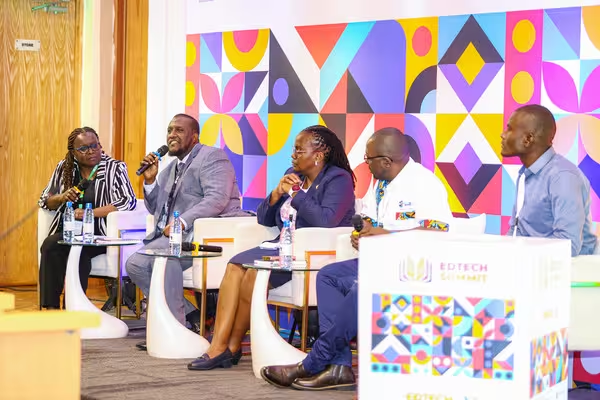
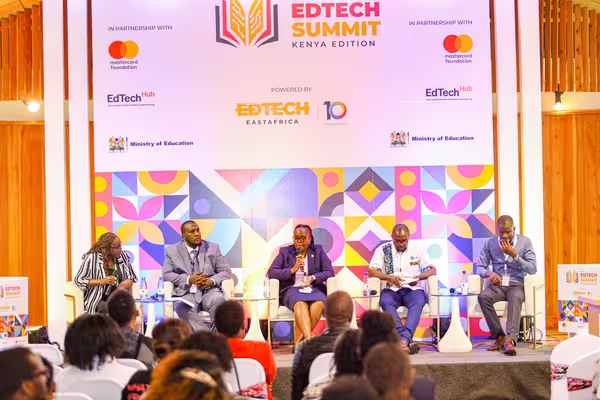
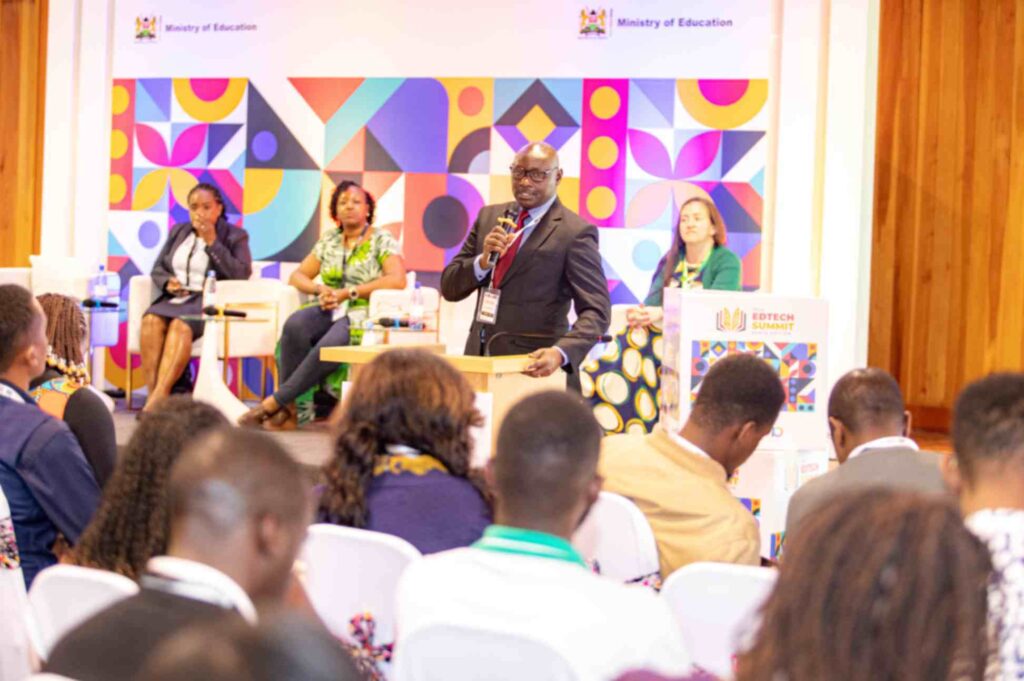
The EdTech ecosystem facilitates the exchange of research and field insights, improving alignment between innovation and the implementation of educational interventions. Stakeholders are more inclined to adopt new technologies when they can leverage proven models. For example, during the recent Kenya EdTech Summit, Mr. Barnabas Sang, ICT Director at the State Department for Basic Education, highlighted that the Ministry of Education is a primary source of learner and parent biodata through the National Education Management Information System (NEMIS). This data can be utilized by various players to design targeted programs within the EdTech sector.
Education technology extends beyond introducing the latest gadgets. It must be relevant to learners’ environments. In communities with nomadic lifestyles or in refugee settings, discussions around fixed infrastructure may not resonate. The challenges of building and maintaining infrastructure in remote areas often necessitate low-tech, portable, and homemade solutions. Interactions within the EdTech community can save time and resources while significantly improving educational outcomes.
For instance, lessons learned from the Kakuma refugee camp can inform strategies to enhance learning during emergencies. In Kajiado County, organizations like the Pastoralists Integrated Concerns Organization (PICO) offer flexible learning schedules for students who might otherwise miss out on education. These learners are later integrated into formal education once they can navigate longer distances to classrooms independently.
While governments bear the responsibility for providing infrastructure, partnerships with other stakeholders can enhance these initiatives. In Kilifi County, for example, IREX—a global NGO—is equipping girls in marginalized areas with essential skills in math, computer literacy, and design thinking.
Universal education requires that all voices within the ecosystem are heard. As technological and demographic changes occur, data informing current policies may quickly become outdated. In such scenarios, quick interventions supported by a collaborative framework are essential. For instance, relief organizations can swiftly implement emergency learning solutions during crises like drought or famine displacing communities.
Specialization within the EdTech sector creates fertile ground for innovation when diverse communities exchange ideas. Localized iterations under the direction of those with resources and expertise will be necessary to address the digital divide as technology develops. Deep engagement with these challenges is essential for developing competency in this area.
However, some entrepreneurs create technically impressive tools that are disconnected from local contexts, novelties rather than necessities. Inadequate infrastructure frequently makes this disconnect worse. Improving communication between innovators and the communities they aim to serve is crucial for addressing this problem.
Key players are responsible for weaving these disparate threads into a cohesive narrative. True collaboration involves breaking down silos to allow ideas to flow freely while tailoring technology and content to meet each community’s specific needs. The future of education, especially in developing regions, depends not on isolated innovations but on collective efforts.
In regions where resources are limited and social challenges complicate program implementation, effective solutions often emerge from unexpected places. For instance, in Machakos County, Kenya Connect’s initiative involving parents in their children’s education has been instrumental in fostering reading habits among learners. This grassroots approach is sensitive to cultural nuances and can be replicated elsewhere, but only if there is a willingness to share ideas and lessons across sectors and regions.
A clearer understanding of on-the-ground realities will guide all actors toward the shared goal of ensuring that no child is left behind.
Samuel Kiero is an MIG welder in Laval, France. His job involves welding high-speed train parts for the Trains à Grande Vitesse (TGV), a prestigious project that reflects his expertise and the quality of training. It is a well-paying job that requires European certification and is in high demand. A young welder, he is one of the 14 graduates of the Toolkit for Skills and Innovation Hub working in France.
Toolkit graduates like Samuel are in various industries across Africa and Europe, where his presence represents a significant breakthrough. For Toolkit, having a Kenyan welder like Samuel obtain a work permit and secure a job in Western Europe before leaving Kenya was a big accomplishment because of the stringent requirements. It demonstrated the global demand for highly skilled youth.
Creating flexible learning pathways makes technical and vocational education and training more appealing, offering students the freedom to transition seamlessly between education, training, and the workforce.
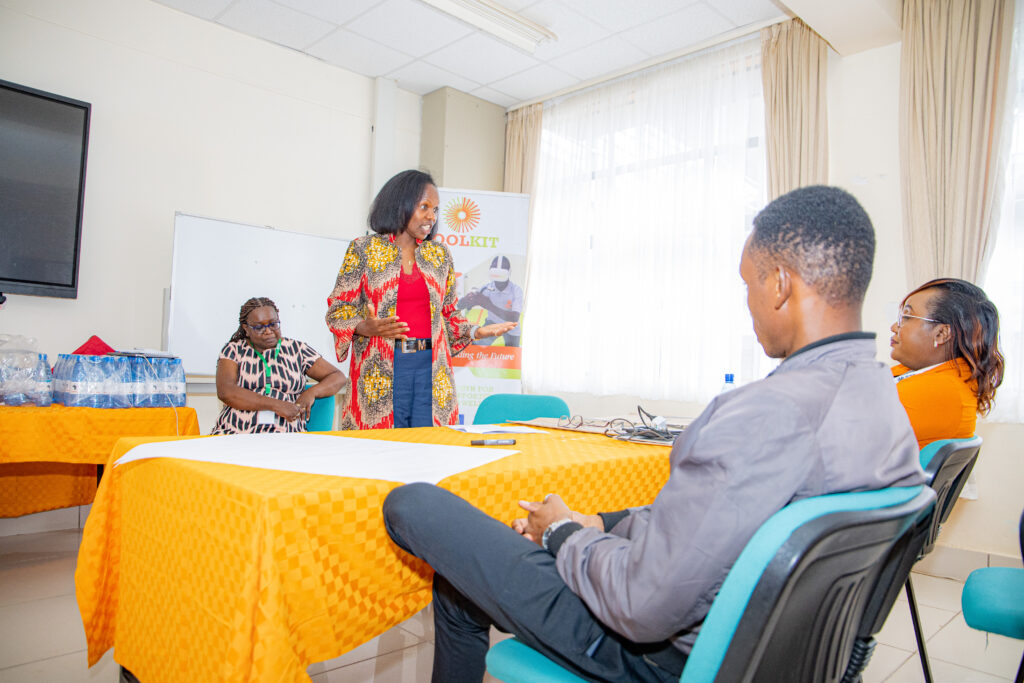
Headquartered in Kikuyu, Toolkit for Skills and Innovation Hub is a Kenyan social enterprise using technology to skill youth and women in cutting-edge trades, bridging the gap between unemployment and opportunity. It has smaller centers in Kakuma and Miritini, Mombasa. Toolkit’s mission is to transform the lives of disadvantaged youth. Technical and vocational education and training (TVET) enhance economic opportunities and social inclusion, helping to break the poverty cycle.
In 2014, Jane Muigai-Kamphuis founded Toolkit for Skills after developing the concept while working as an international civil servant in refugee camps.
Toolkit’s vision from inception was to elevate skilled African youth to the global stage. Africa, once viewed as a source of cheap labor, is now cultivating talent that can compete and thrive internationally.
Virtual Reality Welding: A New Approach to an Old Problem
Training in the welding industry in Kenya, especially in the informal sector, has long been inefficient, unsafe, and expensive. Welders often face a lack of proper training and safety measures, resulting in dangerous working conditions and limiting their opportunities for advancement. Enter Toolkit’s Virtual Reality (VR) technology for welding training.
VR’s immersive capabilities have revolutionized how aspiring welders learn. Instead of risking burns, eye damage, or material waste, trainees don headsets and enter a digital workshop. Here, they practice their skills in a risk-free environment, all while reducing training costs and accelerating the learning process. This cutting-edge approach has proved to be a game changer, particularly in Kenya’s Jua Kali sector.
Jane explains, “Where consumption of 3 pieces of 12-inch welding rods was considered adequate training for a full course due to cost, virtual reality has no limits. Our students use 60 virtual pieces a day. Welding a perfectly straight line is not as easy as it looks, and telling who has been practicing is not difficult.”
Allowing students to practice skills like MIG welding in a simulated environment enhances the training process, enabling young men and women to acquire certifications recognized globally, such as those from the American Welding Society and the EU, which makes them highly sought after across different markets.
Breaking Gender Stereotypes
In every country, certain groups of young people are more prone to unemployment than others, with females often facing significantly higher vulnerability compared to males. In a country where welding has traditionally been seen as a male-dominated field, Toolkit has been instrumental in challenging that notion. Many women, through Toolkit’s three-pronged strategy of life skills, high-tech training, and industry linkages, have secured jobs in welding—not just in Kenya but in places as far as Uganda, Rwanda, and Europe. The success of these women has sparked a wave of interest among others eager to take up MIG welding and prove that gender is no barrier to technical excellence.
Through these centers, Toolkit aims to rapidly skill young people, particularly young mothers, providing them with opportunities to secure decent jobs in a fraction of the time traditional education systems require. Toolkit’s use of technology is crucial, allowing students to access hands-on training that equips them for the workforce in a matter of months.
Jane explains how this short course works. “We can have that girl from Kangemi, a mother of two, who within two to two-and-a-half months becomes a MIG welder and gets a job with decent pay. She can feed her family.”
“She does not have the luxury of taking a diploma of one or two years. That is where the technology comes in. We believe that if we use the technology, we should be able to equalize the playing field for Africa’s learners,” she adds.
Scalability & Sustainability
Yet, even with these successes, Toolkit remains unsatisfied. ToLgolkit is now fine-tuning its methods to further condense training periods and ensure instructors are at the cutting edge of their craft. And as the world’s industries shift, so must the training programs—ensuring that graduates remain relevant, adaptable, and competitive.
The challenge of ensuring long-term success for trainees after their initial training was highlighted. Tracking their progress and ensuring sustained employment post-certification is critical, as is the potential expansion of partnerships with industries to guarantee job placements.
A recent meeting among various stakeholders, including representatives from organizations like Generation Kenya, GIZ, and Oxford University, gathered to discuss the framework for tech-skilling in Africa. This framework addresses key areas such as content, pedagogy, technology, and sustainability. It aims to ensure that training programs are aligned with national standards and the needs of the global job market.
Beyond Welding
There’s a clear interest in expanding this training model, especially in regions like frontier counties or underserved urban areas.
Toolkit’s influence extends far beyond welding. With training programs in solar installation, organic farming, and digital skills, the organization addresses Kenya’s pressing employment needs. From smart agriculture to CCTV installation,
Toolkit’s courses align with the demands of a modern economy, ensuring that the skills they teach are market-driven and future-proof. Not only does this foster job creation, but it also encourages entrepreneurship, with Toolkit offering mentorship and access to seed funding for graduates looking to start their ventures. Toolkit’s journey is more than just skill development. It’s about creating a future where Kenyan youth can access sustainable livelihoods and thrive in a competitive global market. With a firm commitment to empowering women, refugees, and vulnerable communities, Toolkit continues to lead the charge toward a brighter, more inclusive future.
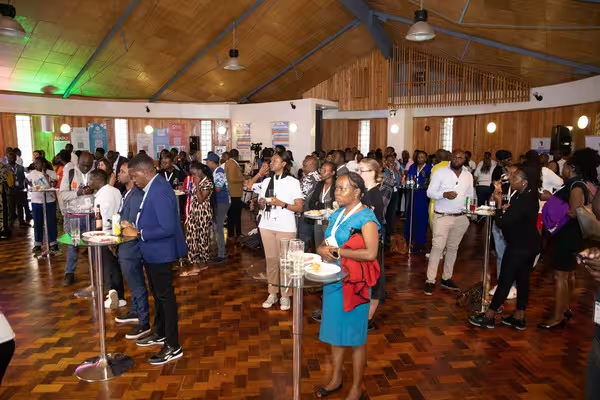
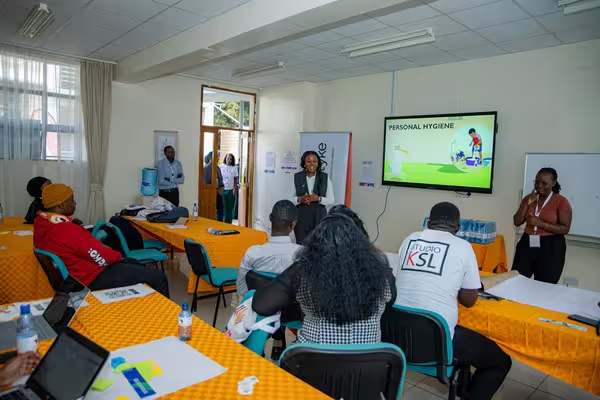
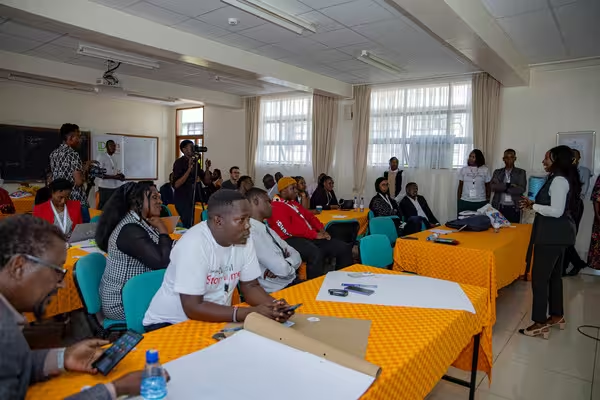
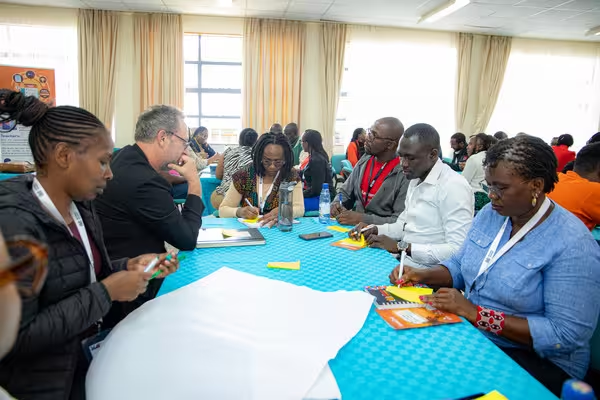
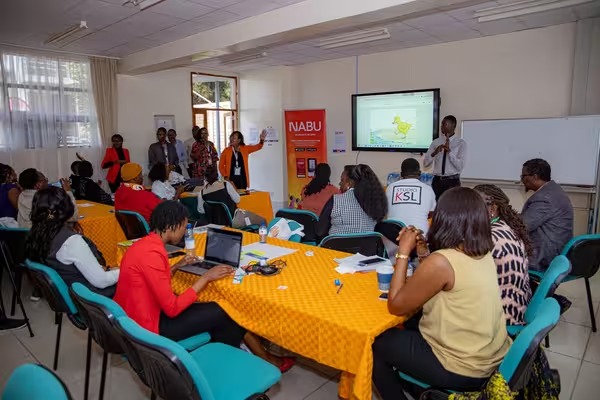
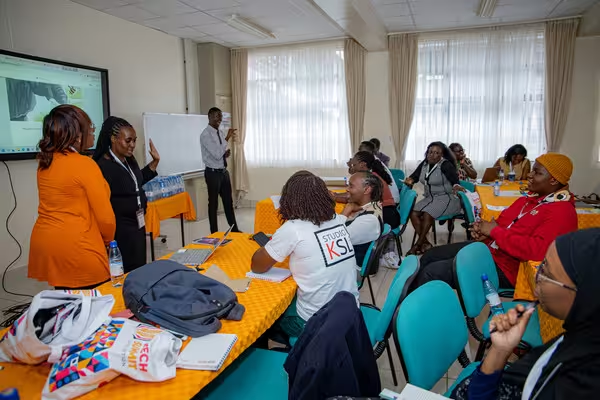
The annual EdTech Summit agenda includes breakout sessions curated with different learnings and case studies.
This year, two organizations in the EdTech ecosystem ran the demo sessions. iHub, which has an EdTech fellowship in partnership with the Mastercard Foundation, conducted the demo sessions for EdTech entrepreneurs.
These sessions provide a platform for innovators to showcase their educational technology solutions, allowing educators, administrators, parents, and tech enthusiasts to experience these tools firsthand and determine which ones best meet their needs.
As noted by Measured, live demos are among the most effective methods for demonstrating progress and gathering feedback. They enable participants to quickly grasp the functionalities and benefits of different products and services through direct interaction.
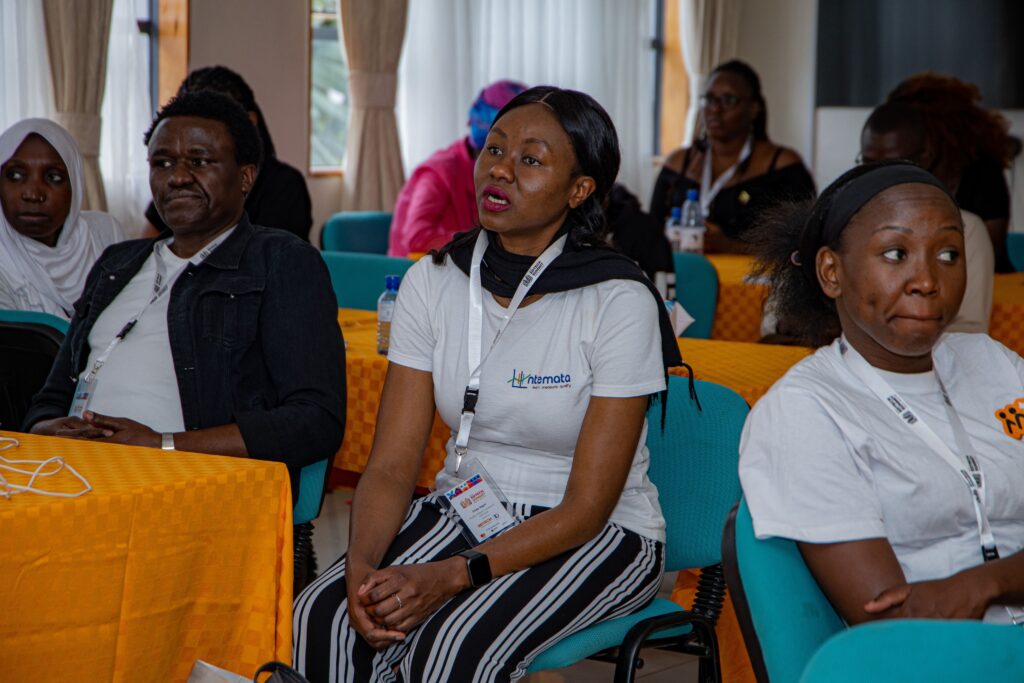
The EdTech entrepreneurs demoing their products were Somachat, Recess, Mzizi, Ntemata, Esoma Kids, and Kuze AI. These sessions highlighted several key benefits crucial to the growth and success of the EdTech ecosystem.
Throughout their presentations, each speaker paused to guide the delegates through the process of navigating the application, urging them to take out their phones and explore a specific feature. This hands-on approach not only made it easier for potential users to understand the technology but also fostered a deeper connection with the products.
Live demos present opportunities for immediate feedback. Participants have the opportunity to immediately ask questions, voice concerns, and offer suggestions. Lewis Njoroge from Mzizi, an online platform for school process automation, emphasized that these sessions offer invaluable real-time feedback from existing clients while also attracting new potential customers.
This interactive environment is critical for EdTech companies, as it allows them to address uncertainties and refine their solutions to better meet the needs of educators and students.
This was evident at this year’s EdTech Summit, where delegates raised pertinent questions, such as whether platforms were free or fee-based, the applicability of EdTech solutions across different education levels, and the capabilities of the technology in grading and standardization.
The phrase “seeing is believing” works well during these demo sessions. The tech companies gain the audience’s trust during these practical sessions. This transparency is essential in an industry where educators are often cautious about adopting new technologies without clear evidence of their efficiency.
Moreover, live demos are more engaging than passive presentations. They capture the audience’s attention by demonstrating real-time problem-solving, which keeps attendees actively involved. This higher level of engagement leads to better retention of information, making it more likely that participants will consider adopting the demonstrated technology.
Benta Otsyeno, a training coordinator with Nawiri, noted that the practical displays allowed her to see how different EdTech solutions work and helped her identify Somachat as a user-friendly option accessible to parents with smartphones despite their literacy level.
Decision-makers typically attend summits like this one in search of practical, implementable solutions. Therefore, these demos enable EdTech entrepreneurs to demonstrate the application of their technology in real-world educational settings, highlighting its relevance and effectiveness. This practical approach can significantly influence purchasing decisions.
Benta, for instance, pointed out that Mzizi distinguished itself with its Parent Engagement Platform, a feature that parents who frequently travel for work or have children in boarding school appreciate.
Lastly, live demos present opportunities for partnerships with other organizations. Many EdTech companies rely on collaborations to enhance their service offerings. For instance, Somachat collaborates with organizations such as Longhorn to supply standardized question papers, which it then uploads onto its exam and question banks for client use.
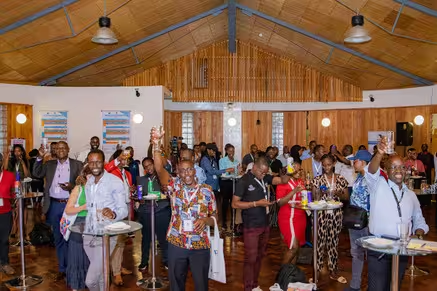
EdTech Summits offer a unique and valuable platform for EdTech entrepreneurs to network with other players in the EdTech ecosystem, either formally or informally. This year’s curation involved demo sessions to create a mutually beneficial environment for EdTech entrepreneurs and attendees.
These sessions go beyond merely showcasing products; they foster engagement, build trust, and create lasting relationships with potential clients, ultimately driving the growth and success of the EdTech ecosystem.
Franklin D. Roosevelt said: “To reach a port, we must sail—sail, not tie at anchor—sail, not drift.”
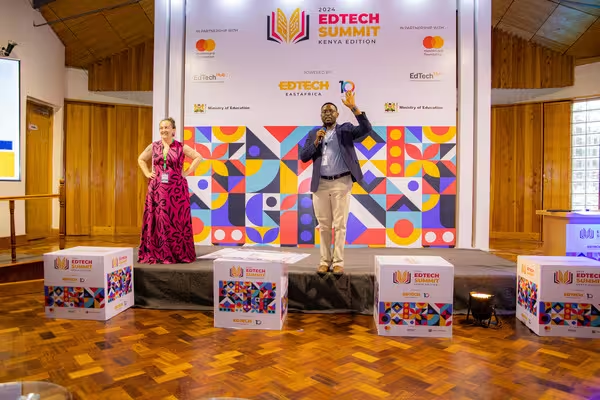
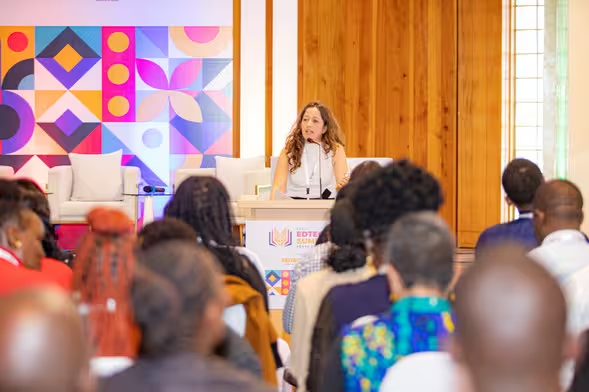
Speaking at the opening session of the EdTech Summit 2024: Kenyan Edition, organized by the EdTech East Africa Summit, Suraj Shah shared snippets about when EdTech East Africa first set sail 10 years ago.
As the Head of Strategic Partnerships and Thought Leadership at the Center for Innovative Teaching and Learning at the Mastercard Foundation, Suraj and other intrepid co-sailors have been paddling the oars driving EdTech Monday’s convos on NTV since 2020.
Suraj reflected, “The idea of EdTech Summits began with a conversation from EdTech Mondays, a program with the Mastercard Foundation. We demystified EdTech.” EdTech East Africa, congratulations on 10 years; you’ve been a wonderful partner.”
Mastercard Foundation is supporting the Young Africa Works goal of 2030. Their goal is to help 13 million young people in Africa, 70% of whom are young women, find meaningful and fulfilling work.
It was only appropriate that the last session of the two-day summit was about setting a 10-year collective vision. The session I attended was for learning leaders.
What is important for this team to include?
“I think after listening to the conversations and seeing the demos, there’s a lot of focus on children; there’s a lot of focus on content creation, but I haven’t seen deep thoughts on how the teacher will be supported,” one attendee noted.
“I believe that, even as development partners or creators, we have placed a lot of focus on the child, materials, and infrastructure, often overlooking the crucial role of the teacher in all this.”
Our innovations are endless, but where does the teacher fit in?
To make meaningful strides in the next decade, the teacher needs holistic support from all stakeholders. There is also a need to rethink designing resources to support teachers in technology, as well as retooling and capacity building.
Continuous sensitisation
Moses, a teacher from Siaya, emphasized the importance of sensitization in this EdTech type of communication and conversation. Moses clarified that his use of the term “sensitization” stems from the lack of training for school leaders. That’s because you’ll be teaching them from January to December.
“But you sensitize them to what their teachers are learning, helping them advance.”
When they go to school, the gatekeeper of any practice in a school is a school leader. We must therefore provide them with support.
Mindset
Addressing a mindset issue is also necessary. Someone mentioned that he was conversing with the teachers, suggesting that he would prefer to learn alongside the children due to their ease of understanding.
“But there is a mindset among teachers that suggests a child should not possess more knowledge than they do.” This is untrue, as our children can utilize technology to a greater extent than we do.
Several individuals observed that the younger generation embraces EdTech quickly, while the older generation takes longer to adjust to technological advancements. In many cases, the heads of institutions are older people. This poses a distinct challenge.
There needs to be a method to alter the mindsets of educators who are firmly entrenched in their practices. Should that mindset shift not occur, students will possess a deeper understanding of technology than their teachers.
Inclusivity
The issue of inclusivity warrants further investigation. Learners with special needs also want to learn and work with technology. However, we can only achieve this if we make deliberate efforts to devise solutions that not only address their unique personal situations, but also somewhat alleviate them.
Players in the EdTech space should keep in mind that there is a need for assistive devices for learners with special needs. This is a big challenge. Even the government is not able to provide equipment for learners with special needs across the board.
To use EdTech to produce inclusive, effective, and resilient learning, we must rethink accessibility. We must consider moving the EdTech ecosystem towards evidence-based, technology-enabled teaching and learning.
Succession planning
Succession planning was another issue that emerged. Teachers come and go. They transfer. Some leave the profession. Most of the time, a new teacher must start from the beginning. Yet, for instance, it took their predecessor years to carve their niche.
When this occurs, there are numerous gaps because there are no mentoring programs or succession plans. Ideally, school leaders, as well as those who have been on the job longer, should mentor young, aspiring school leaders. However, there are established programs for such problems.
Sustainability
The group discussed the issue of sustainability and efficiency. They noted that EdTech stakeholders must ensure that systems are more sustainable and efficient. This will assist, among other things, in identifying issues and making necessary corrections. before they become too late. Additionally, sustainability will help with resource allocation, preventing resource waste.
The research paper, EdTech Tools for Sustainable Practices: A Green Revolution in Education, highlights the rapid advancement of Education Technology (EdTech). EdTech offers promising opportunities for educational institutions to integrate sustainable business practices into their operations and curriculum. The integration of EdTech into sustainability education has emerged as a powerful tool to promote environmental awareness, foster sustainable behavior, and address the pressing challenges of climate change and resource depletion.”
Vision statement
Having a vision and mission for your EdTech startup is not only important for defining your goals and values but also for attracting and retaining your customers, investors, and employees. A vision statement describes the ultimate impact that you want to make in the world through your product or service, while a mission statement explains how you will achieve that impact.
As the education landscape continues to evolve, EdTech leaders face a multitude of challenges in meeting the needs of students, teachers, and parents. To navigate these challenges effectively, EdTech leaders need to have a clear vision and mission that align with the needs of the education sector.
Conclusion
Over the next ten years, learning leaders will be individuals who can effectively apply pedagogy. Ideally, these leaders should be capable of guiding all instructional practices and assisting learners in achieving specific academic milestones.
In 10 years, learning leaders ought to embrace inclusivity. When they depart an institution, they will leave personnel and systems that continue to succeed, if not do better.
The next decade’s learning leaders will “not tie at anchor,” but they will sail; they will not drift but sail to more ports.
It was Lillian Mutegi’s third participation at the Edtech Summit. This time, she had the opportunity to introduce participants to Uptyke’s unique products. It has been a long journey towards identifying and addressing the gap in the market—the lack of accessible content for learners with special needs.
“While working in curriculum development, I had a few encounters with learners who were abled differently, and I felt challenged and, to some extent, compelled to venture into this space,” she says.
According to UNICEF, disability is one of the biggest challenges to education worldwide. There are an estimated 240 million children with disabilities worldwide. In every country around the world, people with disabilities tend to have lower literacy rates compared to those without disabilities. This prevents them from getting involved in their communities, obtaining gainful employment, and having a say in important decisions that affect them.
Founded two years ago, Uptyke has been developing and publishing Special Needs Education material that includes tailored curriculum materials and interactive tools to help overcome barriers for learners with disabilities. Like most entrepreneurs, Lillian started with many assumptions but quickly learned that she needed to incorporate specialists who have worked with persons with disabilities.
“The journey has been challenging but also rewarding. Once I started seeing people buying and consuming our content and partners coming on board, I felt vindicated,” she says.
So far, Uptyke has partnered with the Mastercard Foundation, the International Publishers Association, Founders Factory Academy, and Innovate Now, to mention a few.
Benefiting from a Vibrant Ecosystem
Being part of the Kenya Edtech Summit has been of immense value. They spent the two years gathering insights, gathering data, and establishing connections with parents’ associations, teachers, schools, and development partners to test, refine, and promote ideas.
Uptyke also leveraged device manufacturers and distributors to preinstall the Uptyke app on these devices before distribution to schools. They have also been scouting regions to identify our regional champions who can now advocate for the app.
The recent Kenya Institute of Special Education Expo also helped. “On the first day, we had more than 100 contacts joining our waiting list,” she beams.
Working with organizations that support people with disabilities to find out the specific challenges faced by children with disabilities and their families in the community is the best way to create impactful solutions. When the app is ready, these individuals will become early adopters. Uptyke is expected to hire at least 250 people who have expressed interest.
Uptyke’s biggest challenge was obtaining funding to develop a portal to house content. With additional funding, Uptyke has onboarded more developers to create the learning management platform.
Her peers in the industry discouraged her, questioning why she chose to serve special needs learners when there was a large market with regular learners. Seeing the interest, passion, and excitement of the users as they interacted with Uptyke’s content was an affirmation.
Working with Innovate Now, Africa’s first assistive technology accelerator program, has been of immense benefit. They have helped Uptyke establish connections within the community of learners, parents, and stakeholders, in addition to giving them much grounding.
Lillian’s key lesson was to test assumptions as soon as possible. Her advice: “Assuming the idea will work is enough to kill your business because you’ll waste money on unneeded and inaccessible products. So for me, testing my assumptions is something I wish I had learned two years ago.”
Working toward Sustainability
Coming up with different revenue models helps keep the venture sustainable. In addition to serving the government, NGOs, and civil society, Uptyke Education has a subscription model for the schools and the parents. Another model is revenue share with device distributors.
In November, Uptyke will launch its platform. Teachers and experts will be able to curate their content on the platform. Looking ahead, Uptyke plans to target 1,000 learners in the next two years and grow to 100,000 users.
The UN Convention on the Rights of Persons with Disabilities champions inclusive education, and the translation of this ideal into reality remains a formidable challenge. To achieve this goal, there is need for continuous professional development for teachers to equip them with the requisite skills to cater to diverse learning needs. Equally important is the need to ensure the relevant government policies touching on access to education are fully implemented. This will make the work of content developers like Uptyke more impactful.
Ouma Katrina may not be a household name across the African continent, but for those in Southern Africa and among language enthusiasts, her name is a poignant reminder of the urgent need to preserve the Njuu language, South Africa’s oldest indigenous tongue. Like Njuu, many other African languages are critically endangered and face the threat of extinction.
African languages are a treasure of history, culture, and traditional knowledge. However, many of these languages are on the verge of disappearing due to globalization, cross-cultural marriages, urbanization, and the dominance of widely spoken languages such as English and French. According to Kapodgroup, Africa has over 2,000 languages, and losing one would erase unique cultural identities and worldviews.
The most endangered languages are often minority languages, spoken by less than 50% of the population in specific areas. This is why Ouma Katrina has been regarded as a national treasure in South Africa; she was the last remaining native speaker of Njuu following the deaths of her two sisters, Hanna Koper and Griet Seekoei.
Vambo Academy in South Africa was established to provide a platform for people to learn indigenous languages. They initially focused on Zulu, Shona, and Afrikaans. However, the COVID-19 pandemic prompted a shift from physical classes to online learning through Zoom, a transition that proved successful.
This transition laid the foundation for Vambo AI, born out of the increasing demand to digitize African languages. During this year’s EdTech Summit, Linah Kitala, Community Manager for Vambo AI, captured our attention when she reassured a delegate that AI could support his native language.
The conversation was sparked by questions from María José Ogando from AI-for-Education.org, who walked us through the current landscape of AI-Edtech products in Sub-Saharan Africa, highlighting the opportunities and challenges as technology continues to evolve. Speaking during this year’s Edtech Summit, Maria shared that AI educational products are expanding rapidly, but we are seeing a gap in quality assurance and AI benchmark datasets targeting the teaching and learning process.
Few EdTech startups have ventured down the path Vambo has chosen: preserving African culture through technology.
According to African World Initiatives, African languages lag in natural language processing (NLP), large language models (LLMs), and AI research, largely due to a lack of quality datasets. Maria acknowledged this as one of the challenges they face, stating that though AI educational products are expanding rapidly, there is a gap in quality assurance and AI benchmark datasets targeting the teaching and learning process.
Documentation is an effective method for preserving endangered languages. AI can play a pivotal role in recording and transcribing spoken languages, making it easier to create dictionaries, grammar guides, and other linguistic resources.
Kabodgroup recommends that written records, transcriptions, and recordings be created for every minority or endangered language to aid in their preservation. NLP tools can then be used to automatically transcribe audio recordings of native speakers, converting spoken words into text with high accuracy.
Another approach involves creating and maintaining large-scale digital archives of African languages, including audio recordings, texts, and cultural artifacts. These archives can be made accessible online, allowing people worldwide to explore and learn about these languages.
Many Africans have moved away from their native homes for socio-political reasons, in search of better opportunities. In such situations, people may lose contact with native speakers and, consequently, fail to learn their ancestral languages. Digital archives can bridge this gap, making it easier for displaced people and others to learn these languages, thereby preventing their extinction.
AI helps to curate and organize these archives, making it easier to search for specific words, phrases, or cultural contexts. Machine learning algorithms can continuously update and expand these archives as new data becomes available, ensuring that languages are preserved for future generations.
This is how Vambo is building its indigenous language platform, continually updating existing content. As Linah said, “Building is a process.”
With many African languages at risk as older generations pass away, Linah emphasized the importance of embracing digital tools to preserve our linguistic heritage. Without these efforts, we risk creating an irreparable void once a language becomes extinct.
To ensure that Africa’s cultural legacy endures, we must pass on our languages to future generations. According to Kapodgroup, a language’s longevity largely depends on the quantity of its speakers. Preserving and growing our languages digitally is crucial to keeping them alive and relevant for the future.
While it is important to ensure that African languages are preserved digitally, it is also important to ensure LLM models are fed with good-quality local educational content. Digital companies should source their content from the local people to avoid passing on incorrect information and losing the true meaning of native African languages. Maria suggested the need to develop benchmarks that will give guidance on how AI should be used not only to teach but also to preserve African languages.
In a bustling Kigali classroom, 10-year-old Belize sits cross-legged, her eyes wide as she swipes through the colorful pages of a digital storybook. It is written in Kinyarwanda, her mother tongue. For Belize, this isn’t just another reading exercise; it’s a moment of pride and connection. Through the vivid tales and illustrations, she finds herself reflected—not just in the language of the text, but in the cultural richness it conveys. She feels empowered.
NABU has a presence in seven countries Afghanistan, Australia, DRC, Haiti, Kenya, Nigeria, Philippines, Romania, Rwanda, Ukraine, and the USA. It has made over 1,100 publications in 25 languages on its digital app, a lifeline to a child who’s learning to read in their mother tongue.
A UNESCO report shows that children who start their education in their mother tongue are more likely to enroll and succeed in school. In addition, learning in the mother tongue helps preserve cultural identity and improve cognitive development.
It’s this idea of representation and accessibility that led NABU to publish books in the mother tongue. Printing books was costly and impractical, especially for families forced to choose between buying a book or food. Most families have smartphones, even in rural areas. Hence the decision to create an app that houses the stories.
“Education,” she says, “isn’t about being smart or dumb. It’s about learning differently.”
Drawing from her own experience as a student she is aware that learning styles vary. Hers required preparation. “I had to read ahead,” she says, recalling her school days. If she didn’t, she would get lost during lessons. But once she did her homework, the teacher’s words reinforced what she already understood.
When children are taught in a foreign language, the cognitive load becomes heavy. Besides trying to figure out a math or science concept, they are learning a language often unused in their daily lives. Students who study in their mother tongue perform better academically because they focus more on grasping concepts without having to decode a foreign language.
In addition, they are less likely to drop out of school.
There is more to it than just grades. Language carries tradition, history, and a sense of belonging. When kids like Belize read in their native language, they aren’t just learning to read, they’re connecting with their roots. This bond fosters pride, belonging, and continuity with the generations that came before, increases a child’s motivation to read, resulting in stronger parental engagement in children’s education, and provides a bridge to reading in English, and other languages.
Achieving Global Competence through Local Languages
NABU’s model of multilingualism—where children first master their mother tongue before tackling other languages—prepares them to thrive in a global world without losing their cultural identity. As one of NABU’s partners in Nairobi puts it, “By fostering multilingualism, we ensure our children are not only literate but globally competent.”
While many may assume that learning in the mother tongue limits global competitiveness, NABU challenges this assumption. NABU’s success stories reveal that building a strong foundation in one’s first language enables children to learn additional languages more effectively. “Countries that excel in education teach in their local languages,” she adds, pointing to Japan, Norway, and Finland.
Telling Stories that Matter
One of NABU’s areas of focus is creating culturally relevant stories. These are stories written and illustrated by local artists, steeped in the unique traditions and values of the communities they serve. NABU isn’t just handing out books. They’re telling stories that matter. With over 250 local artists involved, NABU is supporting literacy while also empowering creative economies.
In Romania, NABU developed content for Ukrainian refugee children. “It’s about making them feel at home, even when they’ve lost everything,” Beryl explains.
Children see themselves not just in the stories but in the illustrations. “Our children are problem solvers,” Beryl insists, noting that the stories reflect this natural curiosity and resilience.
Complementing Digital Solutions
While digital books are cheaper to produce and can be accessed anywhere in the world, not every child can lay his hands on a digital device. That’s why NABU has partnered with organizations like HP to produce physical copies of these books, ensuring that even without a screen, the stories—and their impact—reach every child.
To touch even more lives, they have worked with NGOs and governments in Haiti, to train 2,000 Reading Ambassadors.
Working through Obstacles
The journey has not been easy. Many African countries, shaped by colonial histories, prioritize English, French, or Portuguese in their education systems. These dominant languages often overshadow indigenous languages, leaving little room for mother tongue education.
In Mali, for instance, French dominates official communication, while rural students speak local languages like Bambara. NABU’s bilingual program in Mali, blending French with the mother tongue, has led to better retention rates and student performance
Many parents, influenced by the promise resist mother tongue education, believing English or French will give their children better economic opportunities. NABU works to shift this perception by demonstrating that literacy in the mother tongue not only enhances academic achievement but also lays the groundwork for fluency in global languages.
The Road Ahead
Despite NABU’s successes, challenges persist. Developing books in multiple languages requires substantial resources. Technology, while essential for distribution, often requires reliable internet access and smartphones, which are not universally available. Moreover, governments and policymakers must prioritize mother tongue education to ensure that NABU’s work isn’t just a stopgap but a sustainable solution.
In Kenya, for example, NABU has partnered with government agencies and organizations like Girl Rising and Save the Children to advocate for inclusive policies that support mother tongue education. NABU’s vision is to provide every child with equitable access to literacy by 2030, an ambitious goal that requires collective action from governments, NGOs, communities, and individuals.
By championing mother tongue education, NABU hopes to raise a generation of confident, culturally rooted, and globally competent individuals.
For schools, NABU is developing a web reader, accessible via a browser, allowing teachers to use projectors and laptops to bring stories to life in the classroom. The key, Beryl notes, is to personalize the experience. Using AI, NABU hopes to tailor reading suggestions to each child’s level, pushing them from early readers to independent ones who devour books without prompting.
As Beryl speaks, it is clear that this isn’t just about nostalgia —it’s about the survival of identity for future generations. “If we don’t put our languages in a format that can live longer,” she says, “what will happen to your child, your grandchild, or mine? They won’t speak our native tongues, and what does that do? It kills our languages. And yet, that’s our identity.”
Beryl dreams of a future where AI could help democratize content creation, allowing authors from every corner of Kenya to create and share stories in their native languages.
Kenya is a land of contrasts. We are blessed with a variety of cultures, creeds, traditions, and geographical features. From one region to the other, we all do our things in our unique way. That’s the beauty of our country.
And that beauty and uniqueness is seen in how each region is using EdTech apps and gadgets. For instance, though they are slaying the same dragon—foundational literacy and numeracy—the approaches of Samuel Okoth and Abdullahi Maalim are different.
Sam is with the Africa Math Initiative and is based in Western Kenya. Abdullahi is the Education and Governance Sector Lead at the Frontier Counties Development Council (FCDC). Both panelists face different challenges from those affecting Elizabeth Ndung’u and Paul Akwabi. Elizabeth is the Director of Digital Economy and Startups at Nairobi County. Paul is the Executive Director of Tech Kidz Africa, based in Mombasa.
Four different regions: Western, Northeastern (Frontier counties), Nairobi, and Mombasa, and an opportunity to learn from each other, among other things, how to upscale EdTech solutions.
Correcting historical learning injustices
The Frontier Counties Development Council (FCDC) was established to address historical challenges rooted in the 1964 Kenyan Sessional Paper, which prioritized high-potential areas. This led to remoteness, isolation, insecurity, droughts, and more recently, terror-related issues, limiting the region’s educational progress in areas like access, inclusivity, quality, infrastructure, digital content, and teacher availability.
All these have denied the council and the region the opportunity to appreciate the key performance indicators in education, including issues on access and inclusivity, quality education, infrastructure, digital content, and proper delivery of education as a result of shortages of teachers.
“And it’s because of that we felt, now that we are not involved physically, we should not be left behind digitally,” Abdullahi explained. And we want to correct all the gaps that came as a result of the many years of low involvement in these areas with a lot of digital integration.”
“We’re happy that there are many organizations that came into play, knowing very well the SDG Goal of leaving no one behind. So under that rider, we were able to start this cooperative and cooperate with many organizations that are doing a lot of work, including the Ministry of Education, under the very ambitious Digital Literacy Project of 2013, which had its issues, but it has provided the latitude for organizations to come on board.”
The regional summit that was held in the north unpacked many issues. Not only that. It also created opportunities. During that forum, FCDC launched two very critical digital programs. The E-book, ECD Digital Literacy, which is serving 150,000 learners in the Northeastern region. Raspberry Pi Foundation, a charity organization based in the UK, also came on board. It is supporting about 14,000 learners in grades four to eight, in eight of the 10 FCDC counties.
Demystifying math
“Anyone from the western part of Kenya will tell you that we have very dull classroom environments and very dull learning environments,” Samuel noted. “You will also agree with me if you are from the western part of Kenya that our anxiety towards math learning affects our children and in turn, affects how math is perceived.”
Samuel and his team are trying to demystify math. They believe that maths is not a hard subject that can only be done by the smartest of the bunch. They believe that math learning should start early – at ages two or three – even before a child sets foot inside a classroom.
Samuel says that it doesn’t take a trained teacher to start teaching one’s child math. Your house help will do. With the help of an app, Early Family Math, your child can be doing and loving math at home. Your child can learn math through stories and activities that are fun and engaging. Plus, they can facilitate playful interaction between the parents and the child.
Meaningful relationships can be created out of this. The parents can foster their child’s education. And children can also be supported when they take what they learn in the classroom back at home. Starting early will give your child a head start.
Socio-economic activities and beliefs
While Abdullahi is working to correct historical learning injustices and Samuel is crunching numbers to demystify math, Paul is hard at work—down at the coast—trying to deal a death blow to socio-economic activities and beliefs that have hampered education in Mombasa and its environs.
“It’s ironic, but there are so many unique things in Mombasa that are not even in Nairobi,” Paul said. “At some point, they will die. But when they go to Nairobi and other parts of the country, they will thrive. Mombasa was, in 2019, the first county to start robotics and coding from early childhood. This was a life-changing project. But, unfortunately, it died.”
“The biggest things that affect us are socio-economic activities and beliefs. We also have a high rate of school dropouts. And we are not talking about Mombasa as a city, but also places like Kilifi and Kwale.”
Paul has witnessed it all. He has witnessed how culture affects entire populations and causes retrogression. Besides, the number of locals who are teachers is few and in-between. This means that the Coast region has to get teachers from other communities.
“That becomes the first barrier within the community. They don’t have role models. They don’t have people they know within their community that they can relate to who can be a teacher.”
There are also infrastructural challenges and well as limited access to STEM. But even with all this, there are many organizations that have penetrated the market.
The Coast region is among the best places to pilot any edtech solution,” Paul opined. “And that’s because of the already pre-existing resistance. Because of the resistance that is there already, they start rejecting it from the get-go because it is coming from the West. Some of them still hold on to the belief that the West has ill intentions.”
Paul and Co. realised that, as an organization, they could bring in other partners, both global and local, and spur a synergistic working relationship between them and the county government. Speaking of which, they currently have a project that is working just in Mombasa County in partnership with Raspberry Pi Foundation for teachers to be able to integrate technology into their classrooms.
“We are talking about an English teacher being able to teach coding or storytelling just using coding. We are talking about a mathematics teacher being able to teach technology, infusing technology in learning as compared to when a teacher is projecting or using a projector and is telling you that he is using technology to teach math.”
Understanding how government works
Being the capital city, Nairobi is not just the melting pot of the East African region, but it is a crucible of sorts. It’s the place where different people from diverse backgrounds converge for work, business, learning, leisure, and other activities. As such, for instance, there are disparities in wealth as—in some cases—persons living in informal settlements right next to plush neighborhoods.
“People assume that, in Nairobi, schools are overstaffed,” Elizabeth said. “But nothing could be further from the truth. Looking at the ratio of the resources, both human and physical resources, we still find that there is a great challenge.”
Nairobi has about 230 early childhood public schools. When you divide the number of learners with the meager government resources, you will find that the resources are not adequate.
Nairobi has the highest number of private schools. Yet, not all Nairobi children have access to education because the numbers are incredibly high. There are different types of schools in Kenya. The Basic Education Act (2013) defines two categories, namely public and private schools, while the Alternative Providers of Basic Education and Training (APBET) Guidelines provide another by defining APBET schools. The APBET Policy and Guidelines (2016) are silent on the nature of ownership required for APBET schools.
Nairobi has approximately 1,300 under-childhood teachers, yet they are not enough to serve the number of learners who attend schools.
“When it comes to partnership, something that many people don’t have an understanding of is how the government works,” Elizabeth pointed out. “The government works with a document, a five-year document called County Integrated Development Plan. And it is on the county website.”
“When we look at it, we’ll guide you with the programs the county has planned for the next five years and then you can see how we plan it. We also, from there, have an annual development plan. And the county government year runs from 1st July to June 31st the following year.”
Collective action
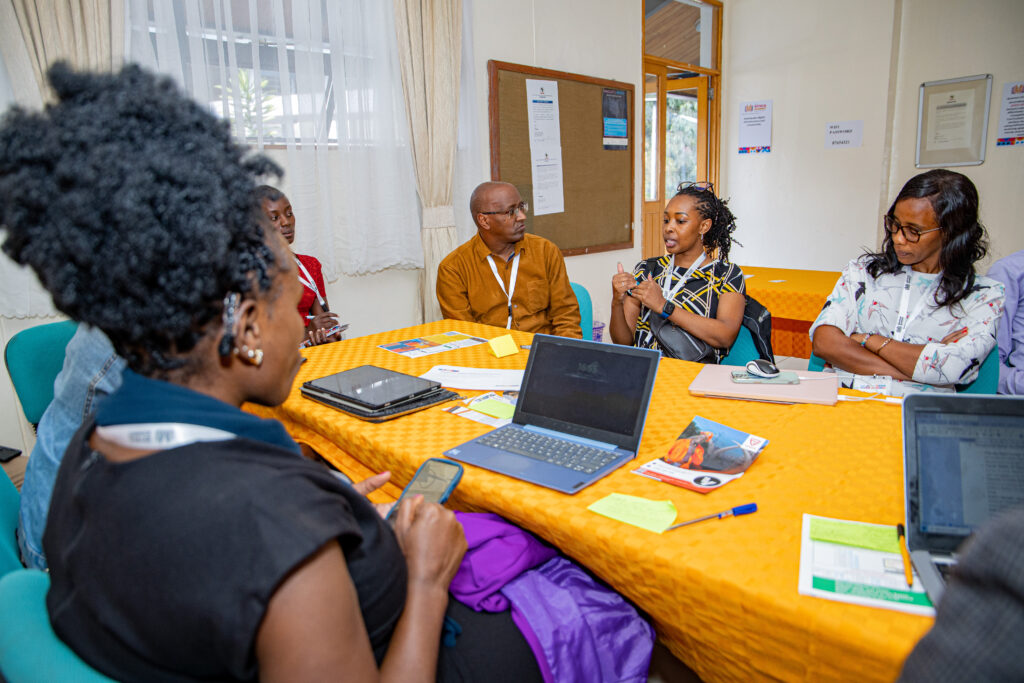
The organizations that are on the ground are doing a lot of co-creation and co-design. This means that the solutions that they come up with, even if they are simple solutions, are the right solutions for that community. Why? Because the community has been involved in creating a solution for the problem.
EdTech East Africa has had collective action work ongoing for the past year. Looking at the challenges facing each region, and looking at what communities are doing under different pillars – foundational learning, skills for the future, equity and inclusion, supporting the capacity of leaders of learning, and then looking at what our policies say and the evidence – what the communities are doing is commendable.
There are a lot of good things happening on the ground. Partners are collaborating on the ground and implementing different programs. That is the way to go.
Conclusion
We may come from different regions and we are faced with different challenges. But just as education is the great equalizer, its sidekick is technology. Technology is an enabler but still, it can be integrated in class.
This is something that is happening in Mombasa County. They have other projects for teachers learning AI. They also have IREX, which has programs in different schools within the coastal regions, where they teach coding without using any computer.
The same is happening in Western Kenya with apps like Early Family Math and other edtech solutions. Then there is FCDC and its partners. Each region is doing what works for them. But, in the grand scheme of things, it all adds up and the whole nation benefits.
As the Swahili adage goes, “Haba na haba hujaza kibaba.” Little by little fills the measure. A little from all the stakeholders, a little from all the regions, and, in due time, our nation will be miles ahead.
The findings in the report indicate that despite a national enrollment rate of 91%, Nairobi lags slightly behind at 89.4%, with more girls enrolling compared to boys. The city faces a high dropout rate, particularly among children with disabilities, at 7.1%. Also, a large number of the capital city’s children are not in school; 6.3% drop out after enrolling, and 4.3% never enroll. What’s more, 10% of girls and 11.44% of school-aged boys in Nairobi are not attending school. This out-of-school rate is higher than the national average.
How can EdTech be used, not just in Nairobi, but also in other urban centers across the country, to address the challenges that learners in poor and underprivileged settings face? This is one of the questions Elizabeth Ndungu tried to answer. Elizabeth, who is Nairobi County’s Director of Digital Economy and Startups, said there are various initiatives her office is undertaking to boost digital literacy and spur job creation in the green city in the sun.
“What we have been seeing especially within the government is that technology has been inward-facing; we have always developed technology just to serve the users,” Elizabeth said.
“But under the new initiative, we want to reach out to the community and also be part of the ecosystem, bringing people together. We want to lead, and that is why we have brought the community together.”
The new initiative is two-pronged: city governance excellence and a department of e-learning. It’s in the latter that ICT education is integrated. The county government is in charge of early childhood education in Nairobi, as well as vocational training centers. However, with rapidly increasing populations in informal settlements, the county government’s resources are stretched thin.
Urban centers—and, indeed, large cities like Nairobi—have unique learning issues, which require unique solutions and innovations that are specifically tuned to bridge the learning gaps in poor and underprivileged urban centers.
Access to online resources
Every crisis presents an opportunity to learn and do better. Zeraki learned this during the Covid-19 pandemic. This crisis made them realize that a bolt out of the blue can happen, which can make learning impossible in a classroom or make bringing learners and teachers together a huge challenge.
This means that innovators should come up with tools or technologies to help so that, in such circumstances, education is not suspended. Zeraki simplifies and enhances the use of technology to deliver quality education, with products for parents, teachers, and schools. They give at-risk learners—such as those in poor and underprivileged settings—access to quality instruction. They also avail training resources to teachers.
Accessibility of education
“People assume that, in Nairobi, schools are overstaffed,” Elizabeth said. “Looking at the ratio of the resources, both human and physical resources, we still find that there is a great challenge.”
Nairobi has about 230 early childhood public schools and approximately 1,300 early childhood teachers. These teachers are not enough to serve the number of learners who attend schools, which will adversely impact the accessibility of education.
Nairobi has the highest number of private schools. Yet, not all Nairobi children have access to education because the numbers are incredibly high. There are different types of schools in Kenya. The Basic Education Act (2013) defines two categories, namely public and private schools, while the Alternative Providers of Basic Education and Training (APBET) Guidelines provide another by defining APBET schools. The APBET Policy and Guidelines (2016) are silent on the nature of ownership required for APBET schools.
EdTech can be used to mitigate the issue of accessibility of education. Loho Learning builds technologies that mainly resolve four things, one of which is the accessibility of education. The others are innovation around the affordability of quality education, inclusive education, and data and insights into quality education.
The TSC recommends a pupil-teacher ratio (PTR) of 40:1 for the primary level. The overall PTR was 24 pupils to a teacher at the primary and pre-primary level. According to a 2020 study by the Ministry of Education, of the 17 sub-counties in Nairobi, Starehe recorded the lowest PTR (it also had fewer schools participating in the study), while Njiru had the highest PTR of 29 learners per teacher.
However, according to a 2015 BBC report, the pupil-teacher ratio has steadily increased since 2012. One Nairobi school, the Olympic Primary School, admitted that some classes have as many as 120 pupils in one room, handled by one teacher.
This presents many challenges, one of which is assessment, which is an important component of transition. CBC Grade books are strenuous and time-consuming to fill and tend to be utilized only at the end of the term. Kurasa enables teachers to conduct formative, summative, and performance-based assessments to support the competency-based approach to teaching and learning. This includes both KICD and non-KICD evaluations.
Kurasa offers a revolutionary way to implement and manage CBC online easily. Assessments can be filled in time by all teachers simultaneously and reports sent out to parents weekly.
Virtual classrooms
Not all schools in Nairobi have access to technology. Others lack vital infrastructure, and, as such, this hampers access to EdTech solutions. Which means that children do not have equal learning opportunities. What’s the city supposed to do in situations like this?
The answer is virtual classrooms. As a speaker in the AI in education forum stated, the city can borrow lessons from what the FCDC and other education partners did. In the frontier counties, they have hubs that have electricity, which they can plug into their laptops. From one hub, for instance, one science teacher can transmit a lesson to five or six different schools.
Bridging the tech gap
Another gap that needs to be bridged is that of technology. Not all teachers have the digital skills and have to play catchup with the learners. That gap that exists between the digital immigrants and the digital natives affects learning outcomes.
“Nairobi has a unique generational gap challenge in that a school may have teachers who have been teaching for 15-20 years, and they have learners who span different generations: millennials, Gen Z, and Gen Alphas,” Elizabeth said.
That’s where a provider like Ntemata comes in, whose core business is automating assessment processes for teachers as well as holistically analysing competency learning. Ntemata is in the business of supporting teachers so that, in return, they can be fully engaged with their learners. A teacher who is better equipped with EdTech tools is in a prime position to make learners perform better.
Conclusion
“In Nairobi, we have parents who suffer from TB— “Too Busy”—and in this case, the teachers become the parents,” Elizabeth said. “Currently everybody is talking about mental health issues. Yet we are heaping more burdens on our teachers. They are the parents, the nurses, the doctors, the cooks, and everything.”
There is a need for systems where teachers can develop resilience on their own. They also need systems and safe places where they can develop their mental health and be in a position to address the myriad needs of learners.
“Let us also think about other aspects concerning support groups and virtual learning for both the teachers and the learners,” Elizabeth concluded. “That they can have virtual discussion groups in different areas because we find we are encouraging and building talent.”
Evidence is the appearance from which inferences may be drawn. It also means ground for belief or obviousness. In the EdTech space, evidence is as important as any other variable needed to make this ecosystem work like a finely tuned Swiss wristwatch.
Evidence was the topic of discussion in the opening panel of the 3rd Kenyan edition of the EdTech Summit. Why is evidence so important? Good question. Because it’s the solid basis for implementing solutions, future paths can be charted and corrective measures can be made. Because, just as in a court case, it’s the basis on which stakeholders can deduce judgments. Because evidence makes players more strategic in their interventions.
The panelists in this session on strengthening EdTech with evidence were Elizabeth Otieno, Ciku Mbugua, Dr. Tiberius Barasa, and Barnabas Sang. Elizabeth is from the Directorate of Basic Primary Education in the Ministry of Education (MoE). Ciku is the co-leader for the EdTech Hub. Dr. Barasa is a policy researcher and analyst. He’s a lecturer at Bomet University College and is on secondment to MoE. Sang is the Director of ICT for the State Department for Basic Education under the MoE.
Director Sang, who was in Italy attending a training about AI in education, joined the panel virtually. He spoke about KEMIS, which will lay the groundwork for a more data-driven, equitable, and accountable education system. (It is yet to be officially called KEMIS, though, because it requires legal duplication). MoE will also explore how these systems will align with the national education sector strategic plan.
Sang stated that they want to improve the efforts of other stakeholders, more precisely target their interventions, and close the gaps that the data reveals.
Data is king
KEMIS is an essential pillar in Kenyan digital transformation and education. This system allows for real-time data collection of student enrollment, attendance, and resources, offering an unprecedented level of visibility into the education landscape. For instance, the platform ensures transparency in the distribution of resources, such as free education. It will also enable the government to allocate resources more efficiently.
Data is not only a mere tool for monitoring progress but is also a critical driver of policy formulation. NEMIS serves as the backbone of collecting accurate and timely data, which informs policy aimed at improving education outcomes. What this unlocks for a researcher or funder is the ability to understand more about the teachers and the learners that you want to serve.
The work that Sang and his team are doing to bring all of these different diverse data sets together will create more insights into what’s actually happening on the ground for learners, teachers, and families across Kenya.
One of the initiatives Sang mentioned is the Education Evidence Hub. It is a way for players in the EdTech space to utilize some of this data, which has much more evidence that’s being generated across diverse EdTech ecosystems.
Education Evidence Hub
“All of you have been sitting here as partners in education; there are interventions that you are undertaking,” Elizabeth threw down the gauntlet. “And if I ask you, what influences your intervention? What is influencing your action? Maybe you heard somebody say it.”
Those are the ills that the Evidence Hub, which is a simple connector between data, wants to cure. It will be a one-stop source of information at MoE, which will generate information on all the questions and challenges in education. For some, MoE is going to find an approach via policy gaps. They will do this by carrying out surveys generating real data and working with universities to generate data.
The Evidence Hub is going to work with all three tech departments and all partners. It is not a property of MoE. It is our system at the education center.
“After we have identified gaps, we are going to collect information from the Ministry of Education,” Elizabeth explained. “We are going to look at the issues around the existing gaps.”
“And I’ll give you an example. There could be a gap in the response to the health issues of children. If you ask parents if they are sure about the safety of their children, they will have different answers. But at the ministry, what is the data that we have? What is the data on sanitation? What is the data on water availability in our schools? What is the evidence?”
ICT will be a tool to help MoE package information, deploy it on numerous servers, and package it so that the general public, educators, education managers, and students can easily consume it.
What’s the end game? To get processes and structures to produce and use data and evidence for policy impact. That’s one. And two is to improve the skills that are administered to help people generate, analyze, and synthesize data and package it purposefully for policy.
Evidence in lecture halls
The proof of the pudding is in the eating. And the proof that evidence is real and grounded in reality can be found on the ground. One such ground is a lecture hall. No one knows this better than Dr. Barasa.
Dr. Barasa witnessed firsthand how COVID-19 forced lecturers and higher learning institutions to change their teaching methodologies.
“Within a short time, nearly eight percent of universities in Kenya started offering their programs online,” Dr. Barasa said. “There was rapid training of lectures to be able to teach using technology. Many lecturers found it very difficult. Some old professors found it torturous to teach online. But they had no option but to do it.”
Bomet University College, where Dr. Barasa plies his trade, teaches all its students ICT. They have adopted blended learning; lecturers need to utilize at least 40% of their time using technology or doing blended learning. Some lecturers have gone a step further and offer their programs up to 60-50% using technology.
“Students seem to love it; they enjoy it; it’s very interactive. And the assessments have shown that as we interact with students or engage them online, they increase their learning ability, and they experience deep learning as opposed to shallow learning.”
Dr. Barasa shared a student’s experience concerning the use of technology and evidence in decision-making.
“From the very beginning, I use engagement methodologies. I engage the students before I start to teach. I ask them about the expectations of the course, and they all write them down and present them. I engage them at every stage of learning in the delivery of the content because I don’t deliver much content. They do it themselves. I also engage them about the assessments.”
Dr. Barasa ensures that every learning activity has student input. He uses simulations and case studies. A student came up to him and confessed that he had never experienced deep learning as much as he had within that course in public policy analysis. The most interesting thing for this student was a real policy scenario and analysis right from the problem identification, decision-making, and evaluation. And for him, he had integrated all the aspects of quality analysis that he required for his life. Upon graduation, this student went ahead to enroll in a Master’s program in public policy at the University of Nairobi.
This just goes to show that the use of technology can improve teaching and learning in universities. Besides, it can also generate important evidence that will inform public policy.
Research gap
In education, if there is one thing that stakeholders can never have enough of, it is research. Without adequate research, which harvests tons of invaluable pieces of evidence, we will not hit our targets. And this is because, without evidence, it is akin to shooting in the dark while blindfolded. Which is a high risk that stakeholders cannot afford to take.
As a nation, we haven’t yet scratched the surface of the 2 percent of what is desired to support research. In the initial stage, we are operating with 0.4 percent of the national budget to support research. It is hoped that in the next budgeting year, the research budget will increase to probably about 0.8 percent.
“The support from the national government concerning finance for research is still meager,” Dr. Barasa said. “And of course, we understand the constraints that the government is going through regarding finances. But we hope that will improve and that allows all interested stakeholders to come in and support our research at the universities.”
Generating evidence through implementation
“As EdTech Hub, we’re in the business of generating evidence,” Ciku stated. “Which is why we’re a key partner at the EdTech Summit. We believe that technology cannot only be accelerated, but we need evidence to be able to scale.”
“Why hasn’t EdTech realized its potential?” an audience member asked.
“There isn’t a lot of evidence out there,” Ciku replied. “There are so many key issues that are under research. However, where evidence is available, it’s hard to find and hard to read.”
EdTech Hub often collaborates with researchers. They generate evidence that makes it into some of the top journals. However, it can be difficult for a layman to read and understand those journal articles. This is why there is a need to find better ways to package evidence based on who researchers are talking to. And the flip side is that it is hard to make good-quality decisions if you don’t have good evidence.
Sandbox
of proving orThe idea of a sandbox, which comes from the tech community budget, involves carving out mini systems within boxes with the purpose of proving or testing our assumptions.
Here’s the thing: there’s a lot of uncertainty at the beginning of implementing edtech solutions. Plus, it is extremely expensive. The best way to go about it is to start in a small way and test your idea before you invest all of your money in something that you’re not sure about. The more the uncertainty decreases, then, as an analyst, you can begin to improve your expenditure or your investment in it.
Edtech exists within a wider ecosystem. You cannot afford to live on an island. Even when in a sandbox, you should think about the bigger picture.
“When we are doing our sandboxes, we use what we call the six keys,” Ciku explained. “What is this product? What is it going to be used for? Who are the people that are going to use it? Do we have provision for it, or will we introduce it into schools and then in six months we have to bow out because we haven’t thought about the cost-effectiveness? What is the place that it is going to be used in?”
Conclusion
Edtech doesn’t operate in isolation. It’s part of a much wider ecosystem. It deals with every facet that surrounds learning. And all these facets revolve around evidence. Which means that we cannot work on assumptions. It is either solid evidence or nothing at all.
Evidence bolsters the work of all stakeholders. It ensures that the entire ecosystem thrives. But for this to happen, the evidence must not only be shared liberally, but ought to be in a language that can be easily chewed and swallowed by all stakeholders, be they the proletariat or university professors.