Tag: Western Kenya EdTech Summit

  • Bridging Gaps in Education: Regional Insights for Effective EdTech Deployment in Kenya

    Bridging Gaps in Education: Regional Insights for Effective EdTech Deployment in Kenya

    By Josaya Wasonga

    Kenya is a land of contrasts. We are blessed with a variety of cultures, creeds, traditions, and geographical features. From one region to the other, we all do our things in our unique way. That’s the beauty of our country.

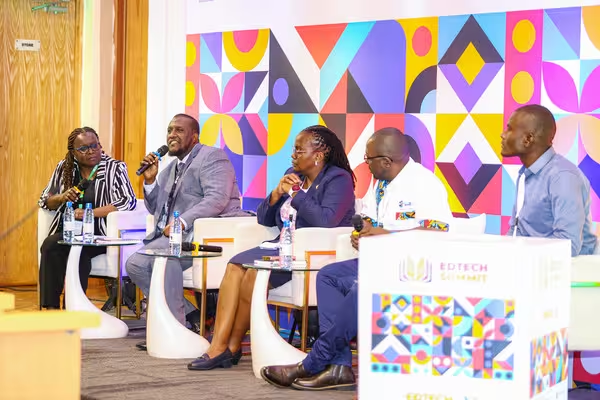
    And that beauty and uniqueness is seen in how each region is using EdTech apps and gadgets. For instance, though they are slaying the same dragon—foundational literacy and numeracy—the approaches of Samuel Okoth and Abdullahi  Maalim are different. 

    Sam is with the Africa Math Initiative and is based in Western Kenya. Abdullahi is the Education and Governance Sector Lead at the Frontier Counties Development Council (FCDC). Both panelists face different challenges from those affecting Elizabeth Ndung’u and Paul Akwabi. Elizabeth is the Director of Digital Economy and Startups at Nairobi County. Paul is the Executive Director of Tech Kidz Africa, based in Mombasa. 

    Four different regions: Western, Northeastern (Frontier counties), Nairobi, and Mombasa, and an opportunity to learn from each other, among other things, how to upscale EdTech solutions. 

    Correcting historical learning injustices
    The Frontier Counties Development Council (FCDC) was established to address historical challenges rooted in the 1964 Kenyan Sessional Paper, which prioritized high-potential areas. This led to remoteness, isolation, insecurity, droughts, and more recently, terror-related issues, limiting the region’s educational progress in areas like access, inclusivity, quality, infrastructure, digital content, and teacher availability.

    All these have denied the council and the region the opportunity to appreciate the key performance indicators in education, including issues on access and inclusivity, quality education, infrastructure, digital content, and proper delivery of education as a result of shortages of teachers. 

    “And it’s because of that we felt, now that we are not involved physically, we should not be left behind digitally,” Abdullahi explained. And we want to correct all the gaps that came as a result of the many years of low involvement in these areas with a lot of digital integration.”

    “We’re happy that there are many organizations that came into play, knowing very well the SDG Goal of leaving no one behind. So under that rider, we were able to start this cooperative and cooperate with many organizations that are doing a lot of work, including the Ministry of Education, under the very ambitious Digital Literacy Project of 2013, which had its issues, but it has provided the latitude for organizations to come on board.” 

    The regional summit that was held in the north unpacked many issues. Not only that. It also created opportunities. During that forum, FCDC launched two very critical digital programs. The E-book, ECD Digital Literacy, which is serving 150,000 learners in the Northeastern region. Raspberry Pi Foundation, a charity organization based in the UK, also came on board. It is supporting about 14,000 learners in grades four to eight, in eight of the 10 FCDC counties. 

    Demystifying math

    “Anyone from the western part of Kenya will tell you that we have very dull classroom environments and very dull learning environments,” Samuel noted. “You will also agree with me if you are from the western part of Kenya that our anxiety towards math learning affects our children and in turn, affects how math is perceived.” 

    Samuel and his team are trying to demystify math. They believe that maths is not a hard subject that can only be done by the smartest of the bunch. They believe that math learning should start early – at ages two or three – even before a child sets foot inside a classroom. 

    Samuel says that it doesn’t take a trained teacher to start teaching one’s child math. Your house help will do. With the help of an app, Early Family Math, your child can be doing and loving math at home. Your child can learn math through stories and activities that are fun and engaging. Plus, they can facilitate playful interaction between the parents and the child. 

    Meaningful relationships can be created out of this. The parents can foster their child’s education. And children can also be supported when they take what they learn in the classroom back at home. Starting early will give your child a head start. 

    Socio-economic activities and beliefs

    While Abdullahi is working to correct historical learning injustices and Samuel is crunching numbers to demystify math, Paul is hard at work—down at the coast—trying to deal a death blow to socio-economic activities and beliefs that have hampered education in Mombasa and its environs. 

    “It’s ironic, but there are so many unique things in Mombasa that are not even in Nairobi,” Paul said. “At some point, they will die. But when they go to Nairobi and other parts of the country, they will thrive. Mombasa was, in 2019, the first county to start robotics and coding from early childhood. This was a life-changing project. But, unfortunately, it died.” 

    “The biggest things that affect us are socio-economic activities and beliefs. We also have a high rate of school dropouts. And we are not talking about Mombasa as a city, but also places like Kilifi and Kwale.” 

    Paul has witnessed it all. He has witnessed how culture affects entire populations and causes retrogression. Besides, the number of locals who are teachers is few and in-between. This means that the Coast region has to get teachers from other communities.

    “That becomes the first barrier within the community. They don’t have role models. They don’t have people they know within their community that they can relate to who can be a teacher.”

    There are also infrastructural challenges and well as limited access to STEM. But even with all this, there are many organizations that have penetrated the market. 

    The Coast region is among the best places to pilot any edtech solution,” Paul opined. “And that’s because of the already pre-existing resistance. Because of the resistance that is there already, they start rejecting it from the get-go because it is coming from the West. Some of them still hold on to the belief that the West has ill intentions.”  

    Paul and Co. realised that, as an organization, they could bring in other partners, both global and local, and spur a synergistic working relationship between them and the county government. Speaking of which, they currently have a project that is working just in Mombasa County in partnership with Raspberry Pi Foundation for teachers to be able to integrate technology into their classrooms. 

    “We are talking about an English teacher being able to teach coding or storytelling just using coding. We are talking about a mathematics teacher being able to teach technology, infusing technology in learning as compared to when a teacher is projecting or using a projector and is telling you that he is using technology to teach math.”

    Understanding how government works

    Being the capital city, Nairobi is not just the melting pot of the East African region, but it is a crucible of sorts. It’s the place where different people from diverse backgrounds converge for work, business, learning, leisure, and other activities. As such, for instance, there are disparities in wealth as—in some cases—persons living in informal settlements right next to plush neighborhoods. 

    “People assume that, in Nairobi, schools are overstaffed,” Elizabeth said. “But nothing could be further from the truth. Looking at the ratio of the resources, both human and physical resources, we still find that there is a great challenge.” 

    Nairobi has about 230 early childhood public schools. When you divide the number of learners with the meager government resources, you will find that the resources are not adequate. 

    Nairobi has the highest number of private schools. Yet, not all Nairobi children have access to education because the numbers are incredibly high. There are different types of schools in Kenya. The Basic Education Act (2013) defines two categories, namely public and private schools, while the Alternative Providers of Basic Education and Training (APBET) Guidelines provide another by defining APBET schools. The APBET Policy and Guidelines (2016) are silent on the nature of ownership required for APBET schools.

    Nairobi has approximately 1,300 under-childhood teachers, yet they are not enough to serve the number of learners who attend schools. 

    “When it comes to partnership, something that many people don’t have an understanding of is how the government works,” Elizabeth pointed out. “The government works with a document, a five-year document called County Integrated Development Plan. And it is on the county website.” 

    “When we look at it, we’ll guide you with the programs the county has planned for the next five years and then you can see how we plan it. We also, from there, have an annual development plan. And the county government year runs from 1st July to June 31st the following year.”

    Collective action 

    The organizations that are on the ground are doing a lot of co-creation and co-design. This means that the solutions that they come up with, even if they are simple solutions, are the right solutions for that community. Why? Because the community has been involved in creating a solution for the problem. 

    EdTech East Africa has had collective action work ongoing for the past year. Looking at the challenges facing each region, and looking at what communities are doing under different pillars – foundational learning, skills for the future, equity and inclusion, supporting the capacity of leaders of learning, and then looking at what our policies say and the evidence – what the communities are doing is commendable.  

    There are a lot of good things happening on the ground. Partners are collaborating on the ground and implementing different programs. That is the way to go. 

    Conclusion 

    We may come from different regions and we are faced with different challenges. But just as education is the great equalizer, its sidekick is technology. Technology is an enabler but still, it can be integrated in class. 

    This is something that is happening in Mombasa County. They have other projects for teachers learning AI. They also have IREX, which has programs in different schools within the coastal regions, where they teach coding without using any computer.

    The same is happening in Western Kenya with apps like Early Family Math and other edtech solutions. Then there is FCDC and its partners. Each region is doing what works for them. But, in the grand scheme of things, it all adds up and the whole nation benefits. 

    As the Swahili adage goes, “Haba na haba hujaza kibaba.” Little by little fills the measure. A little from all the stakeholders, a little from all the regions, and, in due time, our nation will be miles ahead. 

  • Western EdTech Summit Sparks Innovation Dialogues from the Ground Up

    Western EdTech Summit Sparks Innovation Dialogues from the Ground Up

    By Kennedy Kachwanya

    EdTech East Africa, spearheaded by visionary co-founder and CEO Jennifer Cotter-Otieno, is not just an organization. It is a movement, a vibrant ecosystem of stakeholders working together to reshape the educational landscape through technology.

    From a humble beginning as EdTech Nairobi, this powerhouse has grown to over 4,000 members, united by a common goal: inclusive, evidence-driven technology use in education. Their reach goes beyond the city limits, thanks to partners who share their passion. The summit in Western Kenya exemplifies their commitment to building a truly inclusive movement.

    The goals of EdTech Conversations are clear and ambitious:

    ● Coordinated action: Ensure technology in education is used inclusively and effectively.

    ● Transparency and clarity: bridge the communication gap between diverse stakeholders.

    ● Action, not just talk: drive policies, practices, and real-world impact.

    This isn’t a one-off event. EdTech Conversations have been ongoing for two years, attracting more voices and evidence with each session. It’s about building a collective narrative—a tapestry woven from diverse experiences and perspectives.

    Who attends?

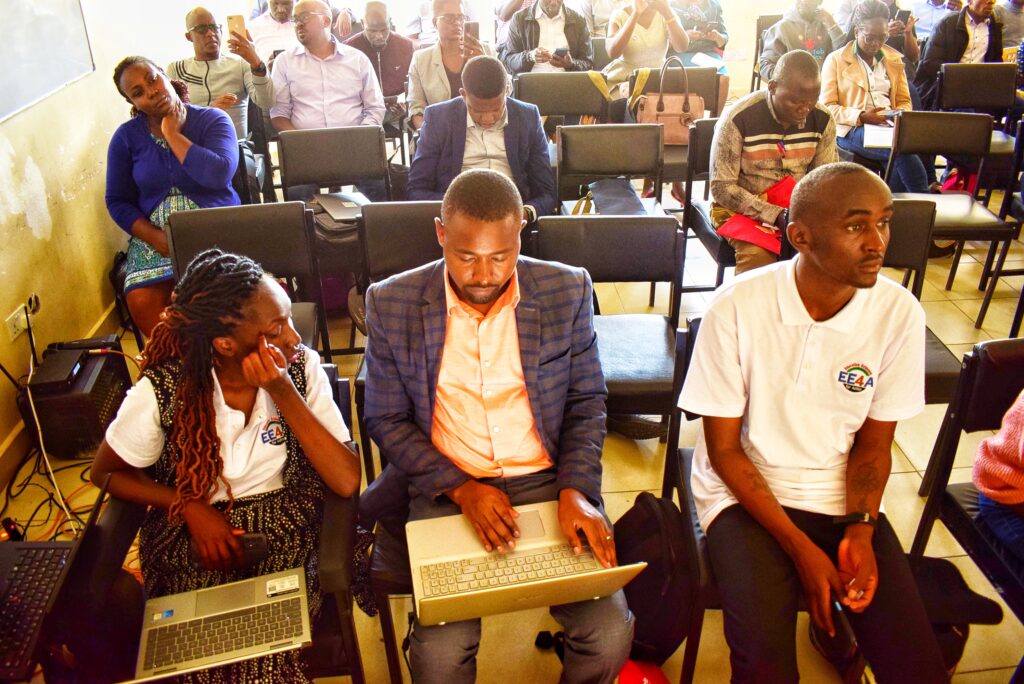
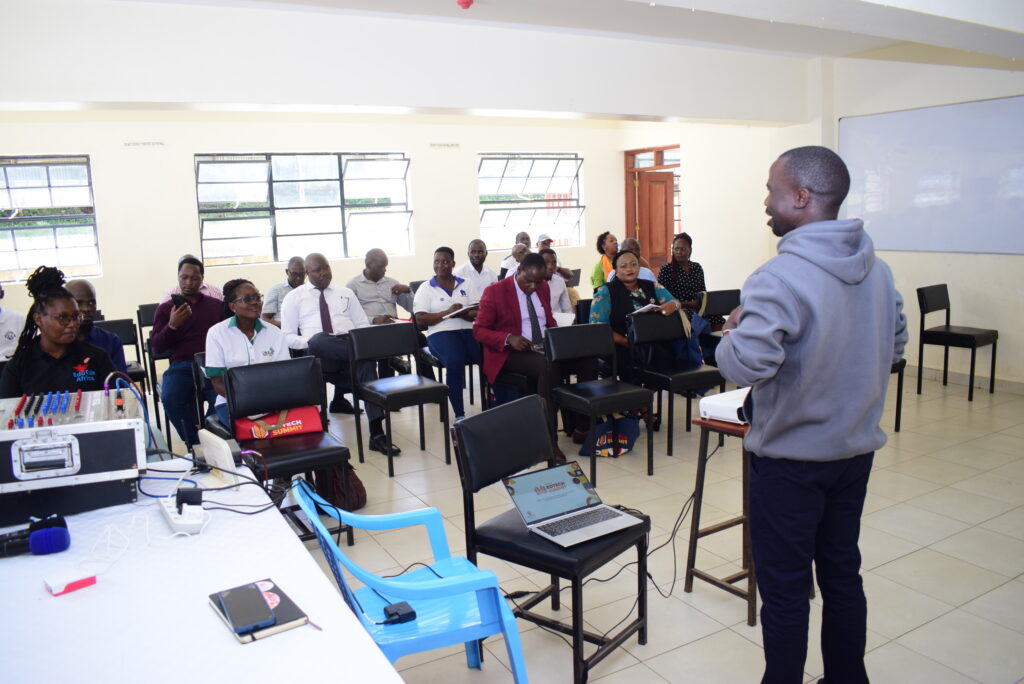
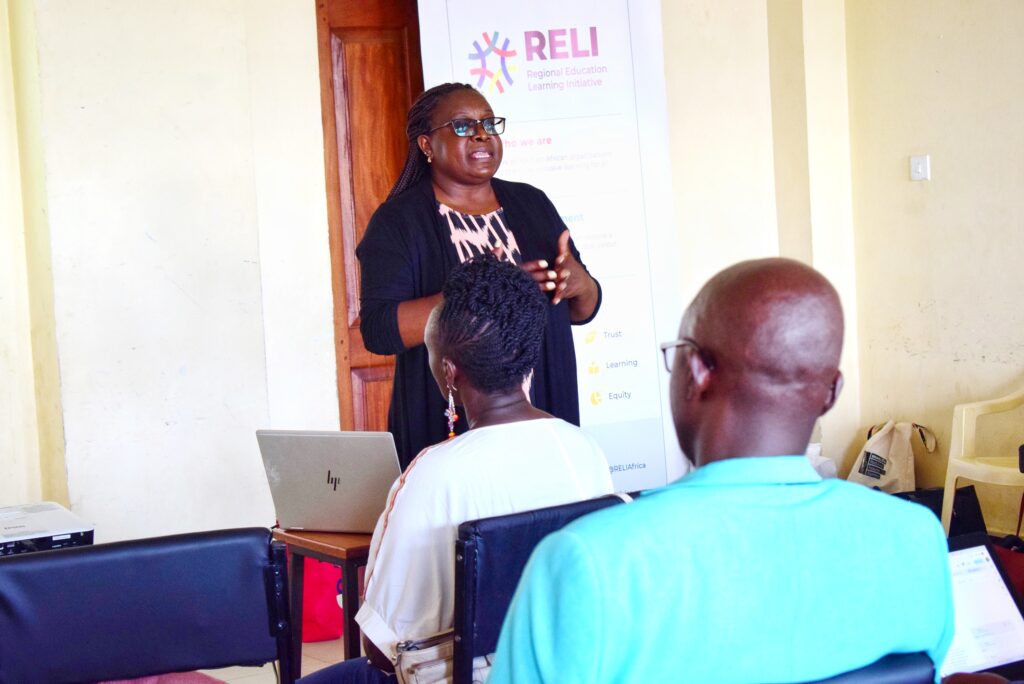
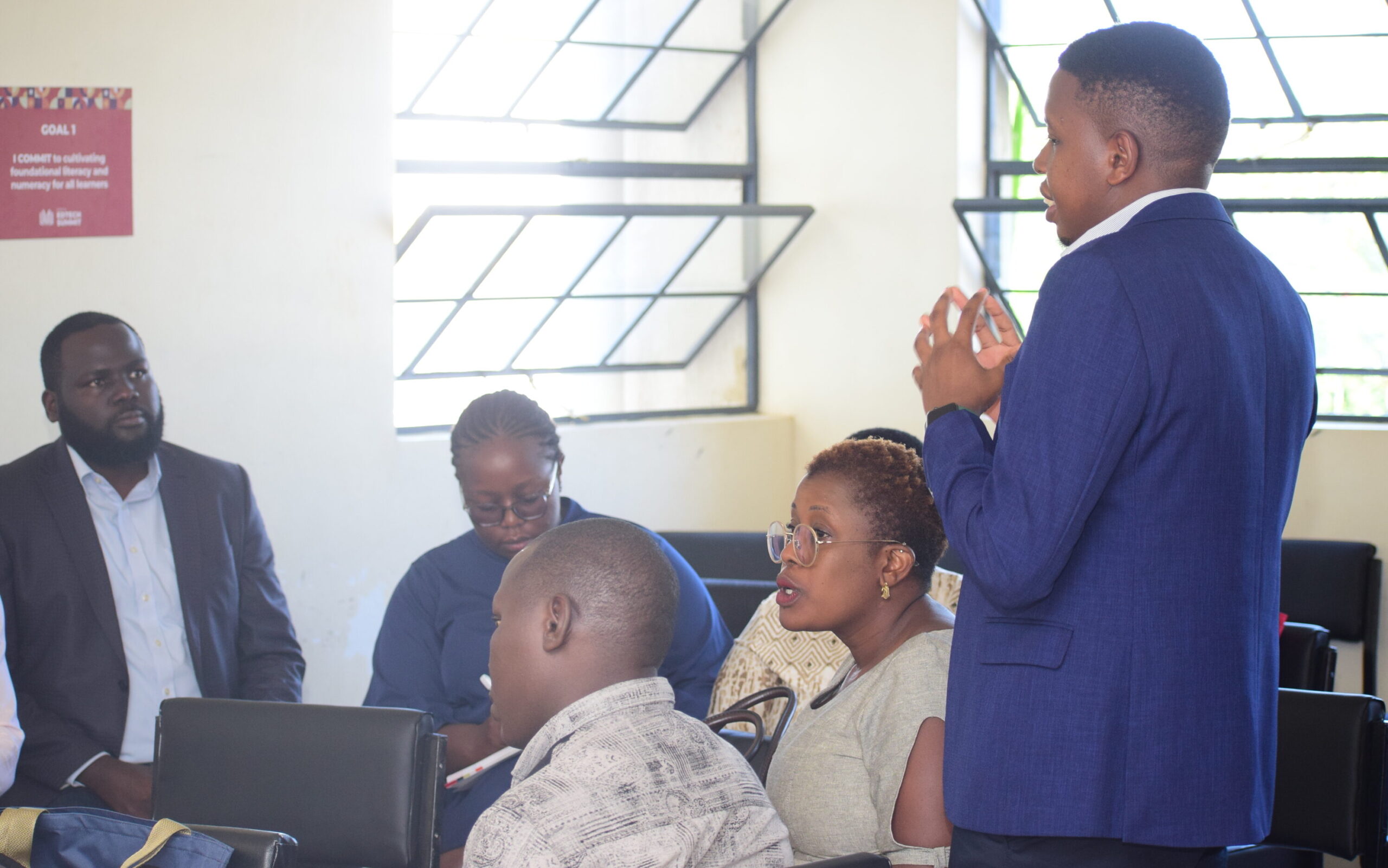
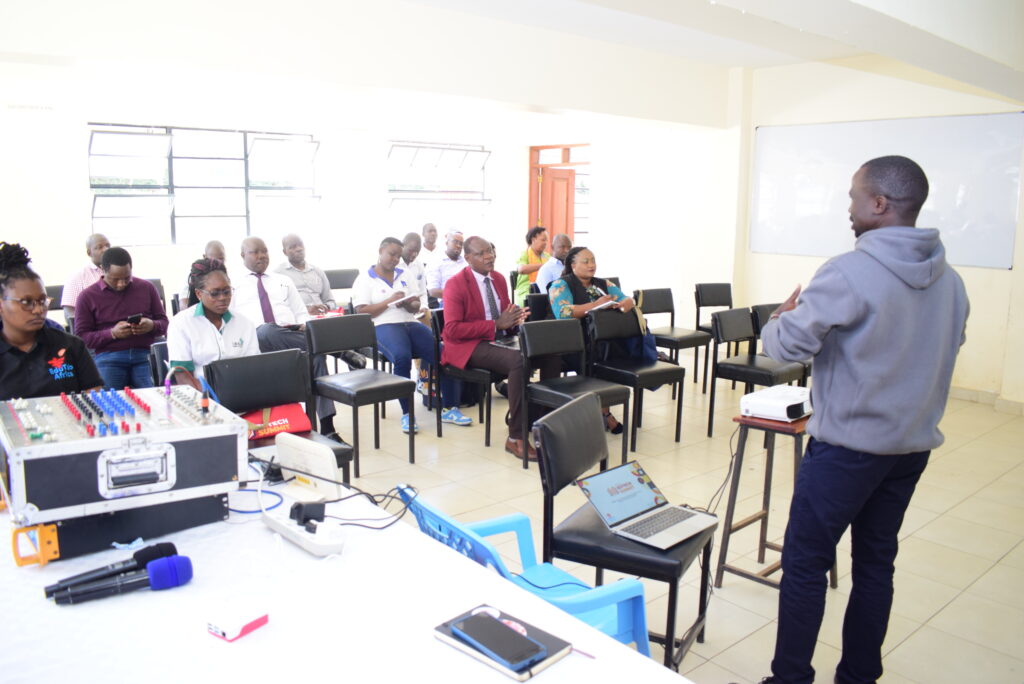
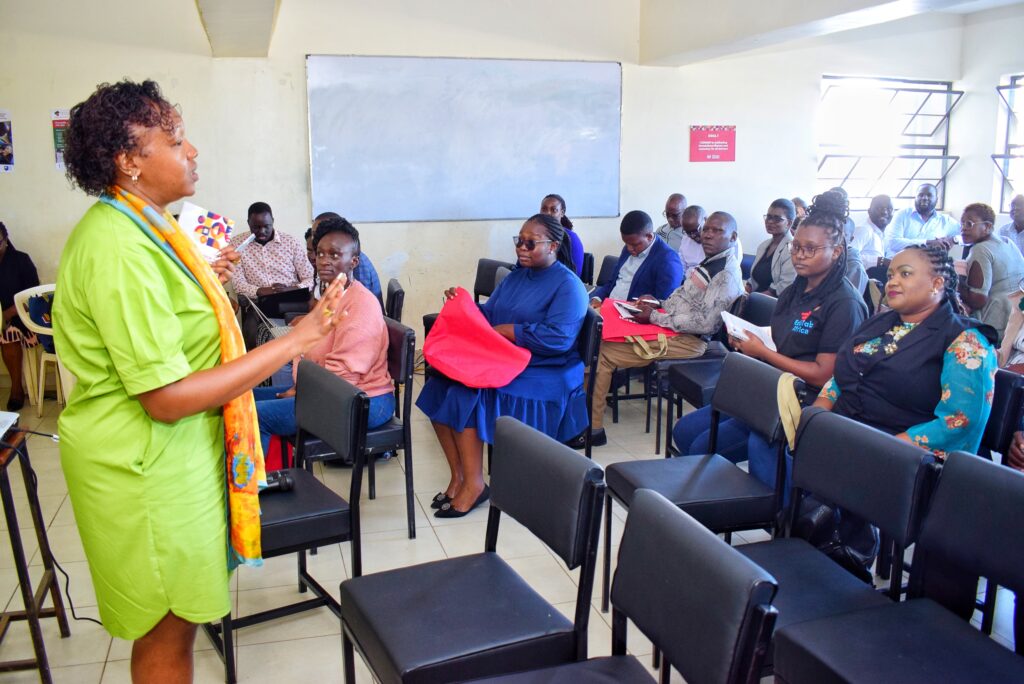
    The Western EdTech Summit, hosted at Tom Mboya University in Homabay, was a microcosm of the movement itself. From product developers to community educators, from research scientists to digital infrastructure builders, everyone with a stake in education’s future was present. It was a powerful reminder that change requires a village.

    The event was not just about sharing stories. Dr. Manos Antonios’s presentation of the 2023 Global Education Monitoring Report on Technology and Education offered a critical look at this evolving field. Key takeaways?

    ● Scale and Scope of Technology: Despite significant deployment in higher education, technology has yet to transform primary and secondary education. Only one in ten students use digital devices regularly in classrooms.

    ● Rapid Change and Lack of Evidence: Education technology products change rapidly, approximately every three years. This pace outstrips the ability of research to keep up. In the UK, only 7% of products have undergone rigorous testing. In the US, only 2% of apps in the government clearinghouse have evidence of a moderate or high impact on learning. Despite the lack of evidence, technology adoption continues at a rapid pace, with technology providers generating much of the available evidence.

    ● Impact on Learning: The impact of technology on learning is best described as context-dependent. Some educational technologies improve some types of learning in some contexts. Broader societal issues related to equity and equality should inform decisions on the use of technology in education.

    ● Human-Centered Vision of Education: Technology in education should put the best interests of learners and teachers at the center. The suitability and value of these tools need to be proven concerning a human-centered vision of education. It’s important to consider who these tools might leave behind.

    Dr. Antonios also shared a four-point compass that his team had developed for education policymakers:

    ● Look Down: Assess if the technology is appropriate to your context and learning needs.

    ● Look Back: Ensure focus on the marginalized.

    ● Look Up: Consider whether your choices are scalable.

    ● Look Forward: Plan to support a vision for sustainable development in the future.

    Western Kenya Grassroot Education Technology Case Studies 

    Angaza Elimu

    Mr. Kiko Muuo, CEO of Angaza Elimu, provided demonstrable proof of the potential in the case study he presented. His pilot project in GIGA schools demonstrated the effectiveness of personalized learning and teaching. Angaza Elimu, a digital tool, boosted student engagement and performance, with boys showing higher adoption and improvement in science and social studies.

    ● Angaza Elimu: It proved to be an effective tool for facilitating student engagement inside and outside the classroom, with measurable improvements in student performance over its usage period.

    ● Gender Differences: Across almost all schools, boys had higher levels of engagement and adoption of Angaza Elimu and outperformed girls.

    ● Subject Performance: Science and social studies were the subjects where Angaza Elimu facilitated the highest increases in student performance.

    ● Teacher Upskilling: Teachers require upskilling that builds digital literacy as well as learning greater digital pedagogy principles. Increased digital competency among teachers and access to digital tools enhance the capacity of teachers to adapt teaching methods to deliver the national curriculum.

    Challenges remain:

    ● Internet Access: Consistent access to the Internet remains a key challenge for the adoption of digital learning and teaching in schools.

    ● Device Availability: There is a lack of enough devices, with a best-case scenario of a 1:2 device-to-student ratio per class in each school. This leads to the significant challenge of device scrambling.

    ● Teacher Training: There is a strong need for ad hoc and ongoing in-person teacher training components that build teachers’ comfort and confidence to utilize digital tools.

    Edutab Africa

    Mr. Mike Mumbo, the CEO and Founder of Edutab Africa, presented the second case study. It clearly showed the importance of teamwork by stakeholders for rural learning. In two remote Trans Nzoia schools, Edutab Africa is using Moodle to provide offline digital education, transforming how teachers use technology and integrate playful learning. This ongoing collaboration with local NGOs, schools, and the Ministry of Education highlights the crucial role of partnerships in empowering rural communities.

    Collective Action Goals Workshop

    The participants in particular gave careful consideration to the collective action objectives under Joan Mwachi’s leadership at EdTech East Africa.  From the workshop, it was clear that education today faces a critical turning point. A coordinated effort with specific objectives that prioritize inclusivity, innovation, and empowerment is necessary to prepare students for the opportunities and challenges of the future. The five EDTech East Africa collective goals are very clear and specific:

    • 1. Building the foundations: Literacy and numeracy aren’t relics of the past; they’re the pillars upon which future skills are built. Ensuring every learner, regardless of background or circumstance, grasps these core competencies is paramount. The key is to use a shared measurement system, using tools like EGra and EGma to assess literacy and numeracy skills across different programs
    • 2. Future-Proofing Skills: The world of work is evolving at breakneck speed. It was clear to all that learners should be equipped with the critical thinking, collaboration, and digital fluency they need to solve problems, adapt to change, and navigate the complexities of a digital future.
    • 3. Technology for All: Technology can be a powerful equalizer, but only if it is designed for inclusivity and accessibility. From diverse content to user interfaces that cater to different learning styles, we must ensure technology serves every learner, not only a select few.
    • 4. Empowering the Frontlines: Teachers, school leaders, parents, and caregivers are the closest allies of learners on their educational journey. By strengthening their capacity to create data-driven, inclusive, and engaging digital learning experiences, we empower them to guide and inspire.
    • 5. Building a Resilient Ecosystem: Sustainable digital infrastructure, reliable connectivity, and evidence-based policies are the bedrock of a resilient learning environment. Investments in these areas ensure everyone has equal access to quality digital education, no matter where they learn.

    On the last goal, the participants were introduced to the ICT integration model, a framework for government-private sector collaboration to ensure equity, quality, and research in technology-enabled education.

    Conclusion 

    EdTech East Africa is taking the conversations to the grassroots, and the Western EdTech Summit was just the beginning of an exciting journey. Expect more summits in different parts of Kenya, spearheaded by EdTech East Africa. The future of education looks brighter than ever.

  • EdTech: A Piece in the Puzzle—EE4A 2023, Insights on the Crucial Role of Evidence in Education Reform

    EdTech: A Piece in the Puzzle—EE4A 2023, Insights on the Crucial Role of Evidence in Education Reform

    By Juliet Awuor

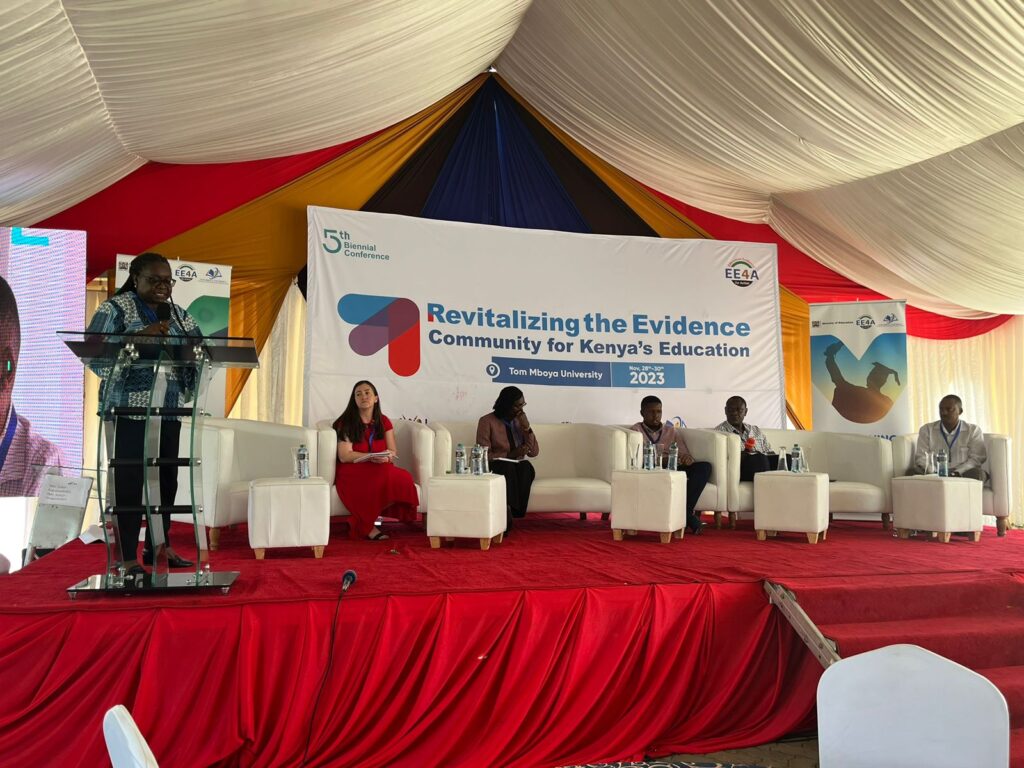
    “Despite education receiving over a third of the national budget, many decisions are made without reliance on evidence, leading to inadequate knowledge and information on alternative, cost-effective, and impactful alternatives,” Dr. Kilemi Mwiria observed at the recently concluded 5th Education Evidence for Action (EE4A) 2023 in Homabay County. Dr. Mwiria is the Managing Director of Africa at Education.Org, an independent non-profit that uses evidence to transform education for children and young people. Having a political and research background, Dr. Kilemi was a great fit to deliver the keynote because he could speak from both sides. If you recall, he led a task force in 2014, proposing a raft of measures, including introducing free secondary education.

    EE4A is a biennial conference that brings together the research community—researchers, development partners, and policymakers—in education in Kenya to discuss the use of evidence in education decision-making. This year, EE4A was from November 28th to November 30th, with the theme Revitalizing the Evidence Community for Kenya’s Education. It was the first time a learning institution, Tom Mboya University, hosted this conference and ensured strong representation from the academic research community in Kenya, with over 40 deans from universities and technical institutions in attendance.

    Dr. Mwiria argued that the collection of enrollment data, participation data, and other data helps allocate resources effectively and provide ideas about progress. However, reports about these numbers may not always reflect the reality on the ground, with many students going through difficulties such as the scarcity of textbooks distributed to schools and the shortage of teachers in some areas. 

    Also in his keynote speech, Dr. Mwiria discussed the challenges of using evidence in school administration, particularly in school examinations. He noted that while there are county quality assurance teams that use evidence to guide special transitions, there are issues with the objectivity of this data across all schools and the potential for manipulation.

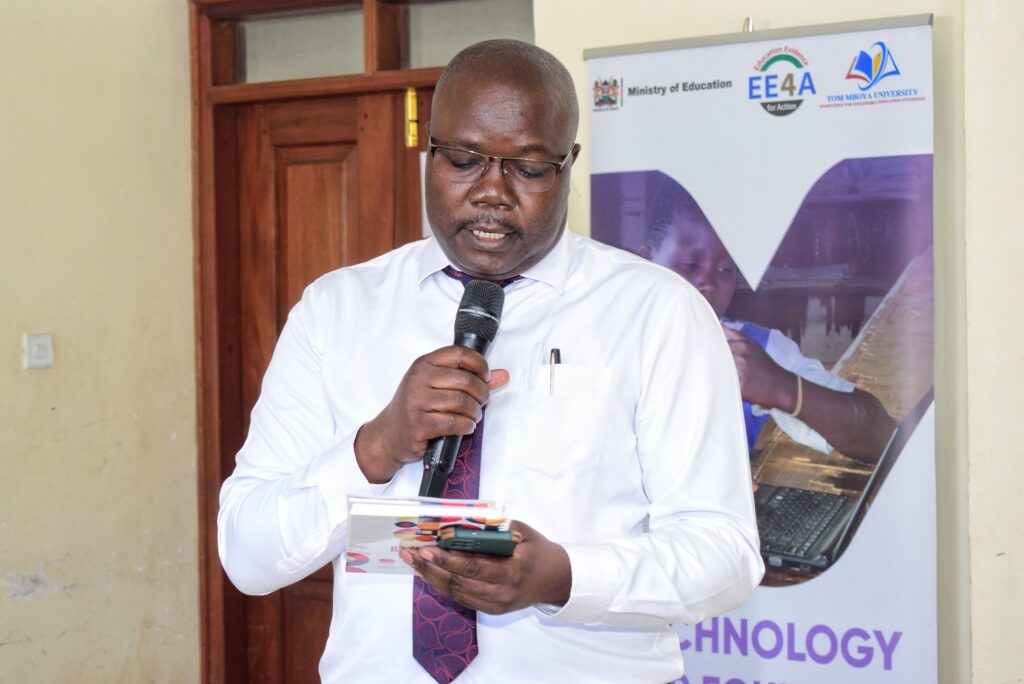
    Representing the Ministry of Education (MoE) was Mr. Darius Mogaka, Director of University Education, who read the opening remarks on behalf of Hon. Ezekiel Machogu, the Cabinet Secretary at MoE. He reiterated the importance of using evidence as a catalyst for transformative change in Kenya’s education. He gave the example of the government’s commitment to educational reforms by commissioning the Presidential Working Party on Education Reforms (PWPER), which conducted countrywide consultations with education stakeholders, resulting in a report that prioritized reforms for quality education.

    In his speech, Hon. Machogu recognized the symbiotic relationship between evidence and policy in ensuring that decisions resonate with the proven dynamics of effective education. As such, he emphasized the importance of inclusivity, ensuring that every voice from the classroom to the research lab is heard.  

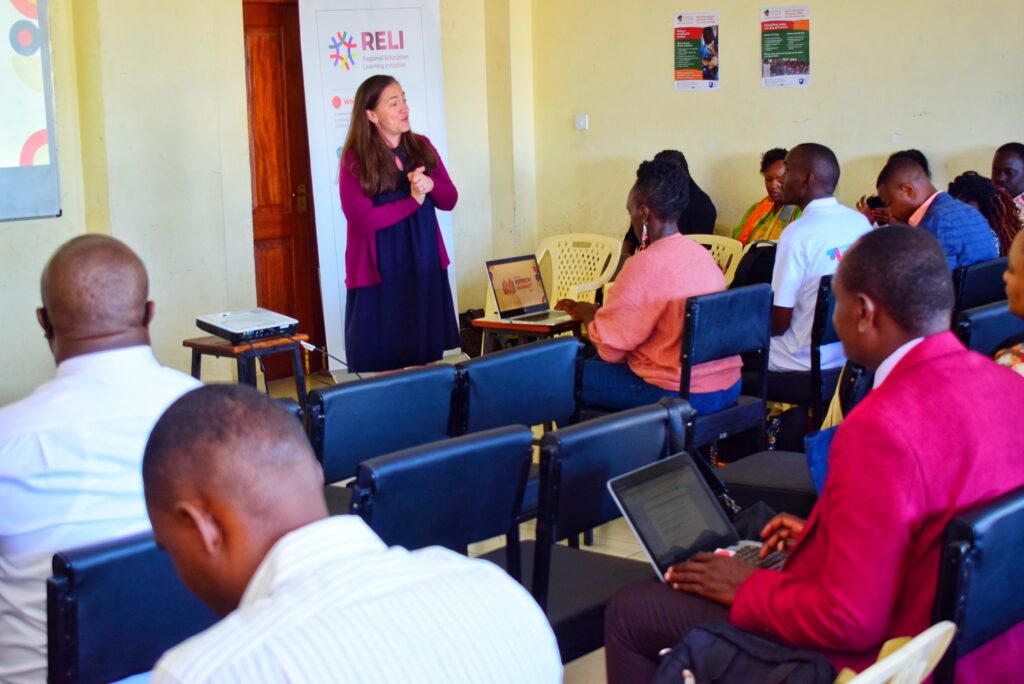
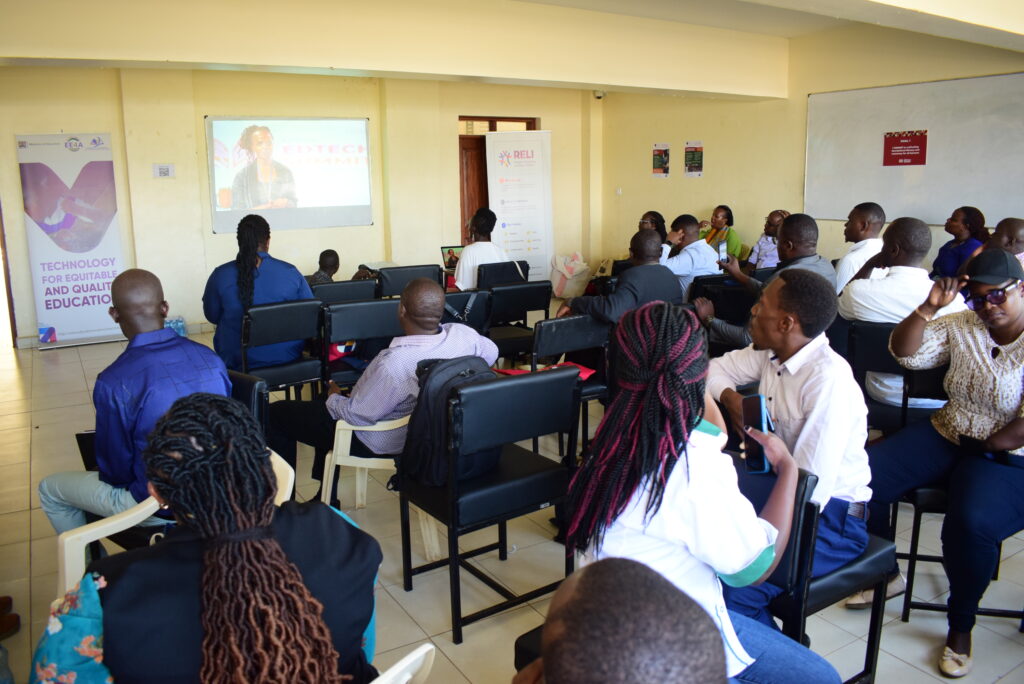
    Of interest to the EdTech ecosystem was having EdTech as one of the four EE4A conference tracks, positioning it as a key enabler to improving education outcomes. EdTech East Africa held their first Western Kenya EdTech Summit as an EE4A 2023 pre-conference activity on November 28th. This half-day event built upon the national-level conversation conducted at the Kenya EdTech Summit in September 2023. The Western Kenya EdTech Summit allowed local EdTech innovators and enablers to interact with the Kenya EdTech Collective Action Goals workshop and Learning Out Loud workshops featuring two case studies of locally implemented EdTech solutions—Edutab Africa and Angaza Elimu.

    The aim was to bring the conversations around EdTech evidence closer to the local community in Western Kenya. Kiko Muuo, the CEO of Angaza Elimu, said in his session that what data from their EdTech interventions has shown them is a disparity between the way girls and boys access technology. He said that they observed a trend where girls accessed their platform late at night when they should be asleep, while boys accessed their platform during normal after-school hours. On probing, they found out that the trend was due to domestic work by the girls after school.

    Mike Mumbo and the Edutab Africa team presented a case study of providing digital education through Moodle for offline access to two rural primary schools in a remote region in Trans Nzoia County. The ongoing case study has so far empowered teachers to integrate technology and playful learning. It has also brought to the fore the importance of collaboration with local NGOs, schools, and the Ministry of Education.

    In a pre-recorded video played at the pre-conference, Dr. Manos Antonios, Director of the Global Education Monitoring (GEM) Report, highlighted the 2023 Global Education Monitoring Report on Technology in Education. The report highlights three key findings:

    1. Although the scope and scale of technology and its change have been vast over the last few years, in higher education and lifelong learning, it has yet to transform primary education.

    2. As EdTech products change rapidly, on average every three years, research cannot keep up. In the UK, only 7% of products had gone through rigorous testing, and in the US, only 2% of apps in the government’s clearing house had evidence of a moderate or high impact on learning. In cases of the availability of evidence, it is technology providers who provide that evidence.

    3. The best way of describing the impact is that some education technologies improve some types of learning in some contexts. This also means that broader considerations around society-wide issues related to equity and quality should inform our decisions on the use of technology in education, with learners’ and teachers’ interests at the center.

    Ciku Mbugua, Kenya Co-Lead at the EdTech Hub, led a discussion on Dr. Manos Antonios’ sentiments regarding what the evidence means for the EdTech ecosystem in Western Kenya. Some of the issues that came out of this conversation were issues of teacher professional development in terms of using technology in the classroom and inadequate infrastructure in rural areas, making access to technology difficult for learners and teachers.

    During the main conference, Joan Mwachi, Collective Action Lead at EdTech East Africa, lauded the fact that this time, the EdTech conversation was part of EE4A’s core agenda and not a side conversation. Joan moderated an engaging EdTech panel consisting of Jennifer Cotter Otieno, CEO and co-founder of EdTech East Africa and Kenya Co-Lead at EdTech Hub; Kiko Muuo, representing the EdTech practitioners; Eng. Robert Juma Wamalwa, who was part of the Presidential Working Party on Education Reforms; Dr. Owen Ngumi, from Zetech University; and Prof. Carol Omulando from KCA University, representing academia. 

    This panel brought out issues of educators’ attitudes toward the use of technology in the classroom, the challenges of e-learning in higher education, issues of access and equity in terms of gender and geographical location of learners, the innovative collaborations between EdTech practitioners and infrastructure providers like telcos, and the strategies that EdTech East Africa is using to bridge the gap between evidence and practice of EdTech interventions. EdTech East Africa is in charge of ecosystem-building initiatives like the Kenyan EdTech Collective Action Goals, which all ecosystem participants co-created under the direction of existing government policies on ICT and education. 

    Dr. Sarah Ruto, the former CAS for Education who is part of the Global Education Evidence Advisory Panel (GEAAP), also reiterated the GEM report when she gave a snapshot of the 2023 GEAAP report on Cost-Effective Approaches to Improve Global Learning. The report outlines great, good, and bad buys for educational programs. The GEAAP report lists great buys as providing information on benefits, costs, and quality of education; supporting teachers with structured pedagogy; and targeting teaching instruction by learning level, not grade (in and out of school). However, making a single investment in hardware, such as laptops, tablets, or computers, or funding additional inputs without addressing other contextual issues has proven to be a bad buy time and time again. 

    The interesting insights that came out of the GEAAP report were the interventions with promising but limited evidence. These have studies that prove their high effectiveness, but evidence of their cost-effectiveness or examples of implementation at scale is lacking. One such intervention is using software that allows personalized learning and adapts to the learning level of the child (where hardware is already in schools). The concept of adaptive learning is already in use with EdTech products. This report clearly shows that it is an area of academic research that’s yet to be exploited.

    As a first-time attendee, the conference prompted introspection. My motivation was to interact with the evidence community as I prepared to come up with a master’s thesis topic. Listening to the different panel sessions, I couldn’t help asking myself the same questions posed. How do I make sure my research informs policy? What is my motivation for choosing a topic? And how do I maintain the quality of my research? Will it be related to EdTech, having worked in EdTech circles for more than five years?

    Dr. Charles Ochola, Vice Chancellor of Tom Mboya University, interrupted my thoughts during the Higher Education panel session. He stated that the research agenda is for career advancements and not to influence policy. Most postgraduates are self-funded by busy working students. This is why, outside every university, you see posters announcing research services and people offering to write master’s theses and Ph.D. dissertations while they don’t even hold degrees. This shines a light on the quality of evidence churned out of our higher learning institutions. Upon successful completion, the bound research gathers dust in libraries and stores, never to be read or influence policies. 

    To remedy this, Dr. Ochola said that we need to have more organizations fund authentic academic research. He stressed that senior lecturers and professors should have more time to do research, balancing it with their lecture work. There needs to be a succession plan for mentoring young lecturers. 

    In conclusion, the 5th Education Evidence 4 Action (EE4A) 2023 conference provided a comprehensive overview of the challenges and opportunities within the education sector in Kenya. In essence, EE4A 2023 served as a platform for critical discussions, bridging the gap between research and policy in the education sector. The incorporation of the EdTech track and the insights from esteemed speakers underscored the importance of evidence-based decision-making for transformative change in Kenya’s education landscape. The discussions recognized that technology is an enabler of teaching and learning, and its implementation should focus on evidence that supports the interests of learners and educators. Moving forward, the challenge lies in translating these discussions into actionable policies that positively impact learners and educators nationwide.

    ————-

    About the author: Juliet Awuor is the Communications and Marketing Lead at EdTech East Africa, an ecosystem-building organization that aims to connect EdTech evidence to practice for developing inclusive, effective, and resilient technology-enabled education systems in East Africa.