Tag: Regional EdTech Summits

  • Is EdTech in Kenya a Necessity or Privilege?

    Kenya has ‘forgotten’ education challenges which are often exposed when disaster strikes, take for instance the floods of April – May 2024. The news was awash with stories of destroyed classrooms, flooded classrooms and learning crises caused by the rain. According to The Impact of 2024 Deadly Floods on Schools research report, 1,967 schools were damaged, and 62 primary schools submerged by water as of May 2024. Resulting consequences of this was closure of schools, a directive by the government,  to protect learners from the floods, and risk of waterborne diseases. Apart from the state of the classrooms, there is the problem of teacher shortages, underfunding in education, curriculum changes and the very high cost of living to mention but a few. With such limited resources, recurring problems and competing priorities, why do we need education technology (EdTech)? Shouldn’t we solve the infrastructural and capacity issues we face before jumping to EdTech?

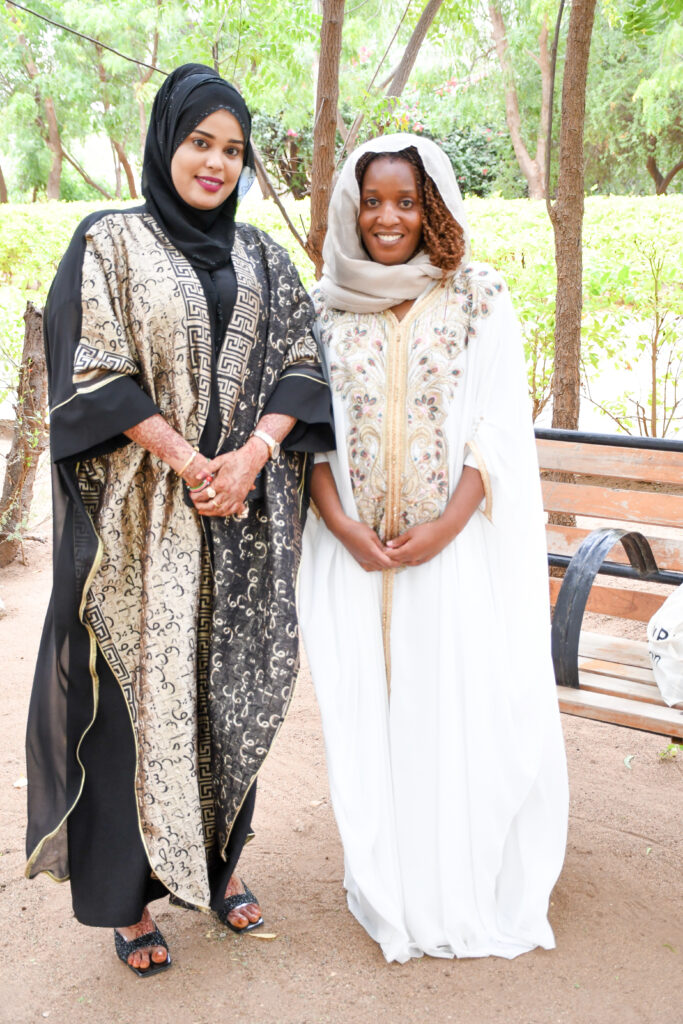
    I have travelled to the Coast, Central and North Eastern regions of Kenya attending the Pwani Regional EdTech Summit, Central EdTech Summit and the Frontier Counties EdTech Summit respectively, to find some answers to a few  conflicting questions: do we need EdTech in Kenya?  Is EdTech for the privileged? How do we bridge the gaps in education in Kenya?

    Contextualised Problems and Solutions

    In the first half of the year that I have spent engaging with key stakeholders in education in Kenya—teachers, learners, EdTech innovators, Ministry of Education representatives, development partners, local and international non governmental organisations—I have learnt that all education problems cannot fit in one basket. While some policy and infrastructural issues such as inadequate funding, lack of inclusivity, inadequate teacher professional development, policy issues plague all the Coastal, Central and North Eastern regions I have been to, some problems are specific to certain areas thus it is critical to address them at the local level and find sustainable solutions that work. 

    At the Pwani Regional EdTech Summit, the priority issues raised include but are not limited to increased school drop out tendencies for both boys and girls, low literacy levels, and child sextortion while in the Frontiers Region, systemic exclusion by the government, and cultural norms and stereotypes are the barriers to education. In the Central region, tech  integration in education systems was discussed more keenly with reference to the National ICT Survey statistics placing household laptop ownership at 9.3 %, and internet registration at 7.1 % as contributors to the digital divide in Central Kenya. So how can the Ministry of Education (MoE) tackle these education challenges and provide long term sustainable solutions for all learners in Kenya?

    First, I acknowledge that the government is not and cannot be an independent actor when it comes to education sector challenges. Different organisations and actors are developing sustainable solutions and creating impact in public schools in underserved communities in Kenya which I’ll dive into in a bit. This is achieved by ecosystem building organisations like EdTech East Africa, who gather education stakeholders in the same room through the regional and national EdTech Summits to discuss EdTech in Kenya, strengthen regional EdTech collaborations and form communities of practice for people to go about their work with shared knowledge and best practices. The summits are curated to give voice to teachers during the Teachers’ Townhall, to generate evidence and data that can influence policy in the ICT in Education and Training Policy (2021) public participation sessions and to showcase innovative, locally-driven solutions for inclusive digital learning via the Demos and Workshop sessions.

    My favourite session to attend in all the three summits has been the policy dialogues where participants are separated in groups to discuss and present their findings on a) equity and access, b) ICT for educators c) research and innovation, and d) digital safety and well being. The key take away in this session led by the Directorate of ICT in the Ministry of Education for me is always the varied responses on the implementation of the ICT in Education and Training Policy (2021). The session is designed to get responses on what’s working, what’s not working, what can be improved to leverage technology usage in Kenyan classrooms, and proposed solutions to transform education. I am often awed by how the government providing laptops and tablets to schools is both the thing that works and the thing that does not work in the three regions I have gone to. On the surface, providing these digital devices for learning is the first step in making EdTech in Kenya accessible. However, lack of internet bundles or even the entire internet infrastructure in rural areas, lack of electricity, resistance to EdTech adoption, maintenance costs of devices, ratio of ICT trained teachers to school population and competing home priorities are a major hindrance to adoption of EdTech in learning.

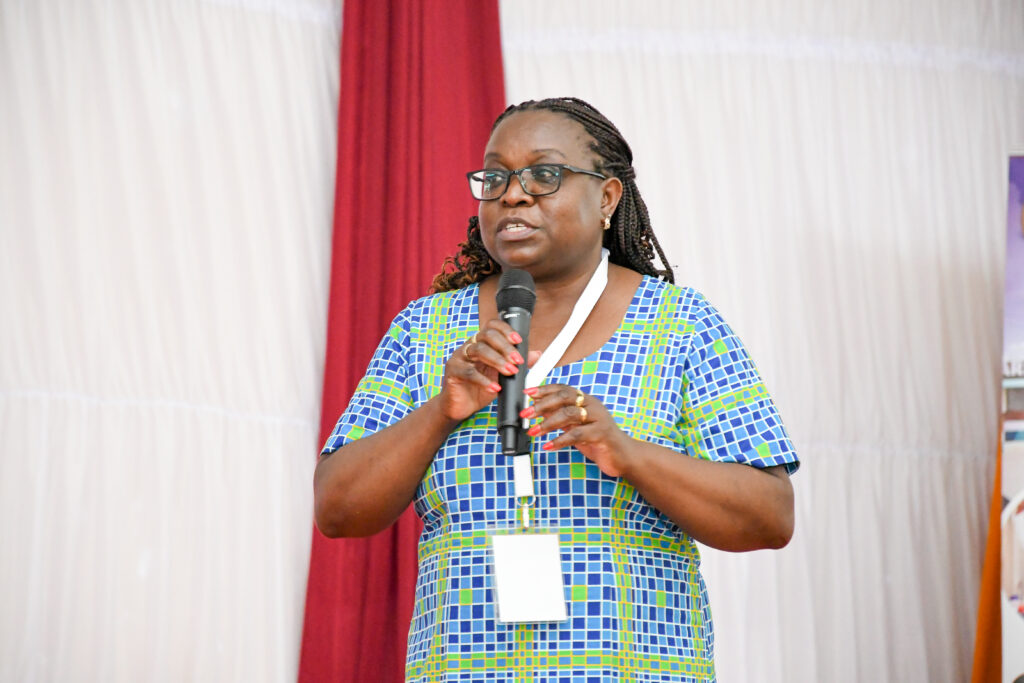
    I also enjoy the Themed Teachers’ Town Hall  which is an open conversation facilitated by a teacher on “Empowering Educators as Innovators in EdTech.” It is a dedicated space for teachers to locate and centre themselves in the EdTech conversation. The facilitator starts by asking open ended questions and passing the microphone to teachers. Usually, teachers highlight how they solve problems with local EdTech solutions, how they integrate technology in classrooms both as innovators and users, and how they monitor and evaluate the impact of EdTech solutions in classrooms. In a room full of EdTech entrepreneurs, the Ministry of Education, learners and development partners, teacher voices are critical as they are on the ground with learners, choosing what works best for their classrooms and driving EdTech usage or not. The importance of teachers in the EdTech ecosystem cannot be understated; they provide insightful feedback in real time to EdTech Practitioners attending the summit on their willingness to integrate new innovations in the classroom, their challenges with EdTech courseware and suggest any improvements that can be incorporated to make the EdTech solutions better for maximum impact.

    Is EdTech Necessary?

    On our drive to Garissa for the Frontier Counties EdTech Summit, I counted about four schools and saw many girls of school-going age walking around. They were either escorting donkeys to waterpoints or taking care of other younger children and I suppose helping their families with other chores. At a police checkpoint in Tana, more than seven girls approached our bus to ask for water bottles for storing milk. I thought and voiced this to one of the summit attendees I was travelling with, “This is so unheard of in my village in Kakamega. Every child of school-going age is in school and if they aren’t any neighbour will ask and report to the area chief for them to handle the matter.” At the same time, I also recognised that in my home area, there is some form of stability and our way of life is agriculture. Compared to the nomadic lifestyle, it is definitely a huge ask to expect learners in school when their families are moving in search of pasture, food and water. I think the realisation that EdTech is indeed a necessity happened for me at that time. 

    I had been privy to Learning Out Loud Workshop sessions hosted by several organisations during the EdTech summits such as LEWA Conservancy and their offline learning solutions in areas prone to human-wildlife interaction. The LEWA Education Programme uses Physics Education Technology (PHET Labs) to offer interactive science and math simulations that mimic real-world lab experiments. By using this technology, teachers in rural schools (where involved) have overcome lab equipment shortages and achieved practical learning outcomes for learners improving engagement and performance in science exams. I had seen NABU showcase how they create culturally relevant books and distribute them on a free mobile app with the goal of improving foundational learning. I had seen robotics and AI presentations in a modern world and I had seen the work of Pwani TeknowGalz in empowering girls to stay in school. But, I had not seen EdTech’s relevance yet in low-resource areas, until I saw the three girls from Mbaikini Girls Secondary who won the World Robotics Olympiad and until I saw a number of out of school girls on a weekday and thought of EdTech as an intervention.

    Transforming education in Kenya is possible and in alignment with Sustainable Development Goal 4; ensure inclusive and equitable quality education and promote lifelong learning opportunities for all. EdTech in Kenya should not be exclusive to a select few who can afford it, nor should it replace traditional learning systems but complement it as a holistic approach to education. There is a growing need for digital learning to be adapted, especially post COVID-19 pandemic, which can be done through co-creating solutions with local communities based on evidence and data, encouraging ownership of EdTech innovations and implementing policies that work and fit in the digital era. As these shifts happen, we need proper classrooms, well stocked libraries and posting of teachers in schools all over Kenya to improve learning outcomes. And if ballot boxes can reach all public schools that serve as polling stations during general elections, surely education infrastructure can be improved in all schools.
  • Bridging Gaps in Education: Regional Insights for Effective EdTech Deployment in Kenya

    Bridging Gaps in Education: Regional Insights for Effective EdTech Deployment in Kenya

    By Josaya Wasonga

    Kenya is a land of contrasts. We are blessed with a variety of cultures, creeds, traditions, and geographical features. From one region to the other, we all do our things in our unique way. That’s the beauty of our country.

    And that beauty and uniqueness is seen in how each region is using EdTech apps and gadgets. For instance, though they are slaying the same dragon—foundational literacy and numeracy—the approaches of Samuel Okoth and Abdullahi  Maalim are different. 

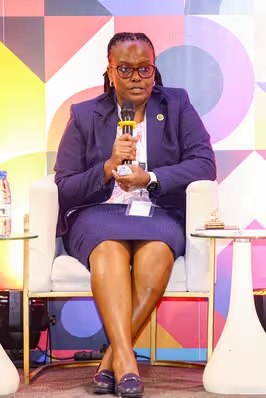
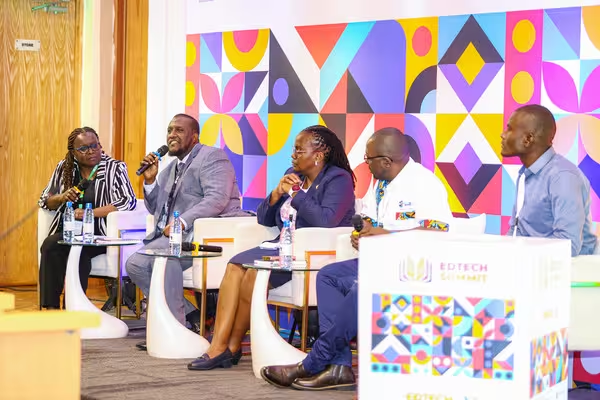
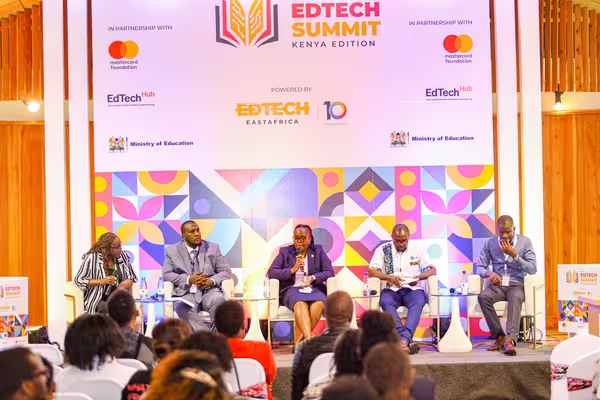
    Sam is with the Africa Math Initiative and is based in Western Kenya. Abdullahi is the Education and Governance Sector Lead at the Frontier Counties Development Council (FCDC). Both panelists face different challenges from those affecting Elizabeth Ndung’u and Paul Akwabi. Elizabeth is the Director of Digital Economy and Startups at Nairobi County. Paul is the Executive Director of Tech Kidz Africa, based in Mombasa. 

    Four different regions: Western, Northeastern (Frontier counties), Nairobi, and Mombasa, and an opportunity to learn from each other, among other things, how to upscale EdTech solutions. 

    Correcting historical learning injustices

    The Frontier Counties Development Council (FCDC) was established to address historical challenges rooted in the 1964 Kenyan Sessional Paper, which prioritized high-potential areas. This led to remoteness, isolation, insecurity, droughts, and more recently, terror-related issues, limiting the region’s educational progress in areas like access, inclusivity, quality, infrastructure, digital content, and teacher availability.

    All these have denied the council and the region the opportunity to appreciate the key performance indicators in education, including issues on access and inclusivity, quality education, infrastructure, digital content, and proper delivery of education as a result of shortages of teachers. 

    “And it’s because of that we felt, now that we are not involved physically, we should not be left behind digitally,” Abdullahi explained. And we want to correct all the gaps that came as a result of the many years of low involvement in these areas with a lot of digital integration.”

    “We’re happy that there are many organizations that came into play, knowing very well the SDG Goal of leaving no one behind. So under that rider, we were able to start this cooperative and cooperate with many organizations that are doing a lot of work, including the Ministry of Education, under the very ambitious Digital Literacy Project of 2013, which had its issues, but it has provided the latitude for organizations to come on board.” 

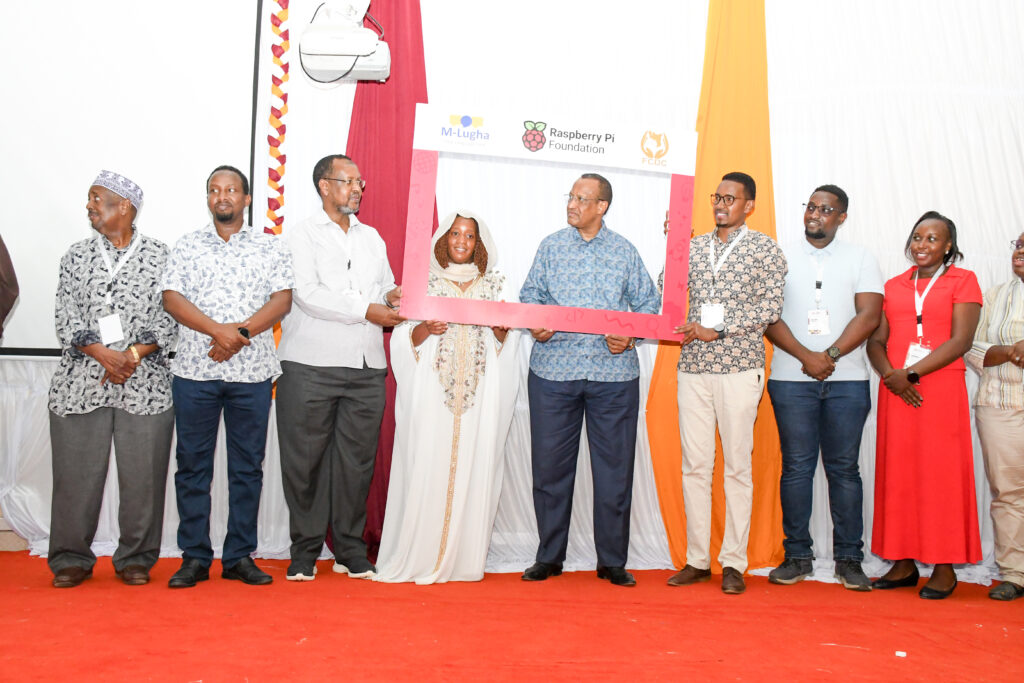
    The regional summit that was held in the north unpacked many issues. Not only that. It also created opportunities. During that forum, FCDC launched two very critical digital programs. The E-book, ECD Digital Literacy, which is serving 150,000 learners in the Northeastern region. Raspberry Pi Foundation, a charity organization based in the UK, also came on board. It is supporting about 14,000 learners in grades four to eight, in eight of the 10 FCDC counties. 

    Demystifying math

    “Anyone from the western part of Kenya will tell you that we have very dull classroom environments and very dull learning environments,” Samuel noted. “You will also agree with me if you are from the western part of Kenya that our anxiety towards math learning affects our children and in turn, affects how math is perceived.” 

    Samuel and his team are trying to demystify math. They believe that maths is not a hard subject that can only be done by the smartest of the bunch. They believe that math learning should start early – at ages two or three – even before a child sets foot inside a classroom. 

    Samuel says that it doesn’t take a trained teacher to start teaching one’s child math. Your house help will do. With the help of an app, Early Family Math, your child can be doing and loving math at home. Your child can learn math through stories and activities that are fun and engaging. Plus, they can facilitate playful interaction between the parents and the child. 

    Meaningful relationships can be created out of this. The parents can foster their child’s education. And children can also be supported when they take what they learn in the classroom back at home. Starting early will give your child a head start. 

    Socio-economic activities and beliefs

    While Abdullahi is working to correct historical learning injustices and Samuel is crunching numbers to demystify math, Paul is hard at work—down at the coast—trying to deal a death blow to socio-economic activities and beliefs that have hampered education in Mombasa and its environs. 

    “It’s ironic, but there are so many unique things in Mombasa that are not even in Nairobi,” Paul said. “At some point, they will die. But when they go to Nairobi and other parts of the country, they will thrive. Mombasa was, in 2019, the first county to start robotics and coding from early childhood. This was a life-changing project. But, unfortunately, it died.” 

    “The biggest things that affect us are socio-economic activities and beliefs. We also have a high rate of school dropouts. And we are not talking about Mombasa as a city, but also places like Kilifi and Kwale.” 

    Paul has witnessed it all. He has witnessed how culture affects entire populations and causes retrogression. Besides, the number of locals who are teachers is few and in-between. This means that the Coast region has to get teachers from other communities.

    “That becomes the first barrier within the community. They don’t have role models. They don’t have people they know within their community that they can relate to who can be a teacher.”

    There are also infrastructural challenges and well as limited access to STEM. But even with all this, there are many organizations that have penetrated the market. 

    The Coast region is among the best places to pilot any edtech solution,” Paul opined. “And that’s because of the already pre-existing resistance. Because of the resistance that is there already, they start rejecting it from the get-go because it is coming from the West. Some of them still hold on to the belief that the West has ill intentions.”  

    Paul and Co. realised that, as an organization, they could bring in other partners, both global and local, and spur a synergistic working relationship between them and the county government. Speaking of which, they currently have a project that is working just in Mombasa County in partnership with Raspberry Pi Foundation for teachers to be able to integrate technology into their classrooms. 

    “We are talking about an English teacher being able to teach coding or storytelling just using coding. We are talking about a mathematics teacher being able to teach technology, infusing technology in learning as compared to when a teacher is projecting or using a projector and is telling you that he is using technology to teach math.”

    Understanding how government works

    Being the capital city, Nairobi is not just the melting pot of the East African region, but it is a crucible of sorts. It’s the place where different people from diverse backgrounds converge for work, business, learning, leisure, and other activities. As such, for instance, there are disparities in wealth as—in some cases—persons living in informal settlements right next to plush neighborhoods. 

    “People assume that, in Nairobi, schools are overstaffed,” Elizabeth said. “But nothing could be further from the truth. Looking at the ratio of the resources, both human and physical resources, we still find that there is a great challenge.” 

    Nairobi has about 230 early childhood public schools. When you divide the number of learners with the meager government resources, you will find that the resources are not adequate. 

    Nairobi has the highest number of private schools. Yet, not all Nairobi children have access to education because the numbers are incredibly high. There are different types of schools in Kenya. The Basic Education Act (2013) defines two categories, namely public and private schools, while the Alternative Providers of Basic Education and Training (APBET) Guidelines provide another by defining APBET schools. The APBET Policy and Guidelines (2016) are silent on the nature of ownership required for APBET schools.

    Nairobi has approximately 1,300 under-childhood teachers, yet they are not enough to serve the number of learners who attend schools. 

    “When it comes to partnership, something that many people don’t have an understanding of is how the government works,” Elizabeth pointed out. “The government works with a document, a five-year document called County Integrated Development Plan. And it is on the county website.” 

    “When we look at it, we’ll guide you with the programs the county has planned for the next five years and then you can see how we plan it. We also, from there, have an annual development plan. And the county government year runs from 1st July to June 31st the following year.”

    Collective action 

    The organizations that are on the ground are doing a lot of co-creation and co-design. This means that the solutions that they come up with, even if they are simple solutions, are the right solutions for that community. Why? Because the community has been involved in creating a solution for the problem. 

    EdTech East Africa has had collective action work ongoing for the past year. Looking at the challenges facing each region, and looking at what communities are doing under different pillars – foundational learning, skills for the future, equity and inclusion, supporting the capacity of leaders of learning, and then looking at what our policies say and the evidence – what the communities are doing is commendable.  

    There are a lot of good things happening on the ground. Partners are collaborating on the ground and implementing different programs. That is the way to go. 

    Conclusion 

    We may come from different regions and we are faced with different challenges. But just as education is the great equalizer, its sidekick is technology. Technology is an enabler but still, it can be integrated in class. 

    This is something that is happening in Mombasa County. They have other projects for teachers learning AI. They also have IREX, which has programs in different schools within the coastal regions, where they teach coding without using any computer.

    The same is happening in Western Kenya with apps like Early Family Math and other edtech solutions. Then there is FCDC and its partners. Each region is doing what works for them. But, in the grand scheme of things, it all adds up and the whole nation benefits. 

    As the Swahili adage goes, “Haba na haba hujaza kibaba.” Little by little fills the measure. A little from all the stakeholders, a little from all the regions, and, in due time, our nation will be miles ahead. 

  • Digital Literacy Boost: Insights from EdTech Summit in Northern Kenya

    By Abdimalik Hajir & Juliet Awuor

    EdTech East Africa brought tech gurus to a summit held at Garissa University in Garissa to explore the future of education technology in the Frontier Counties.

    A daylong summit that culminated in the launch of a pilot project for a digital literacy program for eight frontier counties brought together policymakers, education technology practitioners, educators, researchers, and government representatives from Kenyan frontier counties.

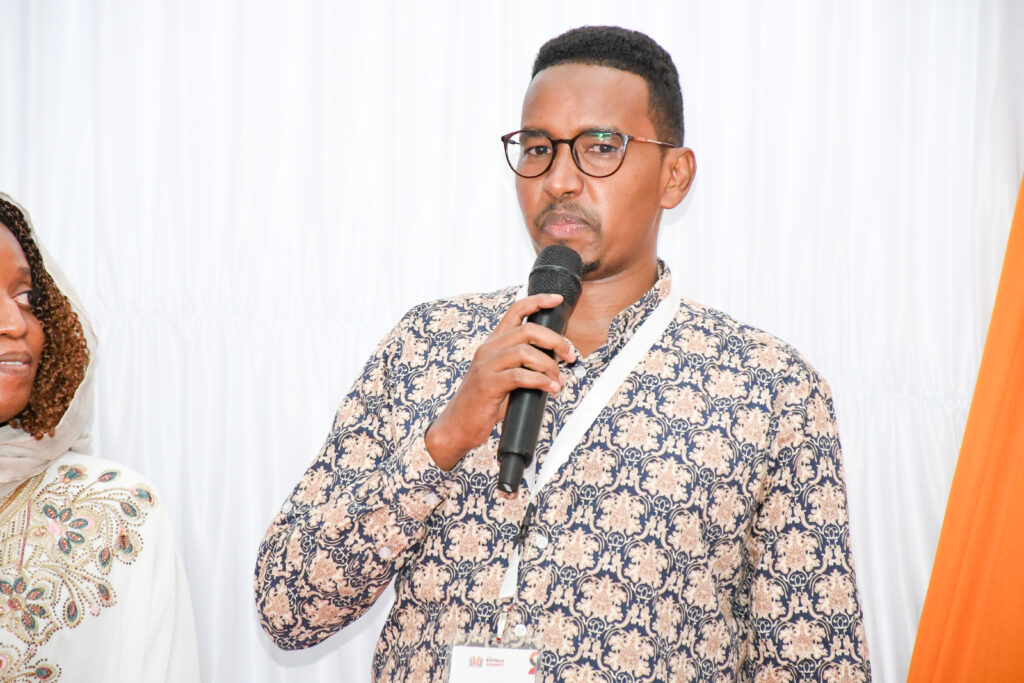
    Abdinoor Alimahdi, the founder of M-Lugha, who was among the technology enthusiasts at the summit, demonstrated how young learners can access content through an application in different Kenyan languages.

    “M-Lugha is a literacy-based solution, a translation service, and early childhood or basic education for adults. We understand the region’s lack of teachers and are bridging the gap using digital learning skills,” he said.

    He said they will train teachers in eight Frontier counties who will train learners in digital skills.

    He described how to use M-Lugha and emphasized its significance for schools, even those in remote areas, because it operates within a 100-meter radius and has KICD-approved content. The content he noted can be downloaded for future use and plays a significant role, especially in areas that experience a shortage of teachers, such as the northeastern region.

    Abdinoor urged residents in the region to put more emphasis on technology in the early years of learning, noting that some courses might be obsolete soon and adding that the world is moving towards technology.

    He noted that their ultimate goal is to enable young university graduates with visual impairments to access inclusive employment opportunities.

    David Osinya, a program officer at Kilimanjaro Blind Trust, demonstrated how the Orbit Reader 20 works with visually impaired children. He noted that the previous braille gadget was large and expensive, unlike the orbit reader, which he said was a removable memory card.

     Visually impaired staff members also use it to read books or take notes. It is, however, not an internet-enabled gadget. It’s called the reader 20 since it has 20 cells. A visually impaired individual can read, take notes, and access content stored in the orbit reader.

    He explained that their organization focuses on providing digital literacy, decoding STEM subjects, employability skills for visually impaired communities, and offering support system devices for people with visual impairments. He noted that their ultimate goal is to enable young university graduates with visual impairments to access inclusive employment opportunities.

    The Kilimanjaro Blind Trust is based in Nairobi but works in various counties. In Garissa, they support the Garissa primary school. They also support several schools in Mandera and Masrsabit. According to Osinya, they also train technicians in various schools so that they learn how to handle the device.

    Garissa Governor Nathif Jama, who graced the occasion, said the digital literacy conversation is critical in the Frontier Counties region. He appreciated the Summit sponsors, underscoring the importance of technology to learners at an early age.

    “As the chair of ASAL counties in the Council of Governors, I appreciate all other partners who, with dedication, continue to empower communities through technology. Such an initiative is a significant milestone in their efforts to ensure that people in the region gain the necessary knowledge and skills to survive the digital age, ultimately creating employment opportunities and fostering economic growth,” he said.

    The EdTech summit, the governor noted, has come at the right time when Garissa and other FCDC counties are investing in digital learning. Garissa, in particular, is working on internet connectivity, ICT laps, digital hubs in the sub-counties, and GIS implementations, which will launch in the coming week.

    The pilot project for digital literacy targets up to 14, 000 schoolchildren in Northern Kenya who will have access to computing lessons for the first time, equipping them with vital digital skills for the future.

    The Raspberry Pi Foundation, in partnership with the Frontier Counties Development Council (FCDC) and the M-Lugha Foundation, will lead the initiative. Thousands of schoolchildren aged 8–14 in eight FCDC counties will benefit from computing lessons, a significant boost to upskilling young people in the country’s arid areas. Key terms will be translated into Somali, Borana, Turkana, and other local languages to aid comprehension. The M-Lugha Foundation, spearheading the project across eight counties, will manage these translations.

    According to Wariara Waireri of the Raspberry Pi Foundation, “We are delighted to be partnering with FCDC and the M-Lugha Foundation in this exciting project to ensure young people living in these communities have access to high-quality computing lessons and resources, supported by the most recent research.”

    “The curriculum has been specially adapted for Northern Kenya, so it feels more relevant to the students’ lives, providing them with vital skills for the future.” She added.

    The summit featured various panelists discussing the unique context of EdTech in the frontier counties. Abdullahi Maalim of the FCDC moderated the discussion. The panelists included Stephen Ajanga from the regional Teachers Service Commission, Anil Khamis from Aga Khan University, and Dr. Mohamed Dahir, an education specialist and member of the Mandera County Education Task Force.

    Dr. Mohamed Dahir stated that blaming insecurity, infrastructure, connectivity, and other factors for the lack of education in the region is no longer tenable. He emphasized that it is a leadership issue, whether it involves political leaders, heads of institutions, or Boards of Management (BOMs), and that they need to step up and resolve the issues within their reach.

    He emphasized the importance of engaging all stakeholders, including children, parents, and education professionals, in serious discussions to resolve the issues revolving around education. He noted that these discussions should focus on solutions rather than placing blame on the sector’s problems.

    He noted that the region’s problem is the excessive localization and long tenure of staff, citing the example of the head of an institution who has remained at the same school for over 20 years.

    Stephen Ajanga, a regional representative of the Teachers Service Commission (TSC), noted that the current teacher shortage is a result of the government’s 1998 policy that froze employment. He mentioned that the TSC is working to bridge this gap by recruiting more teachers. Additionally, he highlighted that affirmative action, which allows teachers in the region to be recruited on permanent contracts, also addresses the shortage. 

    He said over 3000 local students are currently in various teacher training schools, hence the anticipation that the teacher shortage will be resolved in the coming years.

    Anil Khamis from Aga Khan University noted the distinction between digital natives and digital immigrants. He explained that digital immigrants—the older generation, including teachers—were not born into the digital age. In contrast, digital natives, the young children born into a world with technology, need to be equipped with digital skills. He emphasized the importance of training teachers, as they are crucial agents of change in this rapidly evolving technological world.

    In the Collective Action Workshops moderated by Joan Mwachi, participants discussed foundational learning and basic literacy skills by creating personas in the ASAL areas. They focused on Halima, a woman from Garissa who left school to marry and now runs a small shop, earning 15,000 KES monthly. The discussion highlighted her use of WhatsApp for communication with her children’s teachers, who send updates on their progress and follow-up messages.

    It was observed that children often relay information from teachers to parents. Sometimes, teachers send their students to ask their parents to check WhatsApp for communication. They believe this practice can significantly enhance learning and keep parents informed about their children’s well-being.

    Here are two sample messages shared by participants:

    1. “Hi, Mama Abu, Homework is available on WhatsApp, due on 1/7/2024.”
    2. “Salaam aleykum, mama Abu, Kazi ya ziada hesabu moja hadi kumi.”

    Local convenings like the EdTech East Africa event at Garissa University play a crucial role in exploring and implementing solutions tailored to the unique challenges of ASAL (Arid and Semi-Arid Lands) regions. Bringing together local stakeholders, policymakers, and technology experts, these summits foster discussions that lead to the development of targeted initiatives such as digital literacy programs and innovative educational tools. They ensure that solutions are relevant and responsive to the specific needs of communities in Northern Kenya, aiming to equip youth with essential digital skills and empower them for future success in the digital age.