Tag: Pwani EdTech Summit

  • Bridging Gaps in Education: Regional Insights for Effective EdTech Deployment in Kenya

    Bridging Gaps in Education: Regional Insights for Effective EdTech Deployment in Kenya

    By Josaya Wasonga

    Kenya is a land of contrasts. We are blessed with a variety of cultures, creeds, traditions, and geographical features. From one region to the other, we all do our things in our unique way. That’s the beauty of our country.

    And that beauty and uniqueness is seen in how each region is using EdTech apps and gadgets. For instance, though they are slaying the same dragon—foundational literacy and numeracy—the approaches of Samuel Okoth and Abdullahi  Maalim are different. 

    Sam is with the Africa Math Initiative and is based in Western Kenya. Abdullahi is the Education and Governance Sector Lead at the Frontier Counties Development Council (FCDC). Both panelists face different challenges from those affecting Elizabeth Ndung’u and Paul Akwabi. Elizabeth is the Director of Digital Economy and Startups at Nairobi County. Paul is the Executive Director of Tech Kidz Africa, based in Mombasa. 

    Four different regions: Western, Northeastern (Frontier counties), Nairobi, and Mombasa, and an opportunity to learn from each other, among other things, how to upscale EdTech solutions. 

    Correcting historical learning injustices

    The Frontier Counties Development Council (FCDC) was established to address historical challenges rooted in the 1964 Kenyan Sessional Paper, which prioritized high-potential areas. This led to remoteness, isolation, insecurity, droughts, and more recently, terror-related issues, limiting the region’s educational progress in areas like access, inclusivity, quality, infrastructure, digital content, and teacher availability.

    All these have denied the council and the region the opportunity to appreciate the key performance indicators in education, including issues on access and inclusivity, quality education, infrastructure, digital content, and proper delivery of education as a result of shortages of teachers. 

    “And it’s because of that we felt, now that we are not involved physically, we should not be left behind digitally,” Abdullahi explained. And we want to correct all the gaps that came as a result of the many years of low involvement in these areas with a lot of digital integration.”

    “We’re happy that there are many organizations that came into play, knowing very well the SDG Goal of leaving no one behind. So under that rider, we were able to start this cooperative and cooperate with many organizations that are doing a lot of work, including the Ministry of Education, under the very ambitious Digital Literacy Project of 2013, which had its issues, but it has provided the latitude for organizations to come on board.” 

    The regional summit that was held in the north unpacked many issues. Not only that. It also created opportunities. During that forum, FCDC launched two very critical digital programs. The E-book, ECD Digital Literacy, which is serving 150,000 learners in the Northeastern region. Raspberry Pi Foundation, a charity organization based in the UK, also came on board. It is supporting about 14,000 learners in grades four to eight, in eight of the 10 FCDC counties. 

    Demystifying math

    “Anyone from the western part of Kenya will tell you that we have very dull classroom environments and very dull learning environments,” Samuel noted. “You will also agree with me if you are from the western part of Kenya that our anxiety towards math learning affects our children and in turn, affects how math is perceived.” 

    Samuel and his team are trying to demystify math. They believe that maths is not a hard subject that can only be done by the smartest of the bunch. They believe that math learning should start early – at ages two or three – even before a child sets foot inside a classroom. 

    Samuel says that it doesn’t take a trained teacher to start teaching one’s child math. Your house help will do. With the help of an app, Early Family Math, your child can be doing and loving math at home. Your child can learn math through stories and activities that are fun and engaging. Plus, they can facilitate playful interaction between the parents and the child. 

    Meaningful relationships can be created out of this. The parents can foster their child’s education. And children can also be supported when they take what they learn in the classroom back at home. Starting early will give your child a head start. 

    Socio-economic activities and beliefs

    While Abdullahi is working to correct historical learning injustices and Samuel is crunching numbers to demystify math, Paul is hard at work—down at the coast—trying to deal a death blow to socio-economic activities and beliefs that have hampered education in Mombasa and its environs. 

    “It’s ironic, but there are so many unique things in Mombasa that are not even in Nairobi,” Paul said. “At some point, they will die. But when they go to Nairobi and other parts of the country, they will thrive. Mombasa was, in 2019, the first county to start robotics and coding from early childhood. This was a life-changing project. But, unfortunately, it died.” 

    “The biggest things that affect us are socio-economic activities and beliefs. We also have a high rate of school dropouts. And we are not talking about Mombasa as a city, but also places like Kilifi and Kwale.” 

    Paul has witnessed it all. He has witnessed how culture affects entire populations and causes retrogression. Besides, the number of locals who are teachers is few and in-between. This means that the Coast region has to get teachers from other communities.

    “That becomes the first barrier within the community. They don’t have role models. They don’t have people they know within their community that they can relate to who can be a teacher.”

    There are also infrastructural challenges and well as limited access to STEM. But even with all this, there are many organizations that have penetrated the market. 

    The Coast region is among the best places to pilot any edtech solution,” Paul opined. “And that’s because of the already pre-existing resistance. Because of the resistance that is there already, they start rejecting it from the get-go because it is coming from the West. Some of them still hold on to the belief that the West has ill intentions.”  

    Paul and Co. realised that, as an organization, they could bring in other partners, both global and local, and spur a synergistic working relationship between them and the county government. Speaking of which, they currently have a project that is working just in Mombasa County in partnership with Raspberry Pi Foundation for teachers to be able to integrate technology into their classrooms. 

    “We are talking about an English teacher being able to teach coding or storytelling just using coding. We are talking about a mathematics teacher being able to teach technology, infusing technology in learning as compared to when a teacher is projecting or using a projector and is telling you that he is using technology to teach math.”

    Understanding how government works

    Being the capital city, Nairobi is not just the melting pot of the East African region, but it is a crucible of sorts. It’s the place where different people from diverse backgrounds converge for work, business, learning, leisure, and other activities. As such, for instance, there are disparities in wealth as—in some cases—persons living in informal settlements right next to plush neighborhoods. 

    “People assume that, in Nairobi, schools are overstaffed,” Elizabeth said. “But nothing could be further from the truth. Looking at the ratio of the resources, both human and physical resources, we still find that there is a great challenge.” 

    Nairobi has about 230 early childhood public schools. When you divide the number of learners with the meager government resources, you will find that the resources are not adequate. 

    Nairobi has the highest number of private schools. Yet, not all Nairobi children have access to education because the numbers are incredibly high. There are different types of schools in Kenya. The Basic Education Act (2013) defines two categories, namely public and private schools, while the Alternative Providers of Basic Education and Training (APBET) Guidelines provide another by defining APBET schools. The APBET Policy and Guidelines (2016) are silent on the nature of ownership required for APBET schools.

    Nairobi has approximately 1,300 under-childhood teachers, yet they are not enough to serve the number of learners who attend schools. 

    “When it comes to partnership, something that many people don’t have an understanding of is how the government works,” Elizabeth pointed out. “The government works with a document, a five-year document called County Integrated Development Plan. And it is on the county website.” 

    “When we look at it, we’ll guide you with the programs the county has planned for the next five years and then you can see how we plan it. We also, from there, have an annual development plan. And the county government year runs from 1st July to June 31st the following year.”

    Collective action 

    The organizations that are on the ground are doing a lot of co-creation and co-design. This means that the solutions that they come up with, even if they are simple solutions, are the right solutions for that community. Why? Because the community has been involved in creating a solution for the problem. 

    EdTech East Africa has had collective action work ongoing for the past year. Looking at the challenges facing each region, and looking at what communities are doing under different pillars – foundational learning, skills for the future, equity and inclusion, supporting the capacity of leaders of learning, and then looking at what our policies say and the evidence – what the communities are doing is commendable.  

    There are a lot of good things happening on the ground. Partners are collaborating on the ground and implementing different programs. That is the way to go. 

    Conclusion 

    We may come from different regions and we are faced with different challenges. But just as education is the great equalizer, its sidekick is technology. Technology is an enabler but still, it can be integrated in class. 

    This is something that is happening in Mombasa County. They have other projects for teachers learning AI. They also have IREX, which has programs in different schools within the coastal regions, where they teach coding without using any computer.

    The same is happening in Western Kenya with apps like Early Family Math and other edtech solutions. Then there is FCDC and its partners. Each region is doing what works for them. But, in the grand scheme of things, it all adds up and the whole nation benefits. 

    As the Swahili adage goes, “Haba na haba hujaza kibaba.” Little by little fills the measure. A little from all the stakeholders, a little from all the regions, and, in due time, our nation will be miles ahead. 

  • Call for Technology inclusion in schools during the 2024 Pwani EdTech Summit

    Call for Technology inclusion in schools during the 2024 Pwani EdTech Summit

    By Aura Ruth

    As the world evolves, everything is taking on a new shape, with digital space taking over in all sectors and introducing new technologies.

    Kenya is one of the countries that is quickly evolving and ensuring that it is not left behind by introducing digital working spaces not only in offices but also in schools. The introduction of the CBC was one of the new technologies that were introduced in learning institutes, especially in public schools. 

    Today, EdTech community experts are working towards promoting digital literacy in schools in Kenya and ensuring that learners, teachers, and parents are introduced to and made aware of the importance of technology in schools.

    Despite the efforts by governments, the EdTech community, and other stakeholders to ensure that there is inclusivity of technology among learners, there is still a gap when it comes to learners with disabilities who have been left out, especially those who are mentally handicapped.

    The Action Foundation head of programs, Stephen Ikonya, noted that Kenya has a big gap in inclusion and that women, girls, and children with disabilities have always been left out of technology programs.

    Schools are also struggling to get resources that can enable digital literacy learning in their institutions because it is expensive and hard to maintain.

    The language barrier among learners, teachers, and illiterate parents is still a challenge that needs to be addressed. Teachers cannot also contextualize the content to ensure inclusion in classrooms.

    Philip Okidi, a teacher at Pwani Secondary School for the Deaf, said that schools and educational institutions should prioritize accessibility and diversity in STEM. He called upon all stakeholders to ensure that girls are not denied the opportunity to access their rights to go to school because most parents do not allow them to attend school. He said that learners with disabilities should also be given postsecondary digital support just to ensure that they do not sit home idle.

    The government and key stakeholders were called upon to ensure that teachers are retooled to enable inclusivity.

    The national government, through the Ministry of Education, has also come out to support the initiative of digital literacy in schools by providing training to teachers.

    Dr. Robert Juma Wamalwa, a member of the Presidential Working Party on Education Reforms, stated during the 2024 Pwani EdTech Summit that the government and its agencies have started a journey that goes beyond the bounds of conventional education thanks to the winds of technological innovation.

    In this rapidly evolving digital landscape, he said that the interception of education and technology has become the cycle of progress shaping the way children learn, how they are taught, and ultimately the future of society. 

    Dr. Wamalwa said that there is a need for the EdTech community, the government, and other stakeholders to reflect on the power of collaboration and imagination because the digital era has presented opportunities to enhance the learning experience, breaking down barriers and creating a conducive environment for learners around the globe.

    The 2024 Pwani summit took place in Mombasa at the Close the Gap Hub. Jecinter Nduta, manager at Close the Gap Hub, a tech incubation hub where the 2024 Pwani summit took place, said that Close the Gap, a Belgium company, was brought to Mombasa to make it more inclusive for Mombasa people because there was huge innovation potential. 

    Changing the Norm

    EdTech East Africa, supported by the Mastercard Foundation, is working closely with East African countries to ensure that learners are introduced to digital literacy.

    It is a network that began 10 years ago to bring EdTech communities together in Kenya with a focus on three goals, coordination, transparency, and action. It has since grown to an EdTech East Africa community of over 4000 individuals. 

    Dr. Wamalwa said that the Ministry of Education and the Ministry of ICT are working together with EdTech East Africa, which plays a very crucial role in delivering technology by developing ICT infrastructure for curriculum delivery and assessment to improve digital literacy among teachers’ parents and other key stakeholders. “EdTech also has a role to play in ensuring that there are enhanced accelerated education programs for marginalized learners and learners with special needs.” Dr. Robert Juma Wamalwa.

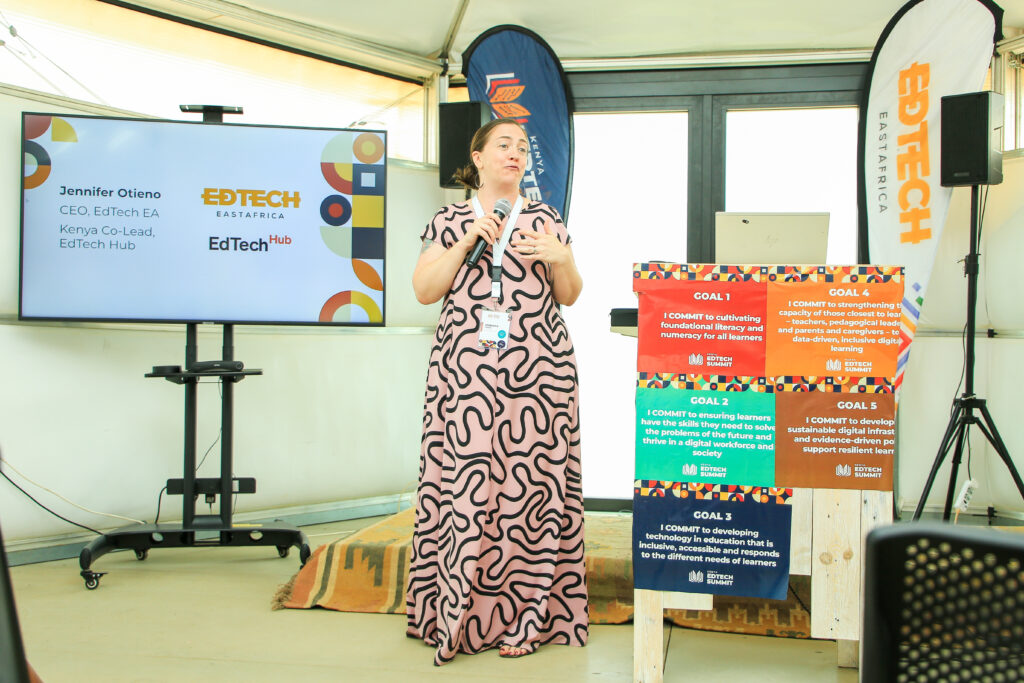
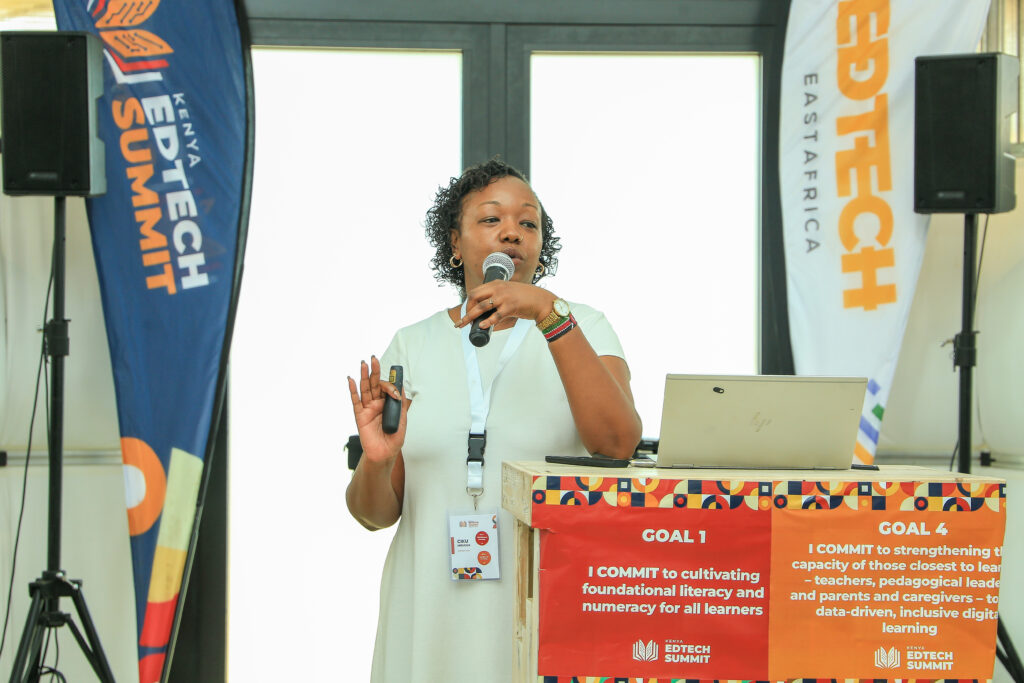
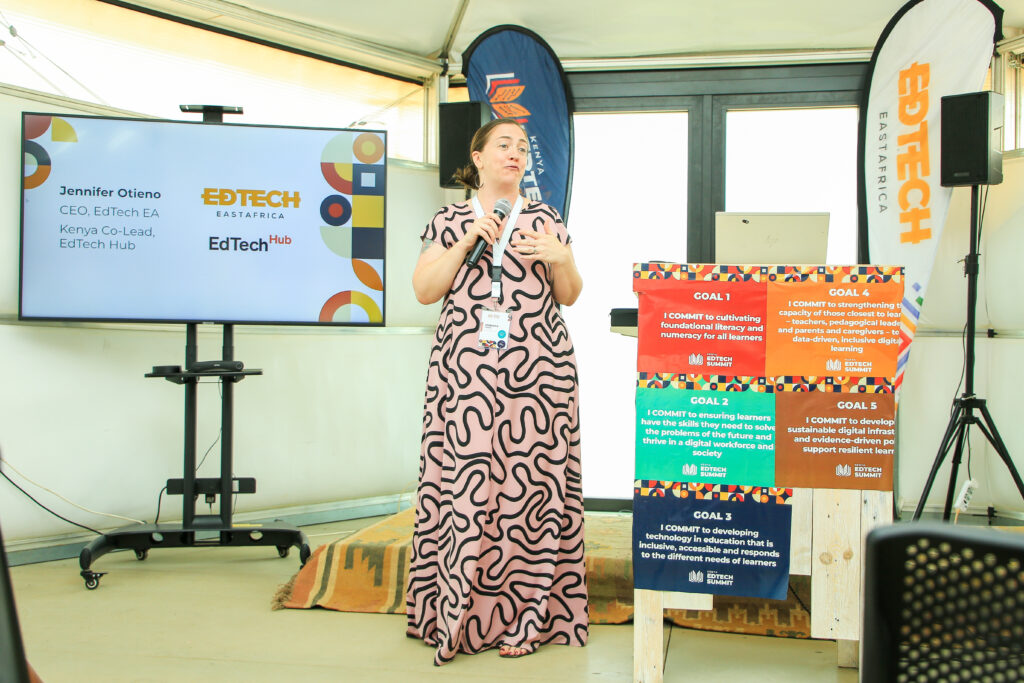
    The EdTech East Africa chief executive officer and Kenya Co-Lead at EdTech Hub, Jeniffer Cotter-Otieno, said in her remarks that the organization aims to bring communities together to create relationships and forge the way forward. “Pwani EdTech Summit is about something bigger than any individual or organization; this is about us coming together. As individuals, we cannot change EdTech in Kenya, but together, it is possible, and we have the opportunity to use technology to make that transformation happen,” said Jennifer.

    “We all believe that, as partners, it is important to use evidence as our common language for what allows us to make the most informed decision about how we use technology in teaching and learning. We have the responsibility of transforming the education sector in Kenya, and together, we can make that transformation,” she noted.

    The CEO noted that EdTech East Africa has an agenda of helping African governments close the gaps that exist in the education sector. They are working towards having evidence-based technology by enabling teaching and learning in schools.

    Evidence-based Tech

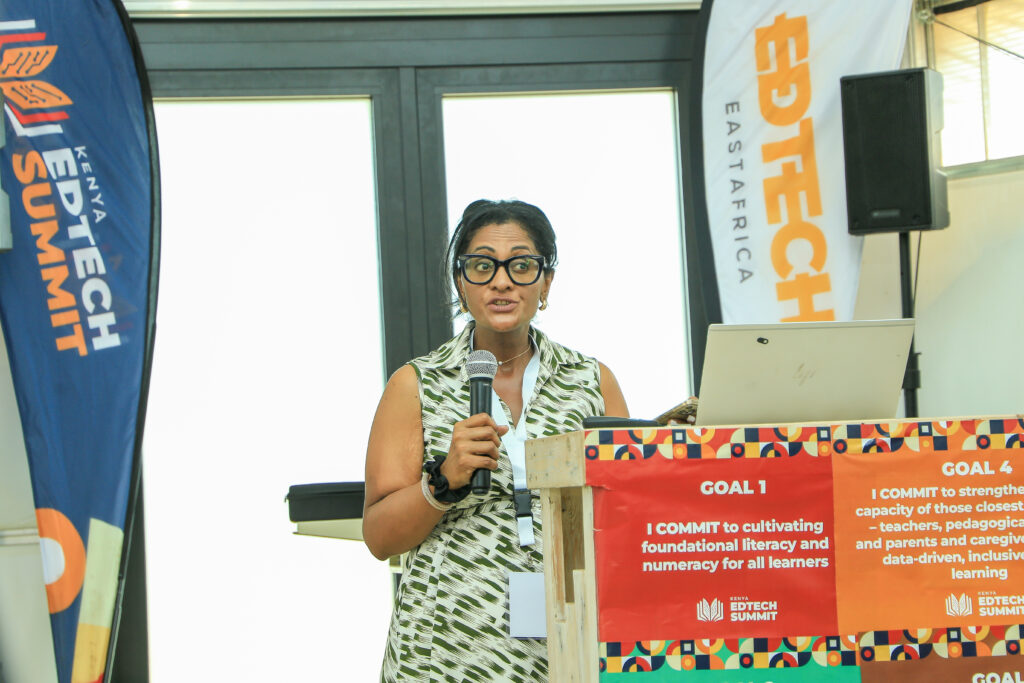
    On her part, EdTech Hub executive director Verna Lalberharie noted that the EdTech Hub is a global research partnership and has a role to focus on and make sure that decision-makers, regardless of where they sit in the digital ecosystem, have access to vigorous evidence and a lot of work in regards to technology and education.

    She noted that there is a need for critical evidence that will guide developers in providing tech solutions. “There is still limited evidence on the work in low-income countries in regards to technology, so how do we as developers or policymakers handle enthusiasm, including teachers as co-creators? Their role is very essential. Parental engagement is a very critical component because children who grow up in low-literacy environments where parents lack education resources, capacity, and connections in schools that need to support the development of children’s education; therefore, we need to partner with schools to ensure that we make this happen,” Verna Lalberharie noted.

    She noted that measuring learners’ experiences is critical, adding that there is still a gap in the social and emotional learning of children and their mental and physical status. Her call to action to the government, EdTech community, and other stakeholders was that as they work on EdTech solutions, they need to take into consideration how they consider the children.

    Innovation Manager East Africa, Brink Kenya, and Co-Lead EdTech Hub, Ciku Mbugua, said that they want to generate and continuously use evidence to improve and upscale in sub-Saharan Africa.

    She said that EdTech Hub has a new project called Ubora Bora, which is expected to be launched on February 27, 2024, under the partnership of the Gates Foundation, who are the funders.

    The new project will help enable continuous improvement and remind the education system to use evidence.

    “EdTech is already doing upscale and long-term research, but we want to do speed implementation research; we want to help unlock certain things in the implementation journey. We have to work with the government and provide solutions for government productivity,” Ciku Mbugua said.

    She noted that system integration goes hand in hand with scale and that the strength of evidence needs to work with the goal. The new project will fund the governments, but the partners will work with the governments.

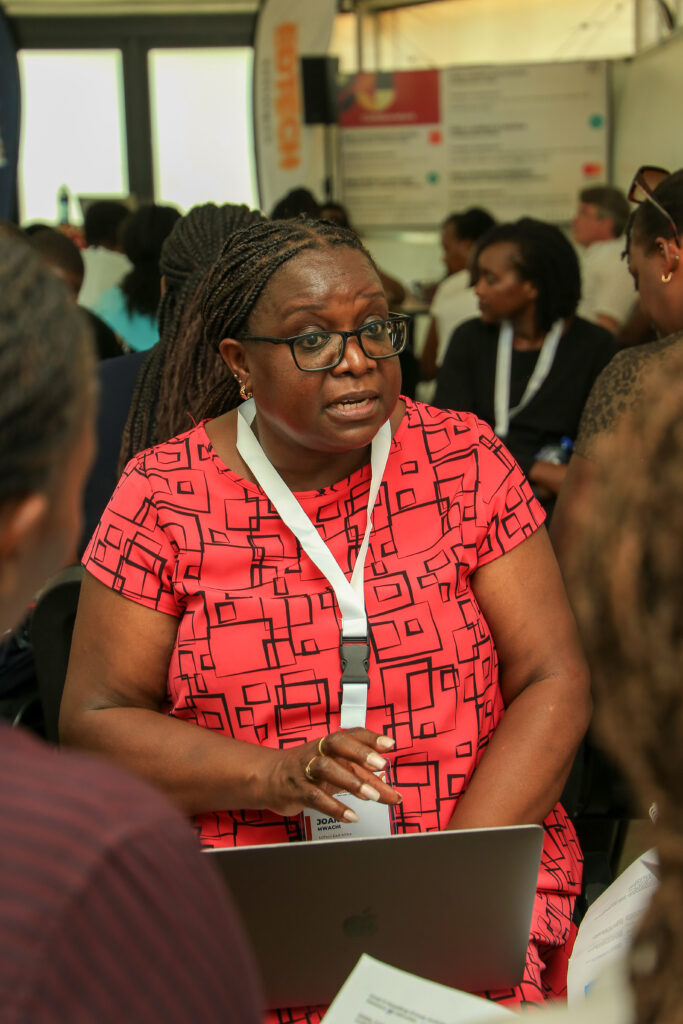
    EdTech East Africa Collective Action Lead Joan Mwachi said that evidence is key, and they cannot talk about what works if they don’t talk about what works. This is because with technology, it is easy to talk about it, but those who are not in technology need evidence to believe that it works.

    “We are in the process of making adaptive change consumable; we are in the era of making AI; we are now talking about intersections in education and AI: AI for learning and AI for teaching. 

    How are we adapting to these things? How are we preparing our teachers, what are our policies saying, and how do we use the platform of foundational learning to address skills for the future? It is all connected in one way or another, and each one of us has a role to play in that space,” said Joan Mwachi.

    The key areas include a common agenda where they want to use technology to close the gap and shared measurement systems, and this entails mutually reinforcing activities. She said that if the EdTech community works together collectively, they will make a change that will work.

    Another key to the collaborative effort is continuous communication. Joan said that the community platform is what EdTech has for people. On the backbone support, she noted that their role as an organization is to try and bring everyone together and coordinate the efforts of the community. 

    “Edtech is a catalyst; the members sit on the table of reforms because they work in one voice. What we are doing is embedded in the Ministry of Education’s vision to support teachers to have the required skills. We have partners who are working to ensure that we have co-facilitators in all areas, identifying skills that are needed in the future, and who are working towards producing technology that ensures equity and inclusion,” Joan Mwachi noted.

    Call to Action

    To strengthen the use of technology in schools beyond the connectivity infrastructures that can be used, the government and key stakeholders were also called upon to ensure that teachers are given access to the devices, especially by the school heads and the Ministry of Education.

    Stakeholders were called upon to also ensure that young people are involved in this technology implementation in schools because they are more likely to embrace and adapt technology than the teachers.

    The government was also urged to come up with evidence-driven policies that will make technology yield in schools.

    “It is very important to start working with teachers and not for teachers; let them contribute to the making and validation of solutions.” William is an EdTech community member.

    The representative of the Presidential Working Party on Education Reforms, Dr. Robert Juma Wamalwa, said that the Ministry of Education has support from the Ministry of ICT in the implementation of technology in schools because it cannot make it on its own.

    “The Ministry of Education on its own cannot make it; it needs an extra hand and support in achieving the goals towards introducing technology to learners, and that is why EdTech East Africa plays a very crucial role in this to leverage technology at all levels of education by defaulting on ICT infrastructure for curriculum delivery and assessment to improve digital literacy among teachers, parents, and other key stakeholders,” Robert Wamalwa noted.

    He said that the Presidential Working Party on Education Reforms recommended that the Ministry of Education enhance and accelerate education programs for marginalized learners and learners with special needs while upscaling inclusivity, an area in which he said EdTech will have to play a crucial role.

    We also recommended the framework for operationalizing the National Open University of Kenya. This alone presents a transformative opportunity for technology to play a central role in shaping the future of education. These are the areas which he said EdTech needs to swim in.

    He called upon collaboration between the government, education institutions, and the private sector as an essential player in the success of these reforms.

    He noted that he is very close to the EdTech community because they are the team that can help the government achieve or fulfill the recommendations they have on the table both nationally, regionally, and even globally.

    “If we talk of the African Union, that is where every country within the region must come. We need serious stakeholders and partners like the EdTech community and other opportunities because we have increased access to learning, inclusive quality education, relevance in learning and teaching, and parent and teacher professional development.

    Online courses are something that EdTech East Africa can do because, within the EdTech community, we have a team of innovators who have a lot of energy to implement this.

    EdTech East Africa has a plan to hold their summits in all 47 counties to create awareness of the importance of technology in schools. The next summit will be held in North and Northern Eastern, Central, and then come back to Nairobi for the 2024 national summit.

    About the AuthorMs. Aura is a communication consultant, a storyteller, and a writer. She is a journalist working with Radio Africa Group, where she writes for The Star Newspaper.

  • Pwani EdTech Summit affirms that Collaboration is the KEY key to EdTech Transformation

    Pwani EdTech Summit affirms that Collaboration is the KEY key to EdTech Transformation

    By Cece Siago

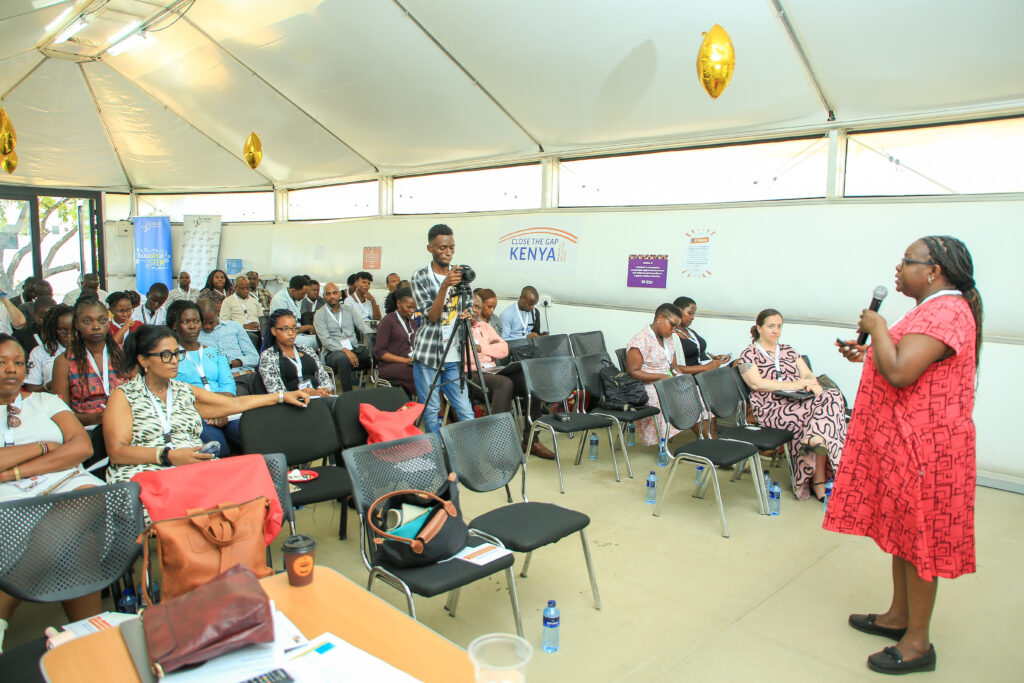
    It is a hot, humid Tuesday morning on February 20th, and guests are slowly streaming in to attend the EdTech East Africa organised Pwani EDTech Summit.

    A first of its kind, the event brought together EdTech experts based in the Coast region as well as innovators working in the coastal part of Kenya.

    Close the Gap, an incubation hub nurturing the most outstanding tech innovations in the Coast region, is this edition’s host, with a well-organized venue suited exactly for that kind of audience.

    The summit was not only to discuss the innovations but also to come up with other solutions that will see more learners, especially in remote and marginalized areas, get access to EdTech learning tools.

    It was also to shed light on the importance of collaboration between government agencies, innovators, and other EdTech practitioners to make the learning transformation a success. 

    The inclusion of innovators meant they demonstrated their work to other parties for the sake of making their work known to more people and also forming connections.

    Presidential Working Party on Education Reforms (PWPER) member Dr. Eng Robert Wamalwa officially opened the summit, highlighting why the intersection of technology and education is shaping learning and the future of society. 

    “This summit is a catalyst for change where education is not confined to classrooms. This is a journey that will change the destiny of education,” Wamalwa said, setting the mood for the day-long engagement.

    He also noted the importance of leveraging the use of technology to empower learners and institutions. As an ambassador for ED Tech, he said it was time that government officials, education players, and the private sector collaborate to see not only Kenya but all the African Union countries benefit from this.

    Jacinta Nduta, Close the Gap’s hub manager, was appreciative of EdTech East Africa considering the hub as a venue for the largest EdTech summit in the coastal region.

    She said the hub offers co-working spaces, meeting rooms, and physical shops for computers whose prices are way below the market prices. These computers allow a wider population to access affordable laptops.

    Their latest innovation is the Digitruck, which moves from one school to another to teach coding to learners, especially those who do not have physical premises or infrastructure that would promote education in tech, such as electricity or machines.

    EdTech East Arica Co-Founder Jennifer Cotter-Otieno was in awe of the attendance, noting how this was just a noble idea with ten people ten years ago but is now attracting tens of hundreds of players in the sector.

    “We decided to hold a summit in Mombasa because we wanted to bring all the communities represented from across the country.”.

    “We cannot change the education sector in Kenya individually, but when we do it together, it is possible.”

    On the partnership, she said the Mastercard Foundation had played a major role as a sponsor for this and other EdTech East Africa initiatives, such as the EdTech Mondays, a programme that discusses various issues in the industry and features several players.

    Collaboration

    EdTech Hub Executive Director Verna Lalbeharie noted that with Ed Tech, it was key to co-create innovations with teachers, parents, and caregivers to be able to have an all-round working system.

    “There is limited evidence of what works in low- and middle-income countries. We need more collaborative research that will enhance the design and the platforms that we use for learning.”

    A key issue was the importance of parent engagement, even as she said that teachers had shown enthusiasm.

    “Parents cannot expose children to teaching at an early age; therefore, collaboration with caregivers can help prompt them to meet the challenges expected because they know what they need.”

    She also noted that the learner’s wellness was important in transition. Verna said the physical health, mental health, and all-around wellness of those learning also contribute to the success of the tools used and their effectiveness.

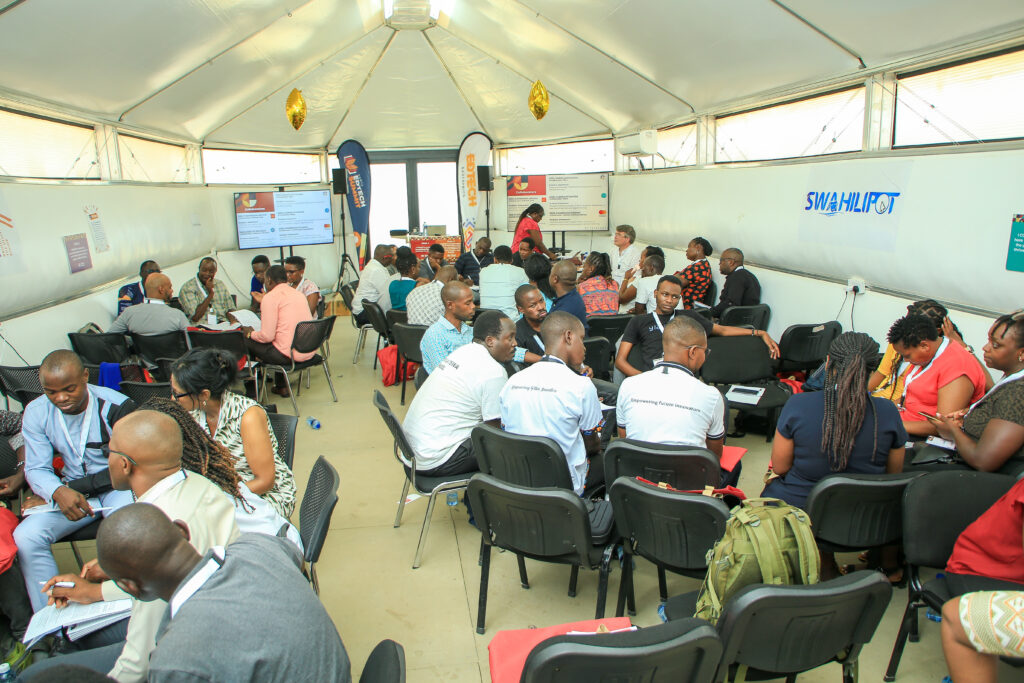
    Collaboration stood out in the day-long interactions that not only involved speeches by key organizers but also plenaries and group discussions organized to shed light on the various technologies that have been applied to support learners in their education.

    In her opening speech, Jennifer Cotter-Otieno said this was not just an event, but the summit was a platform to create relationships that forge the way forward in the fast-growing sector.

    “We want to create an evidence-driven movement, create transparency, and also catalyze action so that we can do our work more efficiently.” 

    This was not possible without the inclusion of key government players.

    For instance, the presidential working party on education reforms, represented by Dr. Robert Juma Wamalwa, came up with recommendations for improving the learning cycle.

    “Let us reflect on the power of collaboration and imagination,” Dr. Wamalwa said, adding that PWPER had come up with recommendations for education, with the Ministry of Education, the Ministry of ICT, and EdTech playing a major role in the education transformation.

    He also said the other recommendation was for the Ministry of Education to enhance inclusivity, which will be an opportunity for EdTech to play a role in the fast-transforming and evolving education sector due to technology. 

    Other than the role of the government, innovators were also asked to collaborate, as opposed to working in silos, to be able to bring out the best in their work. Innovators join forces, especially those with similar innovations, to avoid the replication of ideas.

    Collective Action

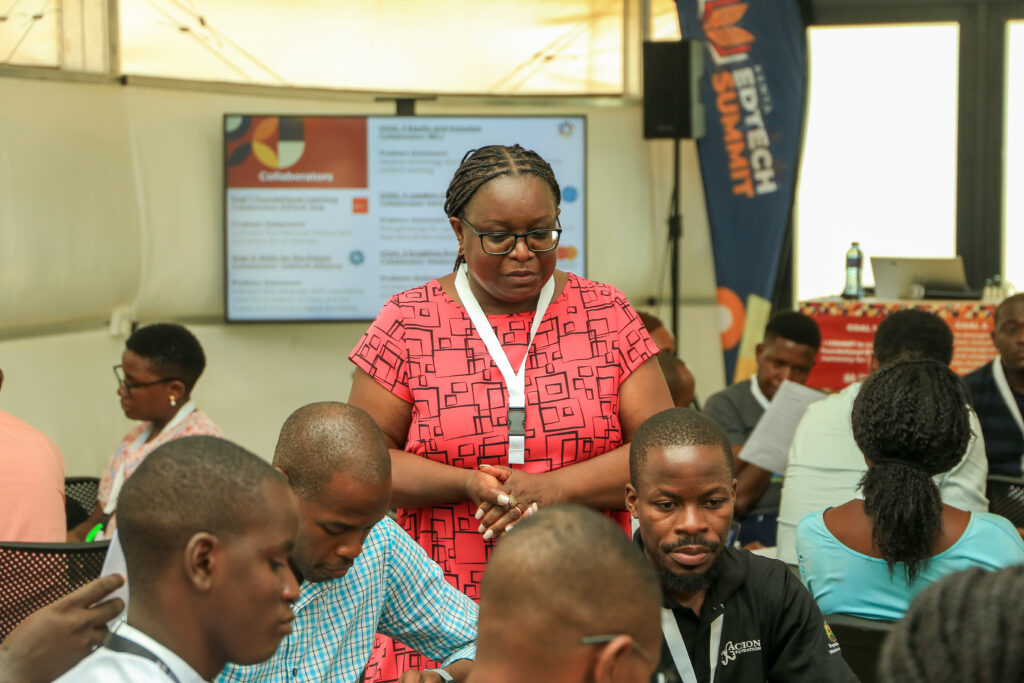
    Joan Mwachi’s Collective Action Workshop session brought to light how stakeholders are preparing for the use of artificial intelligence in terms of policies and how technology can help close this gap.

    “If we work collectively, we will achieve the changes we want,” said Joan.

    She said successful collaboration efforts include having a common agenda, a shared measurement system, mutually reinforcing activities, continuous communication, and a backbone support organization. 

    “EdTech has started a movement that I think will lead us to achieving this,” added Joan.

    Demonstrations of Working Innovations in Coast Region

    In one of the breakouts, Stem Impact Center Kenya ran a demonstration on how to use the coding app dubbed SCRATCH, which uses a block model for coding.

    Stem Impact Center, the youth development non-profit organization, leverages Science, Technology, and Innovations (STI) to enhance technical skills development, youth empowerment, employment creation, entrepreneurship, and innovation.

    The showcased programming language and online platform allow users to create stories, games, and animations. Scratch promotes computational thinking and problem-solving skills, creative teaching and learning, self-expression and collaboration, and equity in computing.

    Children as young as six years old can use this, which is one of the technological learning solutions that is effective in some Coast region schools. For instance, the drag-and-drop program can be used to ease learning, and its adaptation of the Kiswahili and English languages makes the tool more relatable.

    The highlight of the demo session was when participants were offered laptops to attempt to create characters and conversations using the block model. This also involved individual voice recordings to personalize the characters and being guided on how to arrange the code blocks to make successful stories from the characters. 

    “Most learners love it when they hear their voices, which makes the tool more relatable,” a representative from the STEM Impact Center said. They added that the innovation was willing to offer workshops for both teachers and learners in new schools to get to know how the tool works.

    Taking Digital Personalized Learning in ECDs a notch higher

    In the other session, Janice Mutegi and Joseph Gatonye, passionate ECD teachers, took advantage of the forum to explain to the attendees how an innovation of EIDU is working to help learning in preschools.

    “We are bringing digital personalized learning (DPL) to Kenya to support teachers’ efforts in teaching,” said Janice.

    Through the tool, learners have access to digital personalized learning content in math and literacy. The Kenya Institute of Curriculum Development (KICD) has approved all content, and it is fully in line with the new competency-based curriculum (CBC).

    Her co-presenter, Mr. Gatonye, said they are working in steps with partners to ensure the DPL is introduced in class to support the teacher’s efforts and also have a structured pedagogy that is digitised to help teachers have some uniform way to deliver the competency-based curriculum (CBC) better and ensure ECDE officers have a platform or tool to monitor and support learning.

    So far, the team has visited 37 counties and says their goal is to serve all 12+ million public pre-primary and primary students across the country by 2027, making Kenya the first country in the world to have a fully digitized education system.

    Mr. Gatonye said they had developed a digital learning platform and worked with the county governments to identify schools and then help the teachers deliver the CBC curriculum.

    To ensure teachers are capacity-built, they used a master training approach for early childhood development officers. They also support monitoring through class observations and cluster meetings, and EIDU officers support tech issues.

    In the case study, Jane said ECDE learning in the classroom has shown considerable improvement in terms of materials in the Coast region.

    “However, in every classroom you visit, different teachers have different strategic methods of covering their lessons. Even though they are using CBC designs from KICD, they have different priorities,” she said.

    The project, however, still faces a challenge because there are few tools to support teachers in the coverage of their lessons.

    Local education officers monitoring learning also turned out to be a challenge. The duo, however, said EIDU has joined hands with the county government to ensure learning outcomes are improved through the use of enhanced tools to support the learner, the teacher, and the officers.

    Their sessions also included group questions for participants to brainstorm how best teachers can be supported through training and capacity building when it comes to the application of the DPL tools in schools.

    To be highly noted was the need to not just target the teachers but also to include community leaders and parents and use existing platforms.

    Participants also suggested that there should be webinars for teacher training so that they do not have to move out of the classroom. The other suggestion was training outside of class hours.

    To make this more effective, groups suggested that young teachers should be targeted in the training since they are more adaptive to digital tools. 

    As teachers, it was also important to note that there were factors to be considered when it came to the dosage of the tools for the learners. Participants said key considerations would be the concentration span of the learners, the activity type, and the type of learner to know how long each one will take to use the tools.

    Creating Visibility

    As the summit came to an end, Ed Tech East Africa called for the need to increase the visibility of creators and their projects to a larger audience.

    This is after it turned out that even though there were great innovations, they were not highlighted, and people and various stakeholders were not aware of what was happening in the Ed Tech space in the coastal region and other parts of the country.

    Ms Joan said highlighting such innovations to a greater audience will not only foster growth but also open avenues for collaboration with interested investors and innovators from other parts of the world

    More summits and opportunities

    In her closing remarks, Jennifer said this was the first of the many regional summits.

    The next summit will be held in the Northern Kenya Region and another one in the Central Region before it goes back to Nairobi. “These summits will hold discussions that reflect on the technology being used and whether it is working in these specific regions,” said the co-founder.

    About the author:

    Ms. Cece Siago is a bilingual multimedia communication specialist and consultant. With over seven years of experience in the communication and media industries, she develops compelling stories with a bias in technology, education, climate, health, and the environment. She has worked with the Nation Media Group as a reporter based in the Coast region, with her multimedia work published in The East African, The Daily Nation, Business Daily, and Taifa Leo (Swahili), among others.