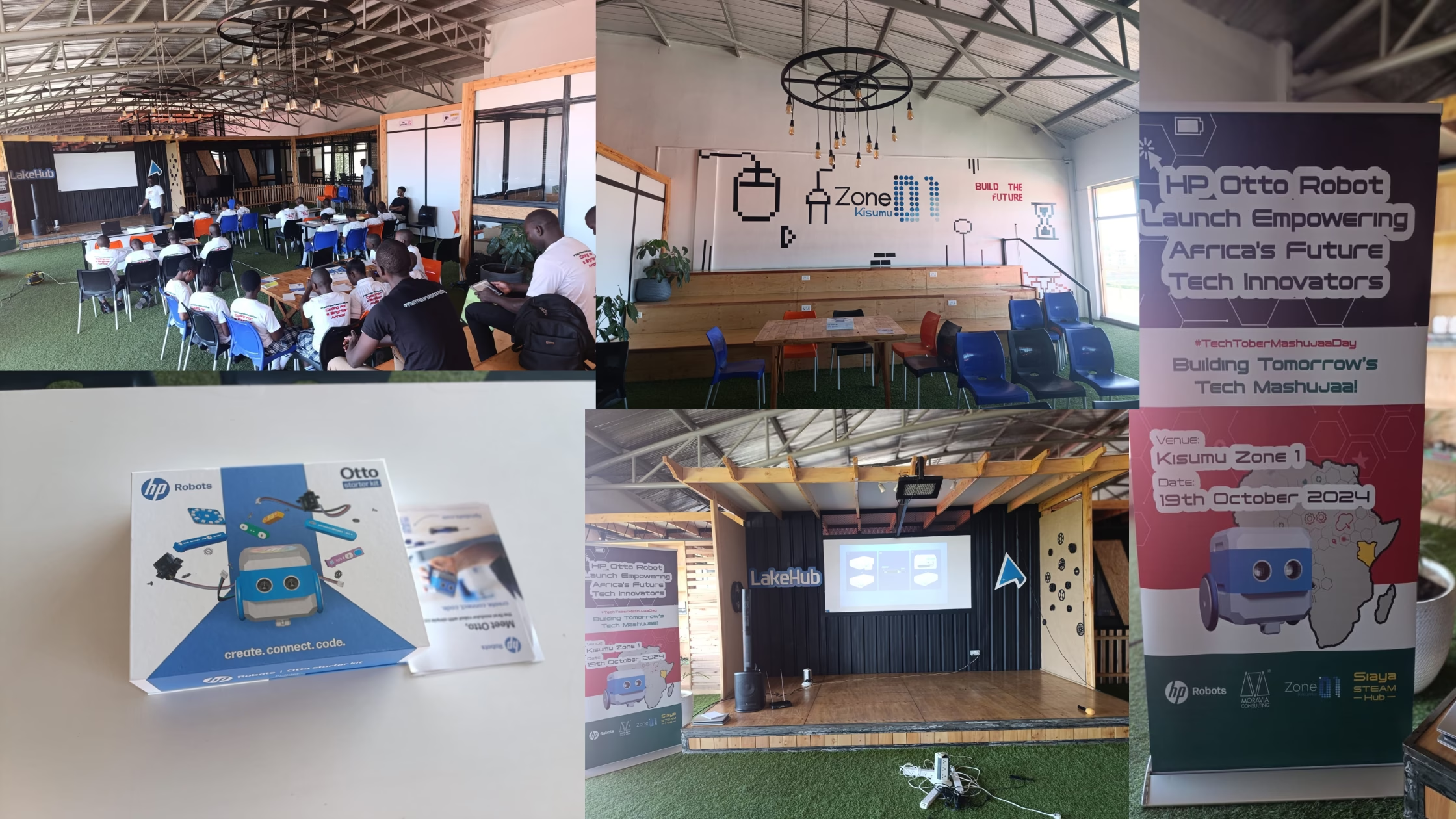
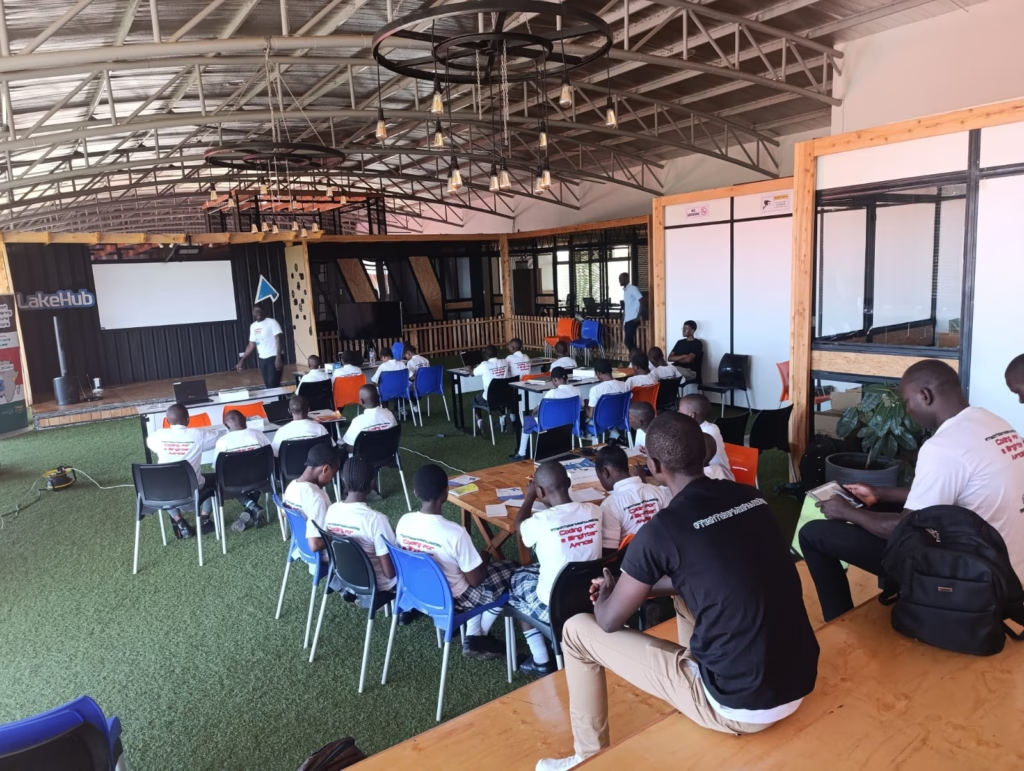
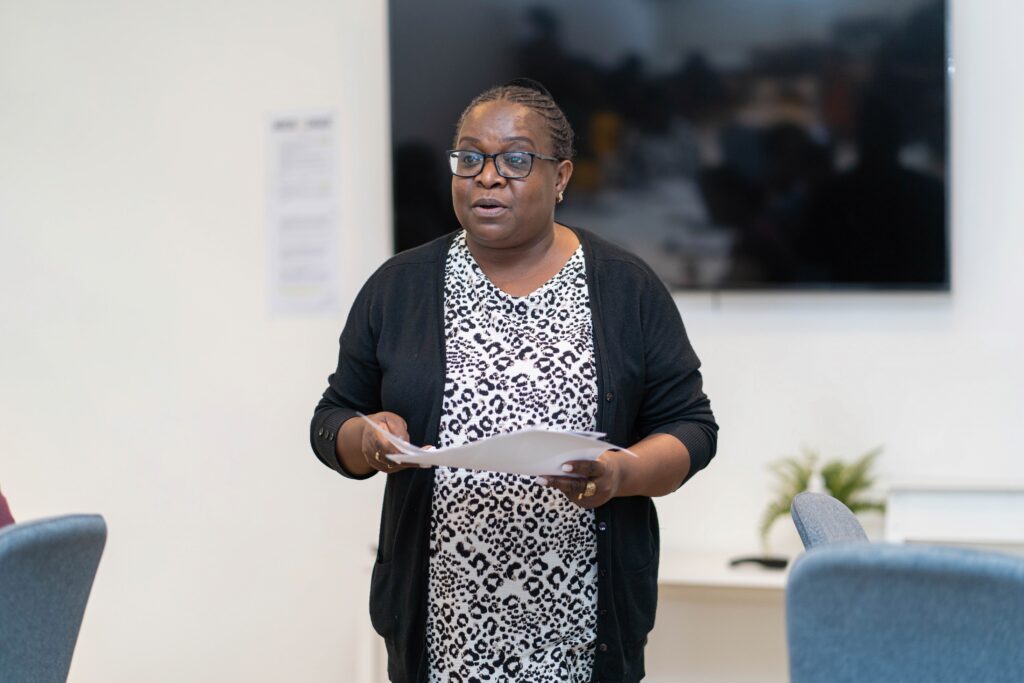
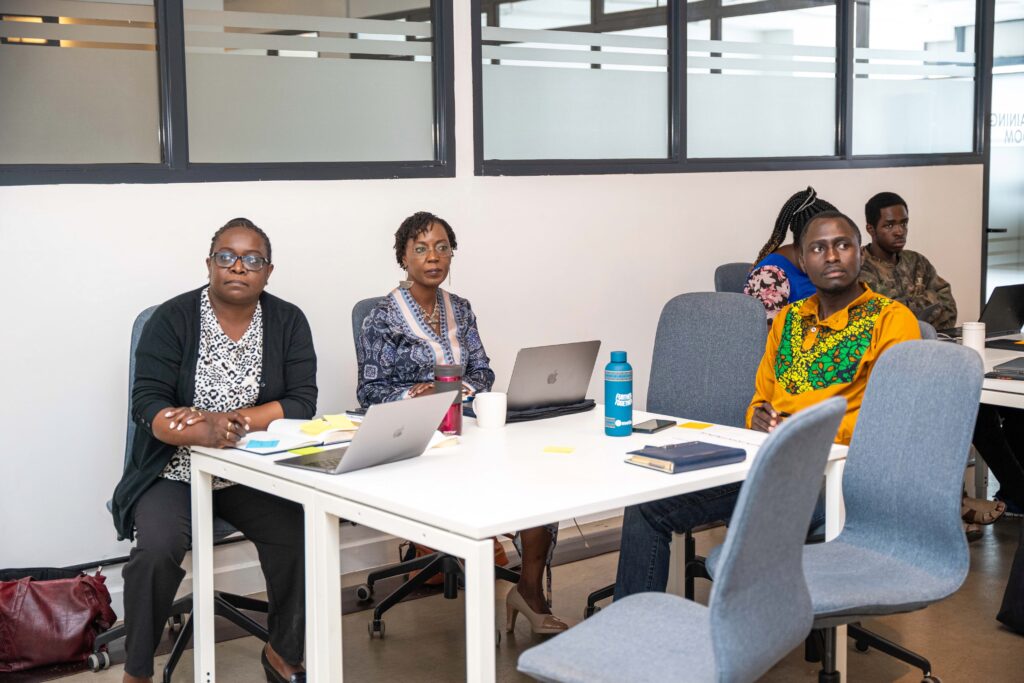
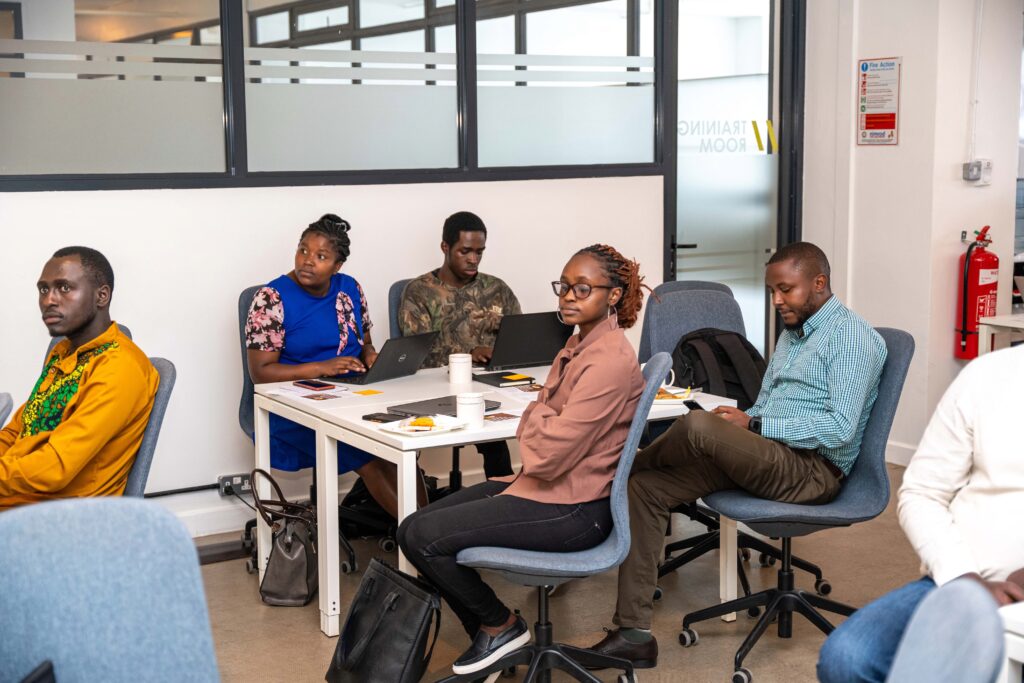
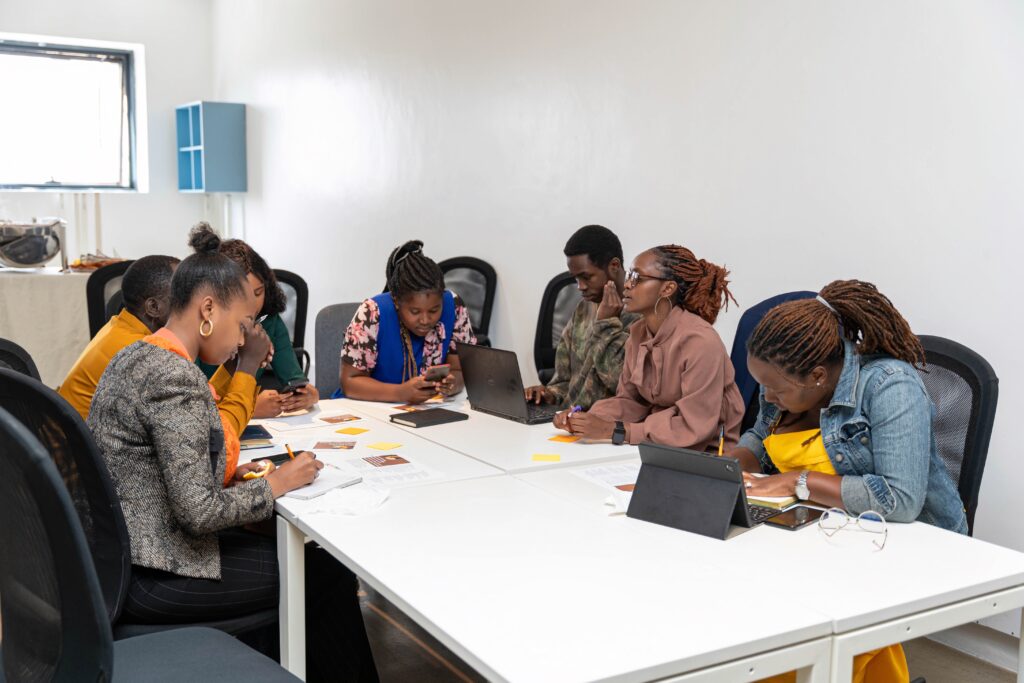
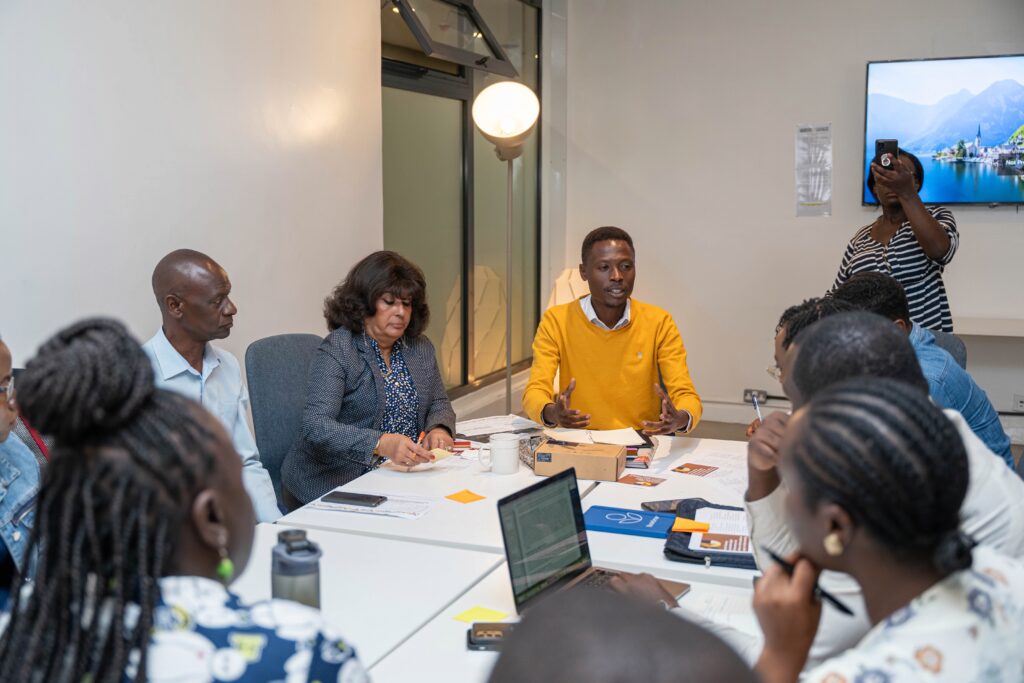
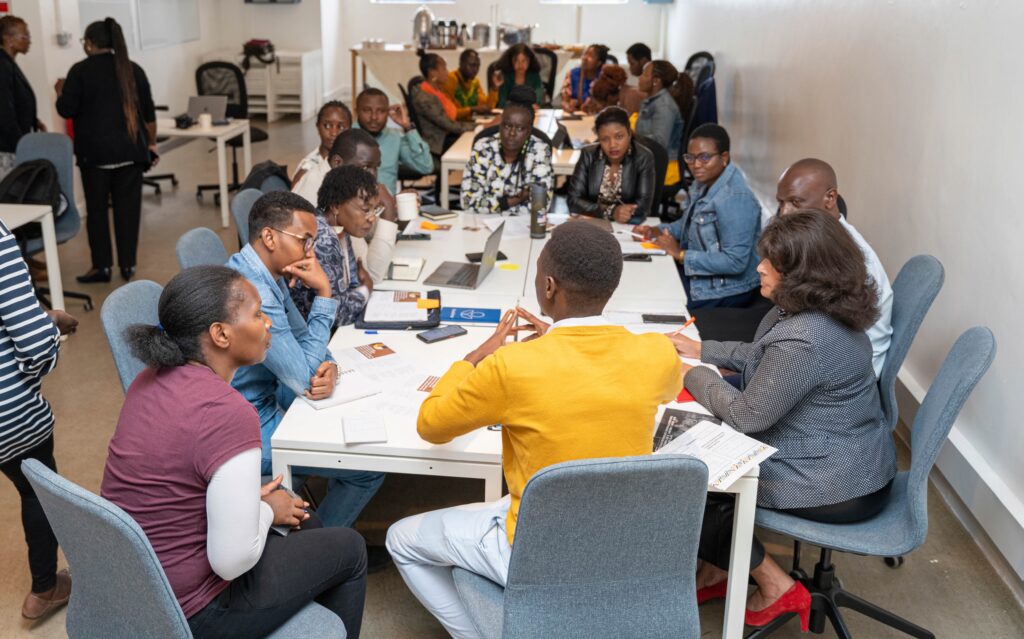
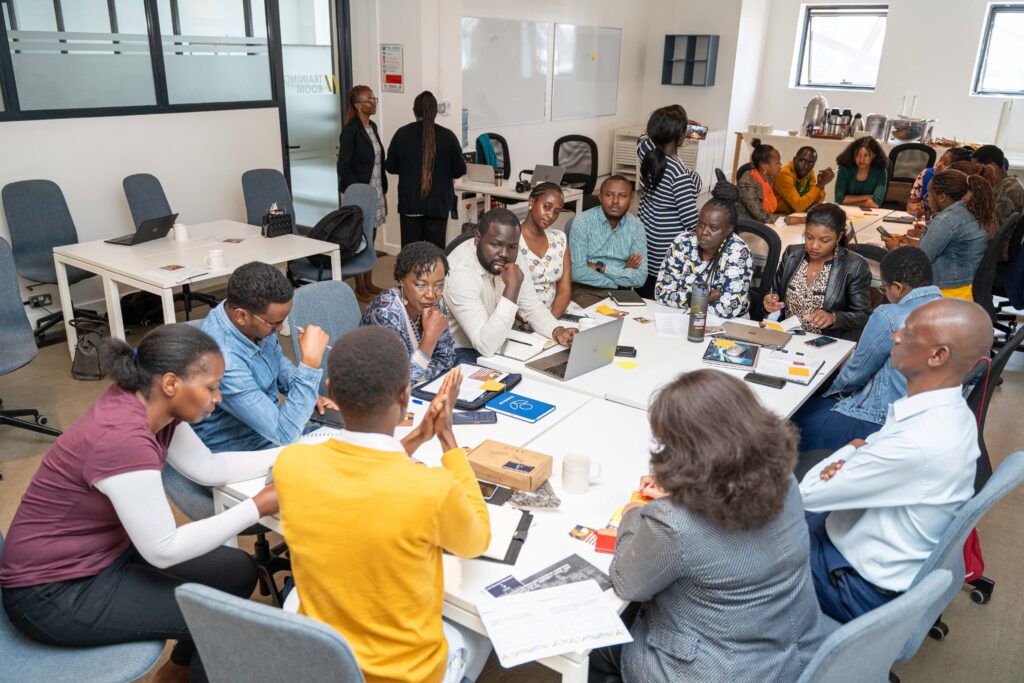
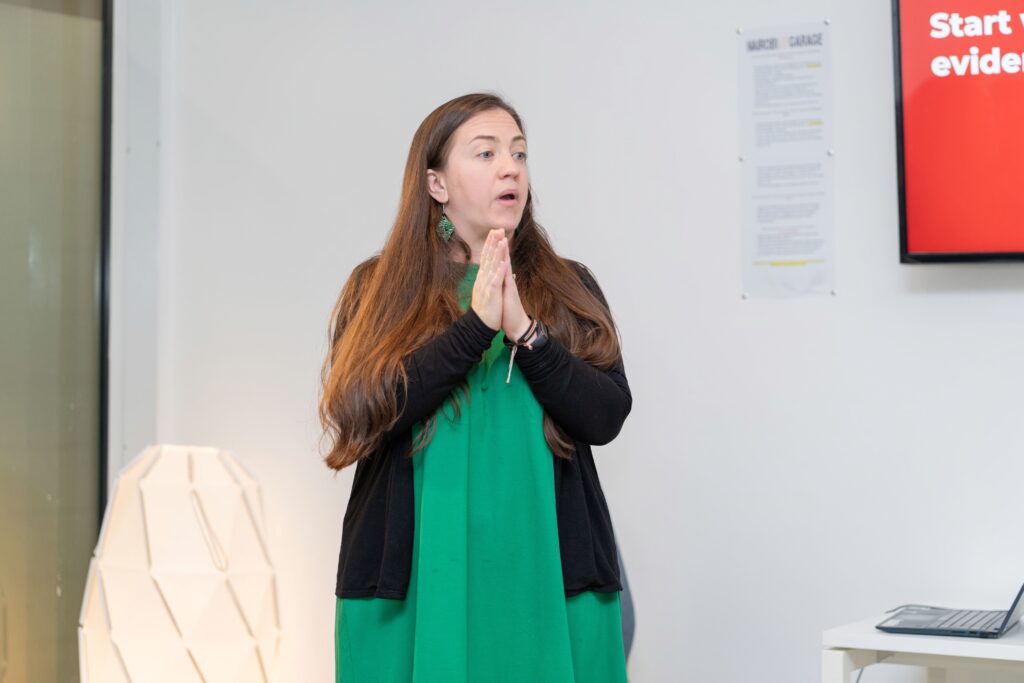
“You want to go fast; go alone; but if you want to go further, go with others.” This powerful philosophy came to life during the #TechToberMashujaaDay event held on Saturday, October 19, at Zone 01 in Kisumu. Organized by Siaya STEAM Hub, led by Moses Okoth, and supported by HP Robots, this exciting event brought together primary and junior high school learners to explore the world of robotics.
Each group of 6–8 students received a box of unassembled parts and was tasked with assembling an Otto Robot. Using computational thinking, design thinking, and critical thinking, the students worked collaboratively, learning to follow provided instructions, solve problems, and build confidence in STEM-related skills.
“Technology is advancing at a supersonic speed internationally,” said Moses Okoth. “In agriculture, for example, people are using drones and apps to improve yields. Yet here in Kenya, many students are still learning traditional farming methods through the same old agricultural clubs.”
Agricultural clubs have long played a crucial role in Kenyan schools, teaching students the fundamentals of farming, sustainability, and food security. These clubs instil valuable skills such as patience, responsibility, and an understanding of natural cycles—knowledge that remains essential in an agricultural economy like Kenya’s. However, as global agriculture evolves with technology, there is a need to modernize these clubs to better prepare students for the future.
Integrating emerging agricultural technologies into school programs helps students gain hands-on experience with modern farming tools. For instance, agricultural clubs could introduce drone-based crop monitoring, precision irrigation systems, smart greenhouses, and mobile apps that analyze soil health. These innovations would make learning more engaging and equip students with the knowledge needed to bridge the gap between traditional and modern farming practices.
By blending tradition with technology, agricultural clubs can continue to nurture young agripreneurs while embracing innovations that enhance efficiency and productivity. Instead of replacing traditional farming lessons, technology can complement them—equipping students with the skills needed to become future-ready agricultural leaders in Kenya and beyond. And where better to introduce technology-driven learning than in rural areas, where agriculture remains the primary source of livelihood?
Through hands-on activities like assembling the Otto Robot, Moses hopes to inspire a new generation to embrace STEAM (Science, Technology, Engineering, Arts, and Mathematics) subjects. He emphasized the value of letting students figure things out for themselves, guided by an instruction manual with every robot kit.
This event marked the first time HP Otto Robots were introduced in Kenya. Moses partnered with Jan Patloka, the product manager at Moravia Consulting in the Czech Republic, to make this dream a reality. Initially sceptical, Jan admitted, “When Moses reached out to introduce Otto Robots to Kenyan schools, I thought it was a joke. But after months of communication, I trusted his strategy.”
Jan expressed optimism about expanding the use of Otto Robots in Kenyan schools. “We look forward to introducing the Otto Robot in more schools—not all, but some,” he added.
The Otto Robot is specifically designed to be user-friendly for STEM education. Its inclusion in the #TechToberMashujaaDay event showcased its potential to impact how Kenyan students learn technology and robotics significantly.
Jan also donated Virtuali-Tees from Curiscope to the schools in attendance. A Virtuali-Tee is a T-shirt designed to make learning about the human body interactive and immersive. Using augmented reality (AR) technology, the shirt works with a mobile app to create a virtual experience where users can explore organs, systems, and anatomical structures in 3D. Scanning the T-shirt with a smartphone or tablet, students can see inside the human body, interact with different organs, and engagingly learn about their functions. This innovative tool is useful for educators looking to make biology lessons more hands-on and visually captivating. The learners, together with their teachers, had fun testing the technology.
The event also introduced many, including myself, to the vibrant tech community at Zone 01 in Lake Basin Mall. This co-working space hosts various technology-related events, providing a platform for innovation and collaboration in Kisumu. Collaboration remains a core value for us at EdTech East Africa, so we had to respond to Moses by supporting his event.
As we reflect on the success of this event, it’s clear that partnerships and community efforts can spark meaningful change. The team of volunteer teachers, Moses Okoth, and international collaborators like Jan Patloka exemplify the spirit of going further together.
The #TechToberMashujaaDay event was a step forward in empowering Kenyan students to dream bigger and prepare for a tech-driven future. Here’s to many more opportunities for learners to build, innovate, and thrive in STEAM fields!
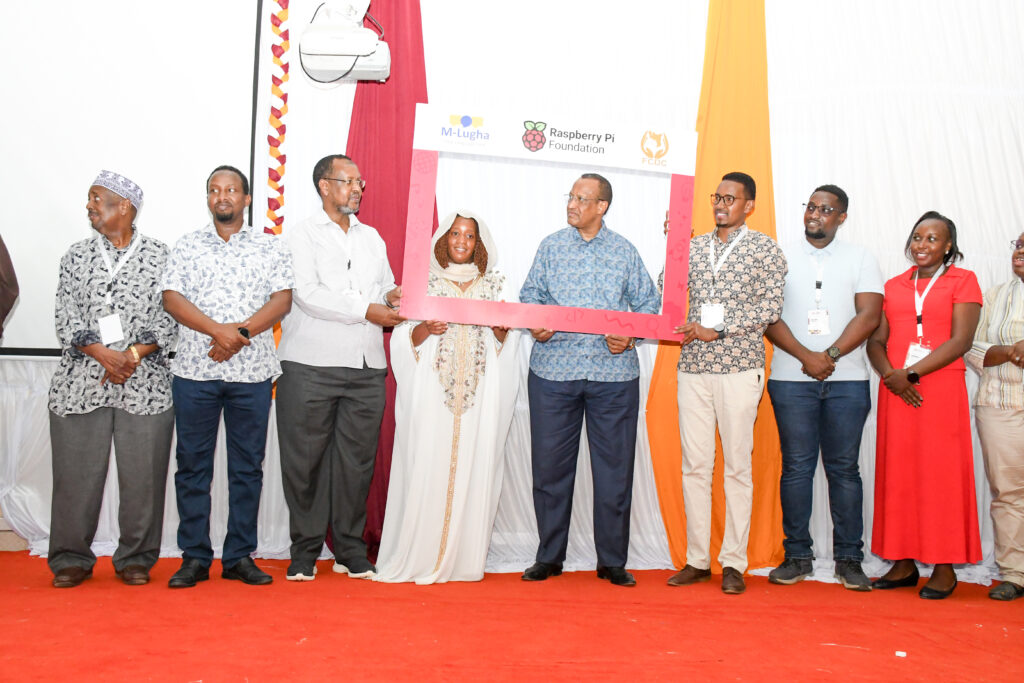
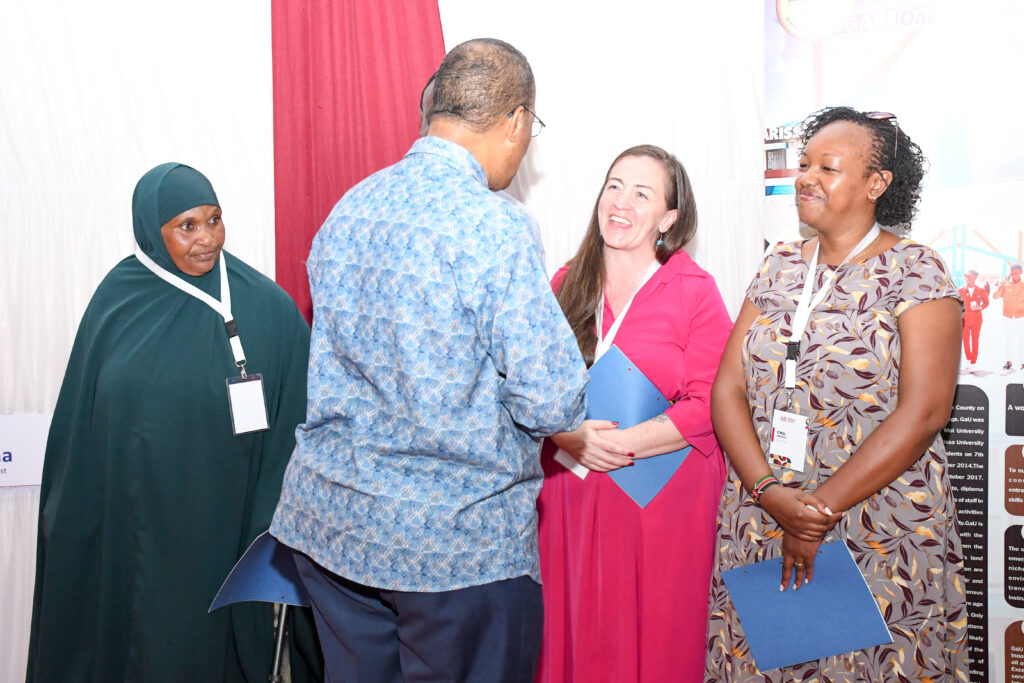
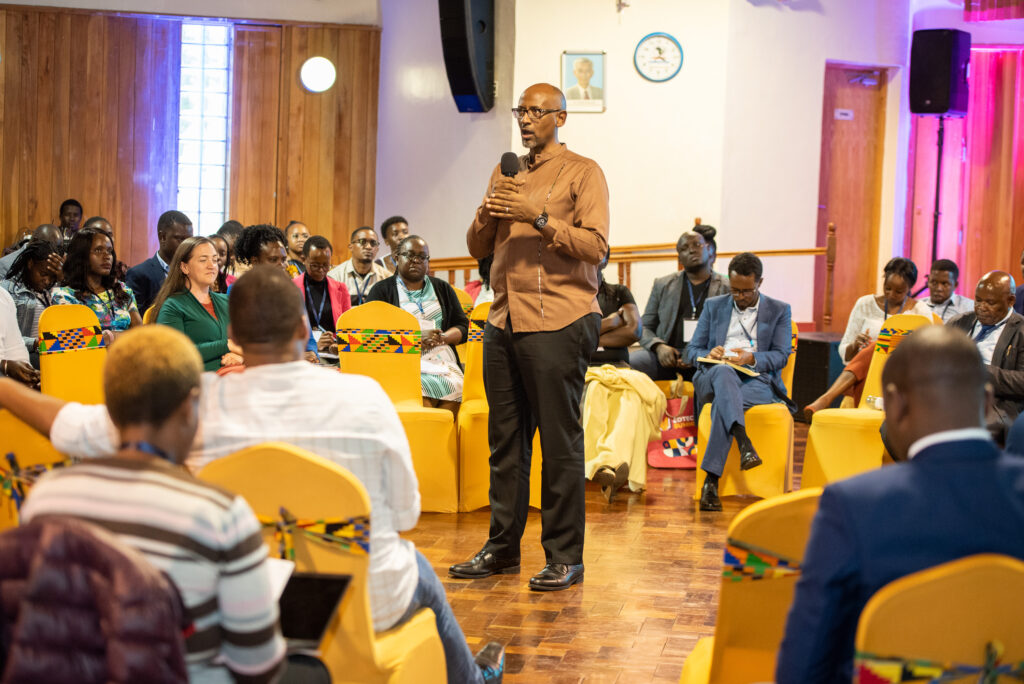
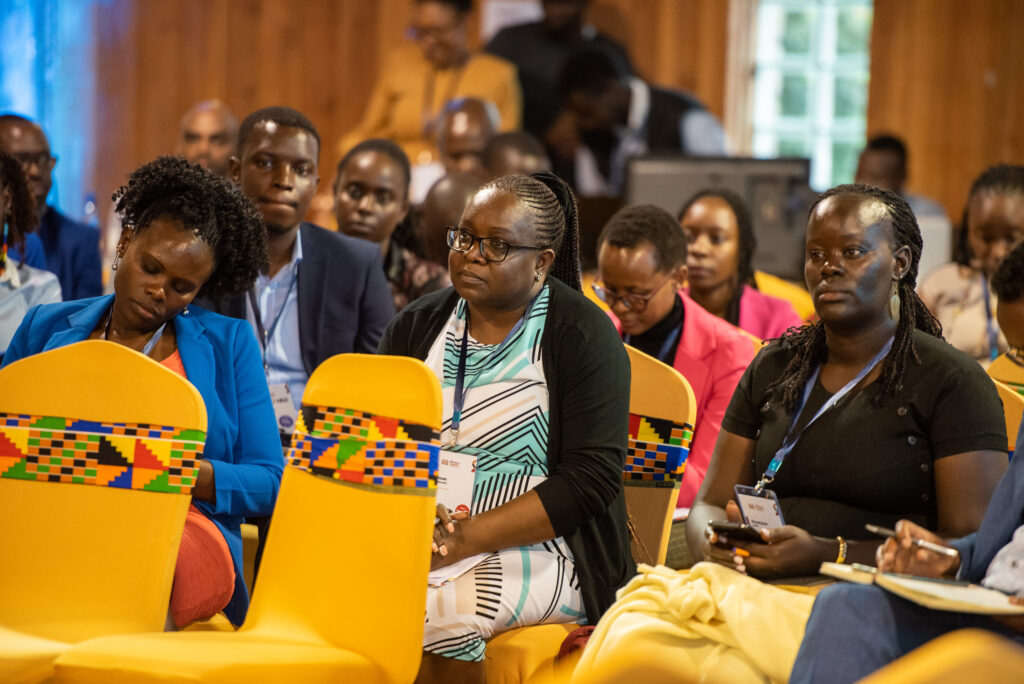
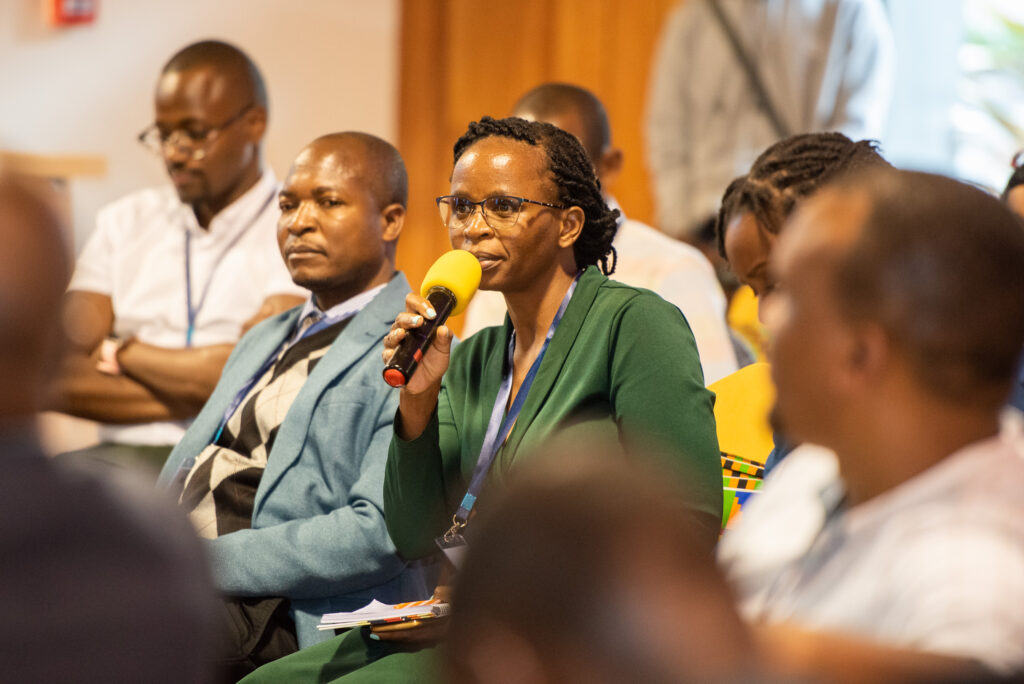
EdTech East Africa brought tech gurus to a summit held at Garissa University in Garissa to explore the future of education technology in the Frontier Counties.
A daylong summit that culminated in the launch of a pilot project for a digital literacy program for eight frontier counties brought together policymakers, education technology practitioners, educators, researchers, and government representatives from Kenyan frontier counties.
Abdinoor Alimahdi, the founder of M-Lugha, who was among the technology enthusiasts at the summit, demonstrated how young learners can access content through an application in different Kenyan languages.
“M-Lugha is a literacy-based solution, a translation service, and early childhood or basic education for adults. We understand the region’s lack of teachers and are bridging the gap using digital learning skills,” he said.
He said they will train teachers in eight Frontier counties who will train learners in digital skills.
He described how to use M-Lugha and emphasized its significance for schools, even those in remote areas, because it operates within a 100-meter radius and has KICD-approved content. The content he noted can be downloaded for future use and plays a significant role, especially in areas that experience a shortage of teachers, such as the northeastern region.
Abdinoor urged residents in the region to put more emphasis on technology in the early years of learning, noting that some courses might be obsolete soon and adding that the world is moving towards technology.
He noted that their ultimate goal is to enable young university graduates with visual impairments to access inclusive employment opportunities.
David Osinya, a program officer at Kilimanjaro Blind Trust, demonstrated how the Orbit Reader 20 works with visually impaired children. He noted that the previous braille gadget was large and expensive, unlike the orbit reader, which he said was a removable memory card.
Visually impaired staff members also use it to read books or take notes. It is, however, not an internet-enabled gadget. It’s called the reader 20 since it has 20 cells. A visually impaired individual can read, take notes, and access content stored in the orbit reader.
He explained that their organization focuses on providing digital literacy, decoding STEM subjects, employability skills for visually impaired communities, and offering support system devices for people with visual impairments. He noted that their ultimate goal is to enable young university graduates with visual impairments to access inclusive employment opportunities.
The Kilimanjaro Blind Trust is based in Nairobi but works in various counties. In Garissa, they support the Garissa primary school. They also support several schools in Mandera and Masrsabit. According to Osinya, they also train technicians in various schools so that they learn how to handle the device.
Garissa Governor Nathif Jama, who graced the occasion, said the digital literacy conversation is critical in the Frontier Counties region. He appreciated the Summit sponsors, underscoring the importance of technology to learners at an early age.
“As the chair of ASAL counties in the Council of Governors, I appreciate all other partners who, with dedication, continue to empower communities through technology. Such an initiative is a significant milestone in their efforts to ensure that people in the region gain the necessary knowledge and skills to survive the digital age, ultimately creating employment opportunities and fostering economic growth,” he said.
The EdTech summit, the governor noted, has come at the right time when Garissa and other FCDC counties are investing in digital learning. Garissa, in particular, is working on internet connectivity, ICT laps, digital hubs in the sub-counties, and GIS implementations, which will launch in the coming week.
The pilot project for digital literacy targets up to 14, 000 schoolchildren in Northern Kenya who will have access to computing lessons for the first time, equipping them with vital digital skills for the future.
The Raspberry Pi Foundation, in partnership with the Frontier Counties Development Council (FCDC) and the M-Lugha Foundation, will lead the initiative. Thousands of schoolchildren aged 8–14 in eight FCDC counties will benefit from computing lessons, a significant boost to upskilling young people in the country’s arid areas. Key terms will be translated into Somali, Borana, Turkana, and other local languages to aid comprehension. The M-Lugha Foundation, spearheading the project across eight counties, will manage these translations.
According to Wariara Waireri of the Raspberry Pi Foundation, “We are delighted to be partnering with FCDC and the M-Lugha Foundation in this exciting project to ensure young people living in these communities have access to high-quality computing lessons and resources, supported by the most recent research.”
“The curriculum has been specially adapted for Northern Kenya, so it feels more relevant to the students’ lives, providing them with vital skills for the future.” She added.
The summit featured various panelists discussing the unique context of EdTech in the frontier counties. Abdullahi Maalim of the FCDC moderated the discussion. The panelists included Stephen Ajanga from the regional Teachers Service Commission, Anil Khamis from Aga Khan University, and Dr. Mohamed Dahir, an education specialist and member of the Mandera County Education Task Force.
Dr. Mohamed Dahir stated that blaming insecurity, infrastructure, connectivity, and other factors for the lack of education in the region is no longer tenable. He emphasized that it is a leadership issue, whether it involves political leaders, heads of institutions, or Boards of Management (BOMs), and that they need to step up and resolve the issues within their reach.
He emphasized the importance of engaging all stakeholders, including children, parents, and education professionals, in serious discussions to resolve the issues revolving around education. He noted that these discussions should focus on solutions rather than placing blame on the sector’s problems.
He noted that the region’s problem is the excessive localization and long tenure of staff, citing the example of the head of an institution who has remained at the same school for over 20 years.
Stephen Ajanga, a regional representative of the Teachers Service Commission (TSC), noted that the current teacher shortage is a result of the government’s 1998 policy that froze employment. He mentioned that the TSC is working to bridge this gap by recruiting more teachers. Additionally, he highlighted that affirmative action, which allows teachers in the region to be recruited on permanent contracts, also addresses the shortage.
He said over 3000 local students are currently in various teacher training schools, hence the anticipation that the teacher shortage will be resolved in the coming years.
Anil Khamis from Aga Khan University noted the distinction between digital natives and digital immigrants. He explained that digital immigrants—the older generation, including teachers—were not born into the digital age. In contrast, digital natives, the young children born into a world with technology, need to be equipped with digital skills. He emphasized the importance of training teachers, as they are crucial agents of change in this rapidly evolving technological world.
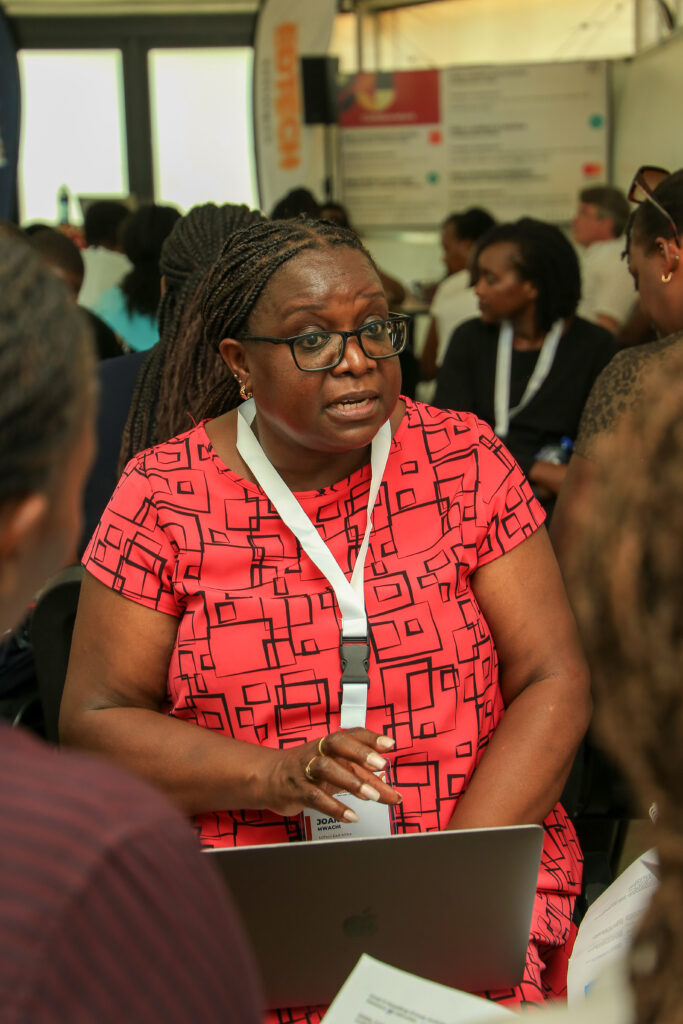
In the Collective Action Workshops moderated by Joan Mwachi, participants discussed foundational learning and basic literacy skills by creating personas in the ASAL areas. They focused on Halima, a woman from Garissa who left school to marry and now runs a small shop, earning 15,000 KES monthly. The discussion highlighted her use of WhatsApp for communication with her children’s teachers, who send updates on their progress and follow-up messages.
It was observed that children often relay information from teachers to parents. Sometimes, teachers send their students to ask their parents to check WhatsApp for communication. They believe this practice can significantly enhance learning and keep parents informed about their children’s well-being.
Here are two sample messages shared by participants:
“Hi, Mama Abu, Homework is available on WhatsApp, due on 1/7/2024.”
“Salaam aleykum, mama Abu, Kazi ya ziada hesabu moja hadi kumi.”
Local convenings like the EdTech East Africa event at Garissa University play a crucial role in exploring and implementing solutions tailored to the unique challenges of ASAL (Arid and Semi-Arid Lands) regions. Bringing together local stakeholders, policymakers, and technology experts, these summits foster discussions that lead to the development of targeted initiatives such as digital literacy programs and innovative educational tools. They ensure that solutions are relevant and responsive to the specific needs of communities in Northern Kenya, aiming to equip youth with essential digital skills and empower them for future success in the digital age.
As the world evolves, everything is taking on a new shape, with digital space taking over in all sectors and introducing new technologies.
Kenya is one of the countries that is quickly evolving and ensuring that it is not left behind by introducing digital working spaces not only in offices but also in schools. The introduction of the CBC was one of the new technologies that were introduced in learning institutes, especially in public schools.
Today, EdTech community experts are working towards promoting digital literacy in schools in Kenya and ensuring that learners, teachers, and parents are introduced to and made aware of the importance of technology in schools.
Despitethe efforts by governments, the EdTech community, and other stakeholders to ensure that there is inclusivity of technology among learners, there is still a gap when it comes to learners with disabilities who have been left out, especially those who are mentally handicapped.
The Action Foundation head of programs, Stephen Ikonya, noted that Kenya has a big gap in inclusion and that women, girls, and children with disabilities have always been left out of technology programs.
Schools are also struggling to get resources that can enable digital literacy learning in their institutions because it is expensive and hard to maintain.
The language barrier among learners, teachers, and illiterate parents is still a challenge that needs to be addressed. Teachers cannot also contextualize the content to ensure inclusion in classrooms.
Philip Okidi, a teacher at Pwani Secondary School for the Deaf, said that schools and educational institutions should prioritize accessibility and diversity in STEM. He called upon all stakeholders to ensure that girls are not denied the opportunity to access their rights to go to school because most parents do not allow them to attend school. He said that learners with disabilities should also be given postsecondary digital support just to ensure that they do not sit home idle.
The government and key stakeholders were called upon to ensure that teachers are retooled to enable inclusivity.
The national government, through the Ministry of Education, has also come out to support the initiative of digital literacy in schools by providing training to teachers.
Dr. Robert Juma Wamalwa, a member of the Presidential Working Party on Education Reforms, stated during the 2024 Pwani EdTech Summit that the government and its agencies have started a journey that goes beyond the bounds of conventional education thanks to the winds of technological innovation.
In this rapidly evolving digital landscape, he said that the interception of education and technology has become the cycle of progress shaping the way children learn, how they are taught, and ultimately the future of society.
Dr. Wamalwa said that there is a need for the EdTech community, the government, and other stakeholders to reflect on the power of collaboration and imagination because the digital era has presented opportunities to enhance the learning experience, breaking down barriers and creating a conducive environment for learners around the globe.
The 2024 Pwani summit took place in Mombasa at the Close the Gap Hub. Jecinter Nduta, manager at Close the Gap Hub, a tech incubation hub where the 2024 Pwani summit took place, said that Close the Gap, a Belgium company, was brought to Mombasa to make it more inclusive for Mombasa people because there was huge innovation potential.
Changing the Norm
EdTech East Africa, supported by the Mastercard Foundation, is working closely with East African countries to ensure that learners are introduced to digital literacy.
It is a network that began 10 years ago to bring EdTech communities together in Kenya with a focus on three goals, coordination, transparency, and action. It has since grown to an EdTech East Africa community of over 4000 individuals.
Dr. Wamalwa said that the Ministry of Education and the Ministry of ICT are working together with EdTech East Africa, which plays a very crucial role in delivering technology by developing ICT infrastructure for curriculum delivery and assessment to improve digital literacy among teachers’ parents and other key stakeholders. “EdTech also has a role to play in ensuring that there are enhanced accelerated education programs for marginalized learners and learners with special needs.” Dr. Robert Juma Wamalwa.
The EdTech East Africa chief executive officer and Kenya Co-Lead at EdTech Hub, Jeniffer Cotter-Otieno, said in her remarks that the organization aims to bring communities together to create relationships and forge the way forward. “Pwani EdTech Summit is about something bigger than any individual or organization; this is about us coming together. As individuals, we cannot change EdTech in Kenya, but together, it is possible, and we have the opportunity to use technology to make that transformation happen,” said Jennifer.
“We all believe that, as partners, it is important to use evidence as our common language for what allows us to make the most informed decision about how we use technology in teaching and learning. We have the responsibility of transforming the education sector in Kenya, and together, we can make that transformation,” she noted.
The CEO noted that EdTech East Africa has an agenda of helping African governments close the gaps that exist in the education sector. They are working towards having evidence-based technology by enabling teaching and learning in schools.
Evidence-based Tech
On her part, EdTech Hub executive director Verna Lalberharie noted that the EdTech Hub is a global research partnership and has a role to focus on and make sure that decision-makers, regardless of where they sit in the digital ecosystem, have access to vigorous evidence and a lot of work in regards to technology and education.
She noted that there is a need for critical evidence that will guide developers in providing tech solutions. “There is still limited evidence on the work in low-income countries in regards to technology, so how do we as developers or policymakers handle enthusiasm, including teachers as co-creators? Their role is very essential. Parental engagement is a very critical component because children who grow up in low-literacy environments where parents lack education resources, capacity, and connections in schools that need to support the development of children’s education; therefore, we need to partner with schools to ensure that we make this happen,” Verna Lalberharie noted.
She noted that measuring learners’ experiences is critical, adding that there is still a gap in the social and emotional learning of children and their mental and physical status. Her call to action to the government, EdTech community, and other stakeholders was that as they work on EdTech solutions, they need to take into consideration how they consider the children.
Innovation Manager East Africa, Brink Kenya, and Co-Lead EdTech Hub, Ciku Mbugua, said that they want to generate and continuously use evidence to improve and upscale in sub-Saharan Africa.
She said that EdTech Hub has a new project called Ubora Bora, which is expected to be launched on February 27, 2024, under the partnership of the Gates Foundation, who are the funders.
The new project will help enable continuous improvement and remind the education system to use evidence.
“EdTech is already doing upscale and long-term research, but we want to do speed implementation research; we want to help unlock certain things in the implementation journey. We have to work with the government and provide solutions for government productivity,” Ciku Mbugua said.
She noted that system integration goes hand in hand with scale and that the strength of evidence needs to work with the goal. The new project will fund the governments, but the partners will work with the governments.
EdTech East Africa Collective Action Lead Joan Mwachi said that evidence is key, and they cannot talk about what works if they don’t talk about what works. This is because with technology, it is easy to talk about it, but those who are not in technology need evidence to believe that it works.
“We are in the process of making adaptive change consumable; we are in the era of making AI; we are now talking about intersections in education and AI: AI for learning and AI for teaching.
How are we adapting to these things? How are we preparing our teachers, what are our policies saying, and how do we use the platform of foundational learning to address skills for the future? It is all connected in one way or another, and each one of us has a role to play in that space,” said Joan Mwachi.
The key areas include a common agenda where they want to use technology to close the gap and shared measurement systems, and this entails mutually reinforcing activities. She said that if the EdTech community works together collectively, they will make a change that will work.
Another key to the collaborative effort is continuous communication. Joan said that the community platform is what EdTech has for people. On the backbone support, she noted that their role as an organization is to try and bring everyone together and coordinate the efforts of the community.
“Edtech is a catalyst; the members sit on the table of reforms because they work in one voice. What we are doing is embedded in the Ministry of Education’s vision to support teachers to have the required skills. We have partners who are working to ensure that we have co-facilitators in all areas, identifying skills that are needed in the future, and who are working towards producing technology that ensures equity and inclusion,” Joan Mwachi noted.
Call to Action
To strengthen the use of technology in schools beyond the connectivity infrastructures that can be used, the government and key stakeholders were also called upon to ensure that teachers are given access to the devices, especially by the school heads and the Ministry of Education.
Stakeholders were called upon to also ensure that young people are involved in this technology implementation in schools because they are more likely to embrace and adapt technology than the teachers.
The government was also urged to come up with evidence-driven policies that will make technology yield in schools.
“It is very important to start working with teachers and not for teachers; let them contribute to the making and validation of solutions.” William is an EdTech community member.
The representative of the Presidential Working Party on Education Reforms, Dr. Robert Juma Wamalwa, said that the Ministry of Education has support from the Ministry of ICT in the implementation of technology in schools because it cannot make it on its own.
“The Ministry of Education on its own cannot make it; it needs an extra hand and support in achieving the goals towards introducing technology to learners, and that is why EdTech East Africa plays a very crucial role in this to leverage technology at all levels of education by defaulting on ICT infrastructure for curriculum delivery and assessment to improve digital literacy among teachers, parents, and other key stakeholders,” Robert Wamalwa noted.
He said that the Presidential Working Party on Education Reforms recommended that the Ministry of Education enhance and accelerate education programs for marginalized learners and learners with special needs while upscaling inclusivity, an area in which he said EdTech will have to play a crucial role.
We also recommended the framework for operationalizing the National Open University of Kenya. This alone presents a transformative opportunity for technology to play a central role in shaping the future of education. These are the areas which he said EdTech needs to swim in.
He called upon collaboration between the government, education institutions, and the private sector as an essential player in the success of these reforms.
He noted that he is very close to the EdTech community because they are the team that can help the government achieve or fulfill the recommendations they have on the table both nationally, regionally, and even globally.
“If we talk of the African Union, that is where every country within the region must come. We need serious stakeholders and partners like the EdTech community and other opportunities because we have increased access to learning, inclusive quality education, relevance in learning and teaching, and parent and teacher professional development.
Online courses are something that EdTech East Africa can do because, within the EdTech community, we have a team of innovators who have a lot of energy to implement this.
EdTech East Africa has a plan to hold their summits in all 47 counties to create awareness of the importance of technology in schools. The next summit will be held in North and Northern Eastern, Central, and then come back to Nairobi for the 2024 national summit.
About the AuthorMs. Aura is a communication consultant, a storyteller, and a writer. She is a journalist working with Radio Africa Group, where she writes for The Star Newspaper.
It is a hot, humid Tuesday morning on February 20th, and guests are slowly streaming in to attend the EdTech East Africa organised Pwani EDTech Summit.
A first of its kind, the event brought together EdTech experts based in the Coast region as well as innovators working in the coastal part of Kenya.
Close the Gap, an incubation hub nurturing the most outstanding tech innovations in the Coast region, is this edition’s host, with a well-organized venue suited exactly for that kind of audience.
The summit was not only to discuss the innovations but also to come up with other solutions that will see more learners, especially in remote and marginalized areas, get access to EdTech learning tools.
It was also to shed light on the importance of collaboration between government agencies, innovators, and other EdTech practitioners to make the learning transformation a success.
The inclusion of innovators meant they demonstrated their work to other parties for the sake of making their work known to more people and also forming connections.
Presidential Working Party on Education Reforms (PWPER) member Dr. Eng Robert Wamalwa officially opened the summit, highlighting why the intersection of technology and education is shaping learning and the future of society.
“This summit is a catalyst for change where education is not confined to classrooms. This is a journey that will change the destiny of education,” Wamalwa said, setting the mood for the day-long engagement.
He also noted the importance of leveraging the use of technology to empower learners and institutions. As an ambassador for ED Tech, he said it was time that government officials, education players, and the private sector collaborate to see not only Kenya but all the African Union countries benefit from this.
Jacinta Nduta, Close the Gap’s hub manager, was appreciative of EdTech East Africa considering the hub as a venue for the largest EdTech summit in the coastal region.
She said the hub offers co-working spaces, meeting rooms, and physical shops for computers whose prices are way below the market prices. These computers allow a wider population to access affordable laptops.
Their latest innovation is the Digitruck, which moves from one school to another to teach coding to learners, especially those who do not have physical premises or infrastructure that would promote education in tech, such as electricity or machines.
EdTech East Arica Co-Founder Jennifer Cotter-Otieno was in awe of the attendance, noting how this was just a noble idea with ten people ten years ago but is now attracting tens of hundreds of players in the sector.
“We decided to hold a summit in Mombasa because we wanted to bring all the communities represented from across the country.”.
“We cannot change the education sector in Kenya individually, but when we do it together, it is possible.”
On the partnership, she said the Mastercard Foundation had played a major role as a sponsor for this and other EdTech East Africa initiatives, such as the EdTech Mondays, a programme that discusses various issues in the industry and features several players.
Collaboration
EdTech Hub Executive Director Verna Lalbeharie noted that with Ed Tech, it was key to co-create innovations with teachers, parents, and caregivers to be able to have an all-round working system.
“There is limited evidence of what works in low- and middle-income countries. We need more collaborative research that will enhance the design and the platforms that we use for learning.”
A key issue was the importance of parent engagement, even as she said that teachers had shown enthusiasm.
“Parents cannot expose children to teaching at an early age; therefore, collaboration with caregivers can help prompt them to meet the challenges expected because they know what they need.”
She also noted that the learner’s wellness was important in transition. Verna said the physical health, mental health, and all-around wellness of those learning also contribute to the success of the tools used and their effectiveness.
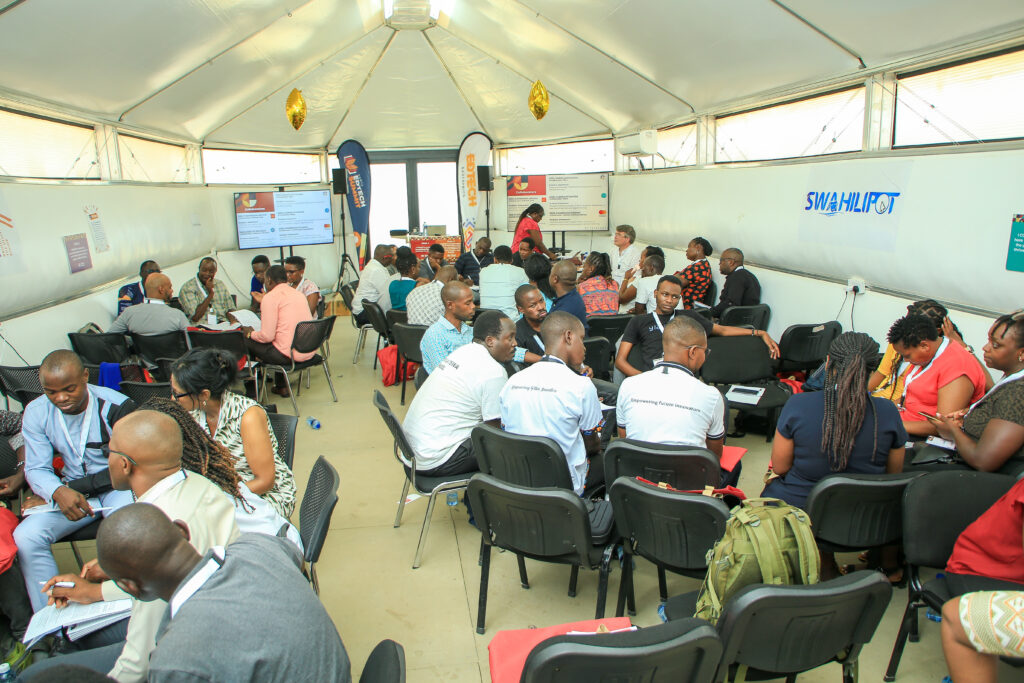
Collaboration stood out in the day-long interactions that not only involved speeches by key organizers but also plenaries and group discussions organized to shed light on the various technologies that have been applied to support learners in their education.
In her opening speech, Jennifer Cotter-Otieno said this was not just an event, but the summit was a platform to create relationships that forge the way forward in the fast-growing sector.
“We want to create an evidence-driven movement, create transparency, and also catalyze action so that we can do our work more efficiently.”
This was not possible without the inclusion of key government players.
For instance, the presidential working party on education reforms, represented by Dr. Robert Juma Wamalwa, came up with recommendations for improving the learning cycle.
“Let us reflect on the power of collaboration and imagination,” Dr. Wamalwa said, adding that PWPER had come up with recommendations for education, with the Ministry of Education, the Ministry of ICT, and EdTech playing a major role in the education transformation.
He also said the other recommendation was for the Ministry of Education to enhance inclusivity, which will be an opportunity for EdTech to play a role in the fast-transforming and evolving education sector due to technology.
Other than the role of the government, innovators were also asked to collaborate, as opposed to working in silos, to be able to bring out the best in their work. Innovators join forces, especially those with similar innovations, to avoid the replication of ideas.
Collective Action
Joan Mwachi’s Collective Action Workshop session brought to light how stakeholders are preparing for the use of artificial intelligence in terms of policies and how technology can help close this gap.
“If we work collectively, we will achieve the changes we want,” said Joan.
She said successful collaboration efforts include having a common agenda, a shared measurement system, mutually reinforcing activities, continuous communication, and a backbone support organization.
“EdTech has started a movement that I think will lead us to achieving this,” added Joan.
Demonstrations of Working Innovations in Coast Region
In one of the breakouts, Stem Impact Center Kenya ran a demonstration on how to use the coding app dubbed SCRATCH, which uses a block model for coding.
Stem Impact Center, the youth development non-profit organization, leverages Science, Technology, and Innovations (STI) to enhance technical skills development, youth empowerment, employment creation, entrepreneurship, and innovation.
The showcased programming language and online platform allow users to create stories, games, and animations. Scratch promotes computational thinking and problem-solving skills, creative teaching and learning, self-expression and collaboration, and equity in computing.
Children as young as six years old can use this, which is one of the technological learning solutions that is effective in some Coast region schools. For instance, the drag-and-drop program can be used to ease learning, and its adaptation of the Kiswahili and English languages makes the tool more relatable.
The highlight of the demo session was when participants were offered laptops to attempt to create characters and conversations using the block model. This also involved individual voice recordings to personalize the characters and being guided on how to arrange the code blocks to make successful stories from the characters.
“Most learners love it when they hear their voices, which makes the tool more relatable,” a representative from the STEM Impact Center said. They added that the innovation was willing to offer workshops for both teachers and learners in new schools to get to know how the tool works.
Taking Digital Personalized Learning in ECDs a notch higher
In the other session, Janice Mutegi and Joseph Gatonye, passionate ECD teachers, took advantage of the forum to explain to the attendees how an innovation of EIDU is working to help learning in preschools.
“We are bringing digital personalized learning (DPL) to Kenya to support teachers’ efforts in teaching,” said Janice.
Through the tool, learners have access to digital personalized learning content in math and literacy. The Kenya Institute of Curriculum Development (KICD) has approved all content, and it is fully in line with the new competency-based curriculum (CBC).
Her co-presenter, Mr. Gatonye, said they are working in steps with partners to ensure the DPL is introduced in class to support the teacher’s efforts and also have a structured pedagogy that is digitised to help teachers have some uniform way to deliver the competency-based curriculum (CBC) better and ensure ECDE officers have a platform or tool to monitor and support learning.
So far, the team has visited 37 counties and says their goal is to serve all 12+ million public pre-primary and primary students across the country by 2027, making Kenya the first country in the world to have a fully digitized education system.
Mr. Gatonye said they had developed a digital learning platform and worked with the county governments to identify schools and then help the teachers deliver the CBC curriculum.
To ensure teachers are capacity-built, they used a master training approach for early childhood development officers. They also support monitoring through class observations and cluster meetings, and EIDU officers support tech issues.
In the case study, Jane said ECDE learning in the classroom has shown considerable improvement in terms of materials in the Coast region.
“However, in every classroom you visit, different teachers have different strategic methods of covering their lessons. Even though they are using CBC designs from KICD, they have different priorities,” she said.
The project, however, still faces a challenge because there are few tools to support teachers in the coverage of their lessons.
Local education officers monitoring learning also turned out to be a challenge. The duo, however, said EIDU has joined hands with the county government to ensure learning outcomes are improved through the use of enhanced tools to support the learner, the teacher, and the officers.
Their sessions also included group questions for participants to brainstorm how best teachers can be supported through training and capacity building when it comes to the application of the DPL tools in schools.
To be highly noted was the need to not just target the teachers but also to include community leaders and parents and use existing platforms.
Participants also suggested that there should be webinars for teacher training so that they do not have to move out of the classroom. The other suggestion was training outside of class hours.
To make this more effective, groups suggested that young teachers should be targeted in the training since they are more adaptive to digital tools.
As teachers, it was also important to note that there were factors to be considered when it came to the dosage of the tools for the learners. Participants said key considerations would be the concentration span of the learners, the activity type, and the type of learner to know how long each one will take to use the tools.
Creating Visibility
As the summit came to an end, Ed Tech East Africa called for the need to increase the visibility of creators and their projects to a larger audience.
This is after it turned out that even though there were great innovations, they were not highlighted, and people and various stakeholders were not aware of what was happening in the Ed Tech space in the coastal region and other parts of the country.
Ms Joan said highlighting such innovations to a greater audience will not only foster growth but also open avenues for collaboration with interested investors and innovators from other parts of the world
More summits and opportunities
In her closing remarks, Jennifer said this was the first of the many regional summits.
The next summit will be held in the Northern Kenya Region and another one in the Central Region before it goes back to Nairobi. “These summits will hold discussions that reflect on the technology being used and whether it is working in these specific regions,” said the co-founder.
About the author:
Ms. Cece Siago is a bilingual multimedia communication specialist and consultant. With over seven years of experience in the communication and media industries, she develops compelling stories with a bias in technology, education, climate, health, and the environment. She has worked with the Nation Media Group as a reporter based in the Coast region, with her multimedia work published in The East African, The Daily Nation, Business Daily, and Taifa Leo (Swahili), among others.
During World War II, U.S. leaders realised that nearly 16 million American men and women who were serving in the armed forces would be unemployed when the war finally ended and that this could cause another depression and widespread economic instability similar to the aftereffects of the 1929 stock market crash. To prevent that, expertsstudied the issue and recommended a series of education and training programs.
On Jan. 10, 1944, Congress passed the GI Bill of Rights because it offered federal aid to help veterans buy homes, get jobs, and pursue an education, and in general helped them to readjust to civilian life.
Within its first seven years of use, about 8 million veterans took advantage. U.S. college and university degree holders more than doubled between 1940 and 1950. Within 50 years, the number of Americans with advanced degrees rose nearly 20 percent. By July 1956, when the bill initially expired, almost half of the 16 million World War II vets had gotten education or training through the GI Bill.
In 1990, President George H.W. Bush summed up the bill’s impact: “The GI Bill changed the lives of millions by replacing old roadblocks with paths of opportunity.”
Youth power
During the Town Hall session at the 2023 EdTech Summit, Joseph Nsengimana pointed out that, as other continents are aging, Africa is getting younger. Nsengimana is the Director of the Mastercard Foundation’s Centre for Innovative Teaching and Learning in ICT. The summit was co-created by several edtech players and was sponsored by the Mastercard Foundation and EdTech East Africa.
“According to the UNICEF Report, Africa will be home to 2 in 5 children by 2050,” Nsengimana gave the stats. “This is an asset. But it’s only an asset if we can invest in this abundant human resource. It’s important to keep the focus on why we’re all here. Education is why we’re all here. Education technology is the means to accomplish what it is we’re trying to do.”
“How do we educate our children in emergencies? How do we make sure we’re taking advantage of all available tools? Whether under a tree or inside a classroom; we have to ensure our children are learning.”
2050 is 27 years away. 27 years seems like a long time. 27 years sounds like Africa has all the time in the world to get her act together and seize her rightful place. But in this fast-paced world, that’s a blink of an eye; what with different emergencies side-tracking Africa, causing her to waste valuable time and talents.
Learning goes on
Nobody knows how we can educate our children in emergencies than Jane Maweu, who’s the Education Program Officer at Save The Children International. Maweu, who works in Dadaab Refugee Camp, refers to herself as a trained teacher who’s no longer in the classroom but supports what happens in the classroom.
The Dadaab refugee complex has a population of 218,873 registered refugees and asylum seekers as of the end of July 2020. The first camp was established in 1991 when refugees fleeing the civil war in Somalia started to cross the border into Kenya. A second large influx occurred in 2011, when some 130,000 refugees arrived, fleeing drought and famine in southern Somalia.
Let’s put it into context. Dadaab has a larger population than the world’s eight least populated countries. Put together.
“We deal with populations we refer to as ‘people on the move’; they’re moving from their home countries because of war or unrest,” Maweu explained. “During their transitory process, they have missed education. When they arrive in Dadaab, we have to pick the learning pieces.”
As if that’s not a big enough challenge, Maweu talked about double jeopardy. The refugee situation is an emergency, and then there are other bolts out of the blue: COVID-19 and El Nino.
“I ensure learning continues during emergencies,” Maweu said. “During Covid-19, many children were left out of school. This forced us to think outside the box.”
No organisation can fly solo during emergency missions. Save The Children has partnered with Library For All which provides gadgets for the learners. Sesame Workshop has also joined the mission. They provide content that targets ECD learners.
“We have teachers who have no exposure to what happens. They’re untrained,” Maweu expounded. “They came from neighbouring countries or were born and brought up in the refugee camp and became teachers in the camp. How do we ensure these teachers can use technology to enhance equity in learning?”
“We’ve been training these teachers to build their capacity. We’re also partnering with EDU Africa to help these teachers with skills and tools to enhance quality education.”
Refugee camps have several challenges. There’s a lack of infrastructure. Families live in tents. Some live in semi-permanent structures. There’s an increasing number of children. There’s also the issue of language.
Tech isn’t the be-all and end-all. Tech can only do so much. On the issue of language, the players in Dadaab have tried to contextualise the content by translating it into Somali. That, too, has brought another challenge. The Somali language has several dialects.
“Technology will not replace teachers, but teachers with technology in hand are the ones who will replace the teachers without technology,” said Dr. Sam Marigat, the TSC County Director for Kirinyaga.
“That should be our foundation when we start discussing EdTech. Technology will supplement teaching. I don’t think technology will replace learners who are lagging behind in learning outcomes.
Education under attack
In an article published in the Global Coalition to Protect Education from Attack, attacks on education in Kenya were reported between 2013 and 2017 with similar frequency to what was reported from 2009 to mid-2013, with a slight uptick in attacks on schools in 2017, due to al-Shabaab’s increased activity that year.
In 2014, terrorists killed quarry workers in Wajir. The victims were non-locals. Fearing for their safety, non-local teachers packed and left.
“The Wajir governor, Ahmed Abdullahi approached us, saying they had about 400 schools in the region but very few locals were heading these institutions,” said Mahmood Ali, the Managing Director of MwalimuPLUS. “He told us they had tried to bring back the teachers who left, but they adamantly refused.”
“That time there was no MwalimuPLUS. We were just a technology company. We did a little bit of research and that’s how MwalimuPLUS was born. We gave the governor the idea that we could solve the problem with the schools that had teachers.”
Ali’s team got down to brass tacks. They developed and used some models to start training. It worked. They approached the governor and advised him that the teachers he had could be supplemented using technology. They could give the county a product that was ready for students to use. AI would assist them by knowing the individual students, how they are performing, and tailoring content solutions for them.
“For those areas that had internet connectivity, we could teach using the same platform from Nairobi,” Ali explained. “We hired experienced teachers who were about to retire. The teachers were teaching from Nairobi.”
“We wanted to ensure the product worked. We went to the government to seek clearance to use the product. Then we came to CEMASTEA in 2017 where we did a pilot with about 23 schools, which worked well.”
MwalimuPLUS is now not only in conflict areas but also in non-conflict locations. Which just goes to show that local emergencies have local solutions. And it also goes to show that, when education is under attack, the best form of defense is creativity.
Partnerships
There’s an African proverb that says “If you want to go fast, go alone; if you want to go far, go together”. MwalimuPLUS wants to go far. Which is why they don’t walk alone. They walk with donors, NGOs, national and county governments, and wellwishers.
“It’s good to form communities of practice,” said Martin Chungu from Save The Children. “We have done that with different stakeholders; from content creators to gadget providers. Such collaborations are key.”
“And to ensure sustainability, we must involve key government stakeholders. Even if some of these organisations are doing small projects, the learning outcomes go a long way in helping the children.”
Chungu’s colleague Eric Nyawara echoed his sentiments, saying that EdTech players should avoid working in silos.
“When developing EdTech tools, we should incorporate all the stakeholders so we can have tools we can easily scale up and replicate because African problems are more or less similar,” Nyawara said.
“Whatever you’re doing, I want you to know the government is a custodian and has the principal responsibility to do all the things you’re doing,” Dr. Marigat said. “The government can reach every nook and cranny of the country. Even during emergencies, the government has systems and structures in place to reach out to people in difficult and hard-to-reach situations.
Undiscussed emergencies
“When we’re talking about education in emergencies, do we only confine ourselves to flooding, et al?” An audience member asked. “What about the children who cannot comprehend some of the basic learning they are supposed to know? Isn’t this also an emergency?”
The answer could lie in remedial programmes. In 2019, researchers evaluated a technology-aided learning, after-school programme in urban India. Children who were the furthest behind saw the greatest improvement in this randomised controlled trial. Those who took part in the intervention “experienced twice the test score value-added in math and 2.5 times that in Hindi” compared to the control group. The authors identified that personalised learning software played a greater role in determining improved learning outcomes than the grade level in which the child is enrolled.
A second audience member talked about yet another undiscussed emergency; children with disabilities, whose numbers are increasing. This participant called for more inclusivity, as she was concerned that any intervention that comes up does not put learners with disabilities in mind.
Paul Lynch, Et Al say “Robust research is needed to evaluate the conceptualisation, design, testing, and impact of appropriate technology in relation to different environmental conditions (such as gender; age; location – urban, peri-urban, and rural; public/private schools; curriculum area) to meet the needs of the full range and diversity of learners with disabilities in low and middle-income communities”.
Turning point
To turn African emergencies into paths of opportunity, we ought to take a cue from the U.S., circa 1944. We must study prevailing and future continental and global issues. We must come up with education and training programs to mitigate these issues. These initiatives must involve all leaders. In our different spaces and spheres, we’re all leaders. We must do all these things like our lives depend on it. Wait a sec. Our lives actually depend on it.
“The triangle of education at the foundational level is knowledge transmission and acquisition. This is followed by the skills and then character,” the Town Hall moderator, John Kimotho stated. “But in 2050, the foundational level will be character.”
2050 sounds strangely familiar, right? If not, let me refresh your memory. The year 2050 is precisely when Africa’s young population will have peaked.
Having gone through the first four EdTech Collective Action Fridays workshops, it was time for the team to meet for the final Goal, centered on developing Sustainable Digital Infrastructure and Evidence-Driven Policy to Support Resilient Learning. It was a meeting that brought together experts from various fields to explore how Policy and Infrastructure are affecting adaptable resilient learning solutions.
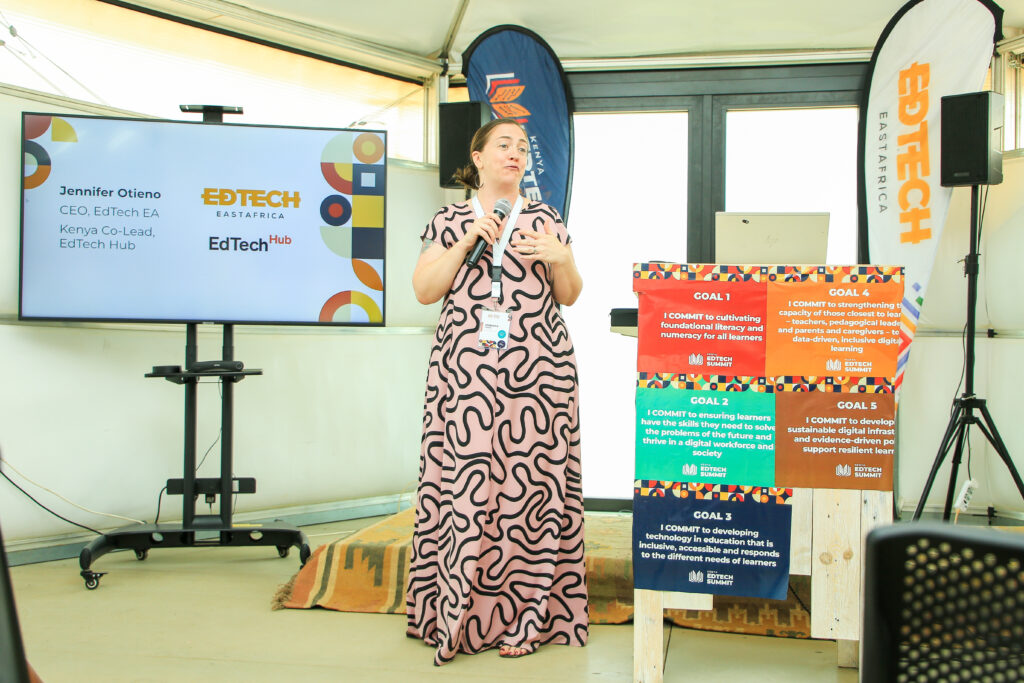
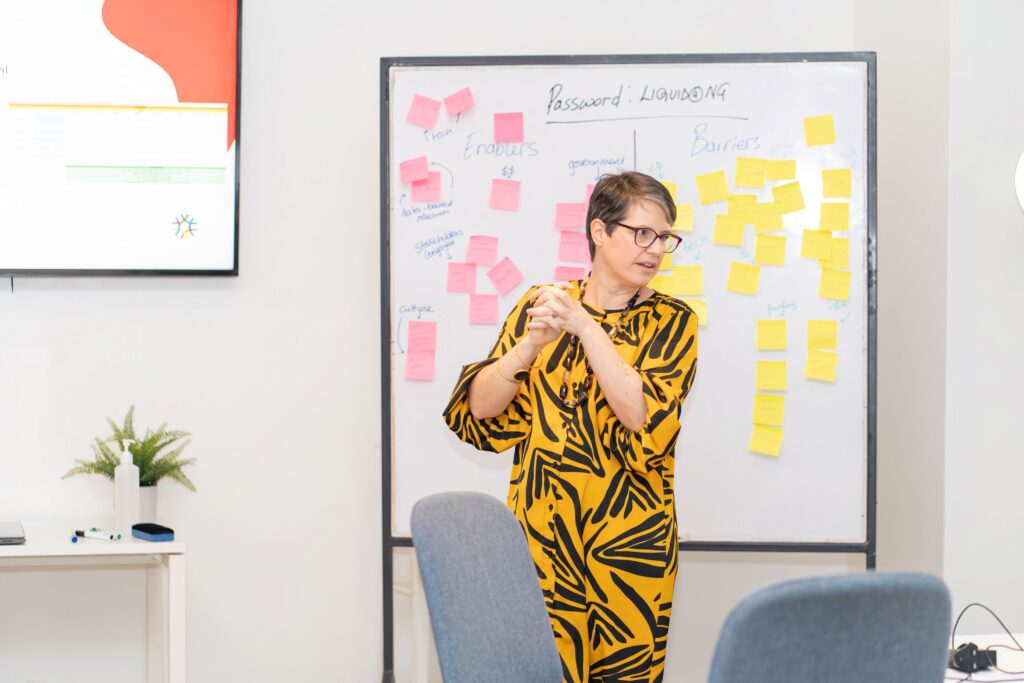
This workshop therefore was important as we got to identify the enablers and barriers to achieving this target but first, we got an opportunity to know how we got here through Jennifer Otieno, (EdTech East Africa Founder and CEO) who took us through the inception of the workshops. Apart from the key shapers which can be looked at as the past, the present, and the future, this conversation was represented at the Kenya Tech Summit 2022, and the Collective Action Fridays workshops, it will also be had at the Kenya EdTech Summit 2023.
Taking us down the tech road in Africa, she focused mainly on how it has been applied in teaching. Kenya, in particular, traces its journey to the late 90s when according to the Presidential Working Party for Education Reforms, teachers began receiving training in ICT integration in teaching and learning, and schools began to receive basic ICT infrastructure, including projectors and laptops for teachers. It was however in June 2006 that the first National ICT Strategy for Education and Training was introduced by the Ministry of Education, In partnership with the state, non-governmental and civil society groups then began to implement activities to foster digital learning in Kenya, key among them being to improve digital infrastructure.
The journey to digitize learning in Kenya did not pick up faster as it wasn’t until 2013 that the government started the first large-scale digital teaching and learning initiative named the Digital Literacy Programme (DLP). This was aimed at children in grades 1-3 in public schools. This project according to findings submitted by The Presidential Working Party on Educational Reforms was revamped in early 2016 having failed to attract more interested parties. As the year came to an end, the DLP was scaled to a national level with the intention of integrating ICT into teaching and learning.
The Covid-19 pandemic required education systems to adopt new operational approaches having failed to attract more interested parties. As the year came to an end, the DLP was scaled to a national level with the intention of integrating ICT into teaching and learning. It wasn’t until the time when Covid-19 happened that Kenya saw a rise in digitally enabled teaching and learning. According to Brunel University, the Covid-19 pandemic required education systems to adopt new operational approaches and this further escalated already existing problems of limited internet access, inadequate learning facilities, and a lack of enough trained teachers among other problems.
In this article titled Teachers’ Use of ICT in Implementing the Competency-based Curriculum in Kenyan Public Primary Schools, Julius Mureithi and Jin Eun Yoo state that UNICEF estimated that close to 20 million learners spread across the country were out of school because of COVID-19 in Kenya as governments were forced to close schools to minimize the spread of the deadly virus.
ENABLERS AND BARRIERS
To help us take a clear look at the two issues presented, Joan Mwachi, EdTech East Africa’s Collective Action Goals facilitator, divided the participants into two groups. One group discussed the enablers and barriers to building a digital infrastructure in Kenya and the other, the enablers and barriers to evidence-driven policy. These two questions made way for robust discussions as different persons went ahead to define the terms used and then made their contributions in the context of education in Kenya.
Availability of funds is essential for building and sustaining digital infrastructure as it ensures that students are provided with the necessary tools, resources, and training to thrive in the digital age, ultimately improving the quality of education and preparing students for the future workforce. However, studies have shown that infrastructure and ICT equipment shortages were among the challenges facing the implementation of ICT in primary schools in Kenya.
According to a study that was carried out in 2015 targeting 40 primary schools and 450 teachers, it was noted that 94% of the schools did not have ICT equipment, all schools in the study had a shortage of classrooms and only two private schools had functional computer laboratories. The members agreed therefore that there is a need for actors in education to come together and help bolster the digital infrastructure and evidence-driven policy.
Accessibility and connectivity also came out as playing a crucial role in the growth of digital infrastructure and evidence-driven policy in Kenyan education, as they enable various stakeholders to leverage technology to improve the quality of education and make informed decisions. This is because it allows for connectivity between students and teachers giving them access to online learning materials. Information through digital platforms also enables parents and guardians to stay informed about their children’s education. They can monitor progress, communicate with teachers, and participate in their child’s learning journey more actively.
Good government policies that focus on infrastructure development, digital literacy, data privacy, and evidence-driven decision-making help to foster the growth of digital infrastructure and improve the quality of education in the country. Such policies as suggested, should be designed with the goal of ensuring that all students have access to a high-quality education. They should prioritize investments in digital infrastructure, such as reliable internet connectivity, electricity access, and the provision of computing devices (e.g., laptops or tablets) to schools and students. This ensures that students and educators have access to the necessary tools for digital learning.
Tied to this is political goodwill that leads to increased allocation of resources for digital infrastructure in education. This includes funding for hardware like computers and tablets, the development of software for educational purposes, and internet connectivity in schools. When policymakers prioritize these investments, it creates an enabling environment for the growth of digital infrastructure.
Political leaders can create policies and regulations that support the integration of technology into education. These policies may include incentives for private sector investment in education technology and the development of guidelines for using digital tools effectively in the classroom. A supportive policy environment encourages the adoption of digital infrastructure.
It was also noted that collaboration is a great enabler as it brings different players both from the government and the private sector to work together through the creation of policies and regulations that support the integration of technology into education, and the provision of digital infrastructure.
Teacher perceptionand capacity were also mentioned as both an enabler and barriers in advancing digital infrastructure. Mureithi and Yoo (2021), demonstrated that ICT in education helps create opportunities for learners to develop 21st Century skills but this depends on the digital literacy of teachers (UNESCO, 2012). Studies on the capacity of teachers in primary schools in Kenya show that, despite the policy formulation for ICT in education and financial investment, the integration of technology in Kenyan classrooms remains low.
According to them, studies on how perception affects the integration of ICT in education show that what teachers think about the use of technology affects their acceptance and subsequent application in their activities. In a study to assess teachers’ beliefs, attitudes, self-efficacy, computer competency, and age, they found out that younger teachers had a highly positive attitude toward technology. This finding they add, could be attributed to the younger teachers having received technology training in the teacher training colleges. It was therefore agreed that teachers’ attitudes should be addressed so as to get the desired results.
The presence of data and consumer awareness was raised as an enabler as information like student performance, attendance, teacher effectiveness, and resource allocation will assist both the government, education institutions, and policymakers to identify areas of improvement, allocate resources more effectively, and tailor educational programs to meet specific needs.
BARRIERS:
The disconnect between policymakers and academia was seen as a great barrier to digital infrastructure and evidence-driven policy as it contributes to its inefficacy in different ways. A study by Kenyatta University on E-Learning policy-making processes in Marsabit Distance Learning Centre quotes McGrath saying that policies that have not been informed by good evidence and analysis result in becoming a victim of the ‘Law of unintended consequences’.
One of the ways is through misalignment of goals where policymakers may set lofty goals and objectives for digital infrastructure and evidence-driven policies without fully understanding the practical challenges and limitations faced by educators and schools. This misalignment can lead to unrealistic expectations and resource allocation. Policymakers may also formulate policies and initiatives without consulting teachers, administrators, and other education professionals who work directly in schools. Such goals and policies become difficult for teachers to implement.
Insufficient trainingand support of teachers and education practitioners is also another barrier. Formulating policies and initiatives without consulting teachers, administrators, and other education professionals who work directly in schools can result in policies that are out of touch with the realities of the classroom and are difficult to implement.
Another challenge is that of resource constraints. When an institution is allocated inadequate funding, it inhibits the work to be done and undermines the success of the initiatives.
Socio-cultural factors came into play as another hindrance to digital infrastructure and evidence-driven policies in Kenya’s education system. Income and location can determine who has access to the internet and digital devices. This can lead to a digital divide where students from disadvantaged backgrounds are left behind.
Cultural attitudes can shape how education is perceived. In some cultures, traditional forms of education are highly valued, and there may be resistance to adopting digital methods. Parents and communities may prioritize traditional teaching methods over digital ones. There are communities that also do not consider it important to educate a girl child therefore girls and young women may face additional barriers in accessing digital infrastructure and pursuing education in STEM fields, further perpetuating gender disparities.
Recommendations to the PWPER from the EdTech Taskforce
A task force of over 20 digital learning organizations representing research, practice, innovation, and funding submitted six recommendations to the presidential Working Party on Education reforms. The task force, represented at this workshop by James Ong’ang’a, from Longhorn Publishing, tabled the following recommendations, three of which made it to the final report.
Strengthen the foundation for inclusive digital learning
Augment the enabling policy environment for digital learning to occur
Leverage technology to promote inclusion and enhance universal access to education
Use technology to transform the way learning happens and improve learning outcomes
Empower all learners with digital literacy skills to help them thrive in a digital workforce and society
Increase and optimise EdTech financing
CONCLUSION:
Developing sustainable digital infrastructure and evidence-driven policy to support resilient learning in Kenya requires different actors to come together. The first is to create accessible digital infrastructure, with widespread internet connectivity and reliable power sources, to ensure that remote learning can thrive across the country. Policymakers should prioritize data collection and analysis to inform educational decisions, using evidence-based insights to tailor learning programs effectively.
Furthermore, fostering partnerships with technology providers and educational institutions can help create innovative solutions for diverse learning needs. This cannot be done by an individual institution and EdTech creates an avenue where different players come together to discuss how best to achieve this for learners in Kenya.
Throughout our conversations, a profound question lingers in the quiet corners of our minds: How do we make learning great?
Is it the curriculum alone, meticulously designed and thoughtfully sequenced, that cultivates greatness? Or perhaps the magic lies in the educators, the torchbearers of wisdom who kindle the flames of curiosity through exceptional EdTech tools? It may be that “great learning” is not an output expected of our educators, but an outcome of engaged and motivated learners.
Still, for all the things “great learning” could be, what we do know is that learning is made great when everyone can and does participate. And right now, our learning is not great.
Despite the existence of policies designed to improve equality of access and opportunity, equitable access is still a dream. Where equality means treating everyone the same, “equity means recognizing that we do not all start from the same place and must acknowledge and make adjustments to imbalances.” It is the difference between giving everyone a seat at the table and acknowledging that some seats might be shorter than others or that the table itself is not accessible to everyone. As such, related to equity is the question of accessibility. If something is accessible, then it can be used, understood, and shared by everyone. Unfortunately, and to reiterate, education in Kenya is neither equal, equitable, nor accessible.
“Even as digitalisation generates opportunities to increase accessibility to education in Kenya, the digital divide has continued to grow larger for groups that have benefited least from the infrastructural development of information and communication technologies”
Thus, edTech, rather paradoxically, risks leaving people behind or, perhaps worse still, pushing those who were already behind, even further back. A great example of this is the state of digital education, as it applies to special needs learners in Kenya. Despite recognising the potential of, and the necessity for, digital education for special needs learners, very few to no resources have been availed to make this type of learning a practical reality. This was confirmed by a 2022 study on the implementation of Kenya’s Digital Literacy Programme in Special Needs Schools. This is before we get into the technology itself, which may be poorly designed, quickly assembled, and fail to reflect local contexts.
Therefore, as we work to improve the acquisition of foundational literacy and numeracy and ensure that our youth have the skills they need for the future, we must ask how the rising edTech tide can be used to lift all learners.
The Workshop
This was the question the third Collective Action Friday workshop addressed. Together with RELI (The Regional Education Learning Initiative in East Africa), we explored how we could develop educational technology that is inclusive, accessible, and responsive to the different needs of learners. And, as with the workshops that came before, we focused on establishing a shared understanding of the problem. As a result, this workshop doubled as a discussion of the elephant in the room: the limits of educational technology.
Unveiling the Barriers
As discussions unfolded, we candidly addressed the barriers that continue to hinder the realization of inclusive education through EdTech. Infrastructure inequalities, varying digital literacy levels, and economic disparities were identified as significant roadblocks. As were, inadequate funding and cultural norms. In fact, and on the point of funding, edTech in Africa is severely underfunded. According to Disrupt Africa’s 2022 African Tech Startups Funding Report, edTech startups received a mere $24.6 million in funding. Compare this to the $1.5 billion received by fintech, the $220 million for transport-based startups, or the $556.7 million for eCommerce. And on the point of cultural norms, a 2021 Working Paper on “Understanding Barriers to Girls’ Access and Use of EdTech in Kenya During Covid-19” affirmed the impact of gendered roles on the accessibility of edTech solutions. They found that “Girls may be discouraged from accessing or using computers due to social and cultural norms, and are instead expected to contribute more heavily than boys to household chores, care for family members, and family income.” Thus, EdTech solutions that fail to account for the nuances in achieving learning outcomes will merely exacerbate these barriers, rather than resolve them.
Ultimately, we soberly acknowledged that technology, while a potent catalyst, is not a panacea, and highlighted the necessity of multi-faceted solutions that encompass policy changes, teacher training, and community engagement.
The Enablers of Change
Amidst the contemplation of challenges, the workshop illuminated the enablers that hold the potential to spark transformative change. Collaborative partnerships, where edTech companies, educational institutions, and governments unite forces, emerged as a crucial strategy. Additionally, the role of localized content creation and context-sensitive design was emphasized as a means to ensure that technology resonates with diverse learners. The workshop championed the notion that customization when wielded effectively, can amplify the impact of EdTech interventions. Another enabler was an equity framework presented by RELI’s Deborah Kimathi. Dubbed the EQUIP Framework, it called upon edTech pioneers, innovators, and designers to do four things to centralise equity in the design and use process. These are; (1) needs assessment and asset mapping to gauge the needs of your consumers; (2) application through an interactive tool that allows real-time feedback; (3) recommend minimum requirements that account for community needs; finally (4) explore mitigating strategies.
We then dissected and debated this framework; engaging in thought-provoking discussions that revealed the intricate nuances of what equity truly entails. While the conversation was marked by a diversity of viewpoints, a shared commitment to unraveling the complexities of equity bound participants together in a shared endeavour.
Conclusion
However, where, in previous workshops, we left with more answers than questions, in this workshop we left with more questions than answers. And that’s a great thing! Questions often tell you more than answers. The right questions will tell you where the gaps are in your knowledge and thinking. They will expose what you don’t know, you don’t know. Above all, the right questions will foster discussion and collaboration. So as we prepare for the Kenya EdTech Summit 2023, here are some questions to ponder:
How do we balance scale and contextualisation (the local relevance and use)?
Given that terms like “equitable”, “accessible”, and “underresourced” have specific connotations that refer to specific communities, how do you convince funders that you mean everyone? Not just a few?
How do we design EdTech for everyone? Is it even possible?
Where are the fracture points in the process of extending equity, inclusivity, and accessibility to education?
Above all, how do we make learning great? And what does this mean?