Tag: Empowering Pedagogical Leaders

  • A collective vision for leaders in learning as they set sail for the next decade

    A collective vision for leaders in learning as they set sail for the next decade

    By Josaya Wasonga

    Franklin D. Roosevelt said: “To reach a port, we must sail—sail, not tie at anchor—sail, not drift.” 
    Speaking at the opening session of the EdTech Summit 2024: Kenyan Edition, organized by the EdTech East Africa Summit, Suraj Shah shared snippets about when EdTech East Africa first set sail 10 years ago.  

    As the Head of Strategic Partnerships and Thought Leadership at the Center for Innovative Teaching and Learning at the Mastercard  Foundation, Suraj and other intrepid co-sailors have been paddling the oars driving EdTech Monday’s convos on NTV since 2020. 

    Suraj reflected, “The idea of EdTech Summits began with a conversation from EdTech Mondays, a program with the Mastercard Foundation. We demystified EdTech.” EdTech East Africa, congratulations on 10 years; you’ve been a wonderful partner.” 

    Mastercard  Foundation is supporting the Young Africa Works goal of 2030. Their goal is to help 13 million young people in Africa, 70% of whom are young women, find meaningful and fulfilling work.

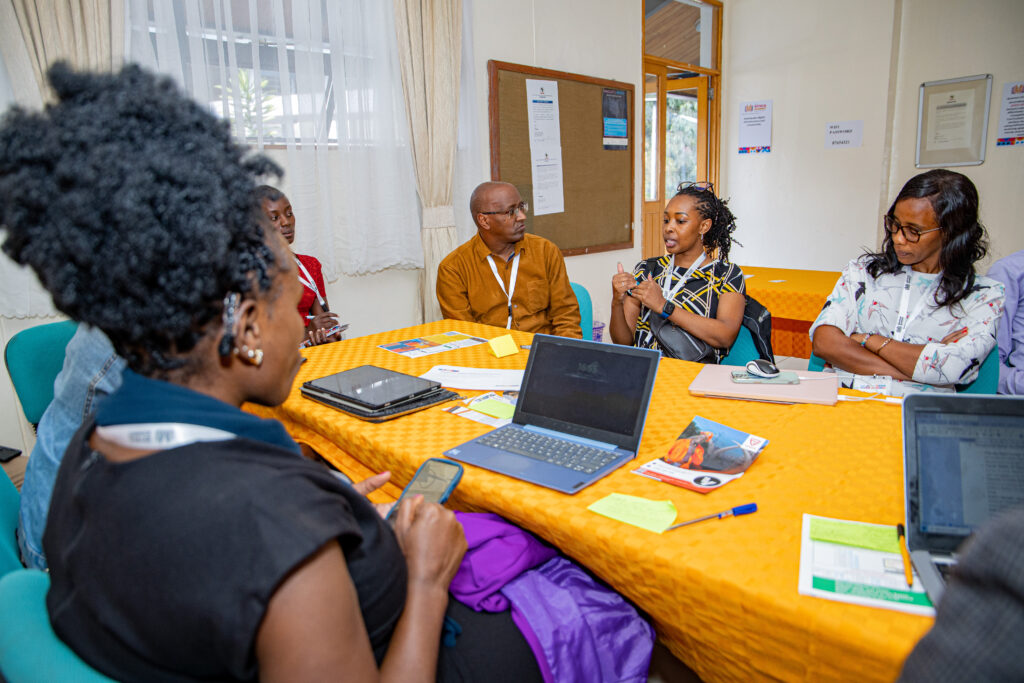
    It was only appropriate that the last session of the two-day summit was about setting a 10-year collective vision. The session I attended was for learning leaders. 

    What is important for this team to include? 

    “I think after listening to the conversations and seeing the demos, there’s a lot of focus on children; there’s a lot of focus on content creation, but I haven’t seen deep thoughts on how the teacher will be supported,” one attendee noted.

    “I believe that, even as development partners or creators, we have placed a lot of focus on the child, materials, and infrastructure, often overlooking the crucial role of the teacher in all this.” 

    Our innovations are endless, but where does the teacher fit in?

    To make meaningful strides in the next decade, the teacher needs holistic support from all stakeholders. There is also a need to rethink designing resources to support teachers in technology, as well as retooling and capacity building.  

    Continuous sensitisation 

    Moses, a teacher from Siaya, emphasized the importance of sensitization in this EdTech type of communication and conversation. Moses clarified that his use of the term “sensitization” stems from the lack of training for school leaders. That’s because you’ll be teaching them from January to December. 

    “But you sensitize them to what their teachers are learning, helping them advance.”

    When they go to school, the gatekeeper of any practice in a school is a school leader. We must therefore provide them with support.  

    Mindset 

    Addressing a mindset issue is also necessary. Someone mentioned that he was conversing with the teachers, suggesting that he would prefer to learn alongside the children due to their ease of understanding. 

    “But there is a mindset among teachers that suggests a child should not possess more knowledge than they do.” This is untrue, as our children can utilize technology to a greater extent than we do.  

    Several individuals observed that the younger generation embraces EdTech quickly, while the older generation takes longer to adjust to technological advancements. In many cases, the heads of institutions are older people. This poses a distinct challenge. 

    There needs to be a method to alter the mindsets of educators who are firmly entrenched in their practices. Should that mindset shift not occur, students will possess a deeper understanding of technology than their teachers.  

    Inclusivity 

    The issue of inclusivity warrants further investigation. Learners with special needs also want to learn and work with technology. However, we can only achieve this if we make deliberate efforts to devise solutions that not only address their unique personal situations, but also somewhat alleviate them. 

    Players in the EdTech space should keep in mind that there is a need for assistive devices for learners with special needs. This is a big challenge. Even the government is not able to provide equipment for learners with special needs across the board.

    To use EdTech to produce inclusive, effective, and resilient learning, we must rethink accessibility. We must consider moving the EdTech ecosystem towards evidence-based, technology-enabled teaching and learning.

    Succession planning

    Succession planning was another issue that emerged. Teachers come and go. They transfer. Some leave the profession. Most of the time, a new teacher must start from the beginning. Yet, for instance, it took their predecessor years to carve their niche. 

    When this occurs, there are numerous gaps because there are no mentoring programs or succession plans. Ideally, school leaders, as well as those who have been on the job longer, should mentor young, aspiring school leaders. However, there are established programs for such problems. 

    Sustainability 

    The group discussed the issue of sustainability and efficiency. They noted that EdTech stakeholders must ensure that systems are more sustainable and efficient. This will assist, among other things, in identifying issues and making necessary corrections. before they become too late. Additionally, sustainability will help with resource allocation, preventing resource waste. 

    The research paper, EdTech Tools for Sustainable Practices: A Green Revolution in Education, highlights the rapid advancement of Education Technology (EdTech). EdTech offers promising opportunities for educational institutions to integrate sustainable business practices into their operations and curriculum. The integration of EdTech into sustainability education has emerged as a powerful tool to promote environmental awareness, foster sustainable behavior, and address the pressing challenges of climate change and resource depletion.”

    Vision statement 

    Having a vision and mission for your EdTech startup is not only important for defining your goals and values but also for attracting and retaining your customers, investors, and employees. A vision statement describes the ultimate impact that you want to make in the world through your product or service, while a mission statement explains how you will achieve that impact.

    As the education landscape continues to evolve, EdTech leaders face a multitude of challenges in meeting the needs of students, teachers, and parents. To navigate these challenges effectively, EdTech leaders need to have a clear vision and mission that align with the needs of the education sector.

    Conclusion 

    Over the next ten years, learning leaders will be individuals who can effectively apply pedagogy. Ideally, these leaders should be capable of guiding all instructional practices and assisting learners in achieving specific academic milestones.

    In 10 years, learning leaders ought to embrace inclusivity. When they depart an institution, they will leave personnel and systems that continue to succeed, if not do better. 

    The next decade’s learning leaders will “not tie at anchor,” but they will sail; they will not drift but sail to more ports. 

  • Measuring impact strengthens the capacity of those closest to the learners 

    Measuring impact strengthens the capacity of those closest to the learners 

    By Josaya Wasonga

    If a tree falls in the forest, and there’s no one around to hear it, does it make a sound? Sounds like a trick question, right? But it’s not. It’s the age-old question that pits reality versus perception. 

    And that’s what Collective Action Goal 4 at the 2023 Kenya EdTech Summit sought to shine a spotlight on. The Summit was co-created by several EdTech stakeholders organized by EdTech East Africa, and sponsored by Mastercard Foundation and other sponsors. 

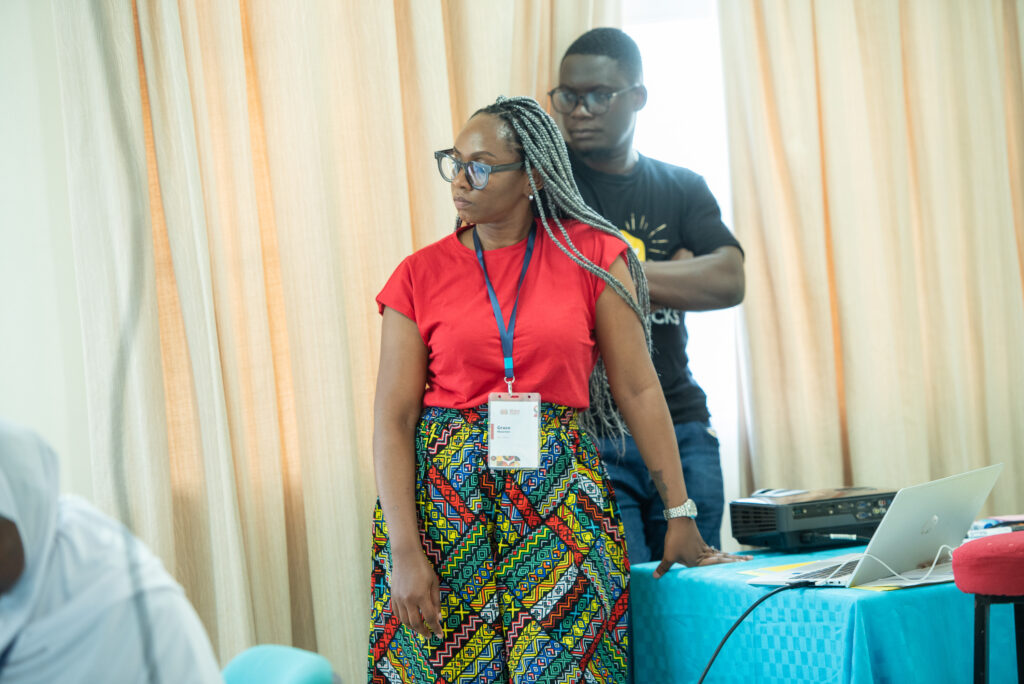
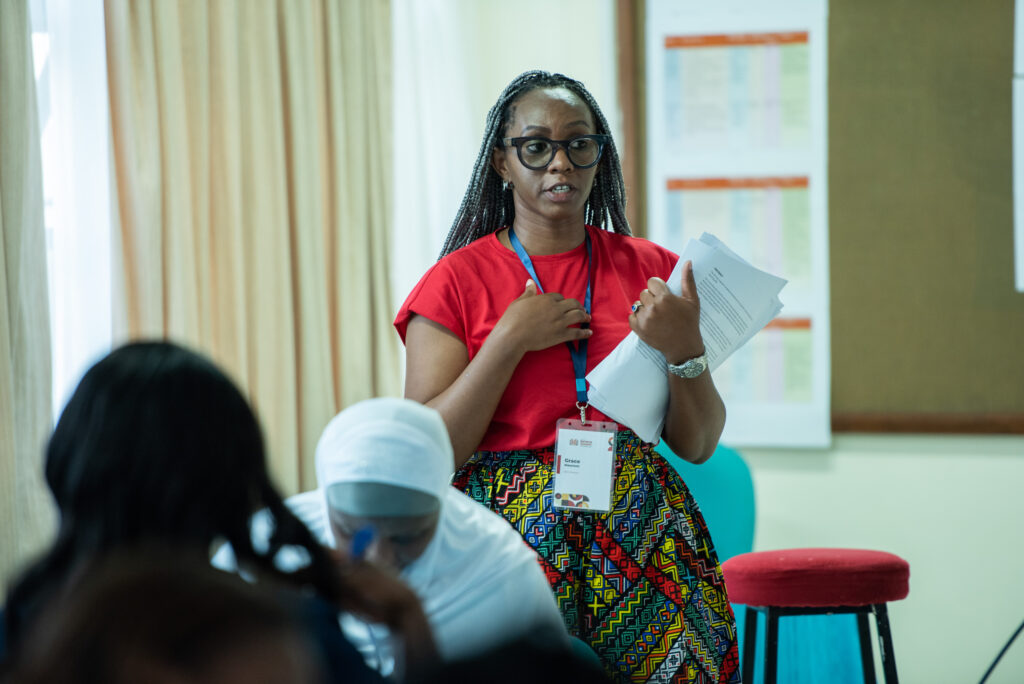
    For context’s sake, let’s rephrase the question: If EdTech innovations make seismic waves and there’s no one to measure the impact, does it cause a change or disturbance in the atmosphere? Sound causes change or disruption in the airwaves. “We don’t have to continue measuring the impact the way we do if it’s not working,” the facilitator, Grace Maureen, said. “That’s why we’re here; to learn from each other.” 

    Digital divide

    Grace works at Metis Collective. At Metis, they amplify and connect with innovators and help them to innovate for systemic change. They bridge the learning gaps with free programmes. One is the six-month fellowship, where they empower education leaders to turn their innovative ideas into practical solutions. 

    Metis piloted InnovateEd two months ago. It’s training that helps teachers solve problems. Currently, they are in what they call the empathise stage. This is where they go to their students, ask questions, and do a root-cause analysis. 

    Metis learned that those closest to the learners lack tools, resources, and a community of partners. These individuals in close proximity—teachers, pedagogical leaders, parents, and caregivers—need to strengthen their capacity to lead data-driven, inclusive digital learning. These players may be physically closest to the learners, but as long as they are worlds apart as long as the digital divide exists between them. 

    Purpose-driven conversations

    The purpose of Collective Action Goal 4 was to help participants think through how they can measure progress toward the end goal of Inclusive digital learning. In the first collective conversation at the EdTech Workshop that took place in August, attendees talked about the enablers and barriers to strengthening the capacity of those closest to the learners and developed indicators.

    The other purpose was to build on that conversation that players in the EdTech field need to develop our teachers. They also need inclusive curriculum integration, digital tools, collaboration, and engaging students, among others. That’s one end of the equation. 

    The other end is measuring progress toward the goal of being inclusive in digital learning. And while we’re at it, it’s not just about strengthening the capacity but realising that all the players are data-driven and can measure and share findings with the communities of practice. 

    “Let’s not leave measuring to the government and the big institutions,” Maureen advised. “We can contribute to that conversation from wherever we are.” 

    Measuring tools

    “How do you measure progress toward your end goal?” Maureen asked the sixty-four-thousand-dollar question. “Which tools are you using and what are you measuring? It could be that, as a teacher, you are measuring student engagement or learning outcomes.”

    Silence. 


    “Or you don’t measure?” Maureen quipped. “That’s also an answer. If I hear someone say they’ve realised that they’re not measuring anything, that would be great.”

    That takes us back to the age-old question. If we EdTech players are not measuring their impact, how will they know what they are doing right? Or wrong?  

    When it comes to measuring, there are different strokes for different subjects. There is measuring progress and learning outcomes based on the 8-4-4 system and the CBC, the latter being more descriptive. There are measurement tools provided by the government: like the Early Grade Reading Assessment (EGRA) and the Early Grade Mathematics Assessment (EGMA). 

    There are also classroom measurements that educators generate according to how they have taught the syllabus. At the end of the term, a teacher sets an exam based on what they have taught. This exam is moderated by other teachers, who will say whether the teacher has followed the syllabus and met the objectives. The pass will be percentage or descriptive. 

    Ideally, the goals of any measuring tool ought to be threefold. One is to measure impact. Two, strengthen the capacity of learners. And third, to strengthen the capacity of those closest to the learners. However, more often than not, most measuring tools accomplish the first two goals but barely scratch the surface of the third. 

    “The tool should be holistic,” Maureen pointed out. “You need to include all stakeholders. As a teacher, you don’t, for instance, look at data in isolation. The parents and caregivers also contribute to that goal.” 

    Actionable insights

    “We should come up with actionable insights. What metrics will I start measuring?” Maireen asked. “If you are an EdTech-preneur, what metrics are you going to use to measure your progress?” 

    “We measure revenue,” a participant said. “It’s important because we’re a for-profit organisation. We spend a lot of money to do content and want to get a return on investment and see if it’s worth it.” 

    A player like Ntemata, emphasises the teacher who, in their opinion, is the driver of learning. They measure the quality and wellness of the teacher. They measure how a teacher enhances learning in a classroom. Their assessment tool is supposed to support the teacher to achieve 100% engagement with the learner. They believe if they can strengthen the teacher’s capacity, then, they will have better learning outcomes. 

    Actionable insights are not just the preserve of some stakeholders in the ecosystem but for all and sundry. A pedagogical leader or EdTech-preneur can, for instance, look for the usage of apps and study the trends on the backend to arrive at actionable insights. 

    Learning metrics

    There are different learning metrics for different learning scenarios. Let’s take the case study of Ziwani Primary School. Its metrics are professional development, inclusive pedagogy in curriculum integration, digital tools and infrastructure, collaboration and community building, student engagement, learning outcomes, and parental and caregiver empowerment. 

    Ziwani Primary School has implemented inclusive education for children with diverse needs. Emily is a fourth-grade student with autism and has shown remarkable progress in her social skills and academic performance since joining the inclusive programme. She has made friends, become more engaged in class activities, and is meeting academic benchmarks. However, the school’s focus on Emily’s success has led to less attention given to other students with diverse needs. 

    “If you’re working in Ziwani Primary School—as a teacher, pedagogical leader, policymaker, EdTech-preneur—what metrics would you use to measure success?” Maureen asked. “How do you ensure the metrics consider the needs of all students with diverse needs, not just Emily?” 

    “The key metric is inclusive pedagogy and curriculum integration,” one attendee opined. “This is because some of the learners are being neglected. They’re not fully engaged. The indicators in this case could be diversity in curriculum materials. This is because the other learners do not deal with the same challenges as Emily.” 

    “The other metric is learning outcomes,” another attendee chimed in. “Because if you’re feeling neglected, which means they’re not at the level they’re supposed to be at. They are not achieving the learning outcomes. One of the indicators would be competency in teaching.” 

    Learning metrics have a lot to do with measuring impacts to strengthen those closest to the learners. For starters, as Valamis states: “By gathering data throughout the process and carefully analyzing real-life results, learning metrics offer a way of accurately assessing the strengths and weaknesses of a particular course to determine whether it achieved its goal.” 

    Measuring the impact of a fallen tree

    We’re back to para one. If a tree falls in the forest and there’s no one around to hear it, does it make a sound? Well, there’s more to this than meets the eye. The tree falls on other flora and fauna. The impact of a fallen tree tremendously affects the surrounding habitat. 

    But then again, if there’s no one around to, in the context of EdTech, measure the impact, it would be akin to a lost opportunity. Why? The capacity of other forms of life that are closest to the tree—teachers, pedagogical leaders, parents, and caregivers—cannot be effectively strengthened.