Tag: EdTech in Kenya

  • The State of Competency-Based Education in Kenya

    By Mo Nyarinda

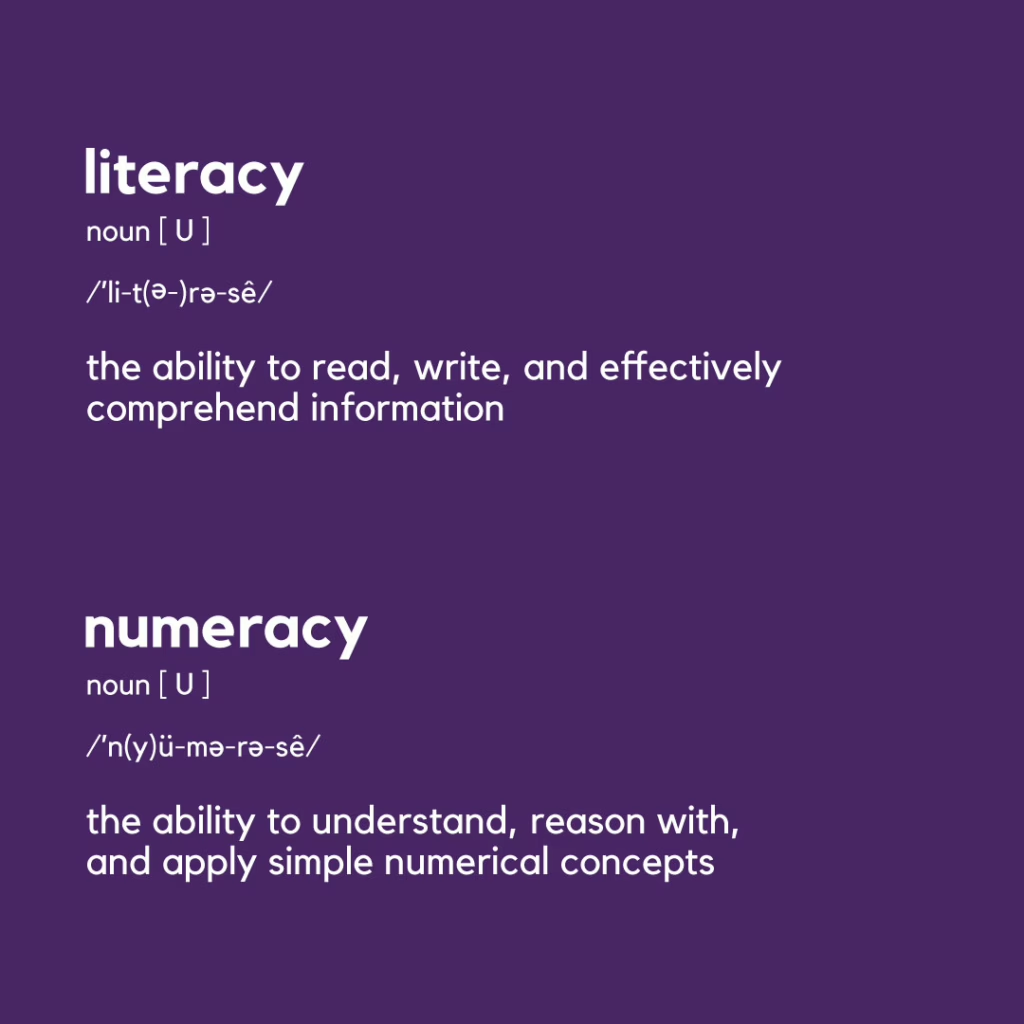
    On the 29th of April 2026, the Daily Nation ran a front page story “State’s shocking admission on CBE“ sharing some statistics from the Grade 3 National Assessment System for Monitoring Learner Achievement (NAMSLA) report. The NASMLA study released by the Kenya National Examinations Council reveals that nationally, only 41.4 percent of Grade 3 learners met the English Literacy benchmark while 26.8 percent met the numeracy skills benchmark of 50 percent.
    The data further shows the stark disparities by region, with West Pokot, Isiolo, and Turkana County counties having the lowest percentage of learners attaining the English literacy benchmark, and Marsabit, Busia, and Vihiga Counties recording low performance in Mathematics activities. According to the study, schools in informal settlements, refugee host counties and those that focus on age-based special needs education also had the lowest number of learners meeting foundational learning requirements. 

    These findings match the Usawa Agenda’s 2nd Foundational Literacy and Numeracy Assessment (FLANA) Report titled Are All Our Children Learning? which documents that learners in refugee community schools have significantly lower learning outcomes compared to those in public and private schools. The survey conducted across the 47 counties in Kenya found that “35 in 100 Grade 6 learners cannot read and comprehend a Grade 3 appropriate English story” and that “foundational numeracy learning outcomes have stagnated” between 2023 and 2025.   

    EdTech East Africa hosted the NRB EdTech Meetup on Wednesday, 29th April 2025 under the theme ‘Is CBE Delivering on its Learning Promise?’ Well, in terms of access to education, the FLANA report indicates that 95 out of 100 children are in school. The facilitator of the meetup, Dr. Lydia Chege, who’s the lead ecosystem building and government engagement at Mizizi Elimu Afrika started by asking participants a very simple question: How many numbers can you count on your fingers? I said ten, another person said so many! I am still figuring out how many we can as part of the task she gave us. 
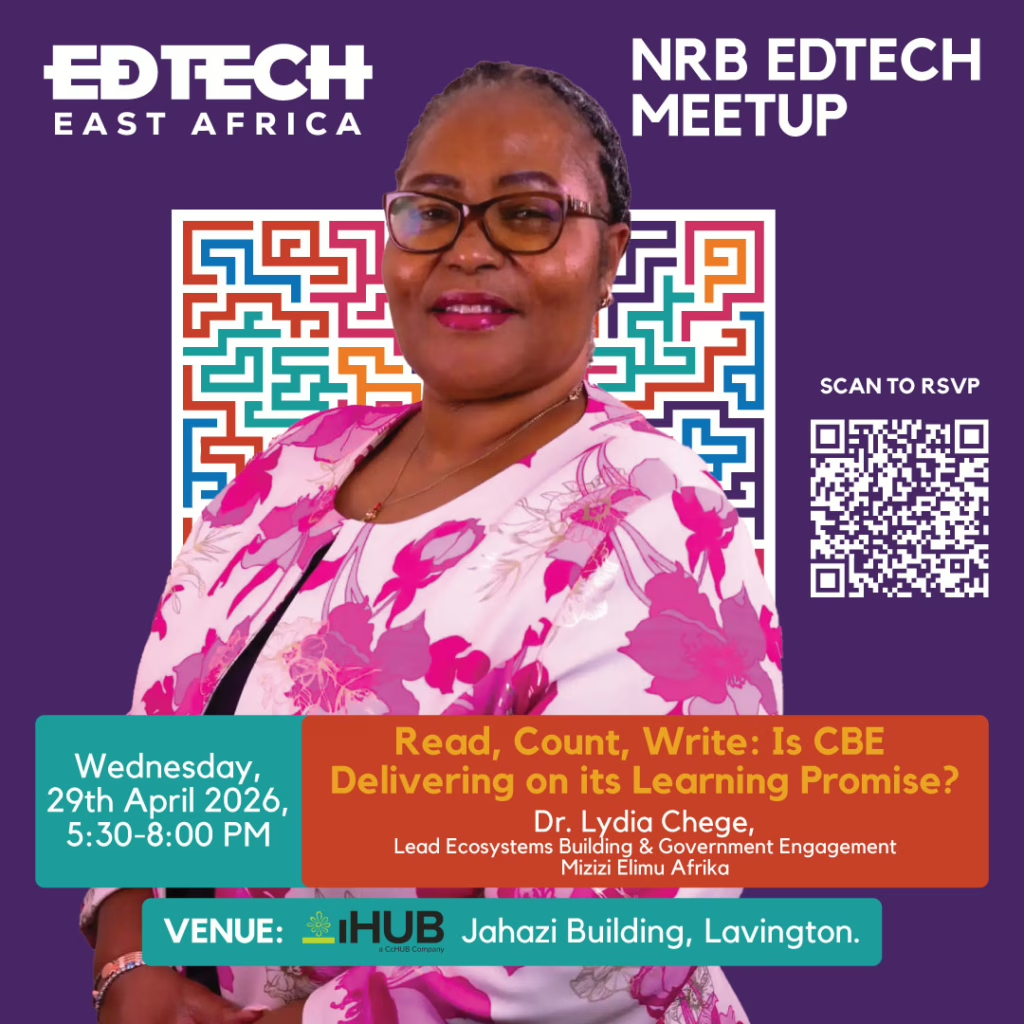
    This quick exercise set the tone for the session which involved panelists from different organisations sharing their perspective on learning in the digital age and how EdTech can effectively support all learners to read, count and write. The panelists were Winnie Ongiri, the head of operations at Signvrse who shared the importance of inclusivity in education through the use of sign language for deaf learners; Emily Kathini, a teacher that shared on the need for personalised assessments for teachers to understand their learners’ needs better; and Christopher Maingi, a Mathematician and parent of a neurodivergent learner who called for EdTech developers to create early intervention plans that can enable parents to prepare learners with different abilities for school.

    The Next Steps for Stakeholders in Education

    There was consensus that indeed competency-based education (CBE) is facing several implementation challenges. At the NRB EdTech Meetup, a space for education innovators and stakeholders to meet for peer learning and exchange of ideas, the attendees shared some of the solutions that need to be replicated widely, or introduced in education for learners to improve their foundational literacy and numeracy outcomes. These include:

    • Teachers integrating technology in classrooms –  according to the FLANA report, the current national average on the uptake of ICT use in education is 47.4 percent. Teachers can continue to use EdTech in the classroom by using visual aids to improve retention, audio stories for better listening and comprehension, and the use of multi-sensory approaches to engage learners with different learning abilities
    • Capacity building – there needs to be continuous training of teachers to use EdTech tools in classrooms, and as tools that can reduce the time spent in administrative tasks so they can focus more on learners needs 
    • Increased parental engagement – parents need to be more proactive about their children; supporting them at home for effective learning and managing screentime especially for fun 
    • Introduction of adaptive assessment methods for different learners – there needs to be an early identification system which can detect learning challenges and propose assessment methods that accommodate every learner e.g. learners who struggle with written exams but are very good at oral exams or use of devices 
    What EdTech Developers and Educators Can Do 

    Education technology if deployed in school and used correctly can unlock better learning outcomes for learners. In order for this to be successful, EdTech developers should involve end users, mainly learners, teachers and parents at every stage of their design process, and test the tools with them so that they build user friendly tools. They should also apply universal design principles and accessibility considerations for all learners to benefit from, especially those with special education needs. See this practical Equity and Inclusion Toolkit developed by iHUB for educators, technologists and designers.

    Educators on the other hand should stay open to EdTech integration in schools, acknowledging that tools are not replacements for the human-teaching expertise. Both educators and EdTech innovators can also take advantage of EdTech summits, EdTech meetups and education conferences to showcase their products and be exposed to current working technologies in education. The 3rd Annual Educational Assessment Symposium by KNEC is one such event happening in Nairobi this 4th-8th May 2026 where both government and other education stakeholders are convening. Ultimately, if there are enough teachers per student in each grade, and if teachers tracked learner’s performance continuously, interventions can be introduced to ensure that foundational learning proficiency is attained by each learner by the time they complete primary education in Kenya.

    Join the next NRB EdTech Meetup on Wednesday, 27th May 2026. More details can be found on EdTech East Africa’s social media pages.

  • Is EdTech in Kenya a Necessity or Privilege?

    Kenya has ‘forgotten’ education challenges which are often exposed when disaster strikes, take for instance the floods of April – May 2024. The news was awash with stories of destroyed classrooms, flooded classrooms and learning crises caused by the rain. According to The Impact of 2024 Deadly Floods on Schools research report, 1,967 schools were damaged, and 62 primary schools submerged by water as of May 2024. Resulting consequences of this was closure of schools, a directive by the government,  to protect learners from the floods, and risk of waterborne diseases. Apart from the state of the classrooms, there is the problem of teacher shortages, underfunding in education, curriculum changes and the very high cost of living to mention but a few. With such limited resources, recurring problems and competing priorities, why do we need education technology (EdTech)? Shouldn’t we solve the infrastructural and capacity issues we face before jumping to EdTech?

    I have travelled to the Coast, Central and North Eastern regions of Kenya attending the Pwani Regional EdTech Summit, Central EdTech Summit and the Frontier Counties EdTech Summit respectively, to find some answers to a few  conflicting questions: do we need EdTech in Kenya?  Is EdTech for the privileged? How do we bridge the gaps in education in Kenya?

    Contextualised Problems and Solutions

    In the first half of the year that I have spent engaging with key stakeholders in education in Kenya—teachers, learners, EdTech innovators, Ministry of Education representatives, development partners, local and international non governmental organisations—I have learnt that all education problems cannot fit in one basket. While some policy and infrastructural issues such as inadequate funding, lack of inclusivity, inadequate teacher professional development, policy issues plague all the Coastal, Central and North Eastern regions I have been to, some problems are specific to certain areas thus it is critical to address them at the local level and find sustainable solutions that work. 

    At the Pwani Regional EdTech Summit, the priority issues raised include but are not limited to increased school drop out tendencies for both boys and girls, low literacy levels, and child sextortion while in the Frontiers Region, systemic exclusion by the government, and cultural norms and stereotypes are the barriers to education. In the Central region, tech  integration in education systems was discussed more keenly with reference to the National ICT Survey statistics placing household laptop ownership at 9.3 %, and internet registration at 7.1 % as contributors to the digital divide in Central Kenya. So how can the Ministry of Education (MoE) tackle these education challenges and provide long term sustainable solutions for all learners in Kenya?

    First, I acknowledge that the government is not and cannot be an independent actor when it comes to education sector challenges. Different organisations and actors are developing sustainable solutions and creating impact in public schools in underserved communities in Kenya which I’ll dive into in a bit. This is achieved by ecosystem building organisations like EdTech East Africa, who gather education stakeholders in the same room through the regional and national EdTech Summits to discuss EdTech in Kenya, strengthen regional EdTech collaborations and form communities of practice for people to go about their work with shared knowledge and best practices. The summits are curated to give voice to teachers during the Teachers’ Townhall, to generate evidence and data that can influence policy in the ICT in Education and Training Policy (2021) public participation sessions and to showcase innovative, locally-driven solutions for inclusive digital learning via the Demos and Workshop sessions.

    My favourite session to attend in all the three summits has been the policy dialogues where participants are separated in groups to discuss and present their findings on a) equity and access, b) ICT for educators c) research and innovation, and d) digital safety and well being. The key take away in this session led by the Directorate of ICT in the Ministry of Education for me is always the varied responses on the implementation of the ICT in Education and Training Policy (2021). The session is designed to get responses on what’s working, what’s not working, what can be improved to leverage technology usage in Kenyan classrooms, and proposed solutions to transform education. I am often awed by how the government providing laptops and tablets to schools is both the thing that works and the thing that does not work in the three regions I have gone to. On the surface, providing these digital devices for learning is the first step in making EdTech in Kenya accessible. However, lack of internet bundles or even the entire internet infrastructure in rural areas, lack of electricity, resistance to EdTech adoption, maintenance costs of devices, ratio of ICT trained teachers to school population and competing home priorities are a major hindrance to adoption of EdTech in learning.

    I also enjoy the Themed Teachers’ Town Hall  which is an open conversation facilitated by a teacher on “Empowering Educators as Innovators in EdTech.” It is a dedicated space for teachers to locate and centre themselves in the EdTech conversation. The facilitator starts by asking open ended questions and passing the microphone to teachers. Usually, teachers highlight how they solve problems with local EdTech solutions, how they integrate technology in classrooms both as innovators and users, and how they monitor and evaluate the impact of EdTech solutions in classrooms. In a room full of EdTech entrepreneurs, the Ministry of Education, learners and development partners, teacher voices are critical as they are on the ground with learners, choosing what works best for their classrooms and driving EdTech usage or not. The importance of teachers in the EdTech ecosystem cannot be understated; they provide insightful feedback in real time to EdTech Practitioners attending the summit on their willingness to integrate new innovations in the classroom, their challenges with EdTech courseware and suggest any improvements that can be incorporated to make the EdTech solutions better for maximum impact.

    Is EdTech Necessary?

    On our drive to Garissa for the Frontier Counties EdTech Summit, I counted about four schools and saw many girls of school-going age walking around. They were either escorting donkeys to waterpoints or taking care of other younger children and I suppose helping their families with other chores. At a police checkpoint in Tana, more than seven girls approached our bus to ask for water bottles for storing milk. I thought and voiced this to one of the summit attendees I was travelling with, “This is so unheard of in my village in Kakamega. Every child of school-going age is in school and if they aren’t any neighbour will ask and report to the area chief for them to handle the matter.” At the same time, I also recognised that in my home area, there is some form of stability and our way of life is agriculture. Compared to the nomadic lifestyle, it is definitely a huge ask to expect learners in school when their families are moving in search of pasture, food and water. I think the realisation that EdTech is indeed a necessity happened for me at that time. 

    I had been privy to Learning Out Loud Workshop sessions hosted by several organisations during the EdTech summits such as LEWA Conservancy and their offline learning solutions in areas prone to human-wildlife interaction. The LEWA Education Programme uses Physics Education Technology (PHET Labs) to offer interactive science and math simulations that mimic real-world lab experiments. By using this technology, teachers in rural schools (where involved) have overcome lab equipment shortages and achieved practical learning outcomes for learners improving engagement and performance in science exams. I had seen NABU showcase how they create culturally relevant books and distribute them on a free mobile app with the goal of improving foundational learning. I had seen robotics and AI presentations in a modern world and I had seen the work of Pwani TeknowGalz in empowering girls to stay in school. But, I had not seen EdTech’s relevance yet in low-resource areas, until I saw the three girls from Mbaikini Girls Secondary who won the World Robotics Olympiad and until I saw a number of out of school girls on a weekday and thought of EdTech as an intervention.

    Transforming education in Kenya is possible and in alignment with Sustainable Development Goal 4; ensure inclusive and equitable quality education and promote lifelong learning opportunities for all. EdTech in Kenya should not be exclusive to a select few who can afford it, nor should it replace traditional learning systems but complement it as a holistic approach to education. There is a growing need for digital learning to be adapted, especially post COVID-19 pandemic, which can be done through co-creating solutions with local communities based on evidence and data, encouraging ownership of EdTech innovations and implementing policies that work and fit in the digital era. As these shifts happen, we need proper classrooms, well stocked libraries and posting of teachers in schools all over Kenya to improve learning outcomes. And if ballot boxes can reach all public schools that serve as polling stations during general elections, surely education infrastructure can be improved in all schools.