Tag: EdTech in Emergencies

  • Leveraging EdTech for Education in Emergencies: Insights from the 2024 EdTech Summit – Kenya Edition

    Leveraging EdTech for Education in Emergencies: Insights from the 2024 EdTech Summit – Kenya Edition

    By Josaya Wasonga

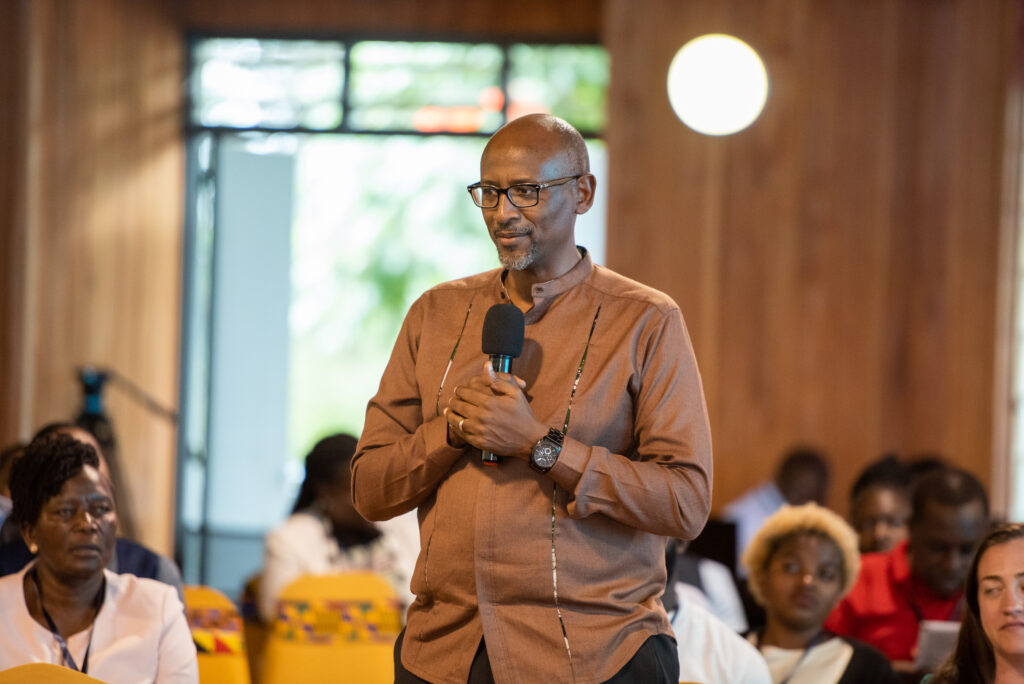
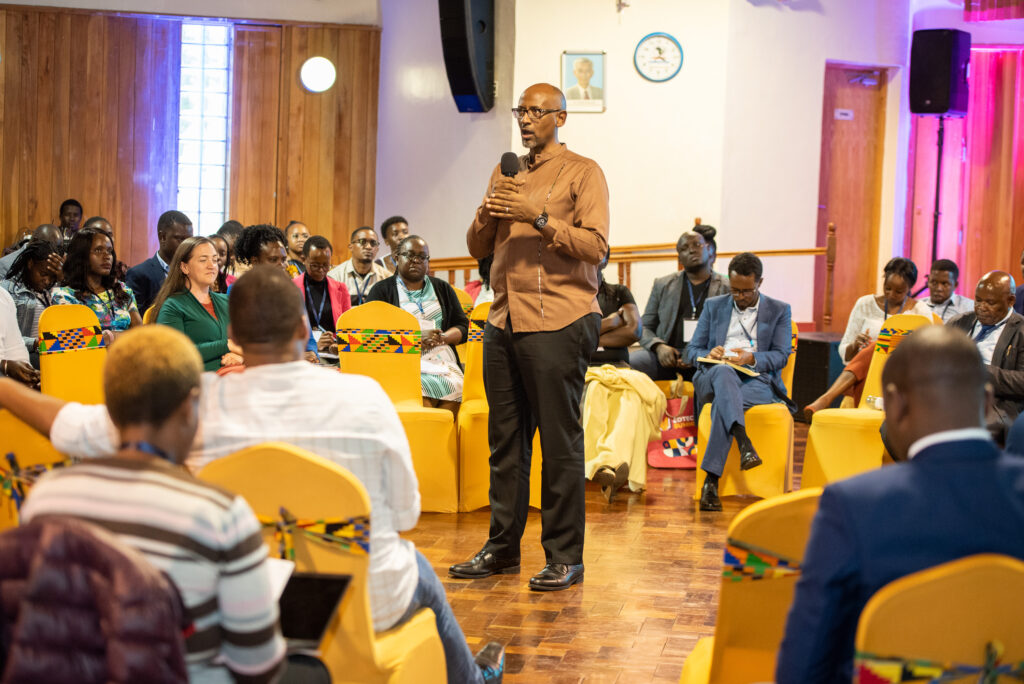
    During the Kenyan edition of the 2024 EdTech Summit, one of the hot topics of discussion was the role of EdTech in emergencies. The moderator of this particular session was Ciku Mbugua of EdTech Hub. Ciku leads a portfolio of work in Kenya, which bridges the gap between research and ensuring the research gets in the right hands. One of the things EdTech Hub is thinking keenly about is how to leverage tech to continue learning during emergencies. 

    The panelists were Hannington Mwenda from Save the Children and Abdinoor Alimahdi, an educational technologist and founder of M-Lugha. 

    Hannington is an evangelist for education in emergencies. His work involves embedding technology education with thematic areas like nutrition and health as well as teacher professional development. 

    Abdinoor’s dream is to drastically increase literacy and numeracy levels in Northern Kenya. His app, M-Lugha, is making gigantic strides toward realizing that dream. It is used in 23 secondary schools in Northern Kenya. This small gadget contains Form 1 to 4 video lessons offline. It doesn’t need internet access; it is like a local LAN. Within a 100-meter radius when turned on, 100 users can access it. All the content is approved by the Kenya Institute of Curriculum Development (KICD). 

    Dire stats

    Recently, the End Learning Poverty For All campaign at the AU pointed out a dire statistic: nine out of ten children in Africa are not reading and doing math at the right level. For a continent that has the most young population, this should be cause for concern. 

    The consolation is that this is an African figure, and our numbers as Kenya are not that bad. We might pride ourselves as the ones carrying the continent. But still. A lot remains to be done. And that’s taking into account that we are always in emergency mode; if it’s not flooding, it is protests or teacher strikes. Or, you-name-it. Which disrupts the academy calendar. 

    “COVID caused us to lose valuable time,” Ciku stated. “And now, any time now, we could be waiting for an emergency or another. So we can’t afford, and we also can’t afford to think that learning can only happen in school.”

    So, what are stakeholders supposed to do? Think outside the box. Heck, scratch that. Think like there is no box. Either that or our learning and learners will always be at the mercy of unmitigated emergencies. 

    Thinking like there is no box

    Save the Children has mastered the art of thinking like there is no box. Their job description is “sector of education in emergencies.” One of their biggest jobs involves getting children to school. This means understanding the full scope of education—all the enrollment to teachers, to parents, then to content itself—the learning content, and then to assessments. 

    “One of the biggest areas has been tracking enrollment,” Hannington said. “Tracking enrollment in two ways. Number one, first of all, getting children; when it’s an emergency, making sure we know how many children have been affected. 

    “And then there is the framework. You have all the area officers for education, who have the numbers of the various headteachers, and the headteachers have the parents’ numbers. So, that way, you’re able to quickly translate how many people are affected.”

    From that feed, Save the Children can quickly and accurately process what percentage of learners are affected by an emergency and how many can access a digital device for continued learning. The next step is assessing what school calendar they are in. Were they nearing an assessment? Were they just opening school? Were they transitioning to a new year? Answering the above questions enables them to counteract emergencies—not with guesswork and guesstimation—but with accurate data and correct solutions. 

    Well, they are not called Save the Children for nothing. 

    Technopreneurship and emergencies 

    The sixty-four thousand dollar question is, How do you build an app that you know can be used at any time? Many edtech apps are designed for the teacher to use during normal times. However, during an emergency, children are either at home or, due to migratory lifestyles, they are in far-flung and often inaccessible places. Thus, teachers cannot be solely relied upon to ensure that education continues. 

    M-Lugha – whose motto, “First Language First,” aptly describes what they are doing, believes that every region has its own unique challenges and cookie-cutter solutions are a recipe for failure. 

    “We have a unique challenge and a solution that is not homegrown,” Abdinoor said. “And in most cases, you find solutions that are imported and normally brought to us, which most of the time doesn’t work for us.”
    M-Lugha primarily serves the communities in North Eastern Kenya, which consists of eight counties. These share almost similar challenges. For starters, they have a culture whereby young learners don’t enroll first in a secular education but start, from a young age, at madrassas, which are Islamic-themed classes. 

    This presents a challenge in that a student who is approximately 15 years old can be in grade one or two, which causes apathy. Eventually, they’ll drop out because they will not feel they have the skills. When M-Lugha Techies were developing their app, they considered such issues, as well as the language of instruction and cultural sensitivity. They also made sure the app was offline because of the issue of internet connectivity, besides the fact that their device is self-learning. This means learners do not necessarily need teachers to help them navigate the device. Everything is localized inside the app, which makes it easy to interact with and does away with the fear of gadgets that some people may have. 

    “This was a home-grown solution, and there’s no need for developing a solution for a community that you know obviously will be challenged,” Abdinoor pointed out. “Because we had a challenge with power, we also introduced  solar-charged tablet devices.”

    Cyclic emergencies

    Is it an emergency if it is cyclic? Is it an emergency if we know it will happen yet we do not prepare for it until it comes crashing in?

    “If floods catch you flat-footed, as a country, we have a problem,” Hannington said. “There are indicators for such things as droughts and floods. As such, there should be a dissemination framework for that information to get to teachers, learners, and parents.”

    Even with that information, a preparedness plan should be done by the people on the ground—the folks who wear the shoes and know where it pinches—as contexts are different from one part of the country to another. 

    That’s why it’s important to have EdTech conversations regularly so players in the EdTech space can come up with different preparedness plans and not wait until an emergency has happened to start planning. 

    “If we’re going to get a method of dealing with education when there’s an emergency, then it’s got to fit in with that specific place,” Hannington concurred. “But, unfortunately, we’re not learning. We’re not learning from all these mistakes that keep happening.” 

    It’s all about anticipating emergencies, having all systems in place, and activating them if and when there is a need. It’s also about continuous monitoring and evaluation of such systems and drills to keep them always well-oiled and ready for any eventuality. Even the dams in the Netherlands went through many years of being tested by flood waters and being re-engineered to ensure they worked to perfection. 

    Infrastructure and partnerships

    Proper infrastructure is the difference between a preparedness plan working during emergencies and a plan not working. Sadly, the issue of infrastructure is a thorn in the flesh for many players in the EdTech space. 

    The flip side is that whereas some areas and schools lack the most basic infrastructure, there are schools with resources that have remained unutilized for many years. 

    “Sometime back we did an episode on the implementation of the Digital Literacy Program,” Ciku said. “I remember we traveled far and wide, and you can’t believe the tablets we found in very remote schools. Sometimes even the number of tablets exceeds the number of enrolments.”

    This is where political will and partnerships come in. The reason why Abdinoor is able to do what he is doing is because of the Frontier Counties Development Council (FCDC).  

    FCDC is an impactful organization and has good relations with county governments in the Northeastern province. When they speak, the counties listen. 

    Having such partners in one’s corner makes speaking to county governments less daunting. 

    Formulating a rapid response protocol 

    Formulating a rapid response protocol is not rocket science. One needs to answer several questions, though. Can you design a protocol to rapidly deploy your solution or your intervention when disruption occurs? What’s the first thing you would do? What are the support systems? What are the things you need to be in place to address the challenges that may arise? 

    Once you have your response plan, you must ensure it ticks at least three boxes. One, ensure it works. Two, ensure it has the requisite support systems. Three, ensure it can be sustained and scaled. Number three includes making sure it can be sustained over long-term disruptions and that it can be scaled to include new users. 

    For instance, if tomorrow the government announces there is a shutdown because of the outbreak of monkeypox, what’s the first thing you will do? How do we deploy the solution, and how do we ensure that the support around it works to perfection? 

    Scaling up a rapid response protocol

    Scaling a response protocol can be done by breaking down the silo mentality and building cross-cutting partnerships. It can also be done by getting rid of the competition mentality and getting more in collaboration mode. 

    By leveraging each other’s networks and strengths to create stronger and far-reaching solutions. For as they say, if you want to travel fast, run alone, but if you want to travel further, run with others. The grass is always enough for everyone, but only if players allow others to graze in each other’s pastures and whet their thirst in each other’s wells. 

    Collaborations happen when there is trust. And trust takes tons of time to build. But once that happens and the whole ecosystem is built, stakeholders can feed each other and celebrate each other’s successes. 

    All this can be done if everyone trains their lens on one goal. And, in this case, the goal is getting our children to learn. That’s the primary goal. All other things are secondary. That’s the non-negotiable profit. The other monetary rewards that may come are only the icing on the cake. 

    Conclusion

    Will we have emergencies? Absolutely. You can bet your bottom dollar on that. Will we always be prepared? That should be our goal. It’s better to be prepared with a wet blanket to meet a fire than to only have twiddling fingers. Will our plans always work like a dream? Nope. Even the best systems are fraught with snafus. C’est la vie. 

    But we must keep all hands on deck. We must make concerted efforts, individually and collectively, to ensure that we meet emergencies—not with knee-jerk reactions—but with concrete actionable plans that can be deployed at the touch of a button. Then and only then will we help increase foundational literacy and numeracy levels. 

  • EdTech can help turn African emergencies into paths of opportunity

    EdTech can help turn African emergencies into paths of opportunity

    By Josaya Wasonga

    During World War II, U.S. leaders realised that nearly 16 million American men and women who were serving in the armed forces would be unemployed when the war finally ended and that this could cause another depression and widespread economic instability similar to the aftereffects of the 1929 stock market crash. To prevent that, experts studied the issue and recommended a series of education and training programs. 

    On Jan. 10, 1944, Congress passed the GI Bill of Rights because it offered federal aid to help veterans buy homes, get jobs, and pursue an education, and in general helped them to readjust to civilian life.

    Within its first seven years of use, about 8 million veterans took advantage. U.S. college and university degree holders more than doubled between 1940 and 1950. Within 50 years, the number of Americans with advanced degrees rose nearly 20 percent. By July 1956, when the bill initially expired, almost half of the 16 million World War II vets had gotten education or training through the GI Bill.

    In 1990, President George H.W. Bush summed up the bill’s impact: “The GI Bill changed the lives of millions by replacing old roadblocks with paths of opportunity.”

    Youth power

    During the Town Hall session at the 2023 EdTech Summit, Joseph Nsengimana pointed out that, as other continents are aging, Africa is getting younger. Nsengimana is the Director of the Mastercard Foundation’s Centre for Innovative Teaching and Learning in ICT. The summit was co-created by several edtech players and was sponsored by the Mastercard Foundation and EdTech East Africa. 

    “According to the UNICEF Report, Africa will be home to 2 in 5 children by 2050,” Nsengimana gave the stats. “This is an asset. But it’s only an asset if we can invest in this abundant human resource. It’s important to keep the focus on why we’re all here. Education is why we’re all here. Education technology is the means to accomplish what it is we’re trying to do.” 

    “How do we educate our children in emergencies? How do we make sure we’re taking advantage of all available tools? Whether under a tree or inside a classroom; we have to ensure our children are learning.” 

    2050 is 27 years away. 27 years seems like a long time. 27 years sounds like Africa has all the time in the world to get her act together and seize her rightful place. But in this fast-paced world, that’s a blink of an eye; what with different emergencies side-tracking Africa, causing her to waste valuable time and talents. 

    Learning goes on

    Nobody knows how we can educate our children in emergencies than Jane Maweu, who’s the Education Program Officer at Save The Children International. Maweu, who works in Dadaab Refugee Camp, refers to herself as a trained teacher who’s no longer in the classroom but supports what happens in the classroom. 

    The Dadaab refugee complex has a population of 218,873 registered refugees and asylum seekers as of the end of July 2020. The first camp was established in 1991 when refugees fleeing the civil war in Somalia started to cross the border into Kenya. A second large influx occurred in 2011, when some 130,000 refugees arrived, fleeing drought and famine in southern Somalia. 

    Let’s put it into context. Dadaab has a larger population than the world’s eight least populated countries. Put together. 

    “We deal with populations we refer to as ‘people on the move’; they’re moving from their home countries because of war or unrest,” Maweu explained. “During their transitory process, they have missed education. When they arrive in Dadaab, we have to pick the learning pieces.”

    As if that’s not a big enough challenge, Maweu talked about double jeopardy. The refugee situation is an emergency, and then there are other bolts out of the blue: COVID-19 and El Nino. 

    “I ensure learning continues during emergencies,” Maweu said. “During Covid-19, many children were left out of school. This forced us to think outside the box.”

    No organisation can fly solo during emergency missions. Save The Children has partnered with Library For All which provides gadgets for the learners. Sesame Workshop has also joined the mission. They provide content that targets ECD learners. 

    “We have teachers who have no exposure to what happens. They’re untrained,” Maweu expounded. “They came from neighbouring countries or were born and brought up in the refugee camp and became teachers in the camp. How do we ensure these teachers can use technology to enhance equity in learning?” 

    “We’ve been training these teachers to build their capacity. We’re also partnering with EDU Africa to help these teachers with skills and tools to enhance quality education.” 

    Refugee camps have several challenges. There’s a lack of infrastructure. Families live in tents. Some live in semi-permanent structures. There’s an increasing number of children. There’s also the issue of language. 

    Tech isn’t the be-all and end-all. Tech can only do so much. On the issue of language, the players in Dadaab have tried to contextualise the content by translating it into Somali. That, too, has brought another challenge. The Somali language has several dialects. 

    “Technology will not replace teachers, but teachers with technology in hand are the ones who will replace the teachers without technology,” said Dr. Sam Marigat, the TSC County Director for Kirinyaga. 

    “That should be our foundation when we start discussing EdTech. Technology will supplement teaching. I don’t think technology will replace learners who are lagging behind in learning outcomes. 

    Education under attack

    In an article published in the Global Coalition to Protect Education from Attack, attacks on education in Kenya were reported between 2013 and 2017 with similar frequency to what was reported from 2009 to mid-2013, with a slight uptick in attacks on schools in 2017, due to al-Shabaab’s increased activity that year. 

    In 2014, terrorists killed quarry workers in Wajir. The victims were non-locals. Fearing for their safety, non-local teachers packed and left. 

    “The Wajir governor, Ahmed Abdullahi approached us, saying they had about 400 schools in the region but very few locals were heading these institutions,” said Mahmood Ali, the Managing Director of MwalimuPLUS. “He told us they had tried to bring back the teachers who left, but they adamantly refused.”

    “That time there was no MwalimuPLUS. We were just a technology company. We did a little bit of research and that’s how MwalimuPLUS was born. We gave the governor the idea that we could solve the problem with the schools that had teachers.” 

    Ali’s team got down to brass tacks. They developed and used some models to start training. It worked. They approached the governor and advised him that the teachers he had could be supplemented using technology. They could give the county a product that was ready for students to use. AI would assist them by knowing the individual students, how they are performing, and tailoring content solutions for them. 

    “For those areas that had internet connectivity, we could teach using the same platform from Nairobi,” Ali explained. “We hired experienced teachers who were about to retire. The teachers were teaching from Nairobi.” 

    “We wanted to ensure the product worked. We went to the government to seek clearance to use the product. Then we came to CEMASTEA in 2017 where we did a pilot with about 23 schools, which worked well.” 

    MwalimuPLUS is now not only in conflict areas but also in non-conflict locations. Which just goes to show that local emergencies have local solutions. And it also goes to show that, when education is under attack, the best form of defense is creativity. 

    Partnerships

    There’s an African proverb that says “If you want to go fast, go alone; if you want to go far, go together”. MwalimuPLUS wants to go far. Which is why they don’t walk alone. They walk with donors, NGOs, national and county governments, and wellwishers. 

    “It’s good to form communities of practice,” said Martin Chungu from Save The Children. “We have done that with different stakeholders; from content creators to gadget providers. Such collaborations are key.” 

    “And to ensure sustainability, we must involve key government stakeholders. Even if some of these organisations are doing small projects, the learning outcomes go a long way in helping the children.”

    Chungu’s colleague Eric Nyawara echoed his sentiments, saying that EdTech players should avoid working in silos.  

    “When developing EdTech tools, we should incorporate all the stakeholders so we can have tools we can easily scale up and replicate because African problems are more or less similar,” Nyawara said. 

    “Whatever you’re doing, I want you to know the government is a custodian and has the principal responsibility to do all the things you’re doing,” Dr. Marigat said. “The government can reach every nook and cranny of the country. Even during emergencies, the government has systems and structures in place to reach out to people in difficult and hard-to-reach situations. 

    Undiscussed emergencies

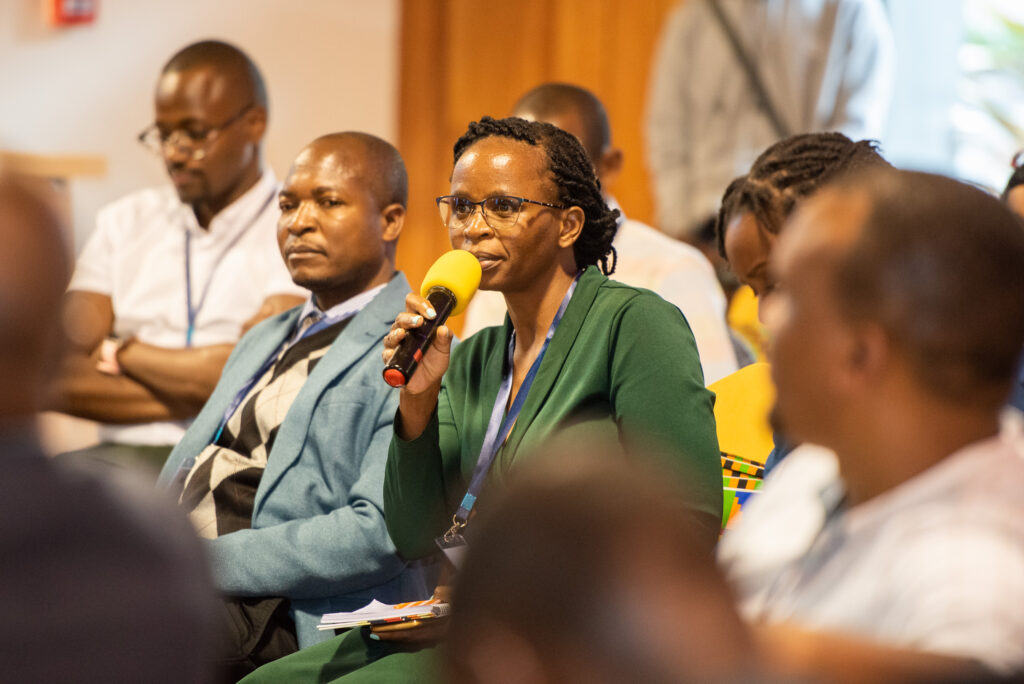
    “When we’re talking about education in emergencies, do we only confine ourselves to flooding, et al?” An audience member asked. “What about the children who cannot comprehend some of the basic learning they are supposed to know? Isn’t this also an emergency?”

    The answer could lie in remedial programmes. In 2019, researchers evaluated a technology-aided learning, after-school programme in urban India. Children who were the furthest behind saw the greatest improvement in this randomised controlled trial. Those who took part in the intervention “experienced twice the test score value-added in math and 2.5 times that in Hindi” compared to the control group. The authors identified that personalised learning software played a greater role in determining improved learning outcomes than the grade level in which the child is enrolled. 

    A second audience member talked about yet another undiscussed emergency; children with disabilities, whose numbers are increasing. This participant called for more inclusivity, as she was concerned that any intervention that comes up does not put learners with disabilities in mind. 

    Paul Lynch, Et Al say “Robust research is needed to evaluate the conceptualisation, design, testing, and impact of appropriate technology in relation to different environmental conditions (such as gender; age; location – urban, peri-urban, and rural; public/private schools; curriculum area) to meet the needs of the full range and diversity of learners with disabilities in low and middle-income communities”. 

    Turning point 

    To turn African emergencies into paths of opportunity, we ought to take a cue from the U.S., circa 1944. We must study prevailing and future continental and global issues. We must come up with education and training programs to mitigate these issues. These initiatives must involve all leaders. In our different spaces and spheres, we’re all leaders. We must do all these things like our lives depend on it. Wait a sec. Our lives actually depend on it. 

    “The triangle of education at the foundational level is knowledge transmission and acquisition. This is followed by the skills and then character,” the Town Hall moderator, John Kimotho stated. “But in 2050, the foundational level will be character.”

    2050 sounds strangely familiar, right? If not, let me refresh your memory. The year 2050 is precisely when Africa’s young population will have peaked.