By Mo Nyarinda
On the 29th of April 2026, the Daily Nation ran a front page story “State’s shocking admission on CBE“ sharing some statistics from the Grade 3 National Assessment System for Monitoring Learner Achievement (NAMSLA) report. The NASMLA study released by the Kenya National Examinations Council reveals that nationally, only 41.4 percent of Grade 3 learners met the English Literacy benchmark while 26.8 percent met the numeracy skills benchmark of 50 percent.
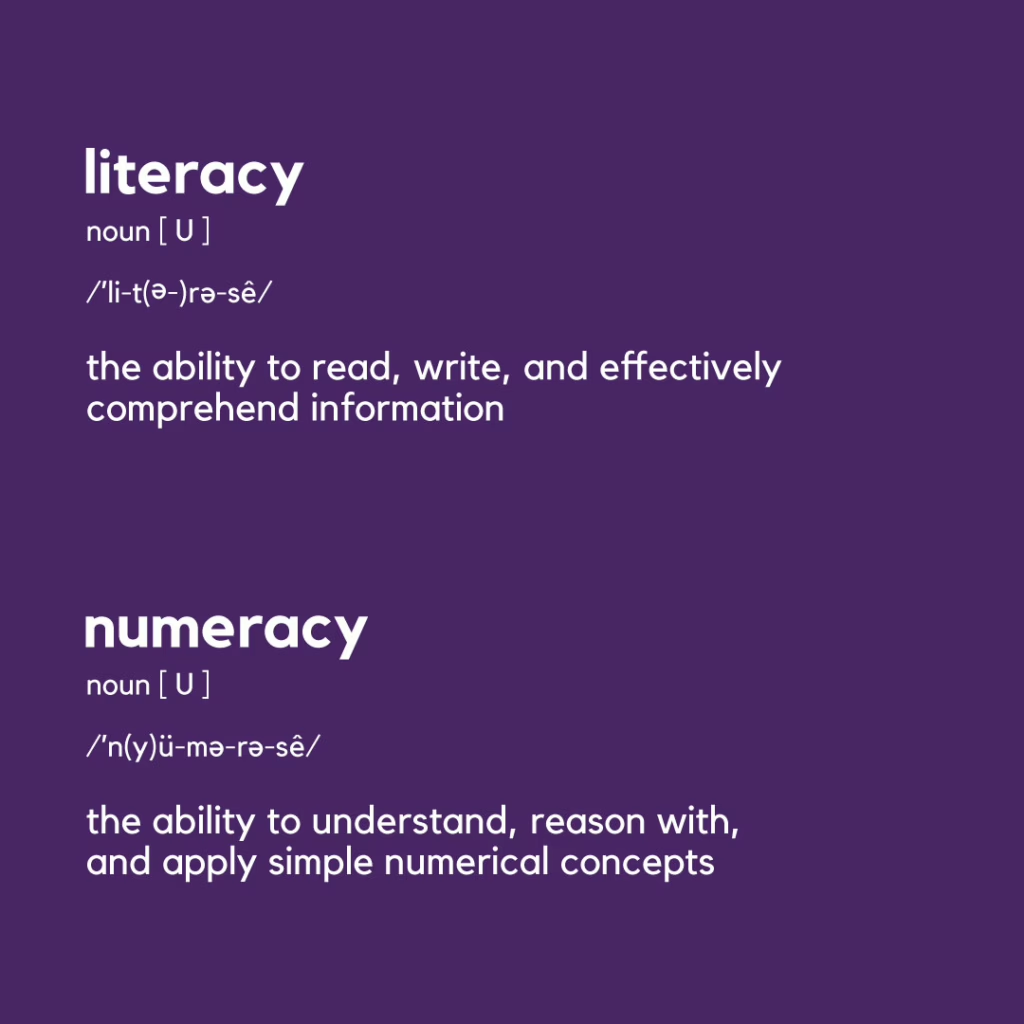
The data further shows the stark disparities by region, with West Pokot, Isiolo, and Turkana County counties having the lowest percentage of learners attaining the English literacy benchmark, and Marsabit, Busia, and Vihiga Counties recording low performance in Mathematics activities. According to the study, schools in informal settlements, refugee host counties and those that focus on age-based special needs education also had the lowest number of learners meeting foundational learning requirements.
These findings match the Usawa Agenda’s 2nd Foundational Literacy and Numeracy Assessment (FLANA) Report titled Are All Our Children Learning? which documents that learners in refugee community schools have significantly lower learning outcomes compared to those in public and private schools. The survey conducted across the 47 counties in Kenya found that “35 in 100 Grade 6 learners cannot read and comprehend a Grade 3 appropriate English story” and that “foundational numeracy learning outcomes have stagnated” between 2023 and 2025.
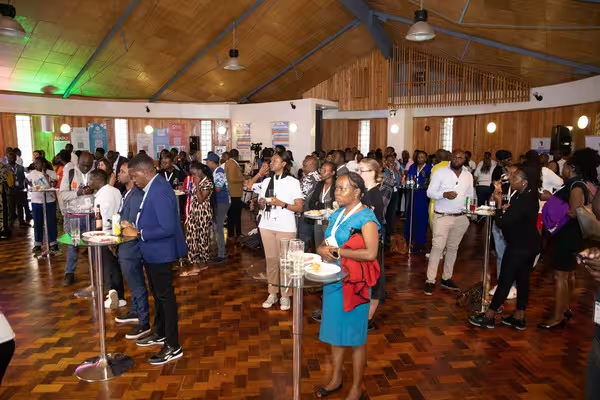
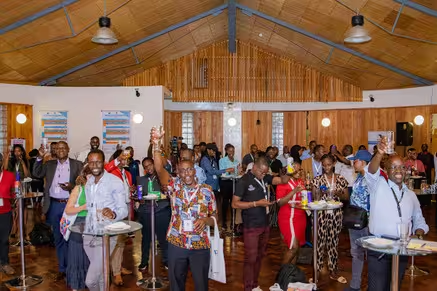
EdTech East Africa hosted the NRB EdTech Meetup on Wednesday, 29th April 2025 under the theme ‘Is CBE Delivering on its Learning Promise?’ Well, in terms of access to education, the FLANA report indicates that 95 out of 100 children are in school. The facilitator of the meetup, Dr. Lydia Chege, who’s the lead ecosystem building and government engagement at Mizizi Elimu Afrika started by asking participants a very simple question: How many numbers can you count on your fingers? I said ten, another person said so many! I am still figuring out how many we can as part of the task she gave us.
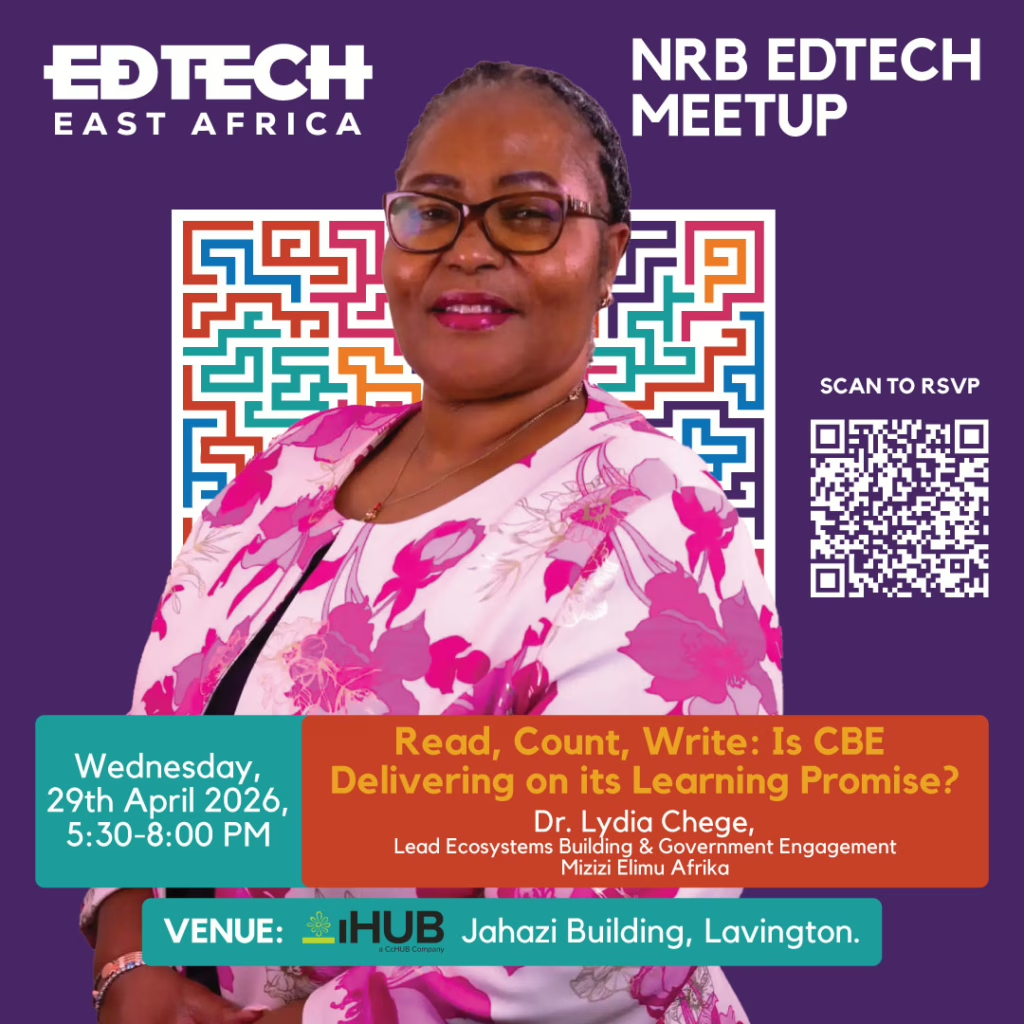
This quick exercise set the tone for the session which involved panelists from different organisations sharing their perspective on learning in the digital age and how EdTech can effectively support all learners to read, count and write. The panelists were Winnie Ongiri, the head of operations at Signvrse who shared the importance of inclusivity in education through the use of sign language for deaf learners; Emily Kathini, a teacher that shared on the need for personalised assessments for teachers to understand their learners’ needs better; and Christopher Maingi, a Mathematician and parent of a neurodivergent learner who called for EdTech developers to create early intervention plans that can enable parents to prepare learners with different abilities for school.
The Next Steps for Stakeholders in Education
There was consensus that indeed competency-based education (CBE) is facing several implementation challenges. At the NRB EdTech Meetup, a space for education innovators and stakeholders to meet for peer learning and exchange of ideas, the attendees shared some of the solutions that need to be replicated widely, or introduced in education for learners to improve their foundational literacy and numeracy outcomes. These include:
- Teachers integrating technology in classrooms – according to the FLANA report, the current national average on the uptake of ICT use in education is 47.4 percent. Teachers can continue to use EdTech in the classroom by using visual aids to improve retention, audio stories for better listening and comprehension, and the use of multi-sensory approaches to engage learners with different learning abilities
- Capacity building – there needs to be continuous training of teachers to use EdTech tools in classrooms, and as tools that can reduce the time spent in administrative tasks so they can focus more on learners needs
- Increased parental engagement – parents need to be more proactive about their children; supporting them at home for effective learning and managing screentime especially for fun
- Introduction of adaptive assessment methods for different learners – there needs to be an early identification system which can detect learning challenges and propose assessment methods that accommodate every learner e.g. learners who struggle with written exams but are very good at oral exams or use of devices
What EdTech Developers and Educators Can Do
Education technology if deployed in school and used correctly can unlock better learning outcomes for learners. In order for this to be successful, EdTech developers should involve end users, mainly learners, teachers and parents at every stage of their design process, and test the tools with them so that they build user friendly tools. They should also apply universal design principles and accessibility considerations for all learners to benefit from, especially those with special education needs. See this practical Equity and Inclusion Toolkit developed by iHUB for educators, technologists and designers.
Educators on the other hand should stay open to EdTech integration in schools, acknowledging that tools are not replacements for the human-teaching expertise. Both educators and EdTech innovators can also take advantage of EdTech summits, EdTech meetups and education conferences to showcase their products and be exposed to current working technologies in education. The 3rd Annual Educational Assessment Symposium by KNEC is one such event happening in Nairobi this 4th-8th May 2026 where both government and other education stakeholders are convening. Ultimately, if there are enough teachers per student in each grade, and if teachers tracked learner’s performance continuously, interventions can be introduced to ensure that foundational learning proficiency is attained by each learner by the time they complete primary education in Kenya.
Join the next NRB EdTech Meetup on Wednesday, 27th May 2026. More details can be found on EdTech East Africa’s social media pages.