Tag: Collective EdTech Vision Setting

  • A collective vision for leaders in learning as they set sail for the next decade

    A collective vision for leaders in learning as they set sail for the next decade

    By Josaya Wasonga

    Franklin D. Roosevelt said: “To reach a port, we must sail—sail, not tie at anchor—sail, not drift.” 
    Speaking at the opening session of the EdTech Summit 2024: Kenyan Edition, organized by the EdTech East Africa Summit, Suraj Shah shared snippets about when EdTech East Africa first set sail 10 years ago.  

    As the Head of Strategic Partnerships and Thought Leadership at the Center for Innovative Teaching and Learning at the Mastercard  Foundation, Suraj and other intrepid co-sailors have been paddling the oars driving EdTech Monday’s convos on NTV since 2020. 

    Suraj reflected, “The idea of EdTech Summits began with a conversation from EdTech Mondays, a program with the Mastercard Foundation. We demystified EdTech.” EdTech East Africa, congratulations on 10 years; you’ve been a wonderful partner.” 

    Mastercard  Foundation is supporting the Young Africa Works goal of 2030. Their goal is to help 13 million young people in Africa, 70% of whom are young women, find meaningful and fulfilling work.

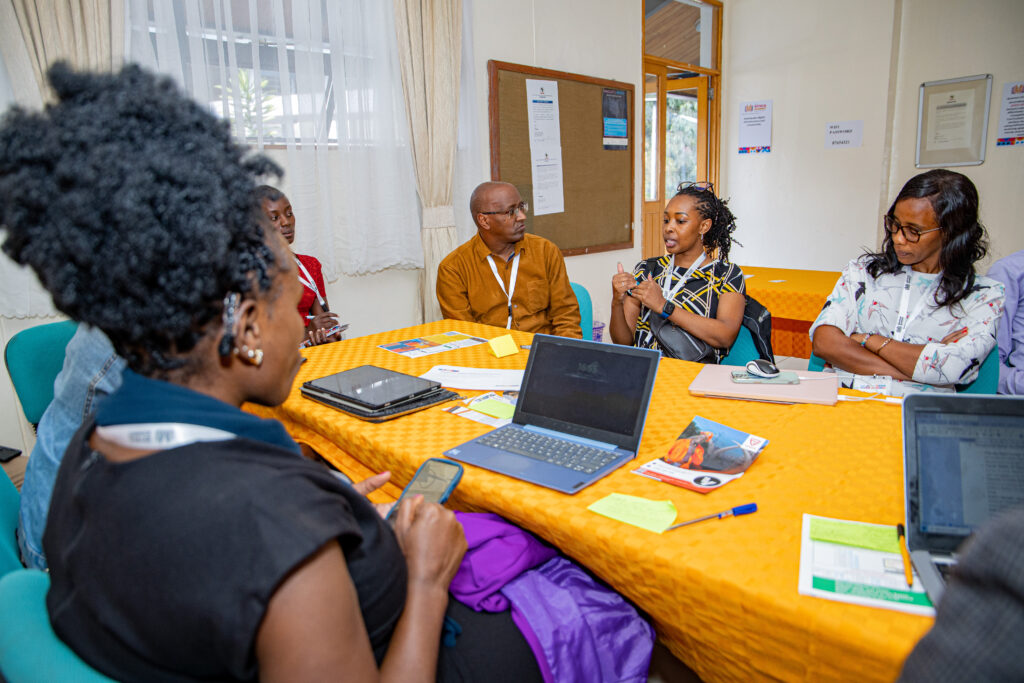
    It was only appropriate that the last session of the two-day summit was about setting a 10-year collective vision. The session I attended was for learning leaders. 

    What is important for this team to include? 

    “I think after listening to the conversations and seeing the demos, there’s a lot of focus on children; there’s a lot of focus on content creation, but I haven’t seen deep thoughts on how the teacher will be supported,” one attendee noted.

    “I believe that, even as development partners or creators, we have placed a lot of focus on the child, materials, and infrastructure, often overlooking the crucial role of the teacher in all this.” 

    Our innovations are endless, but where does the teacher fit in?

    To make meaningful strides in the next decade, the teacher needs holistic support from all stakeholders. There is also a need to rethink designing resources to support teachers in technology, as well as retooling and capacity building.  

    Continuous sensitisation 

    Moses, a teacher from Siaya, emphasized the importance of sensitization in this EdTech type of communication and conversation. Moses clarified that his use of the term “sensitization” stems from the lack of training for school leaders. That’s because you’ll be teaching them from January to December. 

    “But you sensitize them to what their teachers are learning, helping them advance.”

    When they go to school, the gatekeeper of any practice in a school is a school leader. We must therefore provide them with support.  

    Mindset 

    Addressing a mindset issue is also necessary. Someone mentioned that he was conversing with the teachers, suggesting that he would prefer to learn alongside the children due to their ease of understanding. 

    “But there is a mindset among teachers that suggests a child should not possess more knowledge than they do.” This is untrue, as our children can utilize technology to a greater extent than we do.  

    Several individuals observed that the younger generation embraces EdTech quickly, while the older generation takes longer to adjust to technological advancements. In many cases, the heads of institutions are older people. This poses a distinct challenge. 

    There needs to be a method to alter the mindsets of educators who are firmly entrenched in their practices. Should that mindset shift not occur, students will possess a deeper understanding of technology than their teachers.  

    Inclusivity 

    The issue of inclusivity warrants further investigation. Learners with special needs also want to learn and work with technology. However, we can only achieve this if we make deliberate efforts to devise solutions that not only address their unique personal situations, but also somewhat alleviate them. 

    Players in the EdTech space should keep in mind that there is a need for assistive devices for learners with special needs. This is a big challenge. Even the government is not able to provide equipment for learners with special needs across the board.

    To use EdTech to produce inclusive, effective, and resilient learning, we must rethink accessibility. We must consider moving the EdTech ecosystem towards evidence-based, technology-enabled teaching and learning.

    Succession planning

    Succession planning was another issue that emerged. Teachers come and go. They transfer. Some leave the profession. Most of the time, a new teacher must start from the beginning. Yet, for instance, it took their predecessor years to carve their niche. 

    When this occurs, there are numerous gaps because there are no mentoring programs or succession plans. Ideally, school leaders, as well as those who have been on the job longer, should mentor young, aspiring school leaders. However, there are established programs for such problems. 

    Sustainability 

    The group discussed the issue of sustainability and efficiency. They noted that EdTech stakeholders must ensure that systems are more sustainable and efficient. This will assist, among other things, in identifying issues and making necessary corrections. before they become too late. Additionally, sustainability will help with resource allocation, preventing resource waste. 

    The research paper, EdTech Tools for Sustainable Practices: A Green Revolution in Education, highlights the rapid advancement of Education Technology (EdTech). EdTech offers promising opportunities for educational institutions to integrate sustainable business practices into their operations and curriculum. The integration of EdTech into sustainability education has emerged as a powerful tool to promote environmental awareness, foster sustainable behavior, and address the pressing challenges of climate change and resource depletion.”

    Vision statement 

    Having a vision and mission for your EdTech startup is not only important for defining your goals and values but also for attracting and retaining your customers, investors, and employees. A vision statement describes the ultimate impact that you want to make in the world through your product or service, while a mission statement explains how you will achieve that impact.

    As the education landscape continues to evolve, EdTech leaders face a multitude of challenges in meeting the needs of students, teachers, and parents. To navigate these challenges effectively, EdTech leaders need to have a clear vision and mission that align with the needs of the education sector.

    Conclusion 

    Over the next ten years, learning leaders will be individuals who can effectively apply pedagogy. Ideally, these leaders should be capable of guiding all instructional practices and assisting learners in achieving specific academic milestones.

    In 10 years, learning leaders ought to embrace inclusivity. When they depart an institution, they will leave personnel and systems that continue to succeed, if not do better. 

    The next decade’s learning leaders will “not tie at anchor,” but they will sail; they will not drift but sail to more ports. 

  • Empowering Teachers: Using Digital Tools to Enhance Social and Emotional Learning in the Classroom

    Empowering Teachers: Using Digital Tools to Enhance Social and Emotional Learning in the Classroom

    By Mariana Kemei

    On the second day of the 2024 EdTech Summit, a dynamic discussion unfolded around the future of educational technology and the path to achieving it. The Summit which ran for two days was held on September 12 and 13 at Cemastea, Karen.  As the summit celebrated its 10th anniversary, it became evident that the imagination and vision of its participants would shape EdTech’s next chapter.

     According to Jennifer Cotter-Otieno, CEO of EdTech Kenya, “This year’s summit was about members of the ecosystem telling each other what they wanted for the next ten years.” To facilitate this, vision casting sessions were held, where delegates were divided into groups to explore various topics and share their aspirations for EdTech over the next decade. These sessions were particularly engaging thanks to the presence of an educator in our group, who provided valuable first-hand insights into the everyday experiences of teachers using technology in the classroom.

    Social and emotional learning (SEL), as defined by the Child Mind Institute, refers to how children develop essential social and emotional skills. This encompasses managing difficult emotions, making responsible decisions, coping with stress, setting goals, and fostering healthy relationships. 

    Teachers play a crucial role in SEL, as Caroline Mendel, PsyD, a clinical psychologist and Senior Director of Clinical Services, School, and Community Programs at the Child Mind Institute, explains that these skills are not innate but require explicit instruction and consistent reinforcement.

     To ensure the success of social and emotional learning (SEL) in a digital environment, it is crucial to keep teachers motivated. Teaching is more than just delivering education—it requires engaging, inspiring, and connecting with students on a deeper level, which is no simple feat. 

    Achieving this demands passion, creativity, and a strong commitment to making a lasting impact in students’ lives. To achieve this level of success, the teacher needs to be stable both emotionally and socially. However, Joyce from Mang’u High School stated that a lot of teachers in Kenya are already feeling overburdened with their numerous duties, which include lesson planning, assessments, teaching, and participation in students’ extracurricular activities.

     To equip Kenyan teachers for leading digital social and emotional learning, the delegates proposed the following key strategies:

    1. Integrate digital learning as a core course in teacher training programs.

    2. Simplify and promote technology as an essential tool for teaching.

    3. Incorporate ongoing professional development for teachers, both during training and in their workplaces.

    4. Lighten the administrative burden on teachers, enabling them to focus on becoming effective facilitators of learning.

    5. Digitize education from the national level down to rural schools, ensuring equitable access to digital resources.

     Incorporating digital learning as a course is essential. We discussed that equipping teachers with digital skills during their initial training would streamline the process, even though it’s important to provide tech training to current educators. Joyce highlighted that many older teachers hesitate to use technology in the classroom because they lack the necessary skills. 

    As a result, they often rely on younger colleagues or tech-savvy students for assistance. According to Kurasa, this skill gap is largely due to limited access to technology infrastructure, insufficient training opportunities, and resource constraints in educational institutions. Furthermore, older teachers’ resistance to change has slowed their adoption of technology in teaching.

    Simplified technology plays a key role in enhancing social and emotional learning (SEL) by making the experience more interactive and accessible. Often, educators and students perceive technology as complicated and unfamiliar, creating a barrier To drive widespread adoption of EdTech, tech entrepreneurs and solution providers must prioritize ease of use and accessibility. 

    They should design platforms that anyone can navigate, regardless of their technical skills. With the growing prevalence of mobile devices, developing mobile-friendly apps can extend learning opportunities to any location at any time, reducing the stress of incomplete or delayed tasks. 

    Incorporating easy-to-use educational games is another effective way to boost SEL, particularly for students. Simplifying technology in this way transforms it from intimidating to an engaging and enjoyable learning tool. 

     Julius Muriithi, the Evidence and Communications Manager at Dignitas, emphasized the importance of mindset change when implementing Teacher Professional Development (TPD) programs in marginalized areas. He noted that many teachers in these regions lack the necessary formal training and need empowerment to embrace new teaching approaches. 

    Through TPD, these teachers are exposed to new challenges, such as incorporating technology into their classrooms. Julius highlighted that their approach involves coaching teachers over time, ensuring they gradually master new concepts. This method enables students in these marginalized areas to benefit from tech-integrated learning as their teachers become more adept and confident.

    One notable achievement this year was the EdTech Summit in Northern Kenya that was held at Garissa University, where education and technology experts convened to discuss the future of learning in frontier Counties. The initiative aims to bridge the gap in both social and emotional learning through technology integration. 

    Teachers and students in the Frontier counties stand a chance to be better equipped digitally in the next ten years if Edtech drives more of such initiatives.

    Fridah Ngari, CEO of Ntemata, an online platform that automates teacher assessments and tracks competency-based learning, suggested incorporating tools like badges, progress reports, and feedback loops to enhance the professional development process. She stressed the importance of motivating teachers during training, a point echoed by Joyce, who observed that many teachers previously involved in TPD felt demotivated without proper support.

    The other way to foster digital learning in the next decade is by lightening teachers’ administrative tasks. The mountain of papers I have to mark, evaluate, and grade right now would shock you if you looked inside my car, Joyce said, providing a glimpse into the onerous workload of a typical teacher in Kenyan schools.

    Mr. Mureithi echoes this reality, noting that many teachers he’s trained often manage up to seven lessons a day. On top of this, they’re expected to handle various administrative tasks, extracurricular activities, and the rigorous assessment of students—tasks that school principals frequently monitor closely. In most government schools, large class sizes further complicate the already demanding responsibilities.

    This heavy workload leaves teachers feeling overburdened and stressed, reducing the time they have to focus on what they truly enjoy—teaching. To ease this pressure, web developers should prioritize creating solutions that reduce, rather than add to, teachers’ administrative duties. Joyce pointed out that while teachers love teaching, they find the grading process exhausting. 

    If her school adopted a tech solution that automated grading and assessment, she could reclaim valuable time to explore, learn, and implement innovative digital tools focused on social and emotional learning. Lessening this administrative burden is critical for enhancing both teacher well-being and the overall learning experience. 

    The gap between private and public schools in Kenya is significant, especially when it comes to resource allocation. Public schools, which serve the largest student populations, often receive far fewer resources. For social and emotional learning (SEL) to be successfully digitized, the government must prioritize the digitization of education from urban centers to rural schools.

    Over the past few years, Kenya has been making notable strides in digitizing its education system. On September 30, 2016, the Kenyan government launched the Digital Literacy Programme, distributing digital devices to schools nationwide. The goal was to provide 1.2 million devices to public schools, a move that, according to the then ICT Minister Joe Mucheru, was intended to transform not only the education sector but the entire economy.

    While this marked the beginning of an exciting tech journey, much more remains to be done. A report by the International Labour Organization (ILO) highlights that the digital divide has continued to widen, particularly for those groups that have benefited the least from ICT infrastructure developments. 

    In response, the government has enacted ICT reforms, bringing high-speed internet, computers, tablets, and other digital tools to schools through initiatives funded by the Ministry of Education, Science, and Technology. Additionally, partnerships with organizations such as the Network Initiative for Computers in Education, Microsoft, and Oracle have supported these efforts.

    Government involvement at the national level is critical, particularly in helping rural teachers access online resources and infrastructure that will enable them to seamlessly integrate SEL into their daily teaching  As Fridah explained, students in schools that have fully embraced digital learning are more advantaged because they have access to global opportunities. 

    Students using e-portfolios can secure scholarships and international opportunities, unlike those in rural areas using traditional methods. Given that this project’s complexity necessitates cooperation between numerous agencies and organizations, the government will continue to be a crucial force in bringing stakeholders together and realizing the Hon. Mucheru’s vision.

    Integrating digital tools for social and emotional learning (SEL) is transforming education in Kenya, with a vision to enhance inclusivity and digitize learning nationwide over the next decade. Incorporating digital learning as a key course aims to simplify technology’s role in education, making it a powerful tool for both teaching and student development.

    Professional development training for teachers will be critical, equipping them to utilize these technologies effectively while easing administrative tasks through automation. This strategy aims to bring digital education not only to urban centers but also to rural schools, fostering a more equitable and modernized educational system across Kenya in the next decade.