
Category: EdTech Summit 2024: Kenya Edition

  • Using EdTech to bridge learning gaps in poor and underprivileged urban centers

    Using EdTech to bridge learning gaps in poor and underprivileged urban centers

    By Josaya Wasonga 

    The Foundation Literacy and Numeracy Assessment (FLANA) report, launched by Usawa Agenda in collaboration with Youth Initiative Kenya (Yike), titled “Are our children learning?” highlights disparities in enrollment, absenteeism, and the quality of education, particularly among vulnerable groups. 

    The findings in the report indicate that despite a national enrollment rate of 91%, Nairobi lags slightly behind at 89.4%, with more girls enrolling compared to boys. The city faces a high dropout rate, particularly among children with disabilities, at 7.1%. Also, a large number of the capital city’s children are not in school; 6.3% drop out after enrolling, and 4.3% never enroll. What’s more, 10% of girls and 11.44% of school-aged boys in Nairobi are not attending school. This out-of-school rate is higher than the national average. 

    How can EdTech be used, not just in Nairobi, but also in other urban centers across the country, to address the challenges that learners in poor and underprivileged settings face? This is one of the questions Elizabeth Ndungu tried to answer. Elizabeth, who is Nairobi County’s Director of Digital Economy and Startups, said there are various initiatives her office is undertaking to boost digital literacy and spur job creation in the green city in the sun. 

    “What we have been seeing especially within the government is that technology has been inward-facing; we have always developed technology just to serve the users,” Elizabeth said. 

    “But under the new initiative, we want to reach out to the community and also be part of the ecosystem, bringing people together. We want to lead, and that is why we have brought the community together.” 

    The new initiative is two-pronged: city governance excellence and a department of e-learning. It’s in the latter that ICT education is integrated. The county government is in charge of early childhood education in Nairobi, as well as vocational training centers. However, with rapidly increasing populations in informal settlements, the county government’s resources are stretched thin. 

    Urban centers—and, indeed, large cities like Nairobi—have unique learning issues, which require unique solutions and innovations that are specifically tuned to bridge the learning gaps in poor and underprivileged urban centers.

    Access to online resources 

    Every crisis presents an opportunity to learn and do better. Zeraki learned this during the Covid-19 pandemic. This crisis made them realize that a bolt out of the blue can happen, which can make learning impossible in a classroom or make bringing learners and teachers together a huge challenge. 

    This means that innovators should come up with tools or technologies to help so that, in such circumstances, education is not suspended. Zeraki simplifies and enhances the use of technology to deliver quality education, with products for parents, teachers, and schools. They give at-risk learners—such as those in poor and underprivileged settings—access to quality instruction. They also avail training resources to teachers. 

    Accessibility of education 

    “People assume that, in Nairobi, schools are overstaffed,” Elizabeth said. “Looking at the ratio of the resources, both human and physical resources, we still find that there is a great challenge.” 

    Nairobi has about 230 early childhood public schools and approximately 1,300 early childhood teachers. These teachers are not enough to serve the number of learners who attend schools, which will adversely impact the accessibility of education. 

    Nairobi has the highest number of private schools. Yet, not all Nairobi children have access to education because the numbers are incredibly high. There are different types of schools in Kenya. The Basic Education Act (2013) defines two categories, namely public and private schools, while the Alternative Providers of Basic Education and Training (APBET) Guidelines provide another by defining APBET schools. The APBET Policy and Guidelines (2016) are silent on the nature of ownership required for APBET schools.

    EdTech can be used to mitigate the issue of accessibility of education. Loho Learning builds technologies that mainly resolve four things, one of which is the accessibility of education. The others are innovation around the affordability of quality education, inclusive education, and data and insights into quality education. 

    Automating assessments

    A big percentage of schools in resource-constrained urban areas still rely on the old chalk-and-blackboard method of instruction in classrooms. The United Nations Educational, Scientific and Cultural Organisation (UNESCO) recommends a teacher-student ratio of 25 students per teacher for primary schools. 

    The TSC recommends a pupil-teacher ratio (PTR) of 40:1 for the primary level. The overall PTR was 24 pupils to a teacher at the primary and pre-primary level. According to a 2020 study by the Ministry of Education, of the 17 sub-counties in Nairobi, Starehe recorded the lowest PTR (it also had fewer schools participating in the study), while Njiru had the highest PTR of 29 learners per teacher.

    However, according to a 2015 BBC report, the pupil-teacher ratio has steadily increased since 2012. One Nairobi school, the Olympic Primary School, admitted that some classes have as many as 120 pupils in one room, handled by one teacher. 

    This presents many challenges, one of which is assessment, which is an important component of transition. CBC Grade books are strenuous and time-consuming to fill and tend to be utilized only at the end of the term. Kurasa enables teachers to conduct formative, summative, and performance-based assessments to support the competency-based approach to teaching and learning. This includes both KICD and non-KICD evaluations. 

    Kurasa offers a revolutionary way to implement and manage CBC online easily. Assessments can be filled in time by all teachers simultaneously and reports sent out to parents weekly. 

    Virtual classrooms 

    Not all schools in Nairobi have access to technology. Others lack vital infrastructure, and, as such, this hampers access to EdTech solutions. Which means that children do not have equal learning opportunities. What’s the city supposed to do in situations like this? 

    The answer is virtual classrooms. As a speaker in the AI in education forum stated, the city can borrow lessons from what the FCDC and other education partners did. In the frontier counties, they have hubs that have electricity, which they can plug into their laptops. From one hub, for instance, one science teacher can transmit a lesson to five or six different schools. 

    Bridging the tech gap 

    Another gap that needs to be bridged is that of technology. Not all teachers have the digital skills and have to play catchup with the learners. That gap that exists between the digital immigrants and the digital natives affects learning outcomes. 

    “Nairobi has a unique generational gap challenge in that a school may have teachers who have been teaching for 15-20 years, and they have learners who span different generations: millennials, Gen Z, and Gen Alphas,” Elizabeth said.  

    That’s where a provider like Ntemata comes in, whose core business is automating assessment processes for teachers as well as holistically analysing competency learning. Ntemata is in the business of supporting teachers so that, in return, they can be fully engaged with their learners. A teacher who is better equipped with EdTech tools is in a prime position to make learners perform better. 

    Conclusion 

    “In Nairobi, we have parents who suffer from TB— “Too Busy”—and in this case, the teachers become the parents,” Elizabeth said. “Currently everybody is talking about mental health issues. Yet we are heaping more burdens on our teachers. They are the parents, the nurses, the doctors, the cooks, and everything.” 

    There is a need for systems where teachers can develop resilience on their own. They also need systems and safe places where they can develop their mental health and be in a position to address the myriad needs of learners.  

    “Let us also think about other aspects concerning support groups and virtual learning for both the teachers and the learners,” Elizabeth concluded. “That they can have virtual discussion groups in different areas because we find we are encouraging and building talent.”


  • How Evidence-Based Practices Strengthen the EdTech Ecosystem: Insights from 2024 EdTech Summit: Kenya Edition

    How Evidence-Based Practices Strengthen the EdTech Ecosystem: Insights from 2024 EdTech Summit: Kenya Edition

    By Josaya Wasonga

    Evidence is the appearance from which inferences may be drawn. It also means ground for belief or obviousness. In the EdTech space, evidence is as important as any other variable needed to make this ecosystem work like a finely tuned Swiss wristwatch. 

    Evidence was the topic of discussion in the opening panel of the 3rd Kenyan edition of the EdTech Summit. Why is evidence so important? Good question. Because it’s the solid basis for implementing solutions, future paths can be charted and corrective measures can be made. Because, just as in a court case, it’s the basis on which stakeholders can deduce judgments. Because evidence makes players more strategic in their interventions.  

    The panelists in this session on strengthening EdTech with evidence were Elizabeth Otieno, Ciku Mbugua, Dr. Tiberius Barasa, and  Barnabas Sang. Elizabeth is from the Directorate of Basic Primary Education in the Ministry of Education (MoE). Ciku is the co-leader for the EdTech Hub. Dr. Barasa is a policy researcher and analyst. He’s a lecturer at Bomet University College and is on secondment to MoE. Sang is the Director of ICT for the State Department for Basic Education under the MoE.  

    Director Sang, who was in Italy attending a training about AI in education, joined the panel virtually. He spoke about KEMIS, which will lay the groundwork for a more data-driven, equitable, and accountable education system. (It is yet to be officially called KEMIS, though, because it requires legal duplication). MoE will also explore how these systems will align with the national education sector strategic plan. 

    Sang stated that they want to improve the efforts of other stakeholders, more precisely target their interventions, and close the gaps that the data reveals.

    Data is king 

    KEMIS is an essential pillar in Kenyan digital transformation and education. This system allows for real-time data collection of student enrollment, attendance, and resources, offering an unprecedented level of visibility into the education landscape. For instance, the platform ensures transparency in the distribution of resources, such as free education. It will also enable the government to allocate resources more efficiently.

    Data is not only a mere tool for monitoring progress but is also a critical driver of policy formulation. NEMIS serves as the backbone of collecting accurate and timely data, which informs policy aimed at improving education outcomes. What this unlocks for a researcher or funder is the ability to understand more about the teachers and the learners that you want to serve. 

    The work that Sang and his team are doing to bring all of these different diverse data sets together will create more insights into what’s actually happening on the ground for learners, teachers, and families across Kenya. 

    One of the initiatives Sang mentioned is the Education Evidence Hub. It is a way for players in the EdTech space to utilize some of this data, which has much more evidence that’s being generated across diverse EdTech ecosystems. 

    Education Evidence Hub

    “All of you have been sitting here as partners in education; there are interventions that you are undertaking,” Elizabeth threw down the gauntlet. “And if I ask you, what influences your intervention? What is influencing your action? Maybe you heard somebody say it.”  

    Those are the ills that the Evidence Hub, which is a simple connector between data, wants to cure. It will be a one-stop source of information at MoE, which will generate information on all the questions and challenges in education. For some, MoE is going to find an approach via policy gaps. They will do this by carrying out surveys generating real data and working with universities to generate data. 

    The Evidence Hub is going to work with all three tech departments and all partners. It is not a property of MoE. It is our system at the education center. 

    “After we have identified gaps, we are going to collect information from the Ministry of Education,” Elizabeth explained. “We are going to look at the issues around the existing gaps.” 

    “And I’ll give you an example. There could be a gap in the response to the health issues of children. If you ask parents if they are sure about the safety of their children, they will have different answers. But at the ministry, what is the data that we have? What is the data on sanitation? What is the data on water availability in our schools? What is the evidence?” 

    ICT will be a tool to help MoE package information, deploy it on numerous servers, and package it so that the general public, educators, education managers, and students can easily consume it.

    What’s the end game? To get processes and structures to produce and use data and evidence for policy impact. That’s one. And two is to improve the skills that are administered to help people generate, analyze, and synthesize data and package it purposefully for policy. 

    Evidence in lecture halls  

    The proof of the pudding is in the eating. And the proof that evidence is real and grounded in reality can be found on the ground. One such ground is a lecture hall. No one knows this better than Dr. Barasa. 

    Dr. Barasa witnessed firsthand how COVID-19 forced lecturers and higher learning institutions to change their teaching methodologies. 

    “Within a short time, nearly eight percent of universities in Kenya started offering their programs online,” Dr. Barasa said. “There was rapid training of lectures to be able to teach using technology. Many lecturers found it very difficult. Some old professors found it torturous to teach online. But they had no option but to do it.” 

    Bomet University College, where Dr. Barasa plies his trade, teaches all its students ICT. They have adopted blended learning; lecturers need to utilize at least 40% of their time using technology or doing blended learning. Some lecturers have gone a step further and offer their programs up to 60-50% using technology. 

    “Students seem to love it; they enjoy it; it’s very interactive. And the assessments have shown that as we interact with students or engage them online, they increase their learning ability, and they experience deep learning as opposed to shallow learning.”  

    Dr. Barasa shared a student’s experience concerning the use of technology and evidence in decision-making. 

    “From the very beginning, I use engagement methodologies. I engage the students before I start to teach. I ask them about the expectations of the course, and they all write them down and present them. I engage them at every stage of learning in the delivery of the content because I don’t deliver much content. They do it themselves. I also engage them about the assessments.”

    Dr. Barasa ensures that every learning activity has student input. He uses simulations and case studies. A student came up to him and confessed that he had never experienced deep learning as much as he had within that course in public policy analysis. The most interesting thing for this student was a real policy scenario and analysis right from the problem identification, decision-making, and evaluation. And for him, he had integrated all the aspects of quality analysis that he required for his life. Upon graduation, this student went ahead to enroll in a Master’s program in public policy at the University of Nairobi. 

    This just goes to show that the use of technology can improve teaching and learning in universities. Besides, it can also generate important evidence that will inform public policy. 

    Research gap

    In education, if there is one thing that stakeholders can never have enough of, it is research. Without adequate research, which harvests tons of invaluable pieces of evidence, we will not hit our targets. And this is because, without evidence, it is akin to shooting in the dark while blindfolded. Which is a high risk that stakeholders cannot afford to take. 

    As a nation, we haven’t yet scratched the surface of the 2 percent of what is desired to support research. In the initial stage, we are operating with 0.4 percent of the national budget to support research. It is hoped that in the next budgeting year, the research budget will increase to probably about 0.8 percent. 

    “The support from the national government concerning finance for research is still meager,” Dr. Barasa said. “And of course, we understand the constraints that the government is going through regarding finances. But we hope that will improve and that allows all interested stakeholders to come in and support our research at the universities.”  

    Generating evidence through implementation 

    “As EdTech Hub, we’re in the business of generating evidence,” Ciku stated. “Which is why we’re a key partner at the EdTech Summit. We believe that technology cannot only be accelerated, but we need evidence to be able to scale.” 

    “Why hasn’t EdTech realized its potential?” an audience member asked. 

    “There isn’t a lot of evidence out there,” Ciku replied. “There are so many key issues that are under research. However, where evidence is available, it’s hard to find and hard to read.” 

    EdTech Hub often collaborates with researchers. They generate evidence that makes it into some of the top journals. However, it can be difficult for a layman to read and understand those journal articles. This is why there is a need to find better ways to package evidence based on who researchers are talking to. And the flip side is that it is hard to make good-quality decisions if you don’t have good evidence.

    Sandbox 

    of proving orThe idea of a sandbox, which comes from the tech community budget, involves carving out mini systems within boxes with the purpose of proving or testing our assumptions. 

    Here’s the thing: there’s a lot of uncertainty at the beginning of implementing edtech solutions. Plus, it is extremely expensive. The best way to go about it is to start in a small way and test your idea before you invest all of your money in something that you’re not sure about. The more the uncertainty decreases, then, as an analyst, you can begin to improve your expenditure or your investment in it. 

    Edtech exists within a wider ecosystem. You cannot afford to live on an island. Even when in a sandbox, you should think about the bigger picture. 

    “When we are doing our sandboxes, we use what we call the six keys,” Ciku explained. “What is this product? What is it going to be used for? Who are the people that are going to use it? Do we have provision for it, or will we introduce it into schools and then in six months we have to bow out because we haven’t thought about the cost-effectiveness? What is the place that it is going to be used in?” 

    Conclusion

    Edtech doesn’t operate in isolation. It’s part of a much wider ecosystem. It deals with every facet that surrounds learning. And all these facets revolve around evidence. Which means that we cannot work on assumptions. It is either solid evidence or nothing at all. 

    Evidence bolsters the work of all stakeholders. It ensures that the entire ecosystem thrives. But for this to happen, the evidence must not only be shared liberally, but ought to be in a language that can be easily chewed and swallowed by all stakeholders, be they the proletariat or university professors.  

  • Leveraging EdTech for Education in Emergencies: Insights from the 2024 EdTech Summit – Kenya Edition

    Leveraging EdTech for Education in Emergencies: Insights from the 2024 EdTech Summit – Kenya Edition

    By Josaya Wasonga

    During the Kenyan edition of the 2024 EdTech Summit, one of the hot topics of discussion was the role of EdTech in emergencies. The moderator of this particular session was Ciku Mbugua of EdTech Hub. Ciku leads a portfolio of work in Kenya, which bridges the gap between research and ensuring the research gets in the right hands. One of the things EdTech Hub is thinking keenly about is how to leverage tech to continue learning during emergencies. 

    The panelists were Hannington Mwenda from Save the Children and Abdinoor Alimahdi, an educational technologist and founder of M-Lugha. 

    Hannington is an evangelist for education in emergencies. His work involves embedding technology education with thematic areas like nutrition and health as well as teacher professional development. 

    Abdinoor’s dream is to drastically increase literacy and numeracy levels in Northern Kenya. His app, M-Lugha, is making gigantic strides toward realizing that dream. It is used in 23 secondary schools in Northern Kenya. This small gadget contains Form 1 to 4 video lessons offline. It doesn’t need internet access; it is like a local LAN. Within a 100-meter radius when turned on, 100 users can access it. All the content is approved by the Kenya Institute of Curriculum Development (KICD). 

    Dire stats

    Recently, the End Learning Poverty For All campaign at the AU pointed out a dire statistic: nine out of ten children in Africa are not reading and doing math at the right level. For a continent that has the most young population, this should be cause for concern. 

    The consolation is that this is an African figure, and our numbers as Kenya are not that bad. We might pride ourselves as the ones carrying the continent. But still. A lot remains to be done. And that’s taking into account that we are always in emergency mode; if it’s not flooding, it is protests or teacher strikes. Or, you-name-it. Which disrupts the academy calendar. 

    “COVID caused us to lose valuable time,” Ciku stated. “And now, any time now, we could be waiting for an emergency or another. So we can’t afford, and we also can’t afford to think that learning can only happen in school.”

    So, what are stakeholders supposed to do? Think outside the box. Heck, scratch that. Think like there is no box. Either that or our learning and learners will always be at the mercy of unmitigated emergencies. 

    Thinking like there is no box

    Save the Children has mastered the art of thinking like there is no box. Their job description is “sector of education in emergencies.” One of their biggest jobs involves getting children to school. This means understanding the full scope of education—all the enrollment to teachers, to parents, then to content itself—the learning content, and then to assessments. 

    “One of the biggest areas has been tracking enrollment,” Hannington said. “Tracking enrollment in two ways. Number one, first of all, getting children; when it’s an emergency, making sure we know how many children have been affected. 

    “And then there is the framework. You have all the area officers for education, who have the numbers of the various headteachers, and the headteachers have the parents’ numbers. So, that way, you’re able to quickly translate how many people are affected.”

    From that feed, Save the Children can quickly and accurately process what percentage of learners are affected by an emergency and how many can access a digital device for continued learning. The next step is assessing what school calendar they are in. Were they nearing an assessment? Were they just opening school? Were they transitioning to a new year? Answering the above questions enables them to counteract emergencies—not with guesswork and guesstimation—but with accurate data and correct solutions. 

    Well, they are not called Save the Children for nothing. 

    Technopreneurship and emergencies 

    The sixty-four thousand dollar question is, How do you build an app that you know can be used at any time? Many edtech apps are designed for the teacher to use during normal times. However, during an emergency, children are either at home or, due to migratory lifestyles, they are in far-flung and often inaccessible places. Thus, teachers cannot be solely relied upon to ensure that education continues. 

    M-Lugha – whose motto, “First Language First,” aptly describes what they are doing, believes that every region has its own unique challenges and cookie-cutter solutions are a recipe for failure. 

    “We have a unique challenge and a solution that is not homegrown,” Abdinoor said. “And in most cases, you find solutions that are imported and normally brought to us, which most of the time doesn’t work for us.”
    M-Lugha primarily serves the communities in North Eastern Kenya, which consists of eight counties. These share almost similar challenges. For starters, they have a culture whereby young learners don’t enroll first in a secular education but start, from a young age, at madrassas, which are Islamic-themed classes. 

    This presents a challenge in that a student who is approximately 15 years old can be in grade one or two, which causes apathy. Eventually, they’ll drop out because they will not feel they have the skills. When M-Lugha Techies were developing their app, they considered such issues, as well as the language of instruction and cultural sensitivity. They also made sure the app was offline because of the issue of internet connectivity, besides the fact that their device is self-learning. This means learners do not necessarily need teachers to help them navigate the device. Everything is localized inside the app, which makes it easy to interact with and does away with the fear of gadgets that some people may have. 

    “This was a home-grown solution, and there’s no need for developing a solution for a community that you know obviously will be challenged,” Abdinoor pointed out. “Because we had a challenge with power, we also introduced  solar-charged tablet devices.”

    Cyclic emergencies

    Is it an emergency if it is cyclic? Is it an emergency if we know it will happen yet we do not prepare for it until it comes crashing in?

    “If floods catch you flat-footed, as a country, we have a problem,” Hannington said. “There are indicators for such things as droughts and floods. As such, there should be a dissemination framework for that information to get to teachers, learners, and parents.”

    Even with that information, a preparedness plan should be done by the people on the ground—the folks who wear the shoes and know where it pinches—as contexts are different from one part of the country to another. 

    That’s why it’s important to have EdTech conversations regularly so players in the EdTech space can come up with different preparedness plans and not wait until an emergency has happened to start planning. 

    “If we’re going to get a method of dealing with education when there’s an emergency, then it’s got to fit in with that specific place,” Hannington concurred. “But, unfortunately, we’re not learning. We’re not learning from all these mistakes that keep happening.” 

    It’s all about anticipating emergencies, having all systems in place, and activating them if and when there is a need. It’s also about continuous monitoring and evaluation of such systems and drills to keep them always well-oiled and ready for any eventuality. Even the dams in the Netherlands went through many years of being tested by flood waters and being re-engineered to ensure they worked to perfection. 

    Infrastructure and partnerships

    Proper infrastructure is the difference between a preparedness plan working during emergencies and a plan not working. Sadly, the issue of infrastructure is a thorn in the flesh for many players in the EdTech space. 

    The flip side is that whereas some areas and schools lack the most basic infrastructure, there are schools with resources that have remained unutilized for many years. 

    “Sometime back we did an episode on the implementation of the Digital Literacy Program,” Ciku said. “I remember we traveled far and wide, and you can’t believe the tablets we found in very remote schools. Sometimes even the number of tablets exceeds the number of enrolments.”

    This is where political will and partnerships come in. The reason why Abdinoor is able to do what he is doing is because of the Frontier Counties Development Council (FCDC).  

    FCDC is an impactful organization and has good relations with county governments in the Northeastern province. When they speak, the counties listen. 

    Having such partners in one’s corner makes speaking to county governments less daunting. 

    Formulating a rapid response protocol 

    Formulating a rapid response protocol is not rocket science. One needs to answer several questions, though. Can you design a protocol to rapidly deploy your solution or your intervention when disruption occurs? What’s the first thing you would do? What are the support systems? What are the things you need to be in place to address the challenges that may arise? 

    Once you have your response plan, you must ensure it ticks at least three boxes. One, ensure it works. Two, ensure it has the requisite support systems. Three, ensure it can be sustained and scaled. Number three includes making sure it can be sustained over long-term disruptions and that it can be scaled to include new users. 

    For instance, if tomorrow the government announces there is a shutdown because of the outbreak of monkeypox, what’s the first thing you will do? How do we deploy the solution, and how do we ensure that the support around it works to perfection? 

    Scaling up a rapid response protocol

    Scaling a response protocol can be done by breaking down the silo mentality and building cross-cutting partnerships. It can also be done by getting rid of the competition mentality and getting more in collaboration mode. 

    By leveraging each other’s networks and strengths to create stronger and far-reaching solutions. For as they say, if you want to travel fast, run alone, but if you want to travel further, run with others. The grass is always enough for everyone, but only if players allow others to graze in each other’s pastures and whet their thirst in each other’s wells. 

    Collaborations happen when there is trust. And trust takes tons of time to build. But once that happens and the whole ecosystem is built, stakeholders can feed each other and celebrate each other’s successes. 

    All this can be done if everyone trains their lens on one goal. And, in this case, the goal is getting our children to learn. That’s the primary goal. All other things are secondary. That’s the non-negotiable profit. The other monetary rewards that may come are only the icing on the cake. 

    Conclusion

    Will we have emergencies? Absolutely. You can bet your bottom dollar on that. Will we always be prepared? That should be our goal. It’s better to be prepared with a wet blanket to meet a fire than to only have twiddling fingers. Will our plans always work like a dream? Nope. Even the best systems are fraught with snafus. C’est la vie. 

    But we must keep all hands on deck. We must make concerted efforts, individually and collectively, to ensure that we meet emergencies—not with knee-jerk reactions—but with concrete actionable plans that can be deployed at the touch of a button. Then and only then will we help increase foundational literacy and numeracy levels. 

  • Empowering Teachers: Using Digital Tools to Enhance Social and Emotional Learning in the Classroom

    Empowering Teachers: Using Digital Tools to Enhance Social and Emotional Learning in the Classroom

    By Mariana Kemei

    On the second day of the 2024 EdTech Summit, a dynamic discussion unfolded around the future of educational technology and the path to achieving it. The Summit which ran for two days was held on September 12 and 13 at Cemastea, Karen.  As the summit celebrated its 10th anniversary, it became evident that the imagination and vision of its participants would shape EdTech’s next chapter.

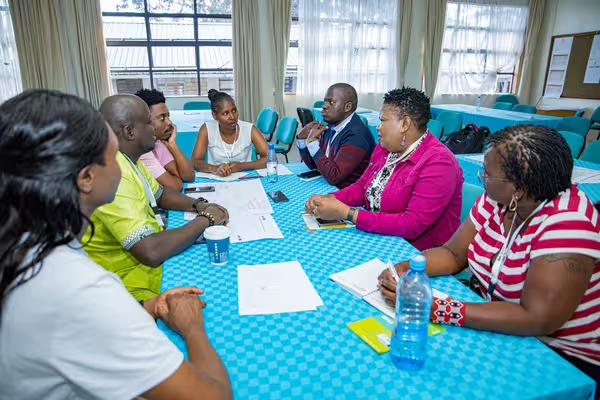
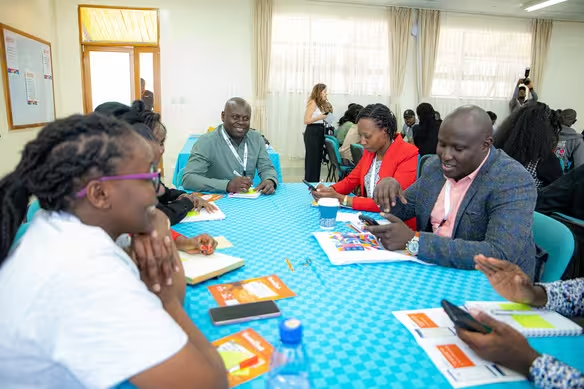
     According to Jennifer Cotter-Otieno, CEO of EdTech Kenya, “This year’s summit was about members of the ecosystem telling each other what they wanted for the next ten years.” To facilitate this, vision casting sessions were held, where delegates were divided into groups to explore various topics and share their aspirations for EdTech over the next decade. These sessions were particularly engaging thanks to the presence of an educator in our group, who provided valuable first-hand insights into the everyday experiences of teachers using technology in the classroom.

    Social and emotional learning (SEL), as defined by the Child Mind Institute, refers to how children develop essential social and emotional skills. This encompasses managing difficult emotions, making responsible decisions, coping with stress, setting goals, and fostering healthy relationships. 

    Teachers play a crucial role in SEL, as Caroline Mendel, PsyD, a clinical psychologist and Senior Director of Clinical Services, School, and Community Programs at the Child Mind Institute, explains that these skills are not innate but require explicit instruction and consistent reinforcement.

     To ensure the success of social and emotional learning (SEL) in a digital environment, it is crucial to keep teachers motivated. Teaching is more than just delivering education—it requires engaging, inspiring, and connecting with students on a deeper level, which is no simple feat. 

    Achieving this demands passion, creativity, and a strong commitment to making a lasting impact in students’ lives. To achieve this level of success, the teacher needs to be stable both emotionally and socially. However, Joyce from Mang’u High School stated that a lot of teachers in Kenya are already feeling overburdened with their numerous duties, which include lesson planning, assessments, teaching, and participation in students’ extracurricular activities.

     To equip Kenyan teachers for leading digital social and emotional learning, the delegates proposed the following key strategies:

    1. Integrate digital learning as a core course in teacher training programs.

    2. Simplify and promote technology as an essential tool for teaching.

    3. Incorporate ongoing professional development for teachers, both during training and in their workplaces.

    4. Lighten the administrative burden on teachers, enabling them to focus on becoming effective facilitators of learning.

    5. Digitize education from the national level down to rural schools, ensuring equitable access to digital resources.

     Incorporating digital learning as a course is essential. We discussed that equipping teachers with digital skills during their initial training would streamline the process, even though it’s important to provide tech training to current educators. Joyce highlighted that many older teachers hesitate to use technology in the classroom because they lack the necessary skills. 

    As a result, they often rely on younger colleagues or tech-savvy students for assistance. According to Kurasa, this skill gap is largely due to limited access to technology infrastructure, insufficient training opportunities, and resource constraints in educational institutions. Furthermore, older teachers’ resistance to change has slowed their adoption of technology in teaching.

    Simplified technology plays a key role in enhancing social and emotional learning (SEL) by making the experience more interactive and accessible. Often, educators and students perceive technology as complicated and unfamiliar, creating a barrier To drive widespread adoption of EdTech, tech entrepreneurs and solution providers must prioritize ease of use and accessibility. 

    They should design platforms that anyone can navigate, regardless of their technical skills. With the growing prevalence of mobile devices, developing mobile-friendly apps can extend learning opportunities to any location at any time, reducing the stress of incomplete or delayed tasks. 

    Incorporating easy-to-use educational games is another effective way to boost SEL, particularly for students. Simplifying technology in this way transforms it from intimidating to an engaging and enjoyable learning tool. 

     Julius Muriithi, the Evidence and Communications Manager at Dignitas, emphasized the importance of mindset change when implementing Teacher Professional Development (TPD) programs in marginalized areas. He noted that many teachers in these regions lack the necessary formal training and need empowerment to embrace new teaching approaches. 

    Through TPD, these teachers are exposed to new challenges, such as incorporating technology into their classrooms. Julius highlighted that their approach involves coaching teachers over time, ensuring they gradually master new concepts. This method enables students in these marginalized areas to benefit from tech-integrated learning as their teachers become more adept and confident.

    One notable achievement this year was the EdTech Summit in Northern Kenya that was held at Garissa University, where education and technology experts convened to discuss the future of learning in frontier Counties. The initiative aims to bridge the gap in both social and emotional learning through technology integration. 

    Teachers and students in the Frontier counties stand a chance to be better equipped digitally in the next ten years if Edtech drives more of such initiatives.

    Fridah Ngari, CEO of Ntemata, an online platform that automates teacher assessments and tracks competency-based learning, suggested incorporating tools like badges, progress reports, and feedback loops to enhance the professional development process. She stressed the importance of motivating teachers during training, a point echoed by Joyce, who observed that many teachers previously involved in TPD felt demotivated without proper support.

    The other way to foster digital learning in the next decade is by lightening teachers’ administrative tasks. The mountain of papers I have to mark, evaluate, and grade right now would shock you if you looked inside my car, Joyce said, providing a glimpse into the onerous workload of a typical teacher in Kenyan schools.

    Mr. Mureithi echoes this reality, noting that many teachers he’s trained often manage up to seven lessons a day. On top of this, they’re expected to handle various administrative tasks, extracurricular activities, and the rigorous assessment of students—tasks that school principals frequently monitor closely. In most government schools, large class sizes further complicate the already demanding responsibilities.

    This heavy workload leaves teachers feeling overburdened and stressed, reducing the time they have to focus on what they truly enjoy—teaching. To ease this pressure, web developers should prioritize creating solutions that reduce, rather than add to, teachers’ administrative duties. Joyce pointed out that while teachers love teaching, they find the grading process exhausting. 

    If her school adopted a tech solution that automated grading and assessment, she could reclaim valuable time to explore, learn, and implement innovative digital tools focused on social and emotional learning. Lessening this administrative burden is critical for enhancing both teacher well-being and the overall learning experience. 

    The gap between private and public schools in Kenya is significant, especially when it comes to resource allocation. Public schools, which serve the largest student populations, often receive far fewer resources. For social and emotional learning (SEL) to be successfully digitized, the government must prioritize the digitization of education from urban centers to rural schools.

    Over the past few years, Kenya has been making notable strides in digitizing its education system. On September 30, 2016, the Kenyan government launched the Digital Literacy Programme, distributing digital devices to schools nationwide. The goal was to provide 1.2 million devices to public schools, a move that, according to the then ICT Minister Joe Mucheru, was intended to transform not only the education sector but the entire economy.

    While this marked the beginning of an exciting tech journey, much more remains to be done. A report by the International Labour Organization (ILO) highlights that the digital divide has continued to widen, particularly for those groups that have benefited the least from ICT infrastructure developments. 

    In response, the government has enacted ICT reforms, bringing high-speed internet, computers, tablets, and other digital tools to schools through initiatives funded by the Ministry of Education, Science, and Technology. Additionally, partnerships with organizations such as the Network Initiative for Computers in Education, Microsoft, and Oracle have supported these efforts.

    Government involvement at the national level is critical, particularly in helping rural teachers access online resources and infrastructure that will enable them to seamlessly integrate SEL into their daily teaching  As Fridah explained, students in schools that have fully embraced digital learning are more advantaged because they have access to global opportunities. 

    Students using e-portfolios can secure scholarships and international opportunities, unlike those in rural areas using traditional methods. Given that this project’s complexity necessitates cooperation between numerous agencies and organizations, the government will continue to be a crucial force in bringing stakeholders together and realizing the Hon. Mucheru’s vision.

    Integrating digital tools for social and emotional learning (SEL) is transforming education in Kenya, with a vision to enhance inclusivity and digitize learning nationwide over the next decade. Incorporating digital learning as a key course aims to simplify technology’s role in education, making it a powerful tool for both teaching and student development.

    Professional development training for teachers will be critical, equipping them to utilize these technologies effectively while easing administrative tasks through automation. This strategy aims to bring digital education not only to urban centers but also to rural schools, fostering a more equitable and modernized educational system across Kenya in the next decade.