Category: Community Stories

  • Community stories: Bridge Academies Foundation’s Journey to Achieving Education for All

    Community stories: Bridge Academies Foundation’s Journey to Achieving Education for All

    This EdTech challenge is part of our ongoing effort to crowdsource and showcase stories from the EdTech East Africa community. If you’d like your work to be featured, please email the editor at juliet@edtech-eastafrica.com

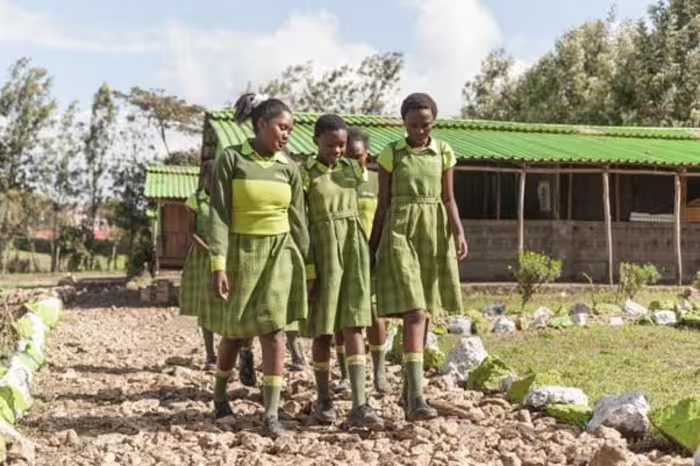
    Since opening its first school in Mukuru Kwa Njenga in 2009, Bridge International Academies has made incredible strides in addressing one of the world’s most pressing challenges—education for all. With a mission to tackle the fact that one in two children worldwide is not learning, Bridge has worked tirelessly to ensure that every child, regardless of background, has access to quality education. This vision has come to life in urban informal settlements and rural areas, where children face significant educational barriers.

    From the beginning, Bridge International Academies set out to provide an affordable, high-quality alternative to traditional public education. Today, the organization operates community schools across 30 out of 47 counties in Kenya, offering life-changing educational opportunities to children who would otherwise struggle to access learning. These schools are designed to provide education that equips learners with practical skills and real-world knowledge, empowering them for future success.
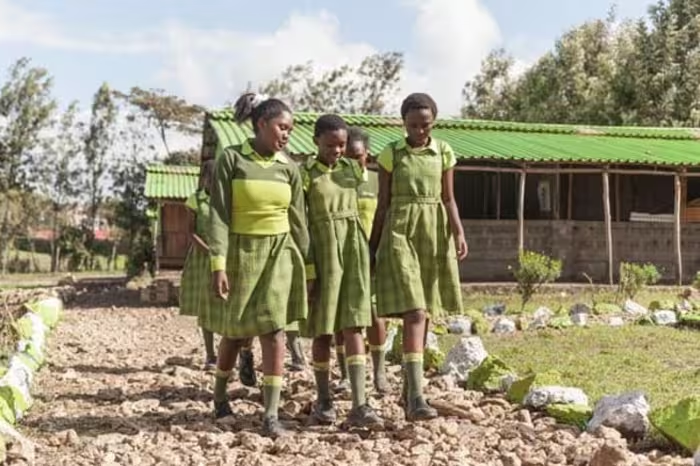
    Bridge’s approach to education is rooted in a powerful mission: to provide every child with a strong foundation that opens doors to a better future. To deliver high-quality education that is data-driven and evidence-based, the organization works closely with teachers, parents, and local communities.

    In pursuit of this mission, Bridge has re-engineered every aspect of the education system—from teacher training and lesson delivery to school construction, financial administration, and beyond. This commitment ensures that Bridge’s community schools are as effective, transparent, and accountable as possible. The results speak for themselves: independent exam results consistently demonstrate that Bridge schools provide a proven pathway to success.

    A key element of Bridge’s solution to the global education crisis is its data-driven, technology-enabled approach. Bridge has transformed lesson delivery and student progress tracking through digital learning systems. Teachers use tablets loaded with standardized, scripted lessons that guide each step of the learning process, ensuring that every student receives consistent, high-quality education, no matter which school they attend.
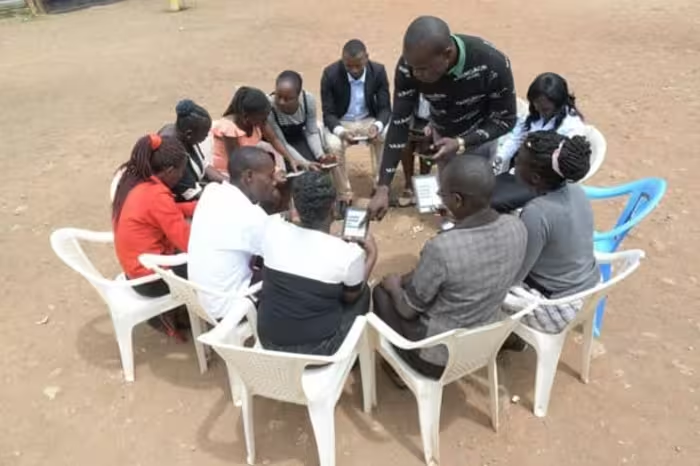
    Real-time data and analytics are integral to Bridge’s operations. By inputting student assessment results into the system, teachers and administrators can track student performance, identify learning gaps, and make informed decisions to improve outcomes. The technology also allows for content to be updated and tailored to meet the specific needs of each student, ensuring lessons remain relevant and effective.
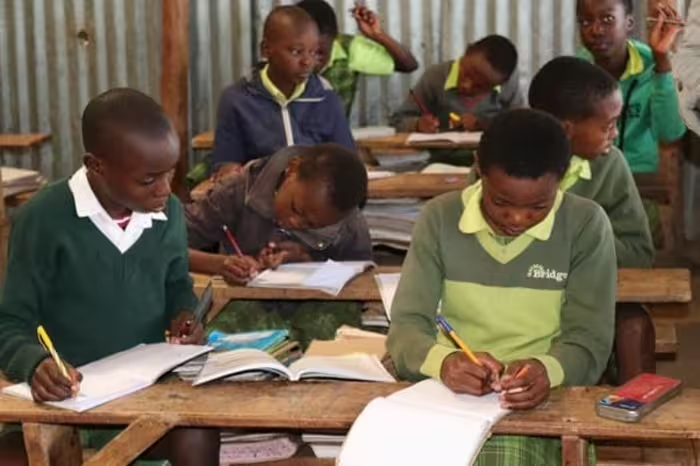
    Teacher empowerment is at the heart of Bridge’s model. The organization invests heavily in continuous professional development, providing teachers with daily, expertly designed lesson plans and regular instructional coaching. This support ensures that teachers are equipped with the pedagogical skills and classroom management techniques they need to succeed, allowing them to focus on what they do best—teaching and inspiring their students.
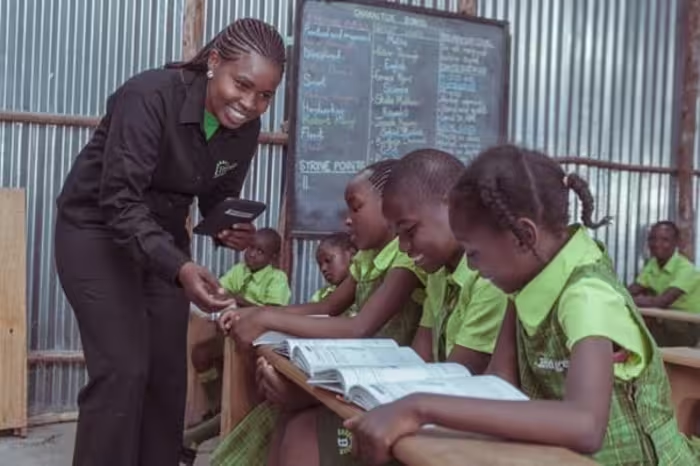

    Bridge’s data-driven decision-making further ensures that the organization is always improving. Daily data collection on student attendance, assessment results, and teacher performance helps to track progress, identify challenges, and implement targeted interventions where needed. Whether addressing underperforming students or schools, this data allows Bridge to make real-time adjustments to enhance learning outcomes.

    The scalability of Bridge’s model is another key achievement. Designed to work in diverse settings—from densely populated urban centers to remote rural areas—Bridge’s approach ensures that quality education is accessible in both high- and low-density environments. The use of technology enables Bridge to expand its reach without compromising on the quality of education provided.

    Looking ahead, Bridge remains committed to being a global leader in education research and innovation. The organization aims to contribute to the global knowledge of what works in low-resource education settings and continues to improve educational outcomes for children in the world’s most underserved communities. Bridge is focused on ensuring that even more children from underserved areas gain access to the same high-quality education offered in its schools—education that prepares them for success in a rapidly changing world.

    Bridge’s journey is far from complete, but every step forward brings the organization closer to realizing its vision of education for all. As it continues to innovate and grow, Bridge is more committed than ever to its mission of transforming education and empowering the next generation.

    Grace Mbugua, the Director of Communications for Bridge Kenya & Uganda, submitted this story.
  • Strong Collaborations to Build Robots and Rural Futures at the TechTober Mashujaa Day

    Strong Collaborations to Build Robots and Rural Futures at the TechTober Mashujaa Day

    By Juliet Awuor

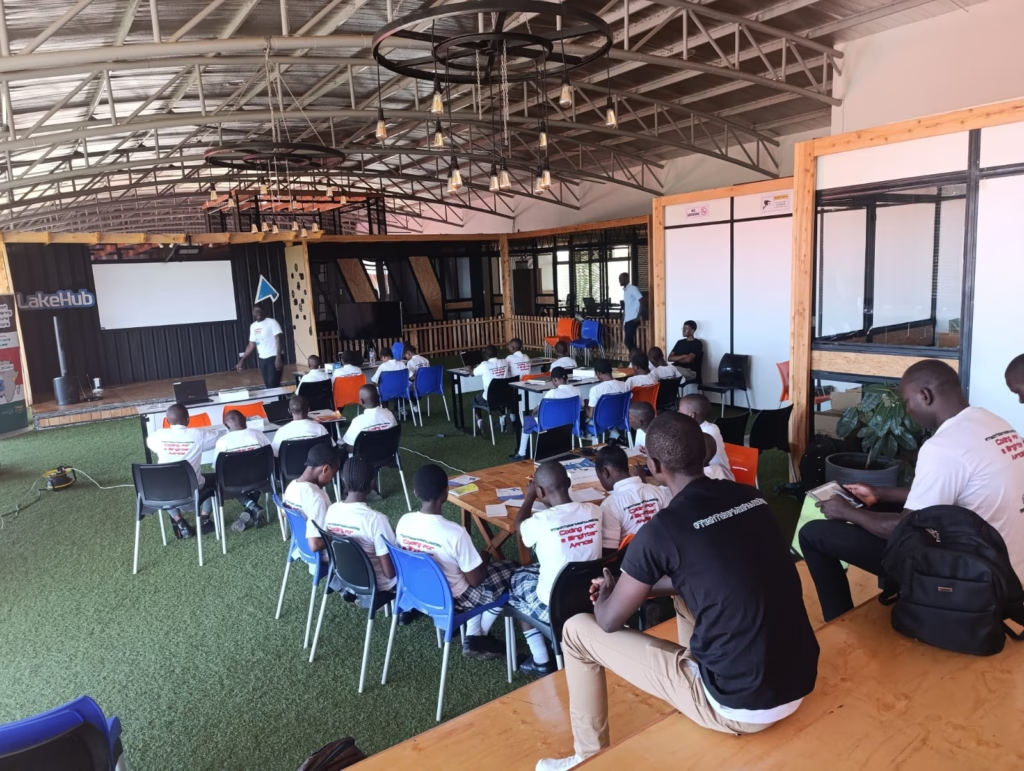
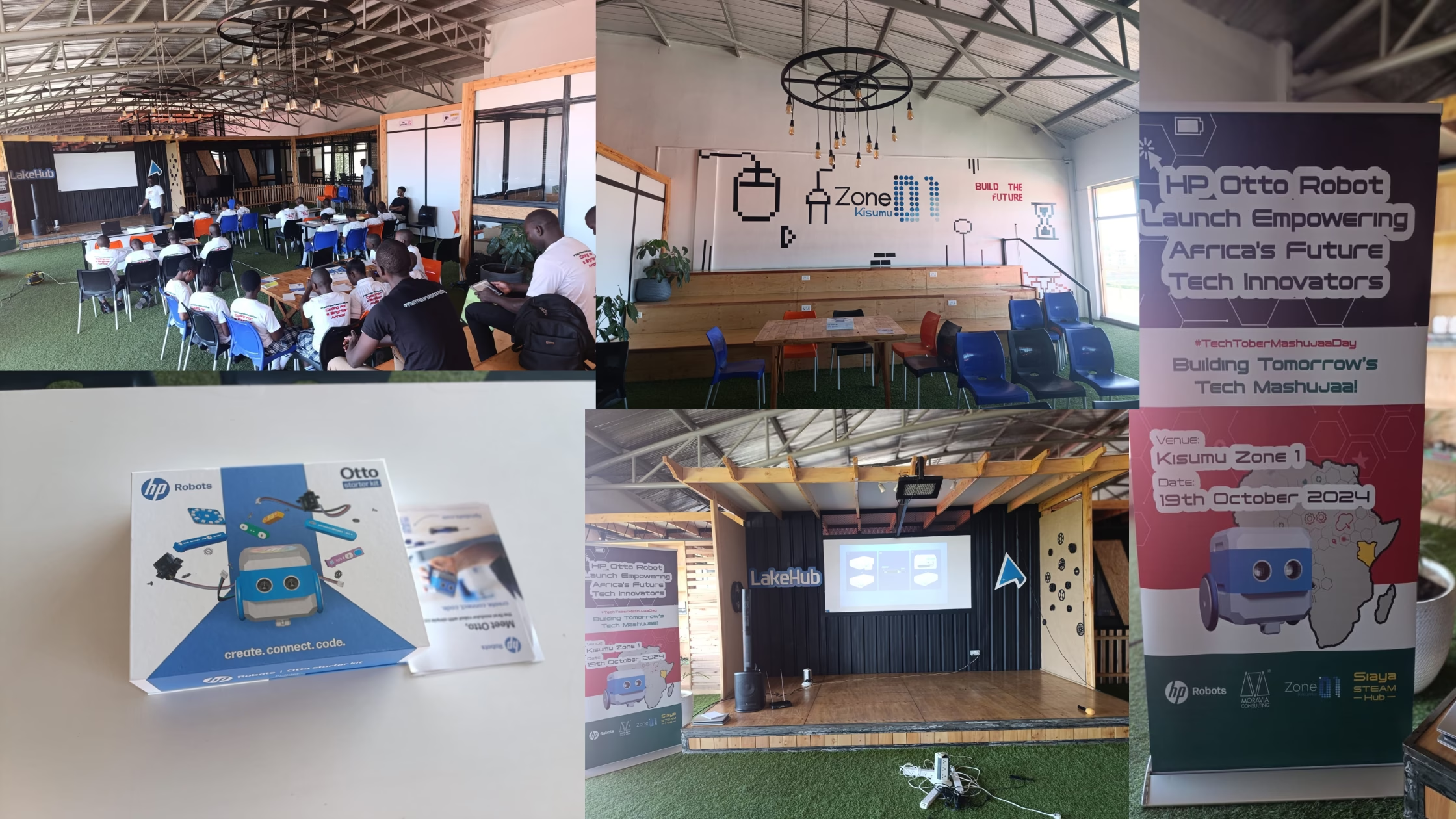
    “You want to go fast; go alone; but if you want to go further, go with others.” This powerful philosophy came to life during the #TechToberMashujaaDay event held on Saturday, October 19, at Zone 01 in Kisumu. Organized by Siaya STEAM Hub, led by Moses Okoth, and supported by HP Robots, this exciting event brought together primary and junior high school learners to explore the world of robotics.

    Each group of 6–8 students received a box of unassembled parts and was tasked with assembling an Otto Robot. Using computational thinking, design thinking, and critical thinking, the students worked collaboratively, learning to follow provided instructions, solve problems, and build confidence in STEM-related skills.

    “Technology is advancing at a supersonic speed internationally,” said Moses Okoth. “In agriculture, for example, people are using drones and apps to improve yields. Yet here in Kenya, many students are still learning traditional farming methods through the same old agricultural clubs.”

    Agricultural clubs have long played a crucial role in Kenyan schools, teaching students the fundamentals of farming, sustainability, and food security. These clubs instil valuable skills such as patience, responsibility, and an understanding of natural cycles—knowledge that remains essential in an agricultural economy like Kenya’s. However, as global agriculture evolves with technology, there is a need to modernize these clubs to better prepare students for the future.

    Integrating emerging agricultural technologies into school programs helps students gain hands-on experience with modern farming tools. For instance, agricultural clubs could introduce drone-based crop monitoring, precision irrigation systems, smart greenhouses, and mobile apps that analyze soil health. These innovations would make learning more engaging and equip students with the knowledge needed to bridge the gap between traditional and modern farming practices.

    By blending tradition with technology, agricultural clubs can continue to nurture young agripreneurs while embracing innovations that enhance efficiency and productivity. Instead of replacing traditional farming lessons, technology can complement them—equipping students with the skills needed to become future-ready agricultural leaders in Kenya and beyond. And where better to introduce technology-driven learning than in rural areas, where agriculture remains the primary source of livelihood?

    Through hands-on activities like assembling the Otto Robot, Moses hopes to inspire a new generation to embrace STEAM (Science, Technology, Engineering, Arts, and Mathematics) subjects. He emphasized the value of letting students figure things out for themselves, guided by an instruction manual with every robot kit.

    This event marked the first time HP Otto Robots were introduced in Kenya. Moses partnered with Jan Patloka, the product manager at Moravia Consulting in the Czech Republic, to make this dream a reality. Initially sceptical, Jan admitted, “When Moses reached out to introduce Otto Robots to Kenyan schools, I thought it was a joke. But after months of communication, I trusted his strategy.”

    Jan expressed optimism about expanding the use of Otto Robots in Kenyan schools. “We look forward to introducing the Otto Robot in more schools—not all, but some,” he added.

    The Otto Robot is specifically designed to be user-friendly for STEM education. Its inclusion in the #TechToberMashujaaDay event showcased its potential to impact how Kenyan students learn technology and robotics significantly.

    Jan also donated Virtuali-Tees from Curiscope to the schools in attendance. A Virtuali-Tee is a T-shirt designed to make learning about the human body interactive and immersive. Using augmented reality (AR) technology, the shirt works with a mobile app to create a virtual experience where users can explore organs, systems, and anatomical structures in 3D. Scanning the T-shirt with a smartphone or tablet, students can see inside the human body, interact with different organs, and engagingly learn about their functions. This innovative tool is useful for educators looking to make biology lessons more hands-on and visually captivating. The learners, together with their teachers, had fun testing the technology.

    The event also introduced many, including myself, to the vibrant tech community at Zone 01 in Lake Basin Mall. This co-working space hosts various technology-related events, providing a platform for innovation and collaboration in Kisumu. Collaboration remains a core value for us at EdTech East Africa, so we had to respond to Moses by supporting his event.

    As we reflect on the success of this event, it’s clear that partnerships and community efforts can spark meaningful change. The team of volunteer teachers, Moses Okoth, and international collaborators like Jan Patloka exemplify the spirit of going further together.

    The #TechToberMashujaaDay event was a step forward in empowering Kenyan students to dream bigger and prepare for a tech-driven future. Here’s to many more opportunities for learners to build, innovate, and thrive in STEAM fields!