I am young. Not young in the “youth is a state of mind” young, but young as a biological fact. Yet, my youth did not spare me from the realities of a rapidly changing world. In the last three years alone, we have seen the rise of artificial intelligence, blockchain technologies, and rapid technological integration. Economic crises have not only challenged what it means to be a worker, they have challenged the fundamental purpose of employment, shifted the types of work available, and changed what it means to be a valuable worker. Meanwhile, our increasingly divided communities threaten our already tenuous grasp on stability and security. And, to be honest, this is not what I, or my peers, signed up for.
As a result of the aforementioned disruption, nearly 50% of Kenya’s unemployed are youth (approx 1.54 million people). Macroscopically, McKinsey estimated that over half of the job activities that currently exist today are projected to no longer be needed in 2055. But if the jobs of the future do not exist today, how can we prepare our youth for them? If the problems of the future are in their infancy today, how can we prepare our youth to address and acknowledge them? Essentially, how do we keep our youth wired to the future, if the future is constantly in flux?
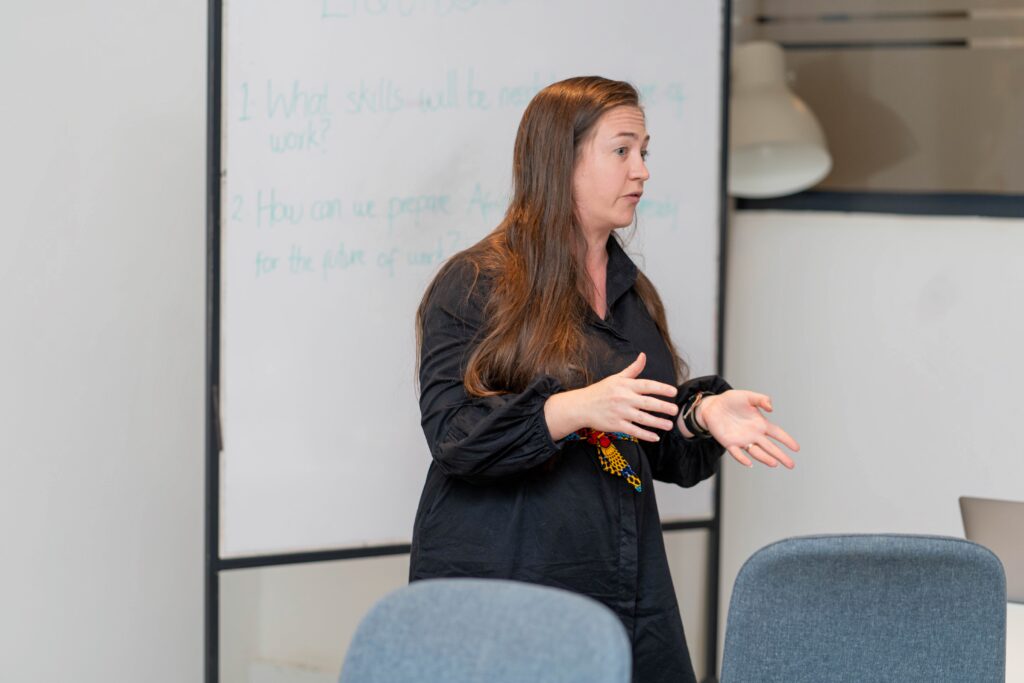
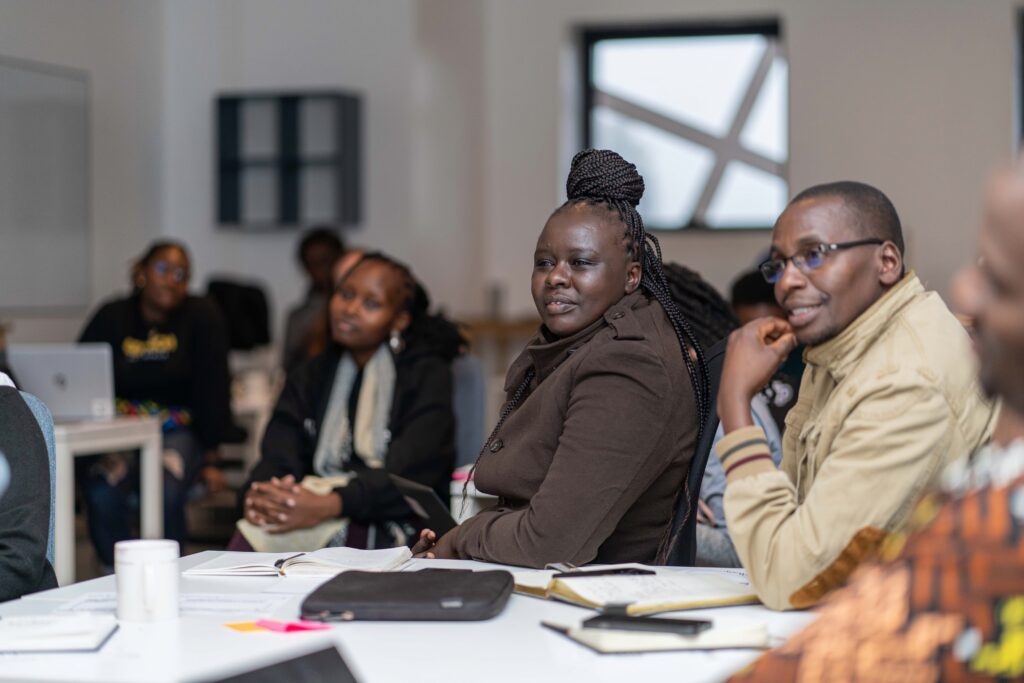
These were the questions we attempted to answer at the second Collective Action Fridays Workshop on 4 August 2023. This workshop was co-hosted by Jobtech Alliance, whose research helped ground our insights and point to areas of further exploration. Like with the first Collective Action Friday on Foundational Literacy and Numeracy (14 July 2023), we gathered to, as Jennifer Otieno (EdTech East Africa Founder and CEO) mentioned, continue the dialogue we began in 2022. At the Kenya EdTech Summit 2022, we identified youth employability and skill development as one of our five areas of interest. To further the discussions at the next Kenya EdTech Summit 2023, this workshop focused on confirming a common understanding of the problem before us.
As such, we began with a very simple question, what skills will be needed for the future of work?

Identifying the Skills for Future Success
First, we agreed that neither traditional academic knowledge nor technical skills are sufficient for the future. To adapt and flourish in the future job landscape, our youth must possess a diverse skill set that includes not only technical expertise (like coding, prompt engineering, and data management) but also crucial soft skills. Skills such as critical thinking, problem-solving, creativity, adaptability, and emotional intelligence emerged as the foundation for success. The last of these is particularly key.
The University of Queensland defines emotional intelligence as the “ability to maneuver and interact with your own emotions as well as those of other people.” This includes the ability to; “(1) perceive and identify emotions. (2) think and reason using emotions; (3) understand emotions and how they change and; (4) regulate your emotions and manage the emotions of others.” This goes beyond managing the impact of, so-called, “negative” emotions like anger, frustration, stress, or managing conflict. It includes cultivating “positive” emotions like empathy, inspiration, and joy. Given that many of us will work because we have to (as a matter of economic survival), and not because we want to, the ability to cultivate joy in our work lives is paramount. Not only as a matter of productivity, or a question of worker resilience but as an issue of fundamental health.
As a result, these emotional intelligence, specifically, and socio-emotional skills, in general, are increasingly relevant. Especially, as we relegate more and more technical, ethical, and moral decisions to algorithms that are not only beyond our comprehension; but also reflect and exacerbate the biases that haunt our world. Thus, success in the workplace is and will be, not only defined by your ability to manage and capitalise on technological change but also by the human beings that drive and are affected by it. This is why, according to Capgemini, 76% of executives agree that AI and automation will increase the demand for emotional intelligence skills. And our workshop participants agreed. Every group mentioned the need for socioemotional skill development as a prerequisite for workforce participation and empowering our youth to solve the problems of the future.
Tailoring Skills for African Youth
The discussion then pivoted to the unique challenges faced by African youth and the specific skills required to succeed in the future of work within the continent. By 2055, Africans (in particular African youth), will be a quarter of the world’s workforce. Many entering fields we could not imagine. Some may dominate familiar industries that have been fundamentally changed, like agriculture or health. While others may not even work in Africa, and extend their talents to others. Therefore, we first need to understand what Africa’s future will look like; beyond purple-prose policies and impotent ideas.
We agreed that given the rise of remote work opportunities, and the push for governments to export African labour, our youth will need to learn cultural competencies and how to navigate cultural differences in the workplace (a fact echoed by the Mastercard Foundation). We also agreed that resilience will need to be imparted to our youth. Resilience in the face of climate change and the misallocation of resources of global resources.
We also agreed that, while technical skills like coding, digital literacies, prompt engineering, and data analysis are universally valuable, we also recognised the importance of incorporating local context into educational curricula. This way, our youth are not only prepared to solve problems of global significance in the areas that are most relevant to them, but they are also prepared to adapt global solutions to local contexts. Indeed, localisation is critical when tailoring skills for our youth.

Identifying Barriers and Enablers
In the final part of the workshop, we engaged in a candid conversation about the barriers hindering the development of employability skills among the youth and the enablers that can drive positive change.
We acknowledged that our primary barrier was our failure to adequately train and empower our youth. And that this failure went to the very foundation of their learning. For example, how can we expect our youth to be digitally literate in the future, when we have not sufficiently invested in infrastructure, and capacity building in the present? How can we expect our youth to be critical thinkers if they were not given the opportunity to develop foundational literacies? These barriers – a lack of foundational skills, poor infrastructure, and capacity-building opportunities, unequal resource distribution, and poor support systems – exacerbated the wider systemic problems that leave our youth unprepared and disempowered. All philosophising aside, we acknowledged that to address these barriers, a collaborative effort involving governments, educational institutions, NGOs, and the private sector was essential. We also recognised that, for all our failings, we were headed in the right direction.
African nations are leveraging technology to bridge education gaps; promoting vocational training programs, and creating mentorship opportunities. A great example of this is the Government of Kenya’s Ajira Digital platform which provides free access to digital skills training and vacancies for young Kenyans. Another is the JobTech Alliance (our co-hosts). JobTech Alliance is an ecosystem-building initiative that aims to link digital platforms which connect people to work opportunities that build livelihoods for each other in order to catalyse large-scale meaningful employment. The ecosystem allows platforms to share resources and insights on the problem of youth unemployment so that our responses can be targeted and relevant. Enablers like these have the potential to allow the present to become a breeding ground for a generation of resilient, well-equipped, and conscientious youth.
However, we must also recognise that the aforementioned enablers only work if the problem is a failure of training but not a failure of the environment. If the barrier is the latter, then investing in training is tantamount to placing a bandaid on a gushing wound. For example, what is the point of training our youth to be entrepreneurs, if the economy is not ready to receive their entrepreneurial outputs? More importantly, how can we invest in training our youth, if there are no jobs for them to pursue? Indeed, the Brookings Institute argues that: “many people in Africa do not so much lack skills or education as the opportunity to apply their knowledge and skills in ways that drive their countries forward economically.” Right now, our economies are not ready to shoulder the burden and privilege of our dynamic and youthful populations. And neither an incubator hub nor a six-month coding course will change this. As a result, we also discussed the need for our economy to change in order to embrace our newly trained workers or for public policy to better manage the export of our workers.

Conclusion
Ultimately, the workshop achieved its objectives of establishing a common agenda. Yet this is not its’ most significant outcome. I would argue that particular distinction lies in the source of these insights; the youth.
The workshop was dominated by youth voices, perspectives, and experiences – from the conclusions JobTech Alliance presented, to the conversations we had on our tables. We led the conversation as we agreed on, and defined, the core skills needed for future success, tailoring these skills to the context of African youth. We felt guided as we identified and evaluated the barriers and enablers that keep us trapped in the present. We no longer felt alone and understood how our unique contributions advance our collective agenda. Significantly, as we spoke, each of us lay claim to the future we sought to create, and found visionaries, advocates, project managers, founders, policymakers, and government officials who were willing to get us there. People who were willing to help us achieve the dreams that powered our first forays into adulthood. People who were willing and able to help us manifest the futures we “signed up for.”
Let’s keep this conversation going on the EdTech East Africa platform. Implementing the insights gained from the workshop will require sustained effort and collaboration from all stakeholders.